
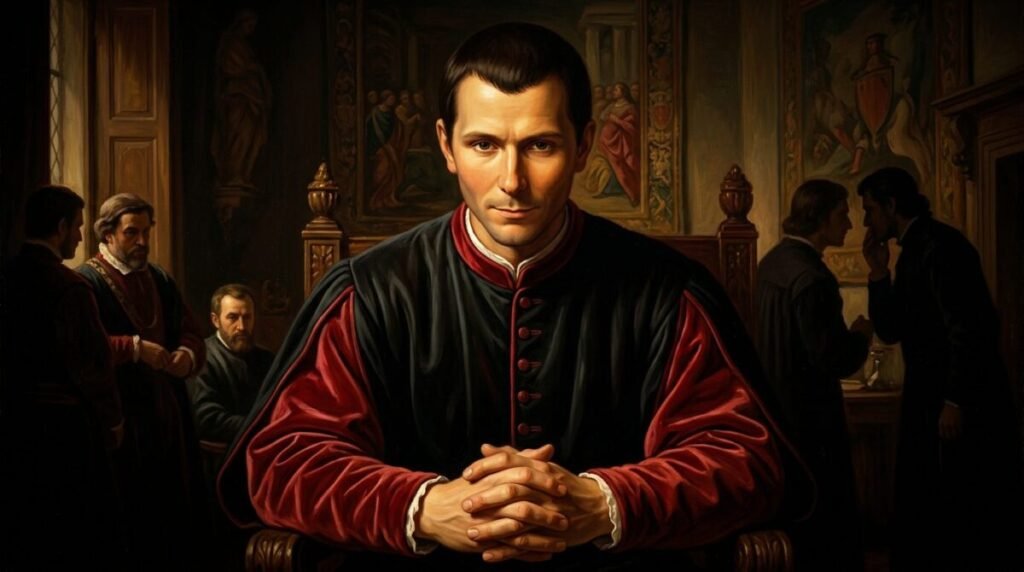
Is it better to be loved than feared, or is force the true foundation of all political order? For over five centuries, this single question has haunted the corridors of power, unsettling philosophers, monarchs, and modern executives alike. We like to believe that human societies are held together by mutual goodwill, shared morals, and the inherent nobility of the human spirit. We construct elaborate legal systems and democratic institutions to convince ourselves that we have transcended the brutal, bloody mechanics of our ancestors. Yet, when the veneer of civilization cracks under the pressure of crisis, we are forced to confront a deeply uncomfortable reality: order is not a natural state of affairs. Order is an artificial construct, and maintaining it requires a profound understanding of human psychology, coercion, and power.
Understanding Niccolò Machiavelli’s complex views on statecraft often involves navigating a maze of ethical dilemmas, historical contexts, and seemingly contradictory texts that can overwhelm even seasoned political science students. To read Machiavelli is to look into a mirror that strips away our moralizing illusions. He does not tell us how we ought to behave in a utopian dreamscape; he tells us how we actually behave in the muddy, unpredictable reality of human existence. For Machiavelli, the state is a fragile organism, constantly threatened by the innate selfishness of its citizens and the predatory ambitions of its neighbors.
This comprehensive analysis breaks down Machiavelli’s foundational theories on law, military force, and political order, contrasting his autocratic advice in The Prince with his republican ideals in Discourses on Livy. As we dissect these concepts through the dual lenses of philosophy and psychoanalysis, we will uncover the stark truth at the heart of his worldview: power is neither inherently good nor evil. It is a tool. And in the hands of a leader who understands the intricate dance between jurisprudence and violence, it is the only thing standing between civilization and the abyss.
1. The Foundations of Machiavellian Realism
To understand the psychological architecture of Machiavelli’s thought, we must first situate him in the chaotic theater of Renaissance Italy. In the late 15th and early 16th centuries, Italy was not a unified nation but a fractured mosaic of fiercely competitive city-states, papal territories, and foreign-controlled domains. Florence, Venice, Milan, Naples, and the Papal States were locked in a perpetual, exhausting cycle of shifting alliances, betrayals, and brutal proxy wars. Foreign powers like France and Spain treated the Italian peninsula as their personal chessboard. It was an environment defined by chronic instability, where fortunes were made and unmade overnight, and where a prince could be dining in a palace one day and rotting in a dungeon the next.
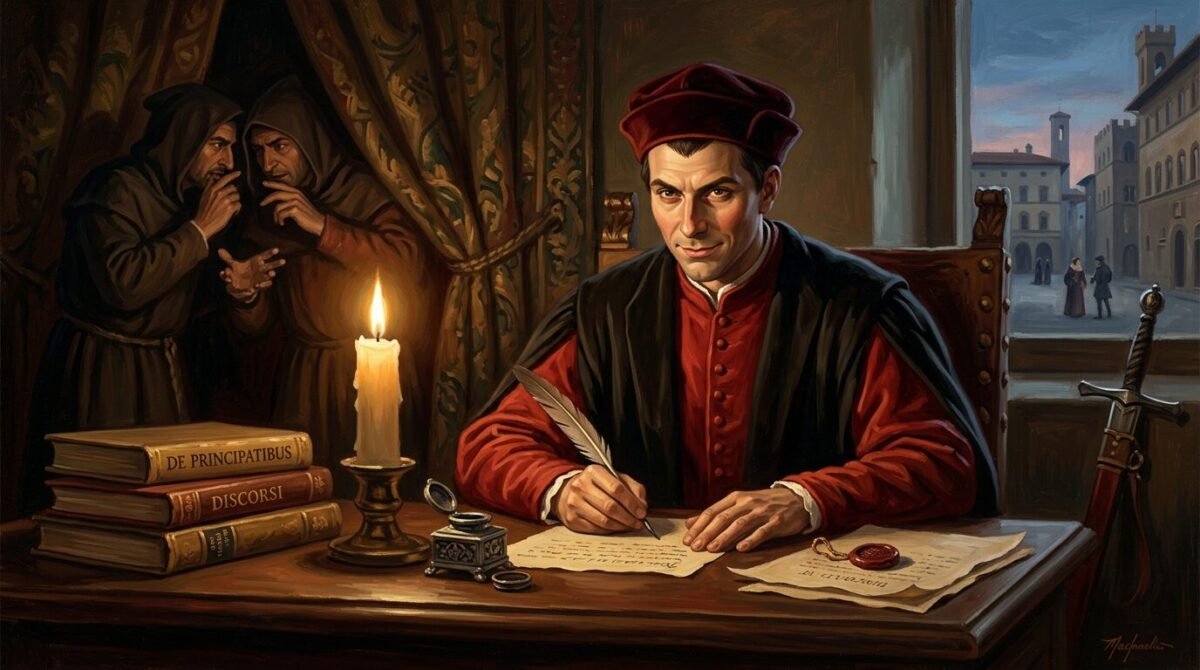
Machiavelli, serving as a diplomat and military strategist for the Florentine Republic, witnessed this volatility firsthand. He sat across the table from popes, kings, and warlords. He observed their neuroses, their vanities, and their ruthless calculations. This immersive exposure to the raw mechanics of Power & Human Nature triggered a radical departure from the classical and Christian idealism that had dominated Western political thought for over a millennium.
Before Machiavelli, political philosophy was largely an exercise in moral theology. Plato had dreamed of the Philosopher King, a ruler guided by the ultimate Form of the Good. St. Augustine and St. Thomas Aquinas had tethered political authority to divine will, arguing that earthly laws must reflect the eternal laws of God. Rulers were instructed to be pious, merciful, and just, with the assumption that moral goodness would naturally translate into political success.
Machiavelli shattered this paradigm with the cold precision of a surgeon. He recognized that applying Christian ethics—which champion meekness, turning the other cheek, and prioritizing the afterlife—to the administration of a state was a recipe for political suicide. In a world populated by predators, a leader who insists on acting like a saint will inevitably be destroyed. Machiavelli introduced strict political realism: the doctrine that the primary objective of a ruler is not the salvation of souls, but the preservation of the state.
At the core of this realism is a deeply cynical, yet arguably accurate, psychoanalytic assessment of human nature. Machiavelli posits that humans are inherently self-interested, fickle, deceitful, and driven by insatiable desires. We are creatures of appetite, constantly seeking security, wealth, and status, yet rarely satisfied once we attain them. Defining political order, therefore, requires looking through the lens of managing this inherently selfish human nature. Order is not achieved by appealing to the better angels of our nature, because those angels are unreliable. Order is achieved by constructing a system of incentives, deterrents, and boundaries that channel human selfishness into predictable, manageable patterns. The state becomes a psychological containment vessel for the chaotic drives of the masses.
2. “Good Laws and Good Arms”: The Twin Pillars of Statecraft
If human nature is a volatile force, how does a ruler construct a durable state? Machiavelli provides a definitive answer in Chapter 12 of The Prince, delivering one of the most famous maxims in political philosophy: “The principal foundations that all states have, new ones as well as old or mixed, are good laws and good arms. And because there cannot be good laws where there are not good arms, and where there are good arms there must be good laws, I shall leave out the reasoning on laws and shall speak of arms.”
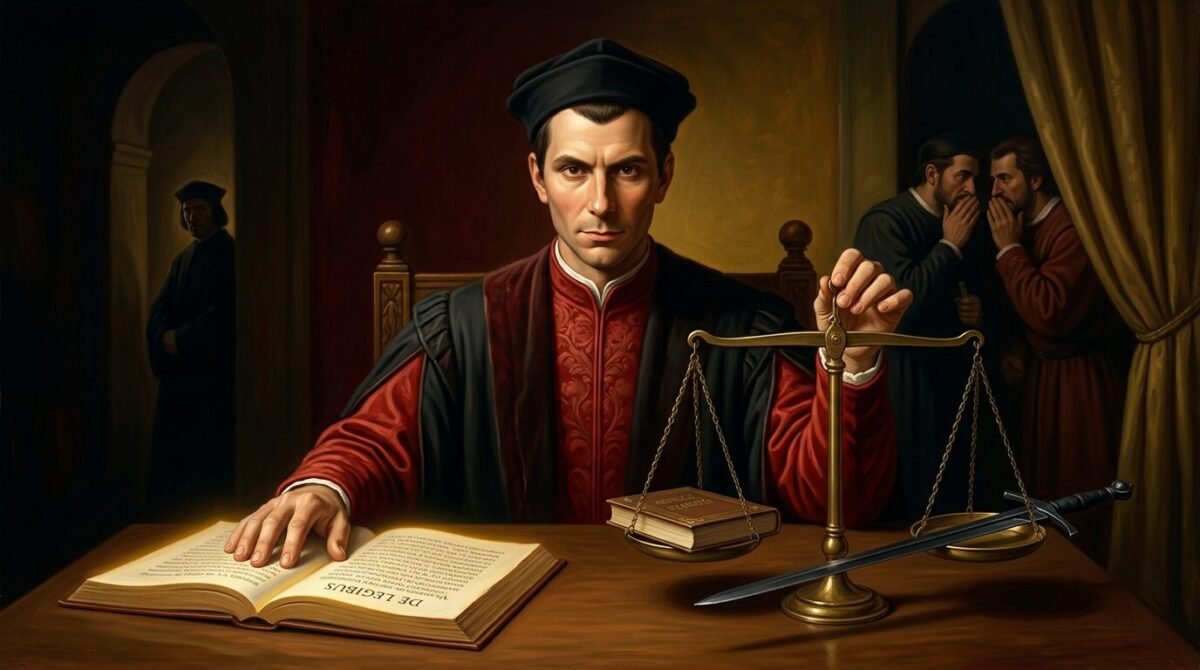
This statement is a masterpiece of political psychoanalysis. It establishes the twin pillars of statecraft, inextricably linking jurisprudence with military capability. To the modern, liberal mind, law and military force are often viewed as distinct, sometimes opposing, realms. Law is the domain of reason, justice, and civilization; armed force is the domain of violence, coercion, and barbarism. Machiavelli obliterates this distinction, arguing that they are two sides of the exact same coin.
Why did Machiavelli believe that good laws cannot exist or be enforced without the backing of good arms? Because a law, in its pure, abstract form, is merely words on parchment. It possesses no inherent physical power to compel obedience. The psychological weight of a law—the reason a citizen pauses before committing a crime—is not derived from the poetic elegance of the legislation, but from the implicit threat of the violence that will follow if the law is broken. Without “good arms” (a capable military and police apparatus), the state has no monopoly on violence. When the state cannot enforce its will, laws become mere suggestions, and the self-interested nature of the populace quickly devolves the society into anarchy.
To Machiavelli, a legal system is only as robust as the swords drawn to defend it. This brings us to his intense, almost obsessive focus on the nature of those arms. In Renaissance Italy, it was common practice for wealthy city-states to outsource their defense to condottieri—mercenary commanders who rented out professional armies to the highest bidder. Machiavelli despised this practice, viewing it as a fatal psychological and strategic error.
His detailed analysis of military forces reveals a profound understanding of human motivation. Mercenaries, he argued, are inherently unreliable because their sole motivation is financial profit. They have no emotional, psychological, or patriotic attachment to the state they are defending. In peacetime, they drain the treasury; in wartime, they avoid decisive battles to preserve their own lives and equipment, or worse, they turn on their employers if offered a better price by the enemy. A state relying on mercenaries is building its foundation on the shifting sands of human greed.
Machiavelli’s strong preference was for citizen militias—armies composed of the very people who live within the state. The psychology here is fundamentally different. A citizen soldier is not fighting for a paycheck; he is fighting for his home, his family, his property, and his identity. His survival is intrinsically linked to the survival of the state. By arming the citizenry, the ruler aligns the self-interest of the individual with the security of the collective. Furthermore, the discipline and shared sacrifice required in a citizen militia foster civic virtue, binding the populace together and reinforcing their respect for the “good laws” they are bleeding to protect.
3. The Role of Force and Coercion in Politics
We now arrive at the most controversial, and psychologically penetrating, aspect of Machiavellian philosophy: the necessity of violence and coercion in establishing and maintaining political authority. For Machiavelli, violence is not a moral failing; it is a mechanical requirement of power. The refusal to use force when necessary is not a sign of moral superiority, but a dereliction of duty that ultimately leads to greater suffering.
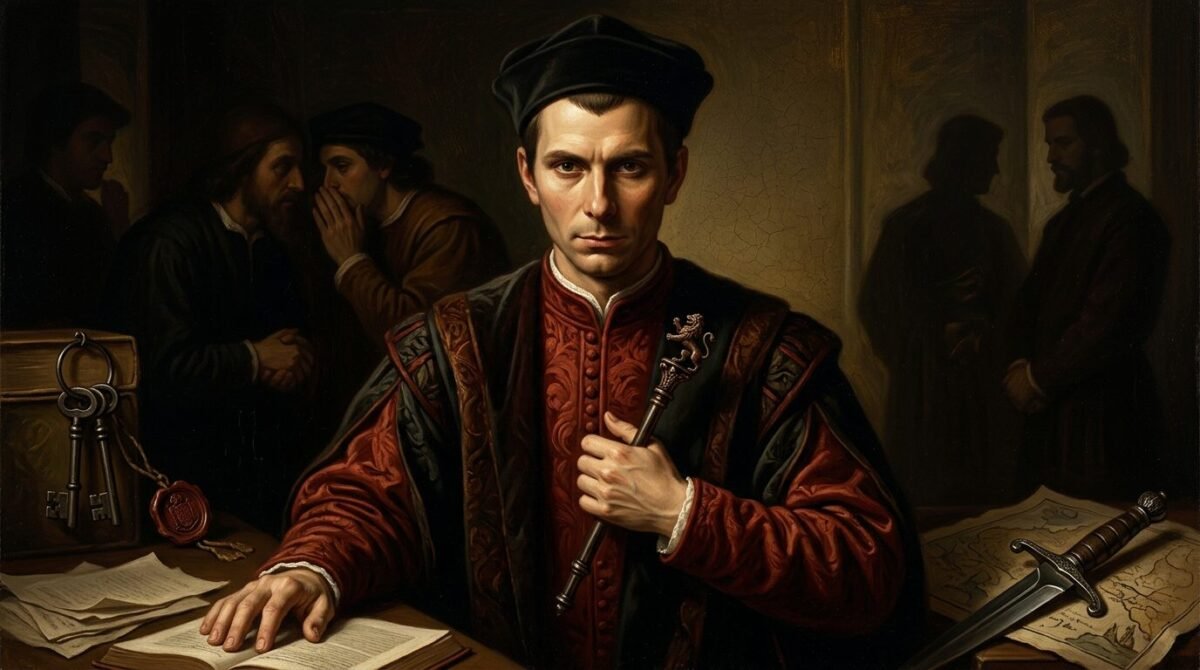
To understand this, we must examine his concept of “cruelty well used” (crudeltà ben usata). Machiavelli makes a chillingly pragmatic distinction between productive violence and destructive violence. Cruelty is “well used” when it is applied swiftly, decisively, and comprehensively at the very beginning of a regime’s establishment or during a severe crisis, with the explicit goal of securing the state and preventing future instability. Once the necessary violence is executed, the ruler must immediately pivot to reassuring the public and providing stability, never repeating the cruelty.
The psychoanalytic brilliance of this strategy lies in its understanding of human memory and trauma. Machiavelli observed that people are more deeply traumatized by prolonged, unpredictable, and chronic anxiety than by a single, massive shock. If a ruler is squeamish and applies violence in half-measures—executing a few dissidents here, confiscating some property there—he keeps the population in a perpetual state of terror and resentment. The wounds are never allowed to heal. Conversely, if a ruler applies overwhelming force all at once, eliminating all threats in a single stroke, the populace will initially be horrified. But as the violence ceases and order is restored, the shock fades, replaced by a grudging respect for the ruler’s strength and a profound sense of relief that the bloodshed is over.
Machiavelli illustrates this with the historical case study of Cesare Borgia and his minister, Remirro de Orco. When Borgia conquered the Romagna region, he found it lawless and chaotic. He appointed the ruthless Remirro to pacify the territory, which Remirro did through extreme, brutal violence. Once order was established, Borgia realized that Remirro’s cruelty had generated deep hatred among the populace. To absolve himself and win the people’s favor, Borgia had Remirro sliced in half and left in the public square, with a block of wood and a bloody knife beside him. Machiavelli notes that the ferocity of this spectacle left the people “at once satisfied and stupefied.” Borgia used force to create order, and then used a theatrical display of violence to purge the resentment that order had cost. It is a masterclass in Machiavellianism and the psychological manipulation of the masses.
Beyond active violence, Machiavelli understood that the threat of force acts as a psychological deterrent to maintain state stability and civic obedience. This is the essence of his famous assertion that it is safer for a prince to be feared than loved. Love is a bond of obligation, which, because men are wretched creatures, is broken whenever it serves their advantage. Fear, however, is maintained by a dread of punishment that never leaves you. Love is voluntary and controlled by the subject; fear is involuntary and controlled by the ruler. A strategic thinker relies on what they can control, not on the fickle emotions of others. Therefore, the architecture of political order relies on a carefully calibrated atmosphere of dread—not a paralyzing terror that breeds rebellion, but a healthy, omnipresent respect for the state’s capacity to inflict ruin upon those who disobey.
4. Law as an Instrument of Political Order
If force is the raw, kinetic energy of the state, law is the mechanism that captures, refines, and directs that energy. In Machiavelli’s framework, we must abandon the romantic notion that laws are sacred reflections of divine justice or universal human rights. Instead, we must view law as an instrument of political order—a practical, psychological tool designed to regulate human behavior and mitigate societal conflict.
Machiavelli understood that society is inherently divided by class conflicts, most notably the tension between the “great” (the elite, who wish to oppress and command) and the “people” (the masses, who simply wish not to be oppressed). Left to their own devices, these two factions will tear the state apart in a cycle of tyranny and anarchy. Law functions as the great mediator. It provides a structured arena where these inevitable conflicts can be fought out politically rather than violently.
The true genius of a legal system, according to Machiavelli, is its ability to manufacture civic virtue. He did not believe that human beings are naturally virtuous. If people act well, it is usually because they are compelled to do so by necessity or by law. Strong legal institutions create a framework of incentives and punishments that condition citizens to prioritize the common good over their selfish desires. Over time, this behavioral conditioning becomes internalized. The fear of punishment evolves into a habit of obedience, and that habit of obedience transforms into a cultural norm. The law, therefore, is a psychological mold into which the raw, selfish material of human nature is poured, eventually hardening into the shape of a dutiful citizen.
Furthermore, law serves as a mechanism for long-term stability, transitioning a state from the charismatic rule of a single founder to a self-sustaining society. A brilliant, ruthless prince can use force and personal magnetism to forge a new state out of chaos. But a state that relies entirely on the personal qualities of one individual is doomed to collapse the moment that individual dies. The founder’s ultimate task is to render himself obsolete.
He does this by institutionalizing his will through a robust legal code. Laws transcend the mortal lifespan of the ruler. They create a predictable, impersonal system of governance that depersonalizes power. When the populace obeys the law rather than the man, the state achieves a level of psychological permanence. The transition from the raw, founding violence of the Prince to the structured, legal-rational authority of the Republic is the ultimate triumph of Machiavellian statecraft.
5. Autocracy vs. Republicanism: The Prince and Discourses on Livy
One of the most enduring puzzles in Machiavelli & Political Philosophy is the stark contrast between his two masterworks. How do we reconcile the autocratic, force-heavy, seemingly tyrannical rule prescribed in The Prince with the passionate defense of liberty, constitutionalism, and republican ideals found in the Discourses on Livy? Was Machiavelli a tutor to tyrants, or a champion of freedom? A psychoanalytic reading of his work reveals that he was neither hypocritical nor confused; he was simply diagnosing different stages of a state’s lifecycle, which require entirely different psychological and political treatments.
The Prince is essentially a manual for emergency medicine. It addresses the founding of a new state, the conquest of a territory, or the rescuing of a deeply corrupted society. In these scenarios, the existing order has collapsed, and the populace is fractured, cynical, and lawless. Machiavelli argues that a republic cannot be established in such conditions, because a republic relies on the shared civic virtue of its citizens. You cannot build a cooperative society out of deeply corrupted individuals.
Therefore, the founding or rescuing of a state requires the singular, undivided will of an autocrat. The Prince must act as a political surgeon, using the scalpel of absolute power and the blunt force of military might to excise the rot, crush dissenting factions, and impose order from the top down. In this phase, morality is suspended in favor of necessity. The ruler must be willing to damn his own soul to save the state, utilizing deception, violence, and fear to force a chaotic populace into a cohesive unit.
However, once the state is secured and order is established, the prescription changes drastically. This is where the Discourses on Livy takes over. Machiavelli understood the psychological trap of absolute power: a dictator may be necessary to found a state, but autocracy is a terrible system for maintaining it. A single ruler is susceptible to paranoia, hubris, and the inevitable decline of old age. Furthermore, a populace kept in perpetual subjugation will never develop the civic virtue necessary for long-term resilience; they remain infantile, dependent on the father-figure of the Prince.
Contrasting this with republican ideals, Machiavelli argues that a healthy, mature state must distribute power. A republic, with its checks and balances, its mixed constitution, and its emphasis on legal frameworks, is far superior at adapting to changing circumstances. In a republic, the competing desires of the elite and the masses are channeled through legal institutions (like the Roman Senate and the Tribunes of the Plebs), creating a dynamic, energetic society. The clash of classes, when regulated by law, actually produces liberty.
Reconciling these texts requires understanding Machiavelli’s view that different stages of a state’s lifecycle require different balances of law and force. The Prince uses force to create the conditions where law can exist. The Republic uses law to manage the force of the populace, ensuring the state outlives its founder. It is a brilliant, Comparative Philosophy of political evolution: autocracy is the spark of creation; republicanism is the engine of endurance.
6. Virtù, Fortuna, and the Survival of the State
At the very heart of Machiavelli’s psychological landscape lies the dynamic, often violent interplay between two defining concepts: Virtù and Fortuna. Understanding these terms is essential for grasping how a state survives the relentless onslaught of time and crisis.
Defining Virtù and Fortuna:
In Machiavelli’s lexicon, Virtù has absolutely nothing to do with Christian virtue, morality, or goodness. Derived from the Latin vir (man), Virtù represents a ruler’s political, martial, and strategic ability. It is the vital energy, the masculine drive, the psychological resilience, the audacity, and the ruthless pragmatism required to impose one’s will upon the world. Fortuna, on the other hand, is the goddess of unpredictable chance, luck, and circumstance. She represents the chaotic, uncontrollable variables of existence—plagues, famines, foreign invasions, and economic collapses. Machiavelli personified Fortuna as a capricious, destructive force, but also as a woman who favors the bold and audacious over the timid and cautious.
The survival of the state depends entirely on how a ruler’s Virtù interacts with the whims of Fortuna. Machiavelli famously compares Fortuna to a raging, destructive river. When the river floods, it destroys trees, ruins buildings, and washes away the earth. Men flee before it, yielding to its fury, unable to stop it. This is the fate of a state that relies purely on luck or that lacks proactive leadership.
However, Machiavelli argues that just because the river is destructive does not mean humans are entirely powerless. A ruler possessing Virtù does not wait for the flood. In times of fair weather, he builds “dams and dikes.” He trains his military, he fortifies his laws, he secures his alliances, and he psychologically prepares his populace. When the flood of Fortuna inevitably comes, the waters are channeled, contained, and managed. The damage is mitigated. A ruler uses both force (the physical construction of defenses and armies) and law (the organization and discipline of society) as tools of Virtù to build these dams against the destructive rivers of Fortuna.
This dynamic highlights the tension between human agency and determinism. We cannot control the chaotic events the universe throws at us, but through supreme strategic competence and psychological fortitude, we can control our response to them. A leader with Virtù adapts to the times; he is a fox when he needs to recognize traps, and a lion when he needs to frighten wolves.
The enduring legacy of these concepts in modern political science, corporate strategy, and Influence & Leadership is profound. Machiavelli teaches us that success is never permanent, and peace is merely an intermission between crises. The survival of any organization—be it a Renaissance city-state or a modern multinational corporation—requires leaders who do not rely on hope, but who actively cultivate the strategic ruthlessness and institutional discipline necessary to weather the inevitable storms of Fortuna.
Conclusion
Machiavelli’s political philosophy is not a celebration of evil, nor is it a sociopathic blueprint for tyranny. It is a brutally honest diagnosis of the human condition and the mechanics of power. By stripping away the comforting illusions of moral idealism, Machiavelli reveals that law and force are not mutually exclusive concepts, but rather interdependent tools that are absolutely essential for establishing, expanding, and maintaining political order in an unpredictable world. A state without force is a victim waiting to be conquered; a state without law is a prison waiting to explode. True statecraft requires the psychological mastery to wield the sword when necessary, and the wisdom to sheath it behind the shield of robust legal institutions.
The discomfort we feel when reading Machiavelli is simply the cognitive dissonance of looking at our own reflection. He demands that we accept the world as it is, not as we wish it to be. Share this comprehensive guide with your political science cohort, and subscribe to our newsletter at DeepPsyche.blog for more in-depth analyses of foundational political philosophy, human nature, and the hidden architectures of power.
Frequently Asked Questions (FAQ)
Did Machiavelli actually say “the ends justify the means”?
While this exact phrasing is a later summarization, it accurately reflects his philosophy. In The Prince, Machiavelli writes that in the actions of men, and especially of princes, one judges by the result. If a ruler successfully preserves the state and maintains order, the methods used—even if deceitful or violent—will generally be judged honorable by the masses, who are primarily concerned with the final outcome of security and stability.
Why did Machiavelli prefer a republic if he wrote an entire book advising an autocrat?
Machiavelli viewed autocracy (The Prince) as a temporary, emergency measure necessary to found a new state or rescue a corrupt one, because establishing order from chaos requires a singular, ruthless will. However, for the long-term maintenance and prosperity of a state, he argued in the Discourses that a republic is superior. A republic distributes power, relies on the rule of law, and is better equipped to adapt to changing circumstances over generations.
What is the difference between Machiavelli’s concept of ‘Virtù’ and traditional moral virtue?
Traditional moral virtue (Christian or classical) involves qualities like meekness, honesty, charity, and piety. Machiavelli’s Virtù is entirely disconnected from morality. It translates closer to “martial spirit,” “effectiveness,” or “strategic ingenuity.” A leader with Virtù possesses the drive, adaptability, and willingness to do whatever is politically necessary—including acts of cruelty or deception—to conquer Fortuna and secure the state.
How does Machiavelli view human nature?
Machiavelli holds a deeply pessimistic, realistic view of human nature. He asserts that humans are inherently self-interested, fickle, ungrateful, and driven by a desire for acquisition and security. Because people will readily break bonds of loyalty when it serves their interests, a ruler cannot rely on their goodwill. Instead, the ruler must construct legal and military systems that manage this selfishness through a calculated balance of fear, deterrence, and institutional order.