Imagine a crowded elevator. As the doors slide shut, a subtle, unspoken dance begins. People adjust their stance, some take up more physical space, others shrink toward the corners, and eyes dart briefly before settling on the floor or the ceiling. In those thirty seconds, a hierarchy is established without a single word being spoken. This isn’t just social awkwardness; it is a micro-demonstration of a force that governs every aspect of our lives, from the bedroom to the boardroom: power.
Is the drive to dominate others an inescapable flaw of the human psyche, or is power simply a neutral tool for social organization? For centuries, we have wrestled with this question. To some, power is a corrupting poison; to others, it is the very engine of progress. Understanding the complex interplay between human instinct and political authority often feels overwhelming given the mountain of conflicting philosophical theories. However, by stripping away the academic dry rot and looking at the core of how we interact, we can find a clear framework for understanding how power shapes our world.
1. Defining Power: From Classical Foundations to Modern Theory
Before we can analyze how power works, we must define what it actually is. In common parlance, we often use the word “power” as a synonym for “force,” but philosophers distinguish between two very different modes of operation: “power over” and “power to.”
“Power over” is the capacity for coercion. It is the boss who threatens a firing, the state that imposes a fine, or the bully on the playground. It is a zero-sum game where one person’s gain is another’s loss. Conversely, “power to” refers to capacity or agency. It is the power to create, to mobilize a community, or to solve a complex mathematical problem. This distinction is vital because it separates the act of domination from the act of achievement.
The Classical Vision: Virtue and Order
In Ancient Greece, power was inextricably linked to virtue. Plato, in his Republic, argued for the “Philosopher King.” He believed that power should only be held by those who have no desire for it, but possess the wisdom to see the “Form of the Good.” For Plato, power was a heavy responsibility meant to align society with cosmic justice. His student, Aristotle, took a more grounded approach, famously labeling humans as “political animals.” To Aristotle, power was the natural result of humans living together in a polis (city-state); it was the tool used to achieve the “good life” for the collective.
The Machiavellian Pivot
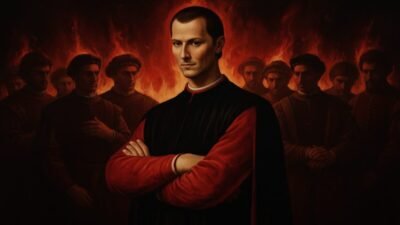
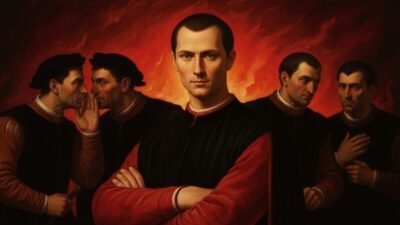
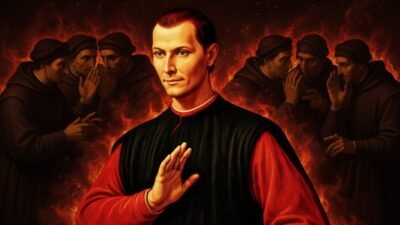
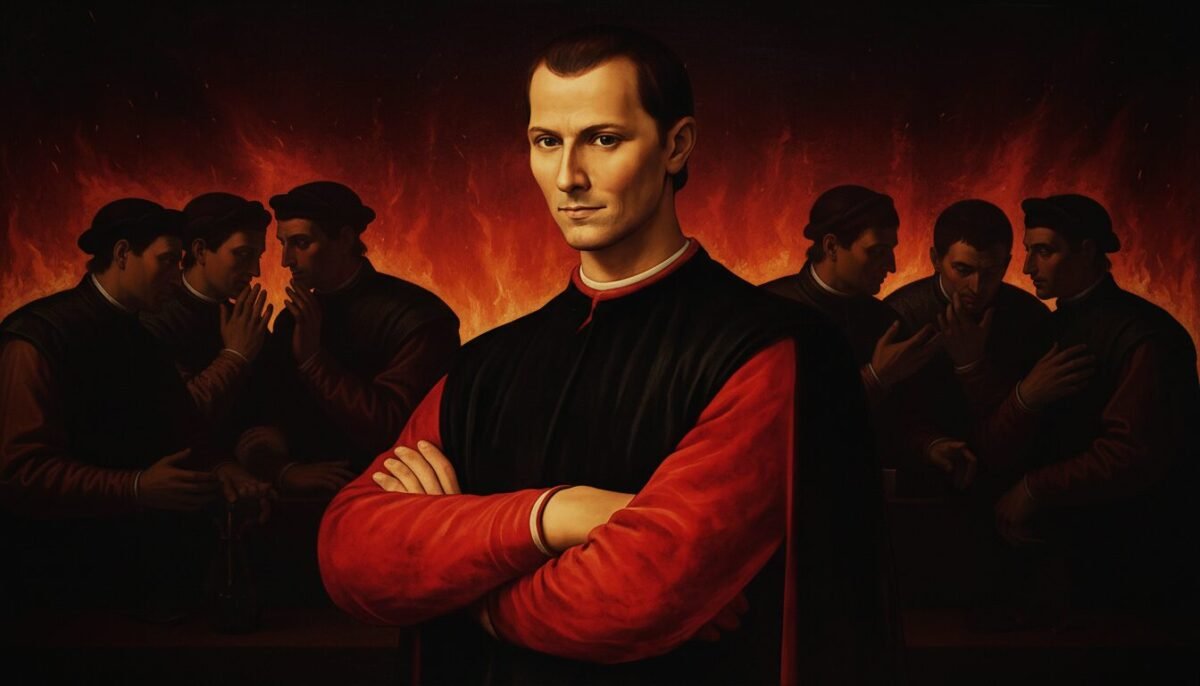
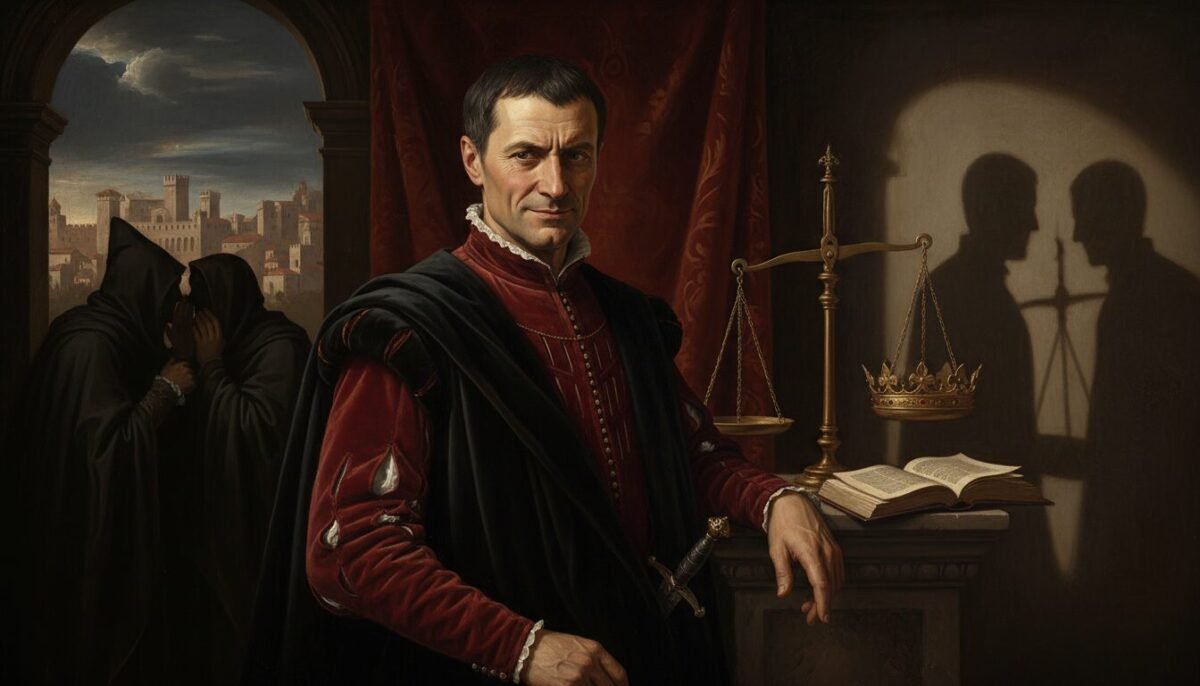
The Renaissance brought a cold splash of water to these idealistic views. Niccolò Machiavelli famously separated power from traditional morality. In his view, a ruler who tries to be “good” in a world full of people who are not will inevitably fail. Machiavelli’s Realpolitik suggested that power is its own justification. If a leader must be cruel to maintain stability, then cruelty is “effective,” and in the realm of power, effectiveness is the only true currency. This shift turned power into a technical craft—a game of strategy rather than a quest for spiritual virtue.
2. The Social Contract: Hobbes, Locke, and the Necessity of Authority
If humans are naturally driven to seek power, why do we ever agree to be ruled? This is the central question of Social Contract theory, which seeks to explain the legitimacy of the state.
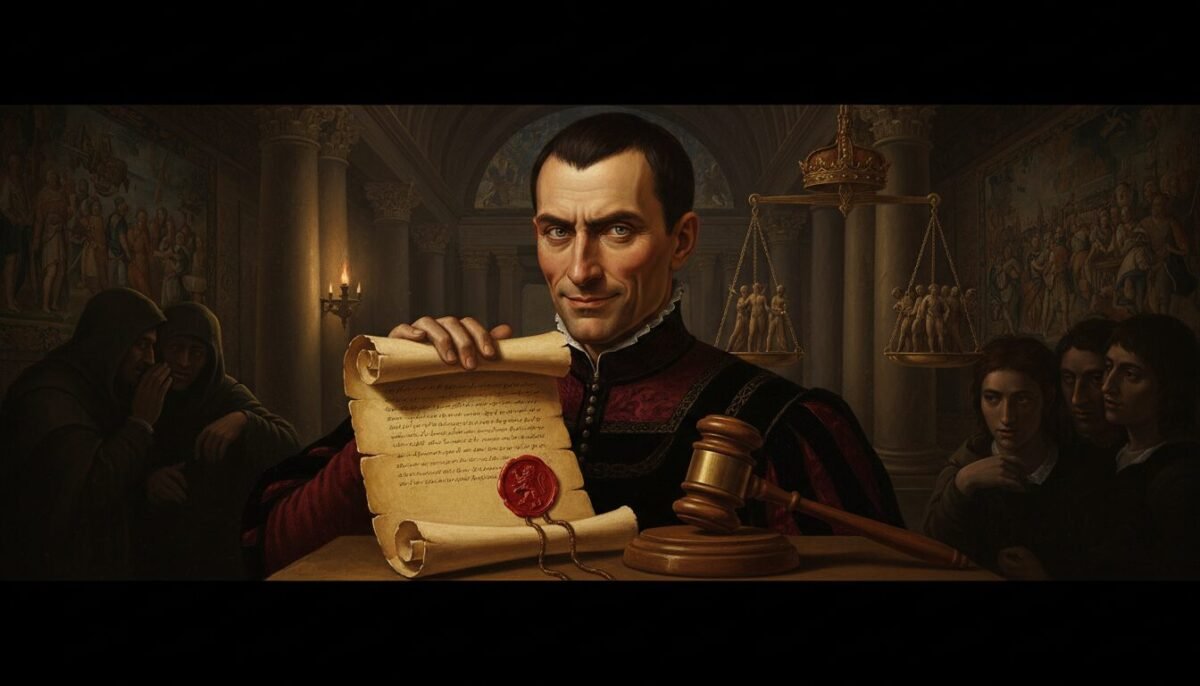
Thomas Hobbes and the Leviathan
Writing during the chaos of the English Civil War, Thomas Hobbes had a bleak view of human nature. He imagined a “State of Nature”—a world without government—where life was “solitary, poor, nasty, brutish, and short.” In this state, every human has a “right to all things,” leading to a perpetual war of all against all. To escape this nightmare, Hobbes argued that rational individuals would choose to trade their absolute freedom for security. They enter a contract to surrender their power to a “Leviathan”—an absolute sovereign—who keeps the peace through the threat of overwhelming force. For Hobbes, the alternative to absolute power isn’t freedom; it’s chaos.
John Locke’s Counter-Argument
John Locke offered a much more optimistic alternative. He argued that even in the State of Nature, humans possess “natural rights” to life, liberty, and property. We don’t create a government because we are monsters who need to be caged, but because we need an impartial judge to protect those rights. In Locke’s view, power is a fiduciary trust. The government is like a security guard hired by the citizens. If the guard starts stealing from the house or abusing the residents, the contract is void, and the people have a moral right to revolt. This idea became the bedrock of modern democracy and the American Declaration of Independence.
The tension between Hobbes and Locke remains at the heart of every political debate today. When we argue about surveillance versus privacy, or regulation versus free markets, we are essentially asking: Are we more afraid of each other (Hobbes), or are we more afraid of the government (Locke)?
3. Nietzsche and the Will to Power: The Psychology of the Individual
While the social contract theorists focused on how power works in a state, Friedrich Nietzsche looked inward at how power works in the soul. He proposed that the fundamental driving force of all living things is not the “will to survive,” but the “Will to Power.”
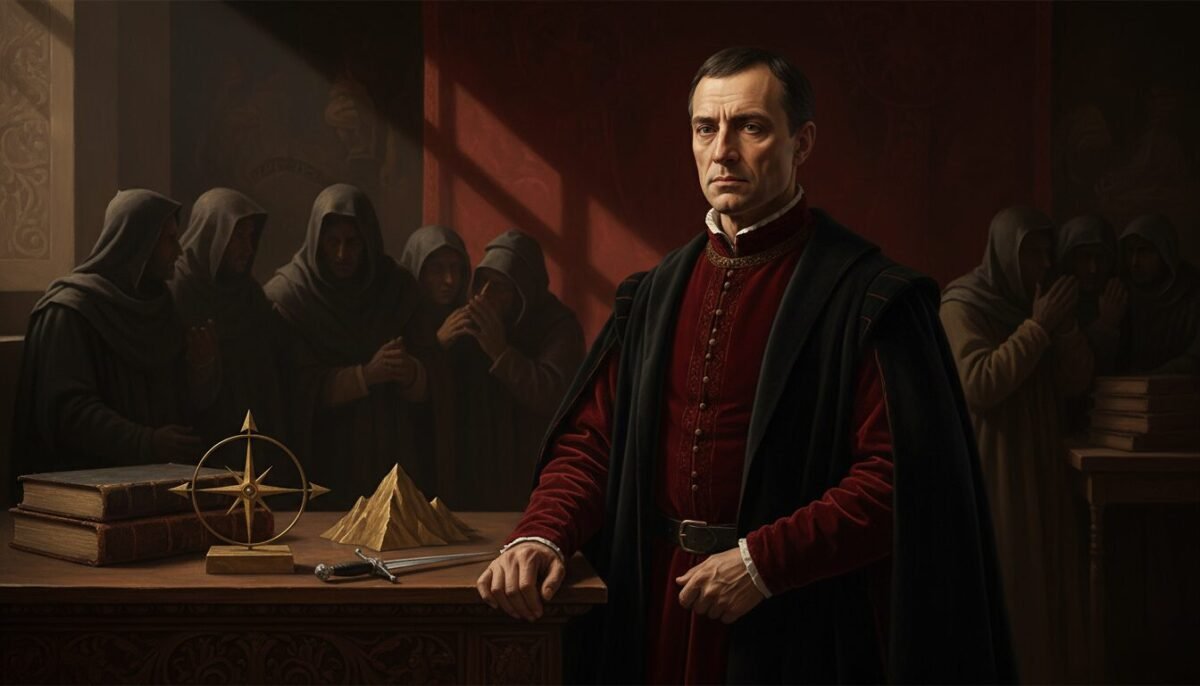
For Nietzsche, “power” wasn’t necessarily about sitting on a throne. It was a biological and psychological drive to expand, to overcome resistance, and to impose one’s own values upon the world. A tree growing through a crack in the sidewalk is expressing the Will to Power just as much as a conquering general.
Beyond Good and Evil
Nietzsche challenged what he called “slave morality”—the traditional religious and ethical systems that prize humility, pity, and self-denial. He argued that these values were invented by the weak to restrain the strong. In his view, the “noble” individual seeks to transcend these inherited rules to become an Übermensch (Overman), someone who creates their own values and finds meaning through self-mastery.
Power as Creative Expression
Crucially, Nietzsche saw the highest form of power as creative rather than destructive. The artist who masters a difficult medium, the athlete who pushes their body to new limits, and the thinker who breaks an old paradigm are all exercising the Will to Power. It is the drive to say “Yes” to one’s own existence and to shape reality according to one’s own vision. When we lose this drive, Nietzsche warned, we fall into nihilism—a state of purposelessness that he believed would be the greatest crisis of the modern age.
4. Foucault and Systemic Power: The Web of Knowledge and Control
In the 20th century, Michel Foucault revolutionized our understanding of power by arguing that it isn’t something people “have” or “hold.” Instead, power is a web that we are all caught in. He moved away from the idea of “sovereign power” (the King at the top) to what he called “capillary power.”
Like the tiny blood vessels in your body, capillary power reaches into the smallest corners of everyday life. It exists in the way we talk, the way we categorize people, and the institutions we inhabit.
Knowledge is Power
Foucault famously linked knowledge and power (pouvoir-savoir). He argued that those who define what is “normal,” “sane,” or “true” hold the ultimate power. For example, in the 18th century, “madness” was often seen as a spiritual state; by the 19th century, it was redefined as a medical “illness.” This change in knowledge gave doctors and psychiatrists immense power over the bodies and lives of those labeled “insane.” Power, therefore, is not just about physical force; it is about the discourse that shapes how we perceive reality.
Biopower and the Regulation of Bodies
Foucault also introduced the concept of Biopower. This is the practice of modern states to manage and regulate the biological lives of their citizens—birth rates, public health, hygiene, and life expectancy. Think about how modern institutions like schools, hospitals, and prisons are structured. They all use schedules, examinations, and surveillance (the “Panopticon” effect) to turn individuals into “docile bodies” that are productive and easy to govern. In Foucault’s world, there is no “outside” to power; even our very identities are products of the power structures we live within.
5. The Ethics of Power: Does Authority Inevitably Corrupt?
We have all heard the famous maxim by Lord Acton: “Power tends to corrupt, and absolute power corrupts absolutely.” But is this a psychological law or just a common observation?
The Psychology of the Hierarchy
Modern psychological studies, such as the famous (and controversial) Stanford Prison Experiment, suggest that when humans are placed in positions of arbitrary authority, they often begin to dehumanize those beneath them. High-status individuals have been shown in various studies to exhibit less empathy and a greater tendency to break rules. This is often called the “hubris syndrome.” When someone gains power, their brain’s “mirror neuron” system—responsible for empathy—can actually become less active. They stop “feeling” the perspectives of others because they no longer need to negotiate to get what they want.
Can “Good” Power Exist?
If power inherently reduces empathy, can it ever be a tool for social justice? The answer lies in the accountability structures we build. Power is most dangerous when it is opaque and concentrated. When power is transparent, decentralized, and subject to constant critique, it can be harnessed for the collective good. Movements for civil rights or environmental protection use “power to” (the capacity to organize) to challenge the “power over” of oppressive systems. The goal is not to eliminate power—which is impossible—but to transform it from a tool of domination into a tool of liberation.
6. Power in the Modern World: Identity, Governance, and Social Hierarchy
Today, we live in a world that would baffle Hobbes and fascinate Foucault. Our power structures have shifted from the physical realm to the digital and the psychological.
The Algorithmic Sovereign
In the past, power was visible: a crown, a uniform, or a skyscraper. Today, some of the most potent power is invisible. Algorithms determine what news we see, which jobs we are offered, and even who we date. This is a new form of “soft power” that shapes our desires and identities without us ever feeling coerced. We are not being forced to obey; we are being nudged to conform.
The Tension of Democratic Agency
There is a growing tension between our democratic ideals and the reality of centralized technological power. While the internet was once hailed as a tool for ultimate decentralization (Locke’s dream of individual agency), it has in many ways become a tool for ultimate surveillance (Foucault’s nightmare of the Panopticon). We see this in the “Social Credit” systems being tested in some nations, where every social interaction is quantified and used to grant or deny privileges.
Identity as a Battleground
Modern social hierarchies are also being redefined through the lens of identity. Power is no longer just about who has the most money, but who has the cultural capital to define the narrative. We see a constant struggle over language and symbols, as different groups vie for the power to define their own place in the social hierarchy. This is the “Will to Power” playing out in the 21st-century town square.
Power is not a “thing” we can opt out of. It is the very fabric of human interaction. By studying the evolution of these ideas—from the virtuous aspirations of Aristotle to the systemic critiques of Foucault—we gain the critical tools to navigate the world. We learn to recognize when power is being used to protect us and when it is being used to diminish us. Ultimately, the study of power is the study of ourselves: our fears, our ambitions, and our enduring struggle to define what it means to be free.
Frequently Asked Questions
Is power inherently evil?
No. Power is a neutral capacity, like fire. It can cook a meal (create social order and progress) or burn down a house (oppression and corruption). Its moral value depends entirely on how it is exercised and the presence of accountability.
What is the difference between authority and power?
Power is the ability to influence or control others, often through force or wealth. Authority is the legitimate right to exercise that power, usually granted by law, tradition, or a social contract.
Can a society exist without power structures?
Philosophically, it is highly unlikely. Even in “leaderless” groups, informal power structures emerge based on charisma, expertise, or social influence. The goal of most political philosophy is not to abolish power, but to make it visible and just.
If you found this exploration of the human psyche and political authority thought-provoking, you might enjoy our other deep dives into the mechanics of the mind and society:
- Machiavelli & Political Philosophy: The Art of the Possible
- Understanding Machiavellianism: The Psychology of Manipulation
- Influence & Leadership: How True Authority is Built
- Comparative Philosophy: Eastern vs. Western Views on Authority
Want more deep dives into the psychological foundations of our world? Subscribe to the DeepPsyche newsletter for weekly insights delivered straight to your inbox.