

Imagine you are sitting in a high-stakes boardroom or watching a political drama unfold on screen. You see a character who doesn’t raise their voice, doesn’t lose their temper, and certainly doesn’t let “feelings” get in the way of a billion-dollar merger or a legislative victory. They are cold, calculated, and remarkably effective. While the rest of the world operates on a diet of empathy and social niceties, these individuals move pieces across a chessboard that most people don’t even realize they are standing on.
Why is it that we are simultaneously repelled by and deeply drawn to the cold-blooded strategies of figures like Frank Underwood or Logan Roy? We are taught from childhood that honesty is the best policy and that kindness wins the day. Yet, history and modern corporate hierarchies often tell a different story—one where the pragmatist, the manipulator, and the strategist take the crown. This creates a profound moral and psychological paradox: we condemn the methods, but we cannot help but admire the results. This fascination is not a fluke; it is a window into a psychological trait that has shaped human civilization for centuries: Machiavellianism.
1. The Historical Legacy: From Niccolò Machiavelli to the Dark Triad
To understand why this trait carries such weight today, we have to travel back to 16th-century Florence. Niccolò Machiavelli was not a “villain” in the cartoonish sense; he was a diplomat and a civil servant who had seen the brutal reality of Italian politics firsthand. When he wrote The Prince in 1513, he wasn’t trying to create a manual for evil. He was writing a survival guide for a world where “the way men live is so far removed from the way they ought to live.”
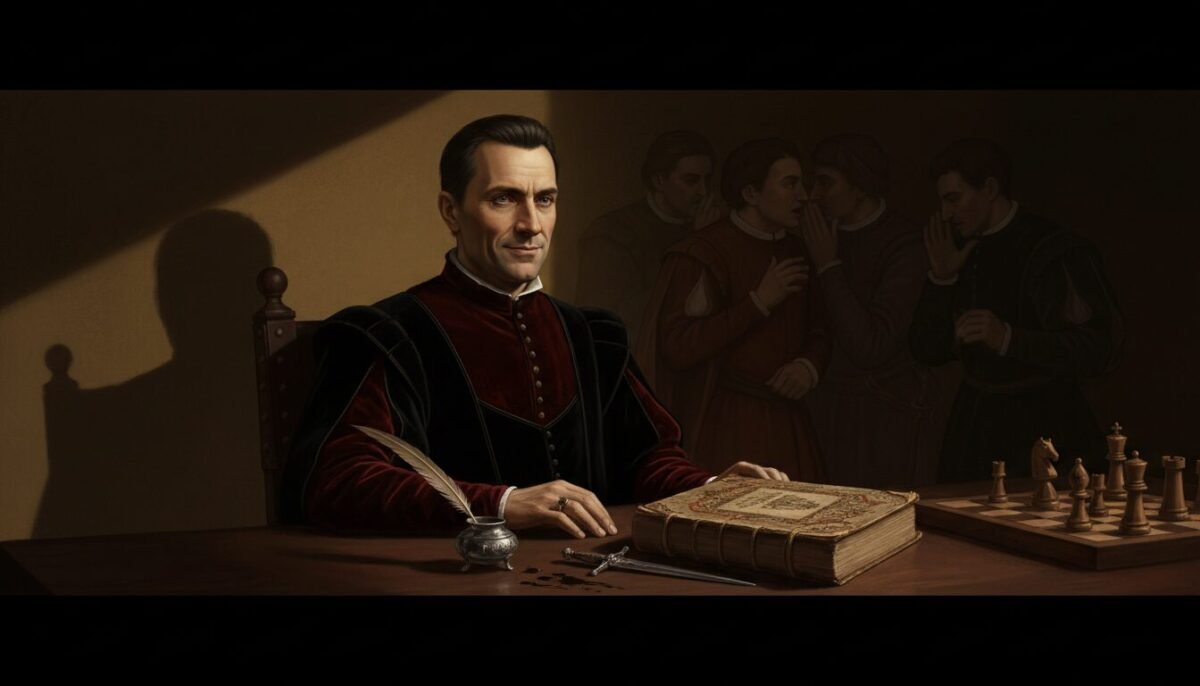
Machiavelli’s core argument was revolutionary and, to many, blasphemous: a leader must be prepared to act against faith, against charity, against humanity, and against religion if it means maintaining the state. He famously posited that it is “much safer to be feared than loved,” provided one avoids being hated. This departure from traditional Christian morality marked the birth of political realism. For centuries, “Machiavellian” was used as a slur, a synonym for the devilish and the deceitful.
However, in the mid-20th century, this political philosophy transitioned into a formal psychological construct. In the 1970s, social psychologists Richard Christie and Florence Geis wondered if the strategies Machiavelli described were actually a measurable personality trait. They developed the Mach-IV scale, a series of statements designed to see how much an individual agreed with Machiavelli’s world-view. Statements like “The best way to handle people is to tell them what they want to hear” or “It is hard to get ahead without cutting corners here and there” became the yardstick for measuring what we now call “High Machs.”
This formalization allowed Machiavellianism to move from the realm of dusty history books into the laboratory. It became recognized as one-third of the “Dark Triad”—a trio of personality traits that also includes Narcissism and Psychopathy. While these three often overlap, Machiavellianism stands out for its intellectualized, long-term approach to social influence.
2. Decoding the Machiavellian Mind: Core Traits and the Dark Triad
What does it actually feel like to be a “High Mach”? If you were to peer into the mind of a highly Machiavellian individual, you wouldn’t necessarily find a monster. Instead, you would find a master of emotional detachment. While most people are swayed by the emotional weight of a situation—guilt, sympathy, or social pressure—the High Mach views these as “noise” that interferes with the “signal” of their objective.

The core of the Machiavellian profile is defined by three pillars:
- Cynicism: A fundamental belief that people are inherently selfish, fickle, and easily manipulated. To a High Mach, “trust” is not a virtue; it is a vulnerability.
- Pragmatism: An intense focus on utility. Every interaction is evaluated based on what it can provide. “Is this person useful to me?” is the silent question behind every handshake.
- Strategic Manipulation: The ability to use subtle social cues, misinformation, or calculated alliances to achieve a goal, often without the target ever realizing they’ve been moved.
It is crucial to distinguish Machiavellianism from its Dark Triad cousins. A Narcissist is driven by ego; they need your admiration and will lash out if their self-image is threatened. A Psychopath is driven by impulse; they seek short-term thrills and often lack the self-control to plan for next year, let alone next decade. In contrast, the Machiavellian is the master of the “cool syndrome.” They are patient. They can wait months or years for a plan to come to fruition. They don’t need the spotlight like the Narcissist, and they aren’t reckless like the Psychopath. They are the architects of the long game.
This emotional “coolness” allows them to navigate high-pressure environments with a level of clarity that others lack. They aren’t paralyzed by the fear of being disliked. In their world, social capital is just another currency to be traded, invested, or spent.
3. The Evolutionary Perspective: Why Strategic Manipulation Persists
If Machiavellianism is so “dark,” why hasn’t evolution weeded it out? In the harsh light of natural selection, traits that don’t serve a purpose usually disappear. The reality is that Machiavellianism persists because it is a highly effective “cheater strategy” in social evolution.
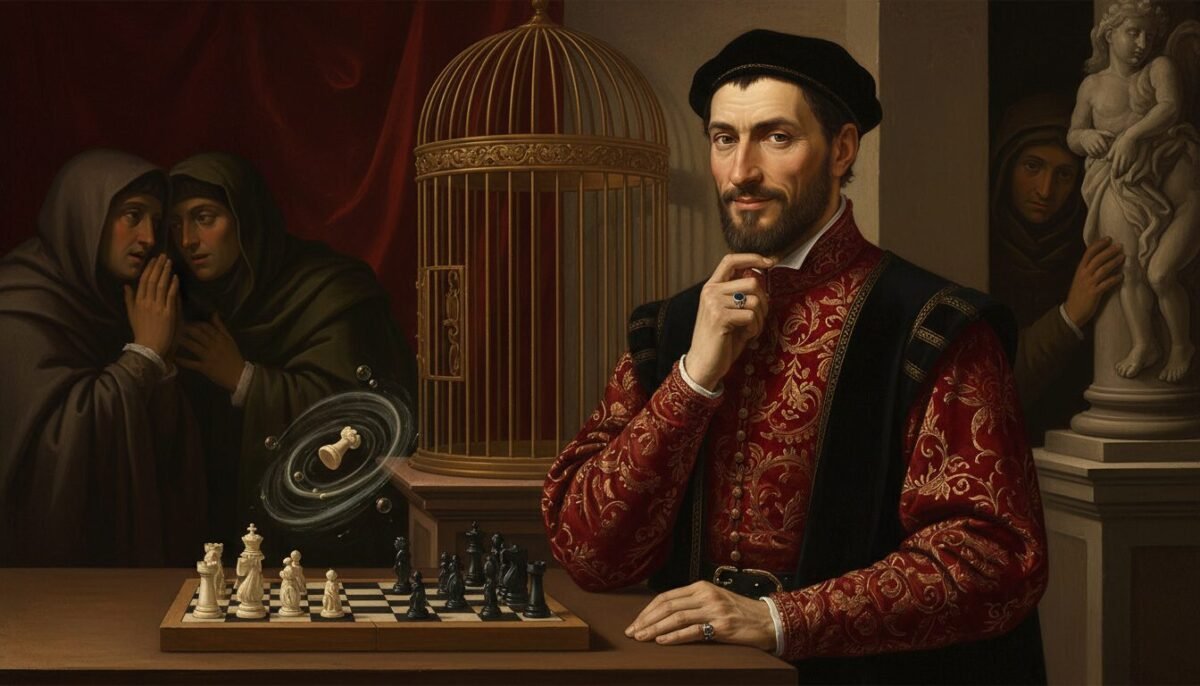
Human society is built on a delicate balance of cooperation and exploitation. For a group to thrive, most members must cooperate. However, if everyone is a perfect cooperator, the environment becomes ripe for a “cheater”—someone who takes the benefits of the group without paying the full cost. In evolutionary biology, this is often discussed in terms of resource acquisition. A Machiavellian individual is adept at navigating social hierarchies to gain access to power, wealth, and mates, often at the expense of those who follow the rules more rigidly.
Consider the “tit-for-tat” strategy in game theory. Most people default to cooperation until they are burned. A Machiavellian, however, is capable of “strategic defection.” They know exactly when to break a promise to maximize their gain while minimizing the social fallout. Because they are skilled at impression management, they often maintain a reputation for being helpful or reliable while secretly pursuing their own agenda. This “wolf in sheep’s clothing” dynamic ensures that their genes and their strategies remain in the human pool. As long as there are hierarchies and limited resources, the strategic manipulator will have an ecological niche to fill.
4. Machiavellianism in the Modern Workplace: Survival of the Strategic
In the modern world, the “state” Machiavelli wrote about has been replaced by the “corporation.” The office is perhaps the most common habitat for the contemporary Machiavellian. Here, the stakes aren’t life and death, but they are promotions, bonuses, and the control of multi-million dollar budgets.
Machiavellian traits often manifest as “political skill.” In many organizations, the person who gets promoted isn’t necessarily the most technically competent; it’s the person who knows how to manage their boss, build the right alliances, and subtly take credit for successes while distancing themselves from failures. This is the fine line between strategic thinking and toxic manipulation. A strategic thinker uses their understanding of the landscape to move the company forward; a toxic Machiavellian uses it to move themselves forward, often leaving a trail of burnt-out colleagues in their wake.
Interestingly, organizations often inadvertently reward Machiavellian behavior, especially during times of crisis. When a company is facing bankruptcy or a hostile takeover, the board of directors rarely looks for a “nice” leader. They look for a “wartime CEO”—someone who can make the cold, hard decisions to lay off thousands of workers or gut a beloved department to save the bottom line. In these moments, the High Mach’s emotional detachment is seen as an asset. They are the ones who can do the “dirty work” without losing sleep, making them indispensable to the power structures they inhabit.
5. The Pop Culture Obsession: Why We Root for the Anti-Hero
Our culture’s obsession with Machiavellian characters—from the Lannisters in Game of Thrones to the Roy family in Succession—suggests that we find something deeply compelling about this trait. But why do we root for people who, in real life, we would likely despise?
The answer lies in the psychological appeal of competence. There is a visceral satisfaction in watching someone who is completely in control of their environment. Most of us feel like victims of circumstance, buffeted by the whims of bosses, bureaucracy, and social expectations. Watching a Machiavellian character navigate these same obstacles with surgical precision provides a form of vicarious power. We think, “If only I could be that detached, I wouldn’t be so stressed.”
Furthermore, these characters allow us to explore our own “shadow” traits safely. According to Carl Jung, the shadow consists of the parts of ourselves we repress—our greed, our desire for power, and our capacity for deception. By watching a High Mach character on screen, we get to exercise those repressed parts of our psyche without the real-world consequences. We admire their honesty about their own selfishness. In a world of “performative virtue,” the Machiavellian’s raw, unapologetic pursuit of power feels, ironically, like a form of truth.
6. Ethical Machiavellianism: Can Calculated Strategy Serve the Greater Good?
This brings us to a provocative question: Can Machiavellianism be used for good? Some psychologists and philosophers suggest the existence of the “Prosocial Machiavellian.” This is an individual who possesses the traits of a High Mach—the strategic mind, the emotional detachment, the political savvy—but uses them to achieve positive social outcomes.
Think of the great leaders of history. Abraham Lincoln was not just a moral giant; he was a master of political manipulation. He handed out patronage jobs, delayed legislation, and played rival factions against each other to ensure the passage of the 13th Amendment. He used “Machiavellian” tactics to achieve a moral end. This is the concept of strategic empathy—understanding exactly how others think and feel, not to comfort them, but to move them toward a specific goal.
The debate on “necessary evils” is central to modern governance. Can a leader be truly ethical if they refuse to get their hands dirty? If a diplomat can prevent a war by deceiving a dictator, is that deception not a moral act? The Prosocial Machiavellian argues that in a complex, often broken world, pure idealism is a luxury we cannot afford. Sometimes, the only way to protect the sheep is to be a wolf who knows how to hunt other wolves.
However, the danger remains. The line between “manipulating for the greater good” and “manipulating for self-interest” is incredibly thin, and the High Mach is an expert at convincing themselves (and others) that their personal gain is actually a public service.
The Raw Reality of Power
Machiavellianism remains a cornerstone of human interaction because it addresses the raw, unvarnished reality of power dynamics. It is the psychological equivalent of a mirror that refuses to use a flattering filter. While we may prefer to view the world through the lens of cooperation and kindness, the Machiavellian reminds us that strategy, pragmatism, and the calculated use of influence are the engines that often drive history, business, and social change.
Whether we view it as a dark stain on the human soul or a necessary tool for survival, Machiavellianism is not going anywhere. By understanding its mechanics, we don’t just learn how to spot the manipulators in our lives; we learn something fundamental about the architecture of human ambition and the complex dance of power that we all, in one way or another, are part of.
Want to dive deeper into the human psyche? Subscribe to our newsletter for weekly insights into personality psychology and social dynamics.
Frequently Asked Questions
Is Machiavellianism a mental illness?
No, Machiavellianism is not a clinical diagnosis or a mental illness. It is considered a personality trait that exists on a spectrum. While “High Machs” may exhibit behaviors that are socially problematic, they are generally high-functioning and well-adjusted to their environments.
Can a person change their Machiavellian tendencies?
Personality traits are relatively stable over time, but they are not set in stone. Through self-awareness and cognitive-behavioral approaches, individuals can learn to temper their manipulative impulses with more authentic social connections and ethical considerations.
How can I protect myself from a Machiavellian at work?
The best defense is transparency. Machiavellians thrive in “gray areas” and behind-the-scenes dealings. By keeping clear records, communicating openly with your team, and setting firm boundaries, you reduce the “information asymmetry” that a High Mach needs to operate effectively.
Are all leaders Machiavellian?
Not all, but many successful leaders possess some degree of Machiavellian intelligence. The ability to think strategically and navigate complex social webs is often a prerequisite for high-level leadership. The difference lies in whether those skills are used for the benefit of the organization or for purely selfish ends.
Explore more on these topics: