
Is it truly better to be feared than loved, or is this centuries-old maxim a recipe for modern social ruin? Imagine a high-stakes boardroom negotiation where one executive remains unnervingly calm, seemingly three steps ahead of everyone else, while another relies on charisma and consensus. The former often wins the day, but at what cost to their reputation? While the term “Machiavellian” is frequently used as a convenient label for manipulative behavior or “office snakes,” its historical depth and psychological complexity are often misunderstood or oversimplified.
To understand Machiavellianism is to look into a mirror that reflects the darker, more pragmatic corners of human nature. It is not merely a synonym for “evil.” Rather, it represents a specific worldview—one that prioritizes effectiveness over ego and results over sentiment. This analysis provides a comprehensive journey through the evolution of Machiavellianism, tracing its origins in the blood-soaked politics of Renaissance Italy to its status as a core trait in the psychological Dark Triad and its pervasive manifestation in today’s corporate power plays.
1. The Historical Origins: Niccolò Machiavelli and the Birth of Realism
To understand the philosophy, we must first understand the man and his era. Niccolò Machiavelli was not a shadowy villain plotting in a dungeon; he was a civil servant, a diplomat, and a patriot living in a Florence that was constantly under threat. The political climate of 16th-century Italy was a chaotic mosaic of warring city-states, foreign invasions, and shifting alliances. Power was not something granted by divine right; it was something seized, held, and frequently lost through betrayal.
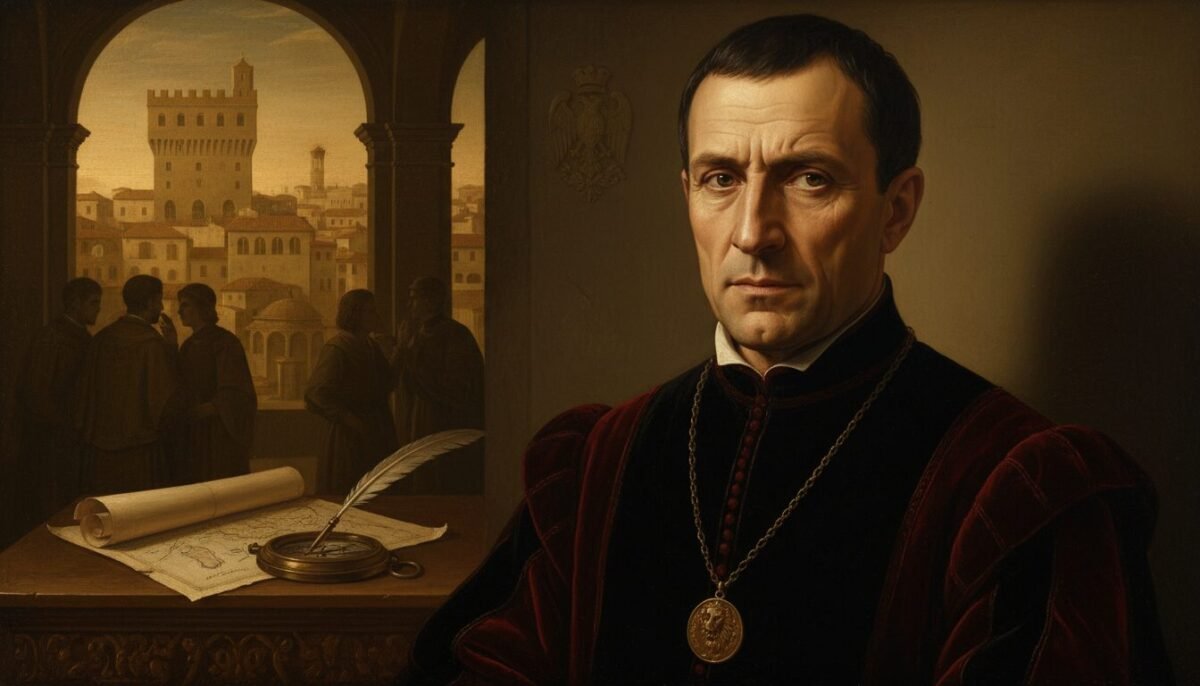
Machiavelli’s most famous work, The Prince, was written during his forced exile after the Medici family returned to power and ousted him from his diplomatic post. Having been imprisoned and tortured, his worldview was forged in the fires of personal and political failure. He didn’t write The Prince to be a “bad person”; he wrote it as a survival guide for rulers who were tired of losing. At the time, political literature followed a genre called “mirrors for princes,” which advised leaders to be pious, merciful, and kind. Machiavelli broke this tradition entirely, replacing idealized fantasies with cold political realism.
He argued that a leader who tries to be “good” in a world full of people who are “not good” will inevitably come to ruin. His exile influenced a cynical yet deeply pragmatic perspective: the state’s stability was the highest moral good, and any action taken to preserve that stability was justified. This was the birth of modern political science—the realization that politics is not about how people should live, but how they actually behave. By stripping away the religious and moral veneer of his time, Machiavelli exposed the raw mechanics of power that had always existed but were rarely discussed so nakedly.
2. Core Philosophy: Pragmatism and the Separation of Ethics from Power
The heartbeat of Machiavellianism is the radical separation of private morality from public necessity. In the popular imagination, this is boiled down to the phrase “the end justifies the means.” While Machiavelli never used those exact words, the sentiment permeates his work. In his view, a ruler’s primary duty is the security and prosperity of the state. If achieving that requires deception, then deception is not a vice—it is a tool.

Central to this is the concept of Virtù. In a traditional Christian context, virtue meant humility and kindness. For Machiavelli, Virtù meant something closer to “prowess” or “manliness”—the ability of a leader to adapt to the whims of Fortuna (luck) through sheer will and intelligence. To navigate this, he famously proposed the strategy of the Lion and the Fox. A leader must be a lion to frighten the wolves (brute strength) and a fox to recognize the traps (cunning). One without the other is insufficient; strength without wit leads to ambush, and wit without strength leads to overthrow.
Machiavelli argued that a leader must learn “how not to be good.” This isn’t an invitation to cruelty for cruelty’s sake—in fact, he warned that senseless cruelty makes a leader hated, which is politically dangerous. Instead, he advocated for “well-used cruelty”: swift, decisive actions that prevent long-term chaos. By separating ethics from power, Machiavelli created a framework where the “moral” choice is whatever produces the most stable and successful outcome for the collective, even if it stains the individual leader’s soul. This pragmatic detachment remains the cornerstone of Machiavelli & Political Philosophy today.
3. Machiavellianism in Psychology: A Pillar of the Dark Triad
In the mid-20th century, Machiavellianism migrated from the halls of political science into the laboratories of social psychology. In the 1970s, psychologists Richard Christie and Florence Geis sought to measure “Machiavellian” tendencies in the general population. They developed the Mach-IV scale, a personality survey that asks individuals to rate their agreement with statements like, “The best way to handle people is to tell them what they want to hear.”
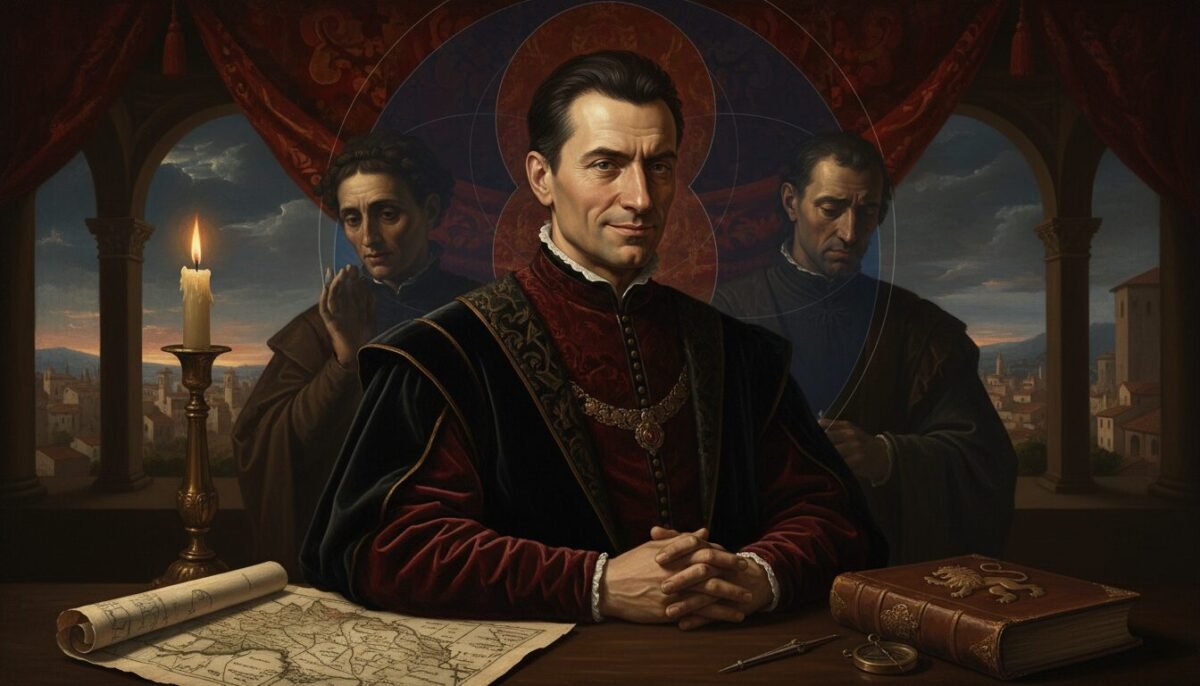
Today, Machiavellianism is recognized as one of the three pillars of the Dark Triad, alongside Narcissism and Psychopathy. While they share some overlap, they are distinct. Narcissists crave admiration; psychopaths lack empathy and impulse control. “High Machs,” however, are defined by a specific set of traits:
- Cynicism: A fundamental belief that people are untrustworthy, self-serving, and easily manipulated.
- Emotional Detachment: The ability to remain “cool” under pressure, viewing social interactions as a game of chess rather than emotional connections.
- Interpersonal Manipulation: A preference for subtle influence, strategic networking, and the calculated use of flattery or guilt to achieve goals.
Unlike psychopaths, High Machs are often highly successful in social environments because they are patient and can delay gratification. They don’t break the rules for a cheap thrill; they bend the rules when it serves a long-term strategy. Understanding Machiavellianism in this light helps us see it not as a “mental illness,” but as a personality strategy focused on self-interest and social maneuvering. It is a calculated approach to human interaction that treats others as means to an end rather than ends in themselves.
4. Historical Case Studies: Machiavellian Tactics Through the Ages
History is littered with figures who embodied the “Fox and the Lion.” Machiavelli’s primary contemporary inspiration was Cesare Borgia. Borgia was ruthless, once inviting his enemies to a “peace dinner” only to have them strangled. Machiavelli admired Borgia not for his bloodthirst, but for his efficiency. Borgia turned a chaotic region into a stable one through decisive, albeit brutal, action. He was the “Ideal Prince” because he did what was necessary, regardless of his reputation.
Moving forward to the 19th century, we see Otto von Bismarck, the architect of the German Empire. Bismarck was the master of Realpolitik—politics based on practical objectives rather than ideological or moral notions. He famously stated that the great questions of the day would be decided not by speeches and majority decisions, but by “iron and blood.” Bismarck’s ability to manipulate foreign powers into declaring war on him—making Prussia look like the victim while he expanded its territory—is a masterclass in Machiavellian strategy.
In the modern era, we see these traits in political figures who prioritize “triangulation” and strategic pragmatism over ideological purity. These leaders understand that to pass a landmark law, they might have to make “dirty” deals behind closed doors. The lesson from these historical figures is clear: High Mach tactics often lead to immense short-term success and structural change, but they frequently leave a legacy of distrust that can eventually undermine the very systems they built. The success of the Machiavellian often depends on their ability to hide their Machiavellianism.
5. Machiavellianism in the Modern Corporate Environment
The Renaissance court has been replaced by the corporate boardroom, but the dynamics of Power & Human Nature remain the same. In the modern workplace, Machiavellianism manifests as “office politics.” High Mach individuals are often the ones who master the art of strategic networking—knowing exactly who holds the power and aligning themselves accordingly. They are experts at information control, sharing just enough to seem helpful while keeping the “keys to the kingdom” for themselves.
A High Mach leader can be incredibly effective in a crisis. They aren’t paralyzed by the need to be liked, allowing them to make the difficult layoffs or pivot the company in a way that ensures survival. However, this often comes at the cost of a toxic workplace culture. When employees feel they are being “played” or that their boss is constantly calculating their utility, trust evaporates. Without trust, long-term collaboration becomes impossible, leading to high turnover and internal sabotage.
We also see a digital evolution of these traits in social media influence and digital branding. The modern “influencer” or “personal brand” is often a carefully constructed facade designed to manipulate public perception for profit. This is Machiavellianism at scale: the calculated curation of an “authentic” image to gain social and financial capital. In this environment, the “Fox” doesn’t hide in a palace; they hide behind an algorithm, using data and psychological triggers to influence behavior without the audience ever realizing they are being steered.
6. Ethical Analysis: Pragmatic Success vs. Moral Integrity
This brings us to the ultimate debate: Is Machiavellianism inherently evil, or is it a necessary tool for survival in a competitive world? If you are a CEO trying to save 5,000 jobs by making a deceptive deal with a competitor, are you a villain or a hero? This is the gray area where Influence & Leadership meet ethics.
The primary cost of Machiavellianism is the erosion of social capital. Manipulation works best when it is invisible. Once a person is “found out,” their ability to influence others diminishes instantly. Trust is the currency of human cooperation, and the Machiavellian is essentially spending that currency to buy short-term strategic gains. Eventually, the account runs dry.
However, some argue for the existence of “Prosocial Machiavellianism.” This involves using strategic thinking, cunning, and even a bit of deception to achieve goals that benefit the greater good. Think of a diplomat who uses “white lies” to keep two warring nations at the peace table. In this context, the Machiavellian toolkit is used as a shield for the vulnerable rather than a sword for the ambitious. Balancing moral integrity with the realities of competitive power dynamics requires a high level of self-awareness. It suggests that while we may need to use the “Fox’s” tactics, we should never adopt the “Fox’s” cynical soul. The challenge is to remain effective in a “not good” world without losing the very qualities that make the world worth saving.
Machiavellianism has evolved from a 16th-century survival guide for Italian princes into a complex psychological profile and a staple of modern strategic thought. While often viewed through a negative lens, its core principles of pragmatism and realism remain essential for understanding power dynamics in any era. Whether we like it or not, the “Lion and the Fox” still roam the halls of power, and understanding their tactics is the first step toward navigating the world they help shape.
Frequently Asked Questions
Is Machiavellianism the same as being a sociopath?
No. While both involve a lack of empathy, Machiavellians are generally more capable of following social norms and planning for the long term. Sociopaths tend to be more impulsive and erratic, whereas Machiavellians are calculated and strategic.
Can a Machiavellian person be a good leader?
Yes, in terms of efficiency and achieving goals. However, they often struggle with employee retention and building a culture of trust. Their effectiveness is usually highest in high-stakes, competitive, or crisis-driven environments.
How can I protect myself from a Machiavellian colleague?
The best defense is transparency. Machiavellian tactics thrive in secrecy and “he-said-she-said” environments. Keep written records of agreements, communicate clearly in group settings, and focus on building strong, genuine alliances with others.
Curious about the other sides of the human shadow? Explore our further reading on the Dark Triad to understand how to identify and navigate complex personality types in your professional and personal life.