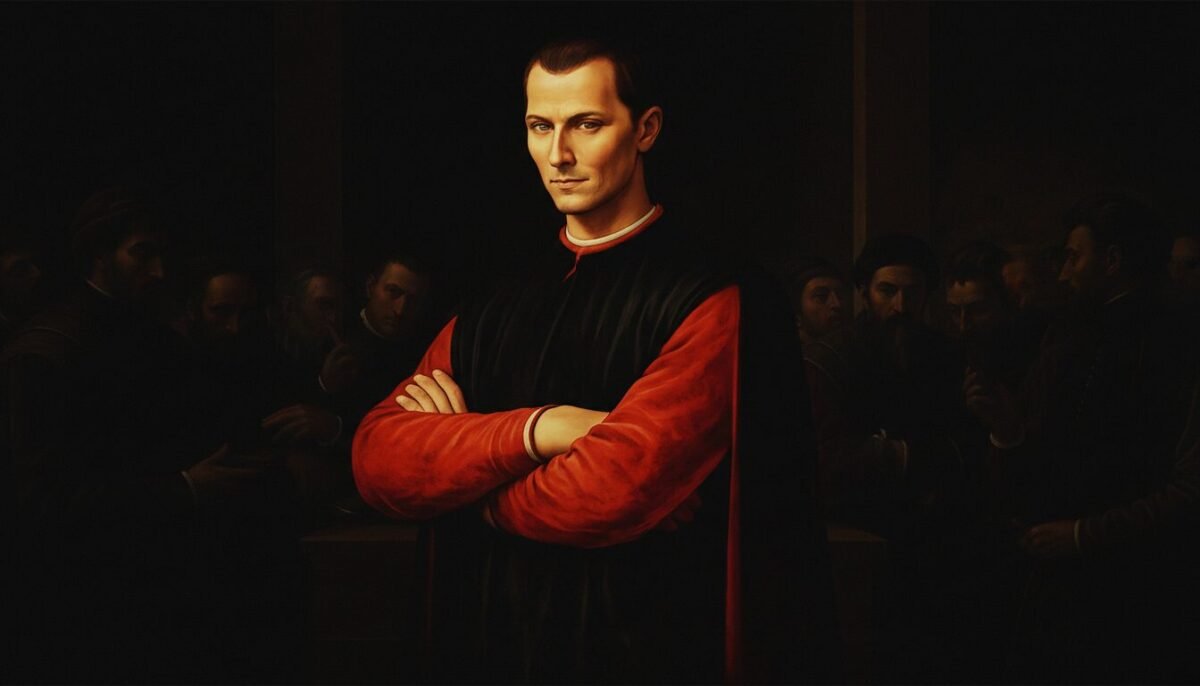
Imagine a king standing alone in the middle of a vast, sun-scorched desert. He wears a crown of solid gold, draped in robes of the finest silk, clutching a scepter that symbolizes his dominion over millions. But there is no one there to see him. There are no subjects to bow, no soldiers to march, and no tax collectors to fill his coffers. In this isolation, does his crown hold any weight? Is he still a king, or is he merely a man in an expensive costume? The answer reveals a profound truth about the world we inhabit: power is not a physical property like mass or temperature; it is a collective hallucination, a shared story we all agree to believe in until, one day, we don’t.
Most of us move through life viewing power as a concrete, inherent trait possessed by certain individuals or institutions. We look at a CEO, a government official, or a high-ranking officer and feel a sense of inherent subordination. This leads to a pervasive feeling of helplessness against systemic influence. We feel like cogs in a machine that is far too large and far too “real” to be challenged. However, when we pull back the curtain, we find that the “machine” is held together by nothing more than psychological threads and social scripts. By deconstructing this “illusion of power,” we can begin to understand how authority is socially constructed, why our brains are wired to obey it, and how these seemingly monolithic structures are actually far more fragile than they appear.
1. Defining the Illusion: Power as a Social and Psychological Construct
To understand the illusion, we must first distinguish between two very different types of influence: “power-over” and “power-to.” Power-over is the traditional model of coercion and dominance—the ability of one person to force another to act against their will. Power-to, on the other hand, refers to capacity and agency—the collective ability to achieve a goal. The illusion of power often stems from our tendency to mistake the former for an immutable law of nature, rather than a temporary social arrangement.
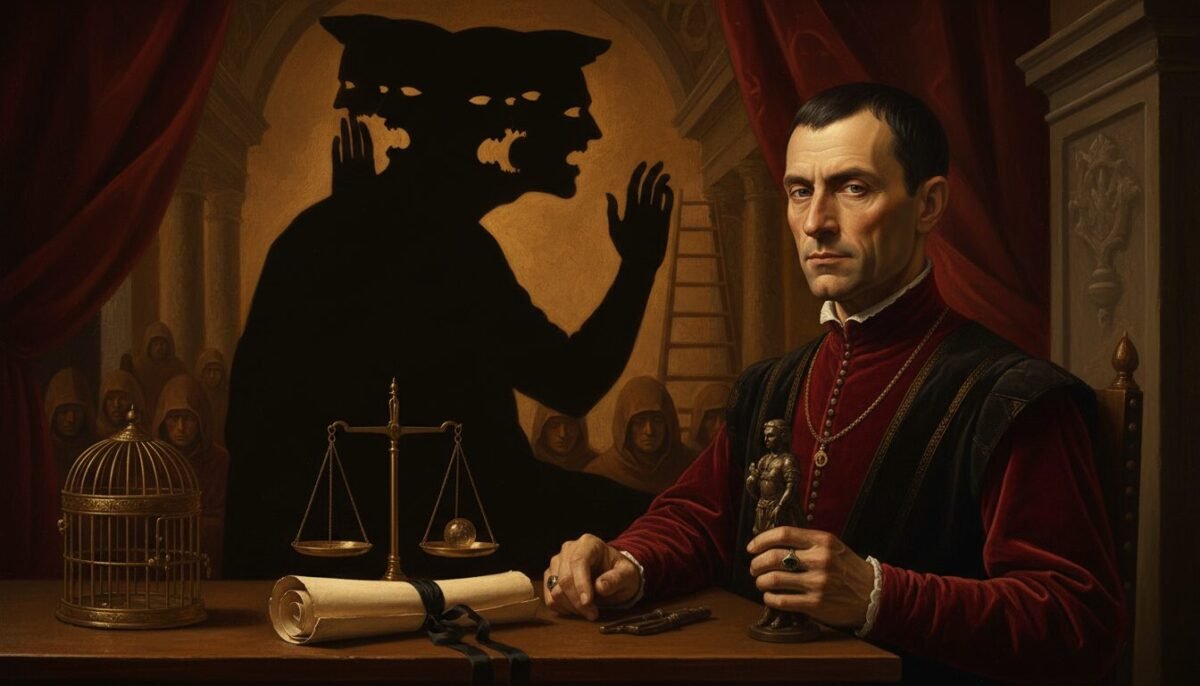
The philosopher Michel Foucault revolutionized our understanding of this dynamic. He argued that power is not a commodity—it isn’t something a person “has” or “holds” like a bag of gold. Instead, power is a “web of relations.” It exists only in the interactions between people. It is fluid, shifting, and omnipresent. In Foucault’s view, power is not just top-down oppression; it is the very fabric of our social reality. It defines what we consider “normal,” “sane,” or “true.” When you stop at a red light on a deserted road at 3:00 AM, you aren’t obeying a person; you are participating in a web of relations that maintains social order.
This brings us to the concept of social stratification. Every society organizes itself into hierarchies, but these hierarchies rely entirely on shared belief systems. In ancient Egypt, the Pharaoh’s power rested on the belief that he was a living god. In modern capitalism, a billionaire’s power rests on the collective belief in the value of digital currency and property rights. If that belief vanishes—as it has during hyperinflation or revolution—the power evaporates instantly. Perceived authority functions as a psychological shortcut; it allows us to navigate complex social environments without having to renegotiate every single interaction. We obey the “manager” because the title provides a script for how to behave, saving us the cognitive load of questioning the entire corporate structure every morning.
Understanding Power & Human Nature requires us to see that these structures are not built of stone, but of consent. Even the most tyrannical regimes require a minimum level of cooperation from the governed to function. Without the clerk to file the papers, the soldier to pull the trigger, and the citizen to pay the tax, the “ruler” is just the man in the desert.
2. The Architecture of Authority: Symbols, Titles, and Rituals
If power is an illusion, how is it maintained so effectively? The answer lies in the “theatre of power.” Institutions invest heavily in symbolic power to reinforce their status. Think about the architecture of a high court or a central bank. These buildings are often designed with massive stone pillars, high ceilings, and intimidating facades. They are meant to make the individual feel small and the institution feel eternal. This is not accidental; it is a psychological tactic to cement the perception of invincibility.
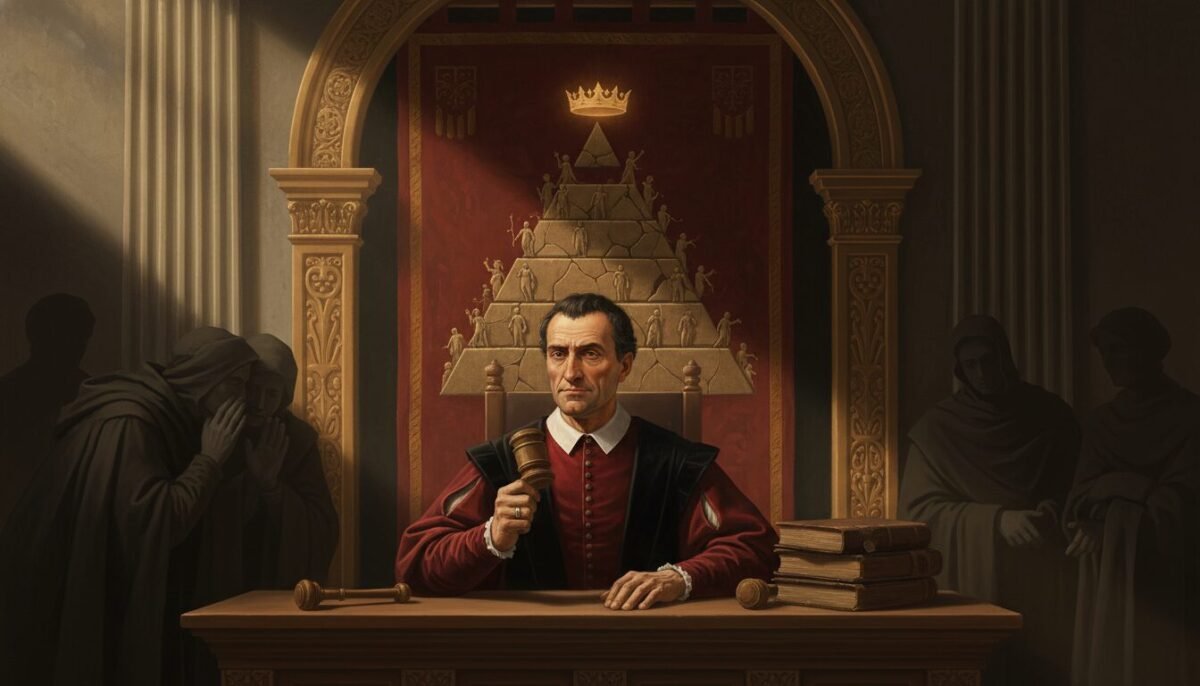
Symbols and uniforms play a crucial role in this architecture. A person in a white lab coat is perceived as an expert; a person in a blue uniform with a badge is perceived as an agent of the law. These garments act as “authority triggers.” They signal to our brains that we should switch from critical thinking to a mode of deference. Language, too, is a tool of reinforcement. The use of specialized jargon, formal titles (Your Honor, CEO, Doctor), and “legalese” creates a barrier to entry, making the layperson feel dependent on the “initiated” members of the hierarchy.
Beyond symbols, we have ritualized obedience. Our lives are filled with daily routines that quietly reinforce hierarchies. In schools, children must raise their hands to speak and move when a bell rings. In workplaces, employees “clock in” and follow “standard operating procedures.” These rituals are not just about efficiency; they are about the normalization of surveillance and control. When we repeat these actions daily, the hierarchy becomes “invisible” to us. It becomes the background noise of our lives, making it much harder to question.
This “theatre” creates an aura of invincibility. When a government holds a massive military parade, it isn’t just showing off its hardware; it is performing a ritual designed to discourage dissent by making resistance seem futile. However, this spectacle is often a mask for underlying weakness. The more an institution relies on outward displays of force and rigid ritual, the more it usually fears the loss of its psychological grip on the population.
3. The Psychology of Obedience: Why We Uphold the Illusion
Why do we go along with it? Even when a hierarchy is clearly unfair or irrational, the human tendency to defer to perceived authority is startlingly strong. The most famous exploration of this is the Milgram Experiment. In the 1960s, psychologist Stanley Milgram showed that ordinary people would administer what they believed were lethal electric shocks to a stranger, simply because a man in a lab coat told them to. The participants weren’t sadists; they were simply caught in the psychological trap of deference to an “expert.”
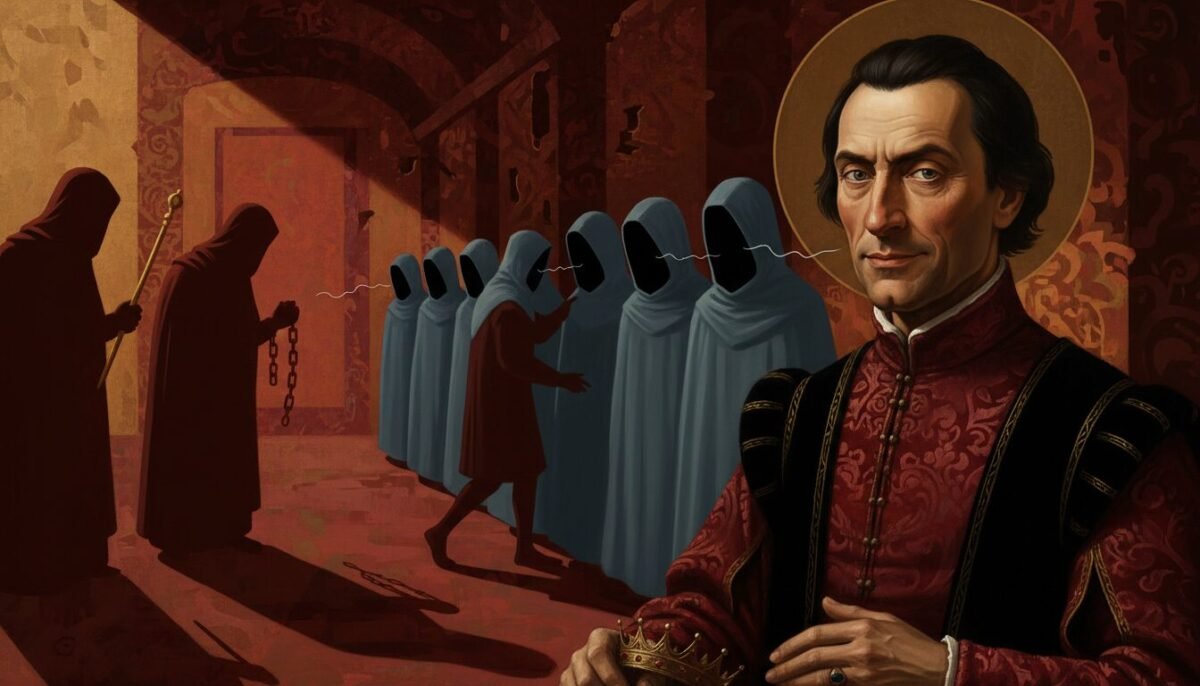
One reason we uphold the illusion is cognitive dissonance. It is deeply uncomfortable to acknowledge that the systems we live under might be arbitrary or corrupt. To question the boss, the law, or the social order is to invite chaos and uncertainty into our lives. Most people find it much easier to justify their obedience (“I’m just doing my job”) than to face the social and personal consequences of dissent. We convince ourselves that the person in charge must know something we don’t, because the alternative—that no one is truly in control—is terrifying.
Social Identity Theory also plays a role. We find security and belonging within hierarchies. Being part of a “team,” a “company,” or a “nation” gives us a sense of purpose and protection. To challenge the hierarchy is to risk being cast out of the group. This is closely linked to the Bystander Effect in social structures. We see an injustice or an absurdity in the system, but we look around and see everyone else acting as if everything is normal. We assume that if no one else is protesting, we must be the ones who are wrong. This collective silence is the glue that keeps the status quo intact.
Deeply understanding Influence & Leadership involves recognizing that most “leaders” are simply people who are better at navigating these psychological triggers. They don’t necessarily possess superior wisdom; they possess the confidence to act as if their authority is natural, which in turn cues others to obey.
4. Actual Power vs. Perceived Authority: Identifying the Structural Gap
There is a critical distinction between legitimate authority and coercive force. Legitimate authority is granted by the people based on competence, ethics, or a social contract. Coercive force is maintained through the threat of punishment. The “illusion of power” thrives in the gap between these two. Often, an institution that has lost its legitimacy will double down on the appearance of force to maintain control. This is known as the “Paper Tiger” phenomenon—an entity that appears massive and terrifying but lacks the actual resources or popular support to sustain itself in a crisis.
The perception of power limits our perceived choices. We often say, “I have to do this,” or “I have no choice,” when what we really mean is, “I am afraid of the social or economic consequences of choosing differently.” Individual agency is frequently surrendered not because we are physically restrained, but because we have internalized the rules of the system so thoroughly that we stop seeing the exits. We treat the company handbook as if it were a law of physics.
Furthermore, social structures have a way of surviving even when the individuals within them change. This is systemic influence. You can replace every single employee in a corporation, and the “culture” and “power dynamics” of that corporation will often remain the same. The structure itself dictates the behavior of the people within it. This is why “changing the person at the top” rarely changes the system. The illusion is embedded in the roles, not the people playing them. To truly challenge power, one must look at the structural gap—the places where the institution’s perceived strength exceeds its actual ability to enforce its will.
5. The Fragility of Hierarchy: When the Illusion Shatters
Because power is built on collective belief, it is incredibly fragile. It relies on a “tipping point.” As long as 95% of people believe the king is powerful, he is. But if that number drops to 50%, the illusion begins to crack. Once it drops below a certain threshold, the collapse is often sudden and total. History is littered with examples of rapid social collapse where monolithic structures vanished almost overnight.
Take the fall of the Berlin Wall in 1989. For decades, the East German state appeared to be an immovable, all-seeing apparatus of control. Yet, when the collective belief in its inevitability shattered, the entire system disintegrated in a matter of weeks. The soldiers stopped shooting, the bureaucrats stopped filing, and the citizens simply walked across the border. The “power” hadn’t changed—the physical weapons were still there—but the *perception* of its legitimacy had evaporated.
In the modern age, information and transparency are the greatest threats to perceived authority. When the “theatre of power” is exposed—when we see the “Wizard of Oz” behind the curtain—the psychological spell is broken. This is why secretive institutions are so obsessed with controlling the narrative. They know that their authority depends on a specific, curated image. Today, decentralized movements are using the internet to challenge traditional top-down structures. By sharing information horizontally, they bypass the traditional gatekeepers of “truth,” making it harder for old-guard institutions to maintain their aura of invincibility.
Exploring Comparative Philosophy can help us see how different cultures have recognized this fragility. From the “Mandate of Heaven” in Chinese philosophy to the “Social Contract” in Western thought, there has always been an underlying recognition that power is a loan from the people, not a permanent gift to the ruler.
6. Modern Power Dynamics: Digital Spaces and Corporate Environments
In the 21st century, the illusion of power has migrated into the digital realm. We no longer just bow to kings or bosses; we bow to algorithms. On social media, “power” is often equated with “clout”—followers, likes, and engagement metrics. This is a new form of perceived authority. We grant immense influence to individuals not because of their expertise or character, but because an algorithm has signaled to us that they are “important.” This is the ultimate “theatre of power,” where status is manufactured through pixels and engagement loops.
In the corporate world, the shift toward remote work has changed how authority is maintained. Without the physical office—the corner suite, the mahogany desk, the “theatre” of the boardroom—managers have had to find new ways to exert control. This has led to the rise of invisible, data-driven control. Surveillance software, keystroke logging, and constant “Slack” availability have replaced the physical presence of the boss. The illusion of power is now maintained through a digital panopticon where you never know if you are being watched, so you behave as if you always are.
To navigate these modern dynamics, critical thinking is our most essential tool. We must learn to distinguish between “influence” (which is often bought or gamed) and “authority” (which should be earned). We must ask: Who benefits from me believing this person or institution is powerful? What would happen if we all stopped acting as if this rule existed? By deconstructing the digital and corporate signals sent our way, we can reclaim our agency in an increasingly automated world. Understanding Machiavellianism in the context of modern data can provide a roadmap for seeing through these new “digital princes.”
Conclusion: Reclaiming Agency in a World of Constructs
Power is rarely an immutable force of nature. More often than not, it is a reflection of our collective consent, our psychological conditioning, and our willingness to participate in a shared story. The symbols, rituals, and hierarchies that surround us are designed to make us feel small, but they only function because we agree to play our parts. When we realize that the “architecture of authority” is built on the foundation of our own perceptions, the walls start to look a lot less solid.
By viewing social structures through a critical lens, we don’t necessarily seek to destroy all order—order is necessary for a functioning society. Instead, we seek to ensure that authority is legitimate, accountable, and based on reality rather than illusion. Reclaiming your agency starts with a simple realization: the crown only has weight because the subjects choose to bow. Once you see the illusion, you can never truly be its prisoner again.
To deepen your understanding of how social constructs and psychological mechanisms shape our world, explore our further readings on sociology, critical theory, and the history of political thought here at DeepPsyche.
Frequently Asked Questions
What is the difference between power and authority?
Power is the raw ability to influence or coerce others, often through force or wealth. Authority is a form of power that is recognized as legitimate by those subjected to it, usually based on a social contract, expertise, or legal standing.
How can an individual challenge a systemic illusion of power?
Challenging systemic power begins with “intellectual divestment”—ceasing to believe in the inherent superiority of the structure. This is followed by seeking transparency, building horizontal networks of support, and refusing to participate in the rituals that reinforce the hierarchy.
Are all social hierarchies “illusions”?
Not necessarily. Some hierarchies are based on “competence,” where the person at the top has genuine skills that benefit the group. However, the *aura* of invincibility and the *symbols* used to demand unthinking obedience are almost always social constructs designed to maintain the status quo regardless of competence.
Why does power seem to persist even when people are unhappy with it?
Power persists due to “coordination problems.” Even if the majority of people dislike a system, they will continue to obey it as long as they believe everyone else will continue to obey it. The fear of being the only one to dissent keeps the illusion alive.