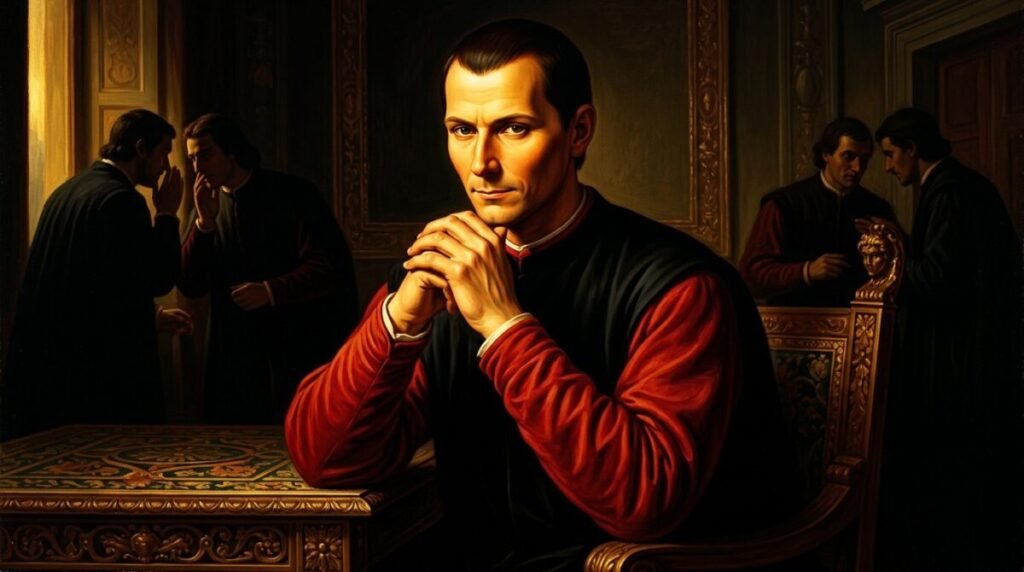
Imagine, for a moment, that you hold the absolute reins of a collapsing nation. A violent, extremist faction is rising in the provinces, threatening to plunge the country into a decade-long civil war. Your intelligence agencies present you with a single, brutal option: you can authorize a covert, extrajudicial purge of the faction’s leadership tonight. Doing so will save tens of thousands of innocent lives and preserve the state, but it requires you to bypass the justice system, violate fundamental human rights, and commit cold-blooded murder. If you refuse on moral grounds, the state fractures, and the blood of a civil war washes over your hands anyway. Which do you choose?
Throughout history, political leaders, philosophers, and ordinary citizens have grappled with this enduring, agonizing tension: the choice between maintaining public order and upholding strict ethical standards in governance. It is the ultimate psychological and philosophical burden of power. Statecraft is rarely a realm of clean hands and pure hearts; it is a landscape of tragic choices, where the refusal to do wrong can sometimes result in the ultimate catastrophe.
This comprehensive guide explores the dark, fascinating intersection of political philosophy, historical case studies, and the complex geopolitics of 2026 to answer a question that haunts every corridor of power: Can a leader truly be both highly moral and highly effective, or is the sacrifice of one’s soul the prerequisite for the survival of the state?
1. Defining the Core Conflict: Order vs. Justice
To understand the psychology of leadership, we must first strip away the romanticism surrounding political rule and define the two opposing forces that tear at the fabric of every nation: political stability (order) and moral governance (justice). In the context of statecraft, political stability is the baseline requirement of civilization. It is the state’s monopoly on violence, the predictability of daily life, the enforcement of laws, and the protection of borders. Without stability, as Thomas Hobbes famously noted, human existence devolves into a “war of all against all,” where life is solitary, poor, nasty, brutish, and short.
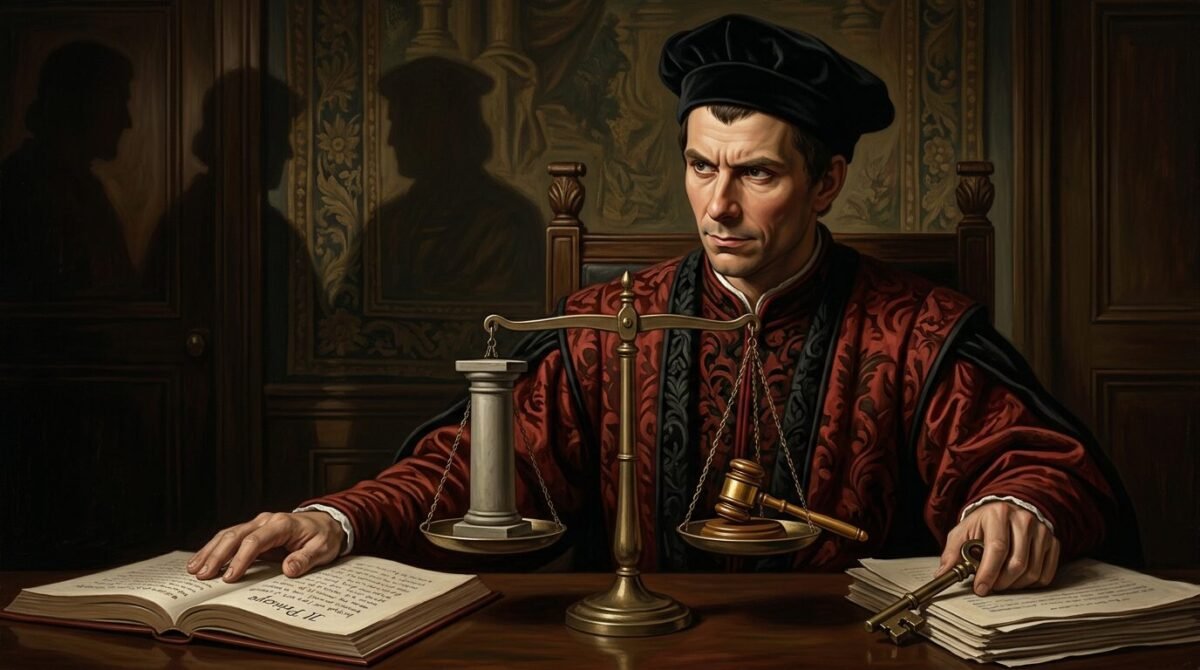
Moral governance, on the other hand, is the ethical framework that gives a state its soul. It encompasses the protection of individual human rights, transparency, fairness, the rule of law, and the inherent dignity of the citizen. Justice demands that the state operates not just with overwhelming force, but with legitimate, ethical restraint. It is the promise that power will not be abused, even when it is convenient to do so.
The fundamental tension arises because the mechanisms required to maintain absolute order are frequently at odds with the mechanisms required to uphold absolute justice. Order often demands coercion, surveillance, secrecy, and the swift neutralization of threats. Justice demands due process, transparency, and the protection of the very individuals who might threaten the state. When a crisis strikes, the leader is forced onto a tightrope. Lean too far toward justice, and the enemies of the state exploit your restraint, leading to chaos. Lean too far toward order, and the state becomes a tyranny, crushing the human spirit to maintain a sterile, terrifying peace.
This ‘order vs justice’ debate remains the central dilemma in political philosophy because it touches upon the deepest contradictions of Power & Human Nature. We possess a primal, psychological need for safety and predictability—we want the trains to run on time and the streets to be safe at night. Yet, we possess an equally profound, higher-order need for fairness and autonomy. The tragedy of political rule is that satisfying the former often requires compromising the latter. The leader is tasked with managing this impossible contradiction, bearing the psychological weight of decisions that will inevitably betray one of these fundamental human needs.
2. The Realist Perspective: Machiavellianism and Realpolitik
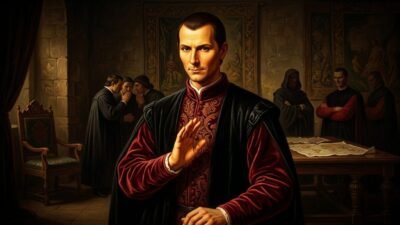
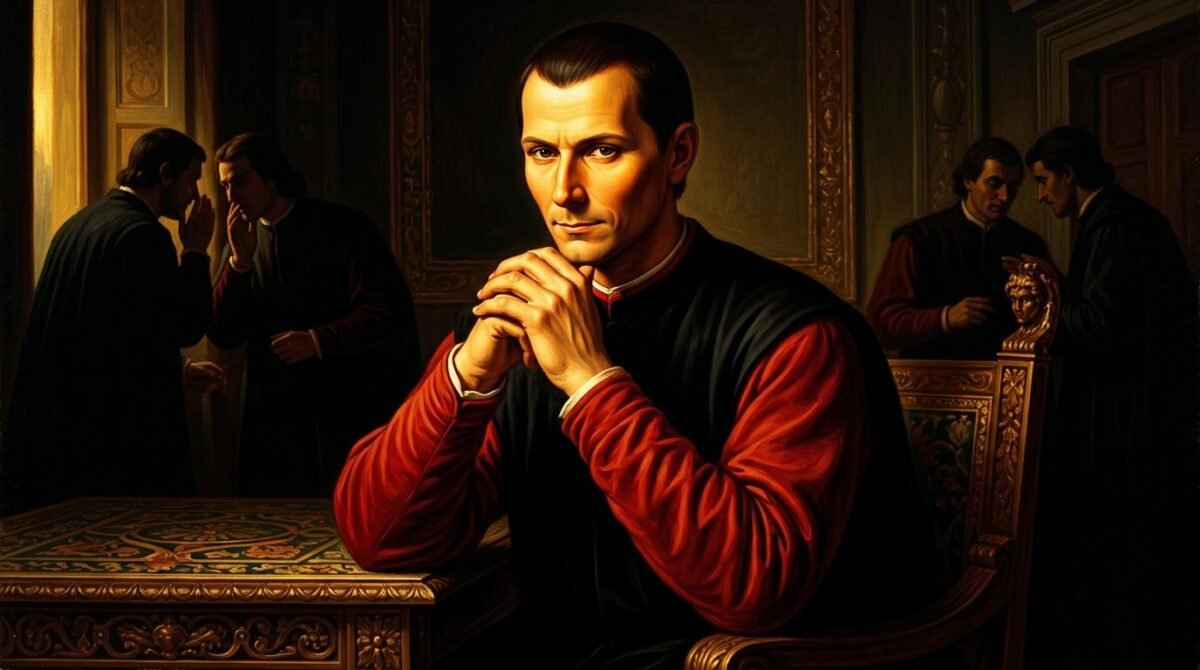
When we peer into the unvarnished reality of political survival, we inevitably encounter the Realist school of thought, most famously articulated by the Florentine diplomat Niccolò Machiavelli. In his seminal work, The Prince, Machiavelli explicitly addresses the agonizing choice between stability and morality, and his conclusion is as chilling as it is pragmatic: a ruler must learn how not to be good. For the Realist, the survival of the state is the supreme moral imperative, rendering all other ethical considerations secondary.
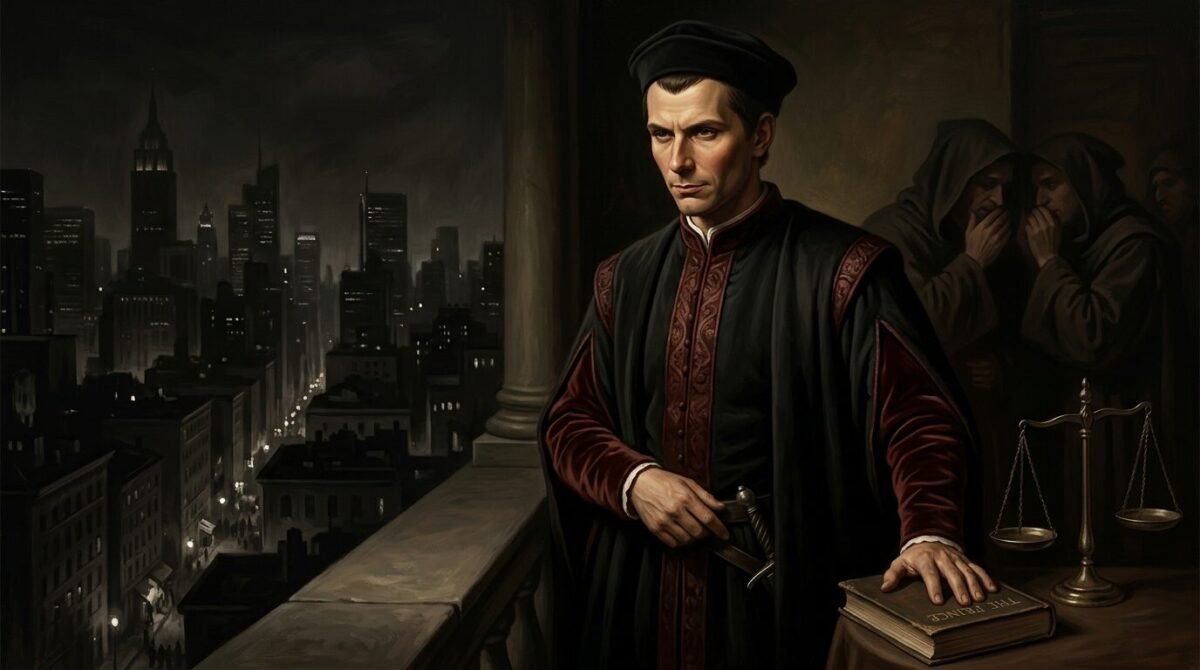
The core tenet of political pragmatism is encapsulated in the often-misunderstood phrase: ‘the ends justify the means.’ In the realm of statecraft, the “end” is not personal wealth or petty tyranny, but the preservation of the republic and the protection of its citizens from foreign conquest and internal collapse. Machiavelli argued that traditional virtues—honesty, mercy, generosity—can be fatal to a ruler. A leader who insists on remaining morally pure in a world filled with ruthless adversaries will inevitably bring ruin upon their state. Therefore, the effective leader must possess virtù—not moral virtue, but a flexible, sometimes ruthless ingenuity that adapts to the dictates of necessity.
This philosophy evolved into what modern strategists call Realpolitik. Realpolitik differs fundamentally from moral absolutism by prioritizing national interest, material power, and practical outcomes over ideological purity or ethical dogma. A practitioner of Realpolitik does not ask, “Is this policy morally right?” but rather, “Will this policy secure our borders, enrich our economy, and neutralize our enemies?” If the answer requires allying with a dictator, breaking a treaty, or engaging in espionage, the Realist does so without hesitation, viewing moral squeamishness as a dangerous luxury.
From a psychoanalytic perspective, Machiavellianism in statecraft is a radical acceptance of the shadow side of human nature. Realists do not pretend that humans are inherently good, rational, or peaceful. They operate on the assumption that international relations are an anarchic jungle where power is the only true currency. By accepting this dark reality, the Realist leader claims to be acting with a higher form of responsibility. They take the moral stain upon themselves so that their citizens can sleep peacefully. They embrace the paradox that to protect the innocent, the leader must sometimes become the monster.
3. The Idealist Vision: Moral Absolutism and Ethical Leadership
In stark contrast to the dark pragmatism of the Realists stands the Idealist vision of political rule. This tradition refuses to accept that statecraft must be divorced from ethics. Drawing its roots from Plato’s concept of the ‘philosopher-king’—a ruler who possesses absolute power but is guided by a supreme understanding of the Good—Idealism insists that politics should be an extension of morality, not an exception to it.
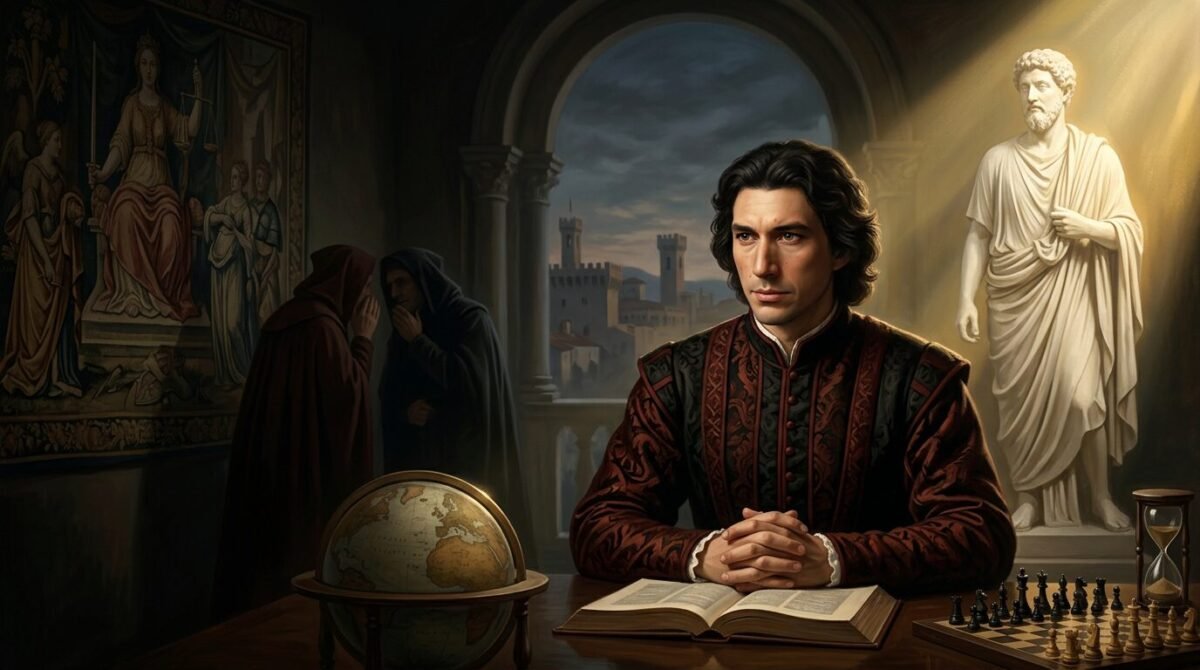
The philosophical bedrock of modern moral absolutism in politics can be traced to Immanuel Kant and his categorical imperative. Kant argued that human beings must always be treated as ends in themselves, never merely as means to an end. In the context of political rule, this means that a leader cannot sacrifice the rights, dignity, or life of a single innocent person, even if doing so would save the state. For the Idealist, the moment a government violates fundamental moral laws to preserve itself, it loses its reason for existing. What good is a surviving state if it has become a machinery of evil?
Proponents of ethical leadership argue that true, lasting political legitimacy can only stem from unwavering moral authority. When a leader operates with absolute integrity, they forge a deep, unbreakable bond of trust with the citizenry. This trust is far more resilient than the brittle compliance extracted by fear or coercion. An ethical leader inspires civic duty, social cohesion, and international respect. In Comparative Philosophy, we see this echoed in Eastern traditions as well, such as the Confucian ideal of the ruler as a moral exemplar whose virtue naturally aligns the state, much like the North Star guides the surrounding constellations.
However, the inherent challenges of applying strict ethical frameworks to the messy, violent reality of governing a state are immense. The Idealist leader often finds themselves politically vulnerable. When you refuse to lie, your adversaries will use propaganda against you. When you refuse to strike preemptively, your enemies will arm themselves. The tragedy of the moral absolutist is that their commitment to purity can sometimes inadvertently lead to the very suffering they wished to avoid. The psychological burden of the Idealist is the agonizing realization that in a world of wolves, being a shepherd who refuses to use a weapon may result in the slaughter of the flock.
4. Utilitarianism in Politics: The Pragmatic Middle Ground?
Caught between the ruthless mechanics of Realpolitik and the paralyzing purity of Moral Absolutism, many leaders seek refuge in the philosophy of Utilitarianism. Pioneered by thinkers like Jeremy Bentham and John Stuart Mill, utilitarianism offers a seemingly rational, mathematical approach to the dilemma of political rule: the morally correct action is the one that produces the greatest good for the greatest number of people.
In modern statecraft, utilitarianism serves as the dominant operating system for public policy and crisis management. It provides leaders with a framework to navigate the impossible choices of governance. When a leader decides to implement a harsh economic austerity measure, quarantine a city during a pandemic, or order a drone strike that carries a risk of civilian casualties, they are utilizing utilitarian calculus. They weigh the aggregate suffering against the aggregate benefit. It is the philosophy of the lesser evil.
Leaders use utilitarian ethics to justify sacrificing individual moral principles—and sometimes individual lives—for the sake of collective stability. Psychologically, this framework is a powerful defense mechanism. It allows a leader to authorize brutal actions while still viewing themselves as a moral agent. The guilt of ordering a controversial military action is mitigated by the belief that the action prevented a much larger catastrophe. Utilitarianism translates the agonizing ambiguity of morality into a spreadsheet of costs and benefits, making the unbearable weight of leadership somewhat tolerable.
Yet, the ethical pitfalls of utilitarianism are profound and dangerous. The most glaring flaw is the inherent risk of marginalizing, oppressing, or even sacrificing minority groups for the sake of the majority’s comfort or stability. If the “greatest good for the greatest number” is the only metric, then the rights of the few are always contingent and fragile. A utilitarian framework could theoretically justify the enslavement of a small population if it brought immense prosperity and happiness to the vast majority. In politics, this often manifests as the tyranny of the majority, where the state maintains order by systematically disenfranchising dissenting voices or marginalized communities, rationalizing the cruelty as a necessary cost for the greater societal peace.
5. Historical Case Studies: Pragmatic Rulers vs. Moral Idealists
To truly grasp the weight of the stability versus morality dilemma, we must look beyond theory and examine the laboratory of human history. The annals of statecraft are filled with vivid examples of leaders who explicitly chose stability and power over ethics, and those who gambled their empires on moral ideals.
The quintessential historical example of the pragmatic ruler is Otto von Bismarck, the architect of German unification in the 19th century. Bismarck was a master of Influence & Leadership through the lens of pure Realpolitik. He famously declared that the great questions of the day would not be settled by speeches and majority decisions, but by “iron and blood.” Bismarck deliberately provoked wars with Denmark, Austria, and France, manipulated the press, and broke diplomatic treaties to forge a unified, powerful German Empire out of fractured states. He possessed little regard for moral absolutism; his sole metric was the strength and stability of the state. His methods were undeniably ruthless, yet they achieved a staggering level of geopolitical success, creating a stable, industrialized powerhouse that dominated European politics for decades.
Contrast Bismarck with a moral idealist like Mikhail Gorbachev in the twilight of the Soviet Union. While leading a brutal, totalitarian apparatus, Gorbachev possessed a genuine moral aversion to the mass violence that his predecessors had used to maintain the Soviet empire. When the Eastern Bloc nations began to rebel in the late 1980s, a Machiavellian leader would have sent in the tanks to crush the dissent and maintain order, as the Soviets had done in Hungary and Czechoslovakia. Gorbachev, guided by a more ethical, reformist vision (Glasnost and Perestroika), refused to authorize the necessary bloodshed to hold the empire together by force. The result? A massive victory for global human rights and freedom, but the absolute collapse and dissolution of his own state. Gorbachev’s morality led directly to his political vulnerability and the end of the superpower he governed.
When analyzing the immediate versus long-term success rates of Machiavellian leaders compared to ethical reformers, a complex psychological pattern emerges. Pragmatic, ruthless leaders often achieve rapid, spectacular immediate success. They build empires, crush dissent, and enforce a rigid, predictable order. However, their long-term success is frequently unstable. By relying on coercion, deception, and the suppression of justice, they plant deep seeds of resentment. The state becomes a pressure cooker. When the iron-fisted leader dies, the artificially maintained stability often shatters into violent chaos.
Conversely, ethical reformers often face agonizing immediate failures. They are outmaneuvered by ruthless opponents, their policies are viewed as weak, and they frequently lose power. Yet, their long-term legacy often shapes the moral trajectory of civilization. Leaders like Nelson Mandela or Abraham Lincoln, who, despite making pragmatic compromises, were fundamentally driven by a moral vision of justice, managed to forge institutions and societal bonds that outlasted their own lives. The Machiavellian builds a fortress of stone that eventually crumbles; the ethical leader attempts to build a foundation of trust, which is harder to construct but far more resilient against the tides of time.
6. The Long-Term Consequences of Sacrificing Morality for Order
While the allure of swift, decisive action to maintain order is intoxicating for any leader facing a crisis, we must deeply analyze what happens to a society when order completely overrides justice over an extended period. When a state consistently chooses the path of Realpolitik, treating its citizens as variables in an equation of power rather than human beings with inherent rights, a profound psychological and institutional rot begins to set in.
The first consequence is the inevitable slippery slope from justified stability into entrenched authoritarianism. It rarely happens overnight. It begins with “emergency powers” enacted to deal with a genuine crisis—a terrorist threat, an economic collapse, a civil uprising. The public, terrified and craving safety, willingly trades their liberties for security. But power, once centralized and freed from moral constraints, possesses a gravitational pull. The emergency becomes permanent. The surveillance apparatus built to catch extremists is turned inward on political rivals and dissenting journalists. The state, having learned that it can violate ethics without immediate consequence, becomes addicted to the ease of coercion. Stability ceases to be a tool for human flourishing and becomes an end in itself—a sterile, suffocating peace maintained by the baton and the secret police.
Beneath the surface of this enforced order, a catastrophic decay of institutional trust occurs. When a government routinely lies, manipulates, and sacrifices its moral compass for the sake of “the greater good,” the citizenry eventually realizes the game. A deep, pervasive cynicism infects the populace. If the law is merely a tool of power rather than a reflection of justice, why should anyone obey it unless a gun is pointed at their head? Civic engagement evaporates. People retreat into private life, adopting a posture of learned helplessness. They stop believing in the media, the courts, and each other.
This is the ultimate paradox of sacrificing morality for order: it destroys the societal fabric necessary for true, resilient stability. A nation is not merely a collection of borders and military assets; it is a shared psychological reality, a web of mutual trust and collective belief in the legitimacy of the system. When political ethics are abandoned, that web disintegrates. The state may look formidable from the outside—boasting massive armies and quiet streets—but internally, it is hollow. It becomes a brittle structure, highly vulnerable to sudden, catastrophic collapse the moment the apparatus of fear falters.
7. Contemporary Statecraft: Balancing Ethics and Stability in 2026
As we navigate the hyper-fragmented geopolitical landscape of 2026, the stability versus morality debate has evolved into an unprecedentedly complex tightrope walk. Modern leaders are no longer just dealing with the physical realities of borders and armies; they are operating in an environment where the speed of information, the power of technology, and the interconnectedness of global markets have fundamentally altered the nature of statecraft.
Contemporary examples of this dilemma are stark. Consider the rise of AI-driven surveillance and predictive policing. In 2026, a government possesses the technological capability to monitor the digital footprint, biometrics, and social interactions of every citizen in real-time. From a purely Machiavellian standpoint, utilizing this technology to its absolute limit guarantees unparalleled state stability. You can neutralize a riot before it organizes; you can identify dissidents before they speak. Yet, the moral cost is the complete obliteration of privacy and human autonomy. Leaders today are constantly forced to draw an arbitrary line between necessary security and dystopian overreach.
Furthermore, modern leaders must navigate digital-age crises like deepfake disinformation campaigns, cyber warfare, and rapid economic shifts driven by automation and climate migration. In a multipolar international arena where rival superpowers operate with vastly different ethical frameworks, a democratic leader faces a severe handicap. How does a nation committed to human rights and transparent governance compete economically and militarily with a rival state that utilizes forced labor, corporate espionage, and total information control? The temptation to abandon moral high grounds to maintain geopolitical parity is stronger than ever. Machiavelli & Political Philosophy have never been more relevant than in the server rooms and situation rooms of 2026.
Yet, the evolving expectations of citizens in 2026 serve as a powerful counterweight. Today’s populace is hyper-connected, deeply skeptical, and armed with decentralized platforms for organizing. They demand both effective leadership that protects them from global volatility, and transparent political ethics that respect their individual agency. They will not tolerate the paternalistic secrecy of the 20th century. A modern leader who attempts to execute a purely Realpolitik strategy in the dark will inevitably be exposed by a whistleblower or a decentralized intelligence network. Therefore, the successful leader in 2026 cannot choose between stability and morality; they must synthesize them. They must articulate a moral vision compelling enough to unite a fractured society, while wielding power with enough pragmatic cunning to protect that society from a deeply unstable world.
Conclusion
The dilemma of political rule is not a puzzle to be solved, but a paradox to be managed. Statecraft is rarely a binary choice between pure good and pure evil; it requires a delicate, often agonizing balance between the pragmatic necessity of maintaining stability and the ethical imperative of moral governance. The leader who ignores reality in favor of pure idealism will lose their state; the leader who ignores morality in favor of pure power will lose their humanity, and eventually, the very society they sought to control.
True leadership requires the psychological fortitude to step into the gray area, to make the tragic choices that history demands, and to bear the moral weight of those decisions without descending into tyranny. It is a burden few can carry without being broken or corrupted by it.
Do you believe modern politicians lean too far toward realpolitik, or are they too constrained by moral idealism to be effective? Share your thoughts in the comments below, or subscribe to our political science newsletter for more deep dives into the philosophy of leadership here at DeepPsyche.blog.
Frequently Asked Questions (FAQ)
What is the difference between Realpolitik and Machiavellianism?
While closely related, Machiavellianism often refers to the broader psychological trait and political philosophy of using cunning, deception, and ruthlessness to achieve and maintain power. Realpolitik is the practical application of this in diplomacy and statecraft, focusing strictly on national interest, material power, and pragmatic outcomes rather than ideological or moral considerations.
Can a political leader be completely moral and still succeed?
Historically and philosophically, it is incredibly difficult. Strict moral absolutism (e.g., Kantian ethics) prohibits lying, violence, and using people as means to an end—actions that are often required to protect a state from ruthless adversaries. Most successful leaders who are considered “moral” actually practice a form of utilitarianism, making ethical compromises for the greater good.
How does the “Order vs. Justice” debate apply to everyday citizens?
This debate shapes the laws you live under. Every time a society debates issues like mass surveillance, police authority, censorship of dangerous speech, or emergency mandates, it is weighing the human desire for order and safety against the moral demand for justice, privacy, and individual liberty.