Imagine you are standing in a crowded subway station. Thousands of people are moving in a choreographed chaos, yet no one is shouting orders. You stop at a red light, you stand in line for coffee, and you lower your voice when you enter a library. Why? Is it because a soldier is standing behind you with a bayonet? Rarely. It is because you are caught in an invisible web of expectations, rules, and silent pressures that dictate your every move. We often think of power as something held by a dictator or a billionaire—a heavy scepter or a massive bank account. But in reality, power is far more fluid, far more pervasive, and infinitely more subtle than a simple weapon.
Most of us navigate our lives viewing power as a binary: you either have it or you don’t. We see it as dominance, the ability of one person to force another to do their bidding. However, this narrow view fails to account for the complex philosophical structures and institutional mechanisms that actually shape our reality. From the way we speak to our doctors to the way we scroll through our phones, power is the silent architect of our social world. To understand how society truly functions, we must peel back the layers of influence, authority, and systemic control that define the human experience.
1. Defining Power vs. Authority: A Philosophical Foundation
To begin our investigation, we must first clear a common conceptual hurdle: the difference between “power” and “authority.” While we often use these terms interchangeably, they represent two very different ways of moving people. Power is the raw ability to influence or control others, often through coercion, wealth, or physical force. It is the “can.” Authority, on the other hand, is the recognized, legitimate right to lead. It is the “ought.” A mugger has power; a judge has authority. One relies on the immediate threat of harm, while the other relies on a shared belief in the system.
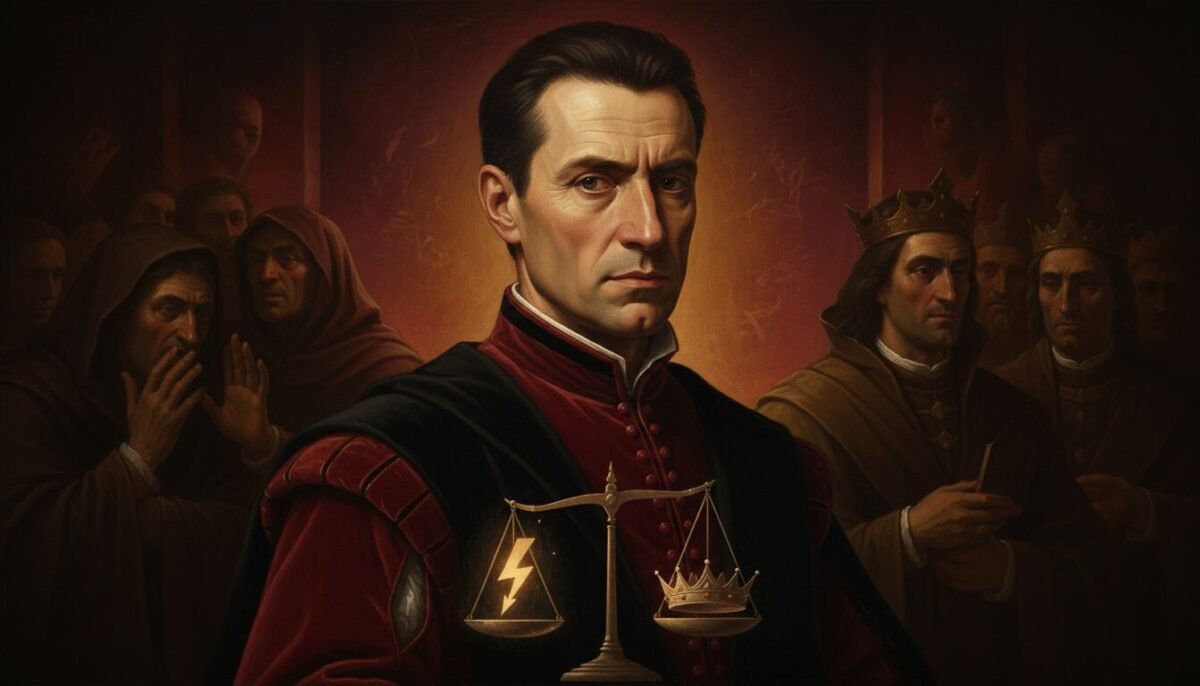
This distinction leads us directly to Social Contract Theory, the bedrock of modern political philosophy. Thinkers like Thomas Hobbes, John Locke, and Jean-Jacques Rousseau spent their lives asking why free individuals would ever agree to be ruled. Hobbes, writing during the chaos of the English Civil War, argued in Leviathan that human life in a “state of nature” would be “solitary, poor, nasty, brutish, and short.” To escape this, we trade our absolute freedom for security, delegating power to a central sovereign.
Locke and Rousseau took this further, suggesting that this delegation isn’t a blank check. Locke argued that authority is only legitimate if it protects our natural rights to life, liberty, and property. Rousseau introduced the “General Will,” the idea that true authority comes from the collective interest of the people. Over centuries, we have seen a massive transition in human history: the move from coercive force (the king’s sword) to legitimate institutional authority (the rule of law). We obey the speed limit not because we fear a duel with a monarch, but because we have collectively agreed that the system of traffic laws serves the greater good.
2. The Evolution of Power: From Machiavelli to Class Struggle
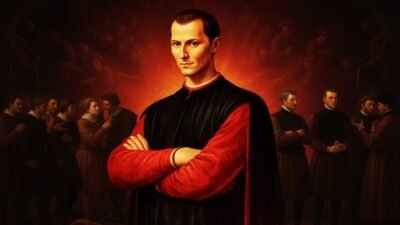
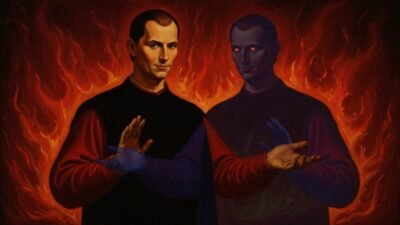
As society grew more complex, so did our understanding of how power is maintained. In the 16th century, Niccolò Machiavelli stripped away the religious and moral pretenses of leadership. In The Prince, he offered a masterclass in political realism. To Machiavelli, power was a tool for survival. He famously argued that it is better for a leader to be feared than loved, provided they are not hated. This was power as statecraft—a calculated, often ruthless game of maintaining the stability of the state at any cost.
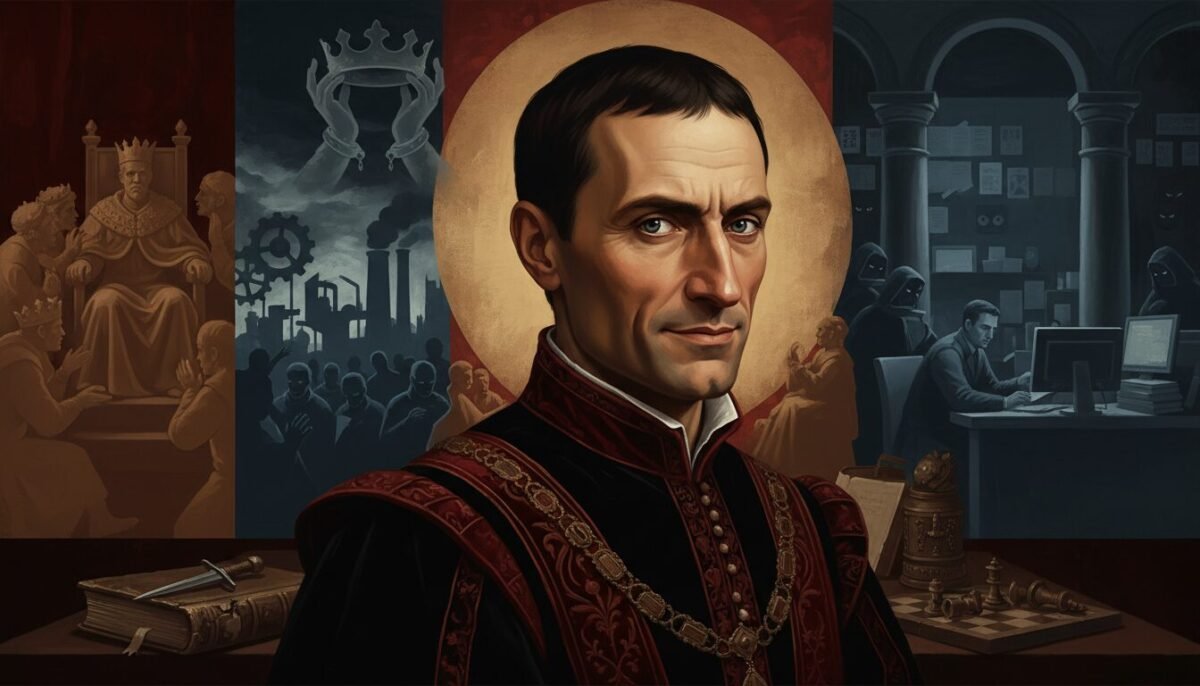
Fast forward to the 19th century, and the focus shifted from the individual “Prince” to the collective “Class.” Karl Marx revolutionized our understanding of power by linking it directly to economic control. In the Marxist perspective, power isn’t just about who sits on the throne; it’s about who owns the “means of production”—the factories, the land, and the technology. For Marx, the state was merely an instrument used by the ruling class to maintain their economic dominance over the working class. Power, in this view, is the engine of class struggle, a way to keep the gears of capitalism turning at the expense of the many.
However, the most profound shift in the evolution of power occurred when we moved from sovereign power to disciplinary power. In the old world, power was the “right to kill”—the sovereign could take your life if you broke the law. In the modern world, power has become the “right to manage life.” We see this in the rise of bureaucracies, schools, and hospitals. Power is no longer just about punishing the body; it is about training the mind, regulating health, and ensuring that every individual is a productive, “normal” member of society. We went from being subjects of a crown to being data points in a system.
3. Michel Foucault and the Power-Knowledge Nexus
If there is one philosopher who completely dismantled our traditional view of power, it is Michel Foucault. He argued that power is not something held by a few people at the top; rather, it is omnipresent and productive. It isn’t just a “No” that stops us from doing things; it is a “Yes” that tells us who we are. Power creates our reality. It defines what is “sane,” what is “criminal,” and what is “normal.”
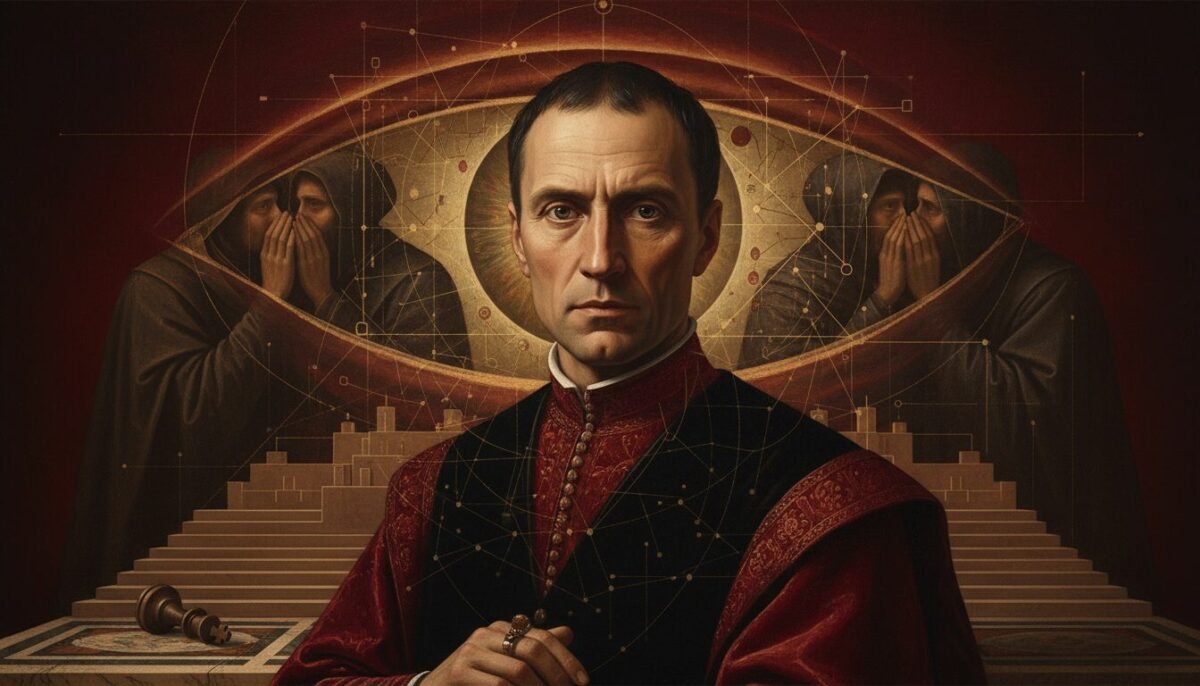
Foucault introduced the concept of the Power-Knowledge Nexus. He argued that those who control knowledge—the scientists, the doctors, the “experts”—actually hold the most profound form of power. By defining “truth,” they control how we perceive ourselves. For example, consider how the definition of “mental illness” has changed over the decades. Those who have the authority to label someone as “insane” possess the power to remove that person’s rights. Knowledge isn’t just used to exercise power; knowledge is power.
To illustrate this, Foucault used the metaphor of the Panopticon, an architectural design for a prison where a single guard can watch every prisoner, but the prisoners can never see the guard. Because the prisoners don’t know when they are being watched, they begin to watch themselves. They internalize the gaze of the authority figure. This is Biopower—the regulation of the human body and behavior through constant surveillance and “normalization.” In the modern world, we live in a digital Panopticon. We don’t need a guard at the door when we have algorithms, social credit scores, and the constant pressure to perform for the “likes” of an invisible audience.
4. Institutional Hegemony: How Systems Reinforce Hierarchy
While Foucault looked at the micro-level of power, Antonio Gramsci looked at how it dominates entire civilizations. Gramsci, an Italian Marxist, wondered why the working class often supported systems that clearly exploited them. His answer was Cultural Hegemony. He argued that the ruling class doesn’t just rule through police and laws; they rule by winning “consent.” They do this by weaving their values into the very fabric of culture—through media, religion, and education.
When a certain way of life is presented as “common sense,” that is hegemony at work. For instance, the idea that “success” is defined by a high-paying corporate job is not a law of nature; it is a cultural narrative that serves a specific economic structure. This is structural power. It doesn’t require a physical threat because the inequality is built into the system itself. Law and policy create a playing field that is tilted from the start, making systemic inequality feel like a personal failure rather than a structural design.
In this system, the role of the “Expert” is crucial. We live in a technocracy where specialized knowledge creates a “referent” power dynamic. We defer to the economist, the data scientist, or the policy analyst not because we understand their work, but because the system has granted them the title of “expert.” This creates a hierarchy where the average citizen feels unqualified to challenge the status quo, effectively silencing dissent through the sheer weight of perceived expertise.
5. The Psychology of Influence: Five Bases of Social Power
To understand how these grand philosophical theories play out in our daily lives, we can look to social psychology. In 1959, John French and Bertram Raven identified five bases of social power that explain why we follow others:
- Coercive Power: The ability to punish (the threat of being fired).
- Reward Power: The ability to provide benefits (a promotion or a bonus).
- Legitimate Power: Power derived from a formal position (a CEO or a parent).
- Expert Power: Power based on superior skills or knowledge (a surgeon).
- Referent Power: Power based on charisma and the desire of others to be like you (an influencer or a celebrity).
These bases explain how we internalize social norms. We don’t just obey because we have to; we obey because we want the rewards, we respect the expertise, or we identify with the leader. However, this psychological deference can have a dark side. Hannah Arendt, in her analysis of the trial of Adolf Eichmann, coined the phrase “the banality of evil.” She observed that many of the greatest atrocities in history were not committed by monsters, but by ordinary people who were simply “doing their job” within a powerful bureaucratic structure. When we defer to perceived power structures without question, we risk losing our moral compass to the machinery of the institution.
6. Resistance, Agency, and the Digital Decentralization of Power
If power is everywhere, is there any room for freedom? Absolutely. Where there is power, there is resistance. This is what sociologists call Agency. Even in the most oppressive systems, individuals find what James C. Scott calls “the weapons of the weak.” This includes subtle forms of defiance: gossip, foot-dragging, irony, and the refusal to believe the official narrative. Resistance doesn’t always look like a revolution; sometimes, it’s simply the act of thinking for oneself.
Today, we are witnessing a Digital Shift that is reconfiguring traditional power structures. For the first time in history, the gatekeepers of information—the big media houses and government censors—are being challenged by decentralized networks. Social media and blockchain technology have the potential to bypass traditional hierarchies, giving a voice to the marginalized and allowing for grassroots movements to mobilize in seconds. We saw this in the Arab Spring and the various global movements that have followed.
However, this brings us to the Paradox of Modern Power. While the internet has decentralized influence, it has also created new, even more concentrated forms of power. Algorithms now decide what we see, what we buy, and what we believe. The “old” power of the state is being challenged by the “new” power of the platform. Can power ever be truly balanced, or does it merely change form? As we move into an era of Artificial Intelligence and global connectivity, the struggle for agency becomes even more critical. We are no longer just fighting for the right to vote; we are fighting for the right to own our own attention and our own data.
Power is not a static resource that you can hoard in a vault. It is a dynamic, living relationship embedded in every conversation, every institution, and every “truth” we hold dear. By understanding these philosophical frameworks—from Foucault’s Panopticon to Gramsci’s Hegemony—we begin to see the invisible threads that pull at our lives. Recognizing these structures is the first step toward challenging systemic inequalities and reclaiming our individual agency. The web of power may be invisible, but once you know how to look for it, you can never unsee it.
If you found this investigation into the mechanics of influence compelling, we invite you to explore our further readings on Machiavelli & Political Philosophy and the deep connection between Influence & Leadership. Understanding the structures that shape our world is the only way to navigate them with intention.
Frequently Asked Questions
What is the main difference between power and authority?
Power is the raw capacity to influence others, often through force or wealth, while authority is the socially recognized and legitimate right to exercise that influence.
How does Foucault’s ‘Panopticon’ apply to modern life?
It serves as a metaphor for how we self-regulate our behavior because we know we are being constantly monitored by digital surveillance, social media algorithms, and data tracking.
Can power ever be truly decentralized?
While digital tools allow for more grassroots influence, power often tends to re-concentrate in new forms, such as the control of platforms, data, and algorithms by a few major entities.