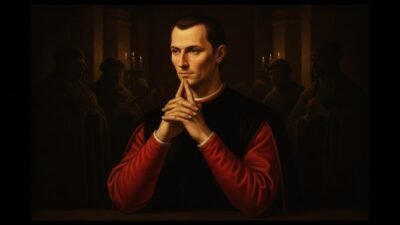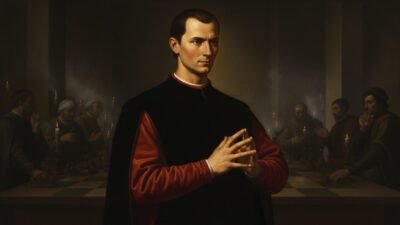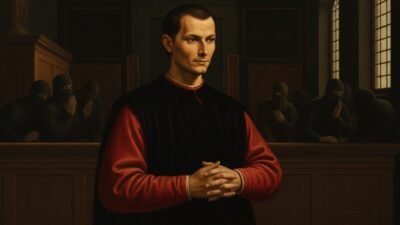

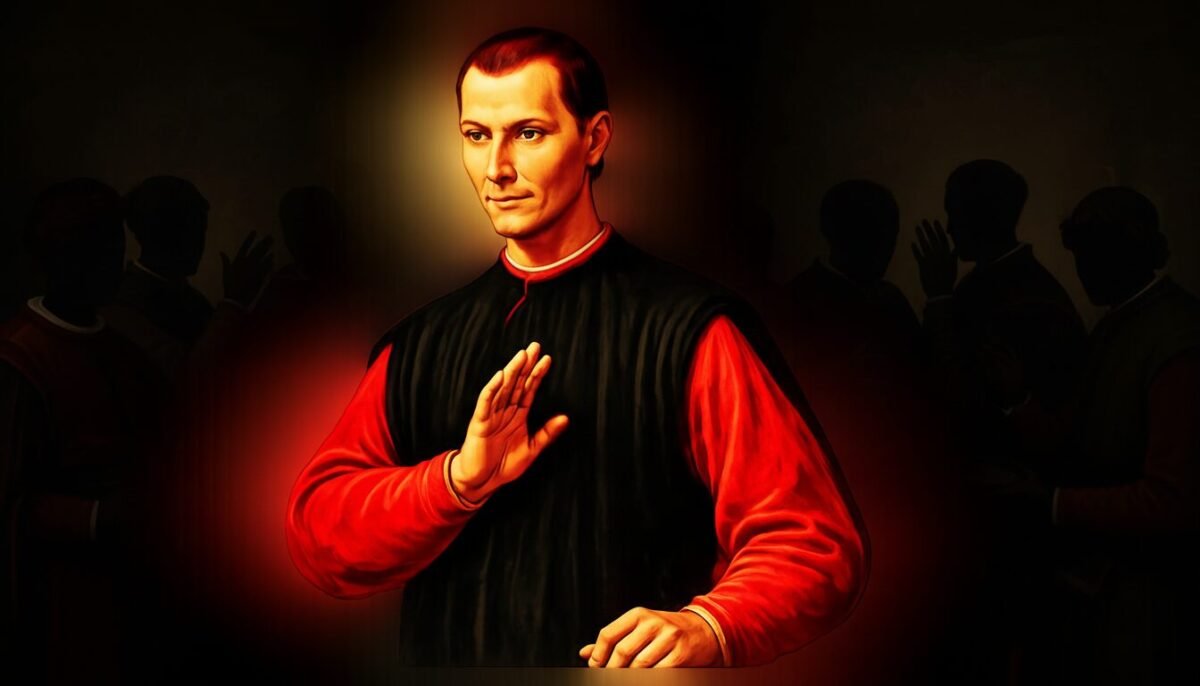
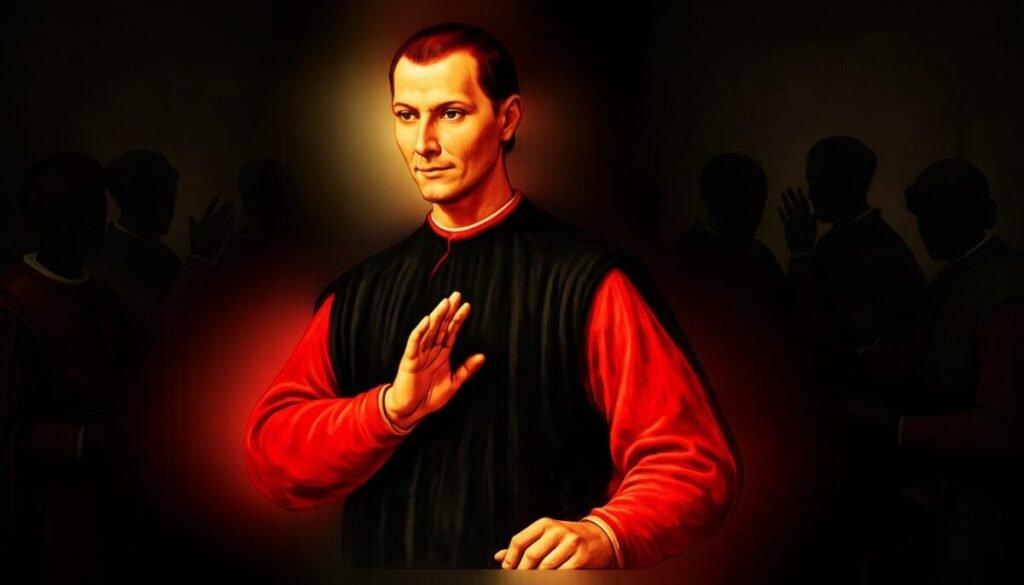
Imagine a man whose name has become a global synonym for cold-blooded manipulation, a thinker so synonymous with “evil” that his first name, Niccolò, is often cited as the origin of the nickname “Old Nick” for the Devil. We call people “Machiavellian” when they are calculating, amoral, and power-hungry. But what if the man who wrote the most dangerous book in political history spent his afternoons arguing with local woodcutters over the price of timber or setting traps for tiny birds just to pass the time? What if the “teacher of evil” was actually a lonely, unemployed diplomat who wrote his masterpieces while covered in the mud of a rural farm, desperately trying to laugh so he wouldn’t cry?
Most readers only encounter Niccolò Machiavelli through the clinical, chillingly pragmatic prose of The Prince. This leads to a one-dimensional caricature—a puppet master pulling the strings of history from a dark corner. However, a hidden cache of private correspondence reveals a startlingly different person. These letters, primarily written during his years of exile, uncover a man of deep wit, profound vulnerability, and a sharp sense of the absurd. To understand the philosophy, we must first understand the man, and there is no better window into his soul than the ink he spilled for his friends.
1. The Epistolary World of Niccolò Machiavelli: Key Recipients
In the 16th century, letters were more than just a means of communication; they were a lifeline, a stage, and a laboratory for ideas. For Machiavelli, who had been unceremoniously stripped of his government post and banished from the heart of Florentine power, his correspondence was the only way to remain “alive” in the political sense. The central figure in this world was Francesco Vettori, the Florentine ambassador to Rome. Vettori was Machiavelli’s primary sounding board, a man who still walked the halls of power that Niccolò so desperately missed.
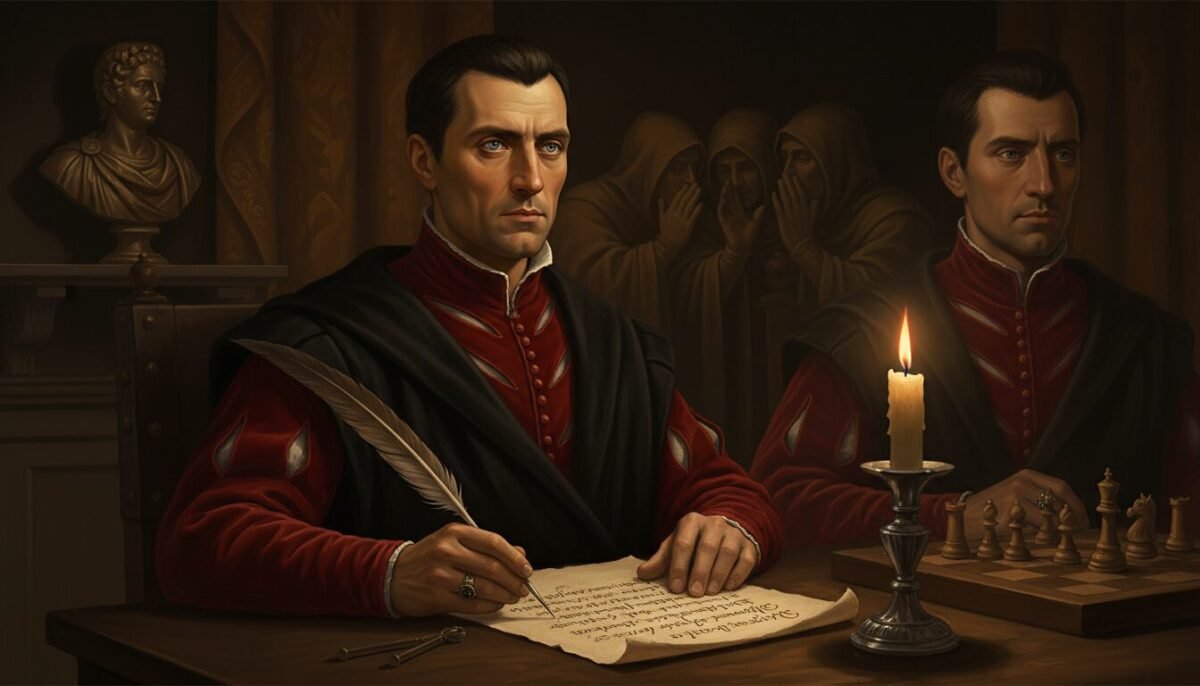
Their exchange was a fascinating dance of intellects. While Vettori provided the “news from the front”—the gossip of the Papal court and the movements of European monarchs—Machiavelli provided the analysis. He took the raw data of 16th-century diplomacy and processed it through his unique lens of realism. These weren’t just friendly updates; they were high-level intellectual exchanges regarding Italian statecraft. Machiavelli also maintained a rigorous correspondence with Francesco Guicciardini, another titan of Renaissance thought. Through these dialogues, we see the preservation of 16th-century Italian history not as a dry chronicle, but as a living, breathing struggle for survival.
For a disgraced diplomat, these letters functioned as a psychological anchor. In the silence of the Tuscan countryside, the arrival of a messenger was an event of seismic proportions. It meant that he was still remembered, that his mind was still valued, and that he hadn’t been entirely swallowed by the obscurity of rural life. The letters were his way of keeping his “hand in the game,” even when he was no longer allowed at the table.
2. Life in San Casciano: The Mundane vs. The Intellectual
After the Medici family returned to power in 1512, Machiavelli’s world collapsed. He was accused of conspiracy, imprisoned, and subjected to the “strappado”—a form of torture where the victim is dropped from a height by their bound wrists. When he was finally released and exiled to his small estate in San Casciano, the transition was jarring. His letters from this period describe a life that felt “unworthy” of a man who had once negotiated with kings and popes.
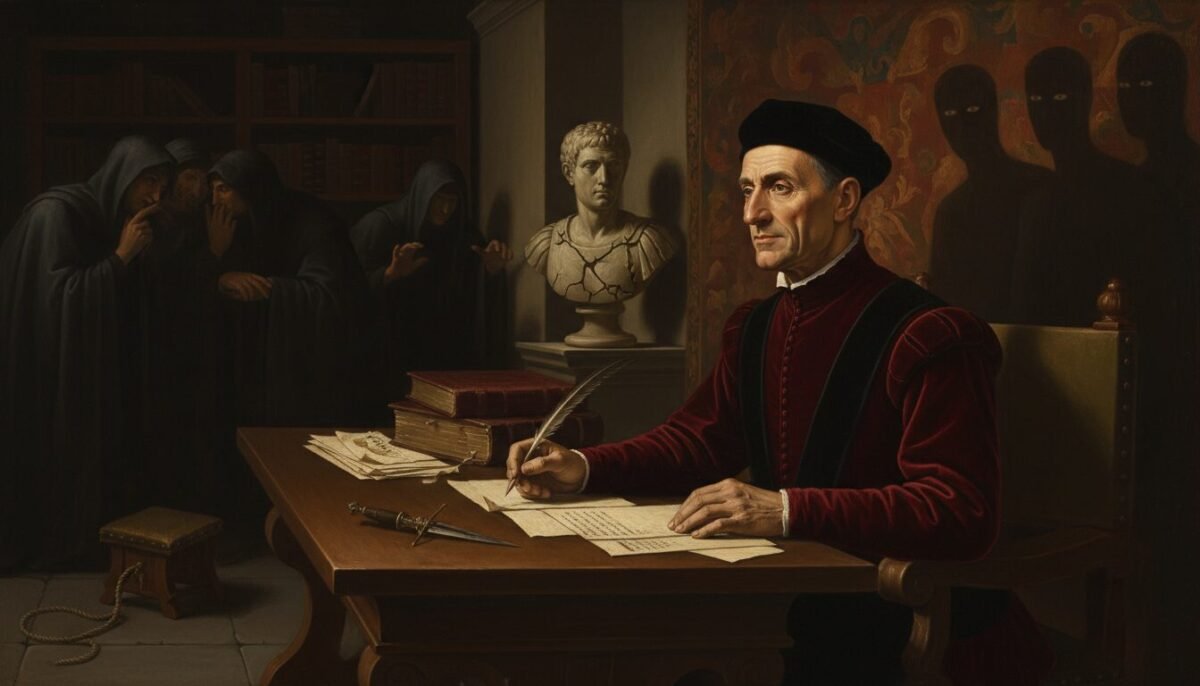
He writes of his “muddy” daytime existence with a mix of humor and resentment. He describes waking up with the sun to oversee the cutting of his woods, getting into petty squabbles with the workmen who tried to cheat him out of a few soldi. He spent his mornings “bird-catching,” setting traps for thrushes—a far cry from the high-stakes political “traps” he used to set in the courts of Europe. He would spend his afternoons at the local tavern, playing cards and dice with the butcher, the miller, and the baker. “There,” he wrote, “I sink into vulgarity for the whole day, playing at cricca and tric-trac… and so, wrapped in this mud, I keep my brain from growing moldy.”
The psychological toll of this ousting was immense. Machiavelli was a man built for the city, for the buzz of the piazza and the secrecy of the council chambers. The silence of the farm was deafening. Yet, this isolation fueled his creative and analytical output. The contrast between his daytime “muddy” life and his evening intellectual rituals created a tension that demanded an outlet. It was in this state of frustrated ambition and forced boredom that his most famous works began to take shape.
3. The Letter of December 10, 1513: The Birth of ‘The Prince’
If there is one document that serves as the “Rosetta Stone” for understanding Machiavelli, it is his letter to Francesco Vettori dated December 10, 1513. This is arguably the most famous letter in the history of political philosophy. In it, Machiavelli describes the ritual that transformed his despair into genius. After a day of “mud” and “vulgarity” at the tavern, he would return home, strip off his filthy, everyday clothes, and perform a symbolic act of purification.
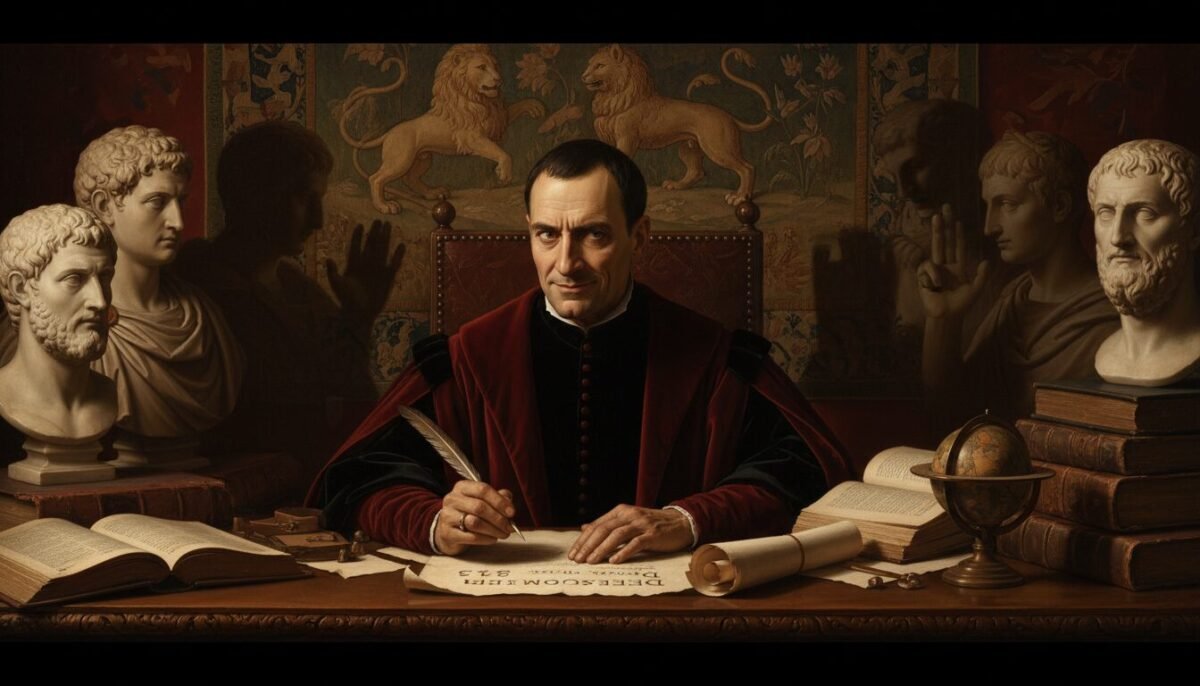
“At the door, I take off my muddy everyday clothes,” he writes, “and I put on royal and courtly garments. Thus appropriately reclothed, I enter into the ancient courts of ancient men and am lovingly received by them.” This wasn’t just a change of clothes; it was a change of state. He was leaving the 16th-century farm and entering the timeless world of Livy, Cicero, and Plutarch. He spoke with them, asked them the reasons for their actions, and, as he put it, “they, in their humanity, reply to me.”
It is in this specific letter that Machiavelli first mentions the composition of a small pamphlet titled De Principatibus (Of Principalities), which we now know as The Prince. He tells Vettori that he has “distilled” his conversations with the ancients into this work, hoping it might prove his worth to the Medici and earn him a job—even if it were just “rolling a stone.” This letter acts as a bridge between his personal despair and his political philosophy. It shows that The Prince was not a cold academic exercise, but a desperate, passionate attempt to find meaning in his exile and to offer a solution to the chaos tearing Italy apart.
4. Humor, Vulgarity, and Wit: The Human Side of Niccolò
While his formal works are known for their clinical, almost surgical tone, Machiavelli’s letters are riotously human. He was a man who loved a good joke, often leaning into bawdy humor and satirical anecdotes. In his correspondence with friends like Guicciardini, he recounts ridiculous stories of his travels, including self-deprecating tales of his own romantic failures and social awkwardness. He wasn’t afraid to be “vulgar” in the Renaissance sense—using the language of the street to puncture the pomposity of the elite.
This humor served as a vital survival mechanism. During a time of extreme political instability, where one’s friends could be executed and one’s own life hung by a thread, laughter was a way to maintain sanity. He often mocked his own poverty, joking about his threadbare clothes and his lack of influence. This side of Machiavelli—the witty, slightly cynical, but deeply funny companion—is entirely absent from the “Machiavellian” myth.
The contrast is striking. In The Prince, he advises that it is better to be feared than loved. In his letters, he is clearly a man who craves connection, who values friendship above almost all else, and who uses his wit to bridge the gap between his high intellect and his low social standing. This “private vulgarity” humanizes him, showing us a man who felt the sting of his circumstances but refused to let them crush his spirit.
5. Insights into Renaissance Political Instability
Beyond the personal, Machiavelli’s letters are an invaluable primary source for the sheer chaos of the Italian Wars. The early 16th century was a time of “permanent crisis.” Foreign armies—French, Spanish, German—trampled across the Italian peninsula, while internal factions fought for control of city-states like Florence. Machiavelli’s correspondence captures the visceral anxiety of this era. He wasn’t observing politics from a distance; he was watching his world burn.
His observations on the Medici family’s return to power are particularly poignant. He watched as the Republic he had served for fourteen years was dismantled. His letters reveal his desperate, often pathetic attempts to regain employment. He wasn’t seeking power for the sake of tyranny; he was seeking a way to be useful to his state. He believed, perhaps naively, that his expertise was so valuable that even his former enemies, the Medici, would eventually have to hire him.
The letters highlight the intersection of personal ambition and the survival of the Florentine Republic. Machiavelli’s “realism” was born from the realization that traditional morality was often a luxury that crumbling states could not afford. When he wrote about the necessity of “entering into evil” to save the state, he was thinking of the very real threats he discussed in his letters: the threat of invasion, the threat of bankruptcy, and the threat of total social collapse.
6. Reshaping the Legacy: From Cold Realist to Complex Human
To read Machiavelli’s letters is to realize that The Prince is only one piece of a much larger puzzle. The letters are essential for a holistic understanding of his philosophy because they provide the “why” behind the “what.” The vulnerability revealed in his private admissions of loneliness and failure suggests that his focus on power was not born of a love for cruelty, but of a deep-seated fear of instability.
The correspondence humanizes a figure often associated with amorality. We see a man who was deeply hurt by his friends’ betrayals, who worried about his children’s future, and who found his only true solace in the “courts of the ancients.” He was a man of deep contradictions: a patriot who was rejected by his country, a brilliant strategist who couldn’t navigate his own career, and a philosopher who spent his days in a tavern playing games with peasants.
The lasting impact of his epistolary style is also significant. He brought a new level of psychological depth and directness to Renaissance literature. He didn’t hide behind flowery metaphors; he spoke plainly about the human condition. By looking at the man behind the myth, we see that Machiavellianism isn’t a manual for villains—it’s the cry of a man who saw the world as it was and dared to write it down, even while his own life was falling apart.
Conclusion
Machiavelli’s letters reveal a man of deep contradictions: a vulgar humorist, a desperate exile, and a brilliant mind who found solace in the “courts of the ancients.” They prove that The Prince was not written in a vacuum, but born from a deeply personal struggle for relevance and a passionate desire to see his homeland strong and united. When we look past the “Machiavellian” caricature, we find a human being who was remarkably like us—struggling to find his place in a chaotic world, using humor to mask his pain, and looking to the past to find a way into the future.
Explore more primary sources from the Italian Renaissance to see how other thinkers of the era balanced their public personas with their private lives.
Frequently Asked Questions
- Did Machiavelli actually practice what he preached in ‘The Prince’? Interestingly, no. In his private life and his career as a diplomat, Machiavelli was known for his loyalty to the Florentine Republic and his personal integrity. His “Machiavellian” advice was intended for rulers in times of extreme crisis, not as a personal moral code.
- Why did he write ‘The Prince’ if he was a Republican at heart? Most historians believe The Prince was a “job application” to the Medici family. He hoped to show them that he understood the realities of power and could help them stabilize Florence, even if he personally preferred a republican form of government.
- Who was his most important friend in his letters? Francesco Vettori was his most consistent and important correspondent. Their letters provide the most detailed account of Machiavelli’s life in exile and the development of his political thought.
If you enjoyed this deep dive into the mind of Niccolò Machiavelli, you might also find these topics intriguing:
- The intersection of Power & Human Nature in Renaissance thought.
- How Machiavellianism is misunderstood in modern psychology.
- The evolution of Influence & Leadership from the Medici to the modern day.