

In the high-stakes corporate landscape of 2026, where algorithmic precision meets volatile global markets, a haunting question lingers in the corner of every executive boardroom: Is the ruthless pragmatism of a 16th-century diplomat still the ultimate blueprint for success? We live in an era that publicly celebrates transparency, empathy, and “servant leadership,” yet the internal mechanics of power often tell a different story. Many leaders find themselves paralyzed by a modern paradox—struggling to balance the need for cold, objective strategic planning with the increasing demand for ethical, human-centric leadership.
The ghost of Niccolò Machiavelli hasn’t left the building; he has simply traded his doublet for a tailored suit and a data dashboard. To navigate this complexity, we must move beyond the caricature of the “evil mastermind” and look at the psychological intersection of Machiavellianism and strategic thinking. By understanding these traits, we can develop a framework to leverage pragmatic tools without sacrificing the very integrity that holds an organization together.
1. Defining Machiavellianism: From Niccolò Machiavelli to the Dark Triad
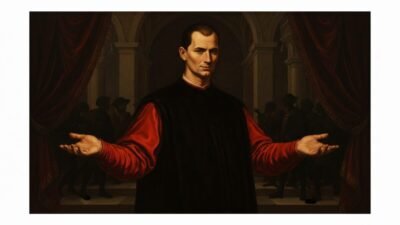
To understand the modern strategic mind, we must first strip away the centuries of stigma attached to the name Machiavelli. When Niccolò Machiavelli wrote The Prince in 1513, he wasn’t trying to create a manual for villains. He was a frustrated diplomat observing the chaotic collapse of Italian city-states. His “crime” was simply describing the world as it was, rather than how it ought to be. He argued that a leader’s primary duty is the stability and prosperity of the state, even if that requires actions that are morally “flexible.”
In the 20th century, this political philosophy transitioned into the realm of clinical and organizational psychology. Researchers began to identify a specific set of personality traits that mirrored Machiavelli’s observations. This led to the coining of the “Dark Triad,” a trio of overlapping personality types: Narcissism (grandiosity and entitlement), Psychopathy (lack of empathy and impulsivity), and Machiavellianism (cynicism and strategic manipulation).
Unlike the narcissist who needs constant praise or the psychopath who may act on destructive whims, the “High Mach” individual is defined by a calculated, cool-headed approach to social interaction. Modern psychology defines the High Mach professional through three primary lenses:
- Cynicism: A fundamental belief that people are generally self-serving and unreliable.
- Pragmatic Morality: The view that “the ends justify the means.” Ethics are seen as a set of social rules to be navigated rather than absolute truths.
- Interpersonal Manipulation: A penchant for using flattery, deceit, or strategic silence to influence others toward a specific goal.
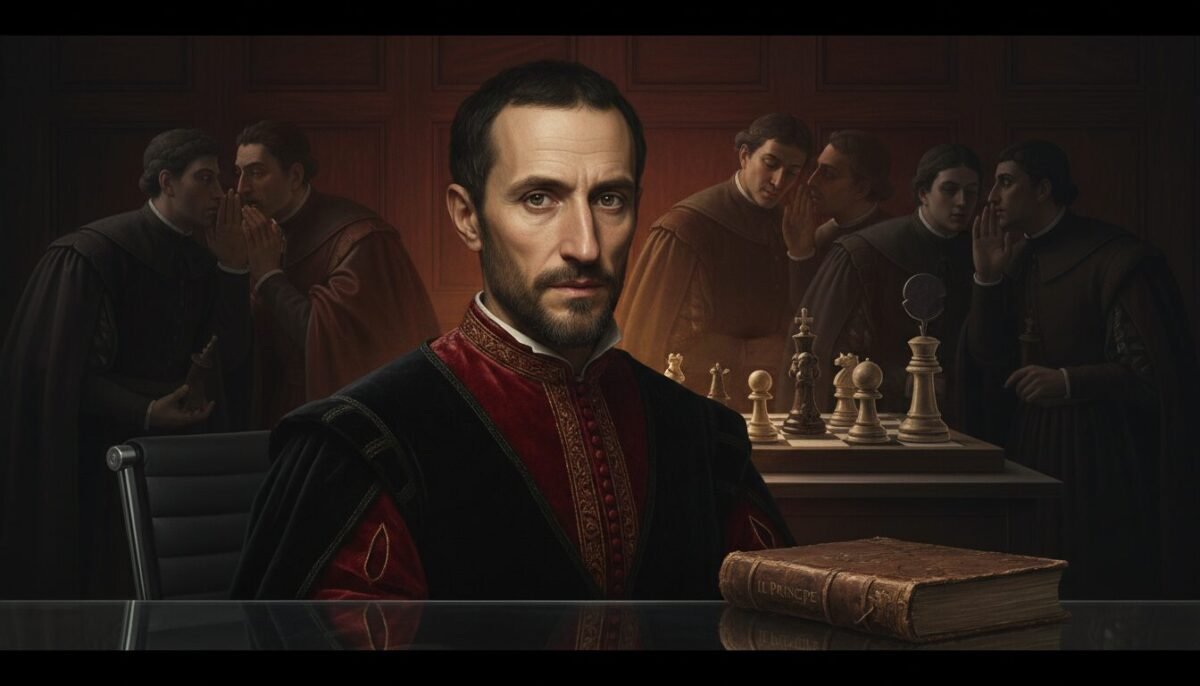
In a professional setting, a High Mach isn’t necessarily the loudest person in the room. Often, they are the quietest—the ones observing the power dynamics, identifying who holds the real influence, and waiting for the opportune moment to move their pieces.
2. The Strategic Edge: Emotional Detachment and Objective Analysis
Why do Machiavellian traits so often correlate with high-level strategic roles? The answer lies in the concept of “emotional coolness.” In high-stakes business environments, emotions are often the enemy of sound judgment. When a company faces a crisis—perhaps a sudden market shift or a hostile takeover bid—the leaders who thrive are those who can detach their personal feelings from the cold reality of the data.

This emotional detachment allows for a level of objective resource management that others might find distasteful. For example, a High Mach leader viewing a failing product line doesn’t see the years of hard work or the “family” of employees attached to it; they see a drain on capital that must be cauterized to save the rest of the organism. This ability to perform “corporate surgery” is a hallmark of strategic thinking. It involves a ruthless assessment of risk where the survival of the entity outweighs the comfort of the individual.
Furthermore, Machiavellianism facilitates a unique brand of political skill. These individuals view the corporate landscape as a chessboard. While a more idealistic manager might focus solely on their team’s performance, the strategic pragmatist is mapping out the “hidden” board. They ask:
- Who has the ear of the CEO?
- What are the unspoken grievances of the Board of Directors?
- Which department is currently over-resourced and vulnerable to a budget pivot?
By viewing human relationships as variables in a strategic equation, they can anticipate moves before they happen. This isn’t just about being “sneaky”; it’s about a superior level of situational awareness that allows for the efficient allocation of political and financial capital.
3. Machiavellianism in Corporate Politics: Navigating Power Dynamics
Every organization, no matter how “flat” or “transparent” it claims to be, has an informal power structure. This is where Machiavellianism moves from theory into practice. High Mach leaders are masters at identifying and utilizing these informal networks to overcome institutional inertia. When a traditional hierarchy stalls a necessary change, the pragmatic leader knows which lever to pull behind the scenes.
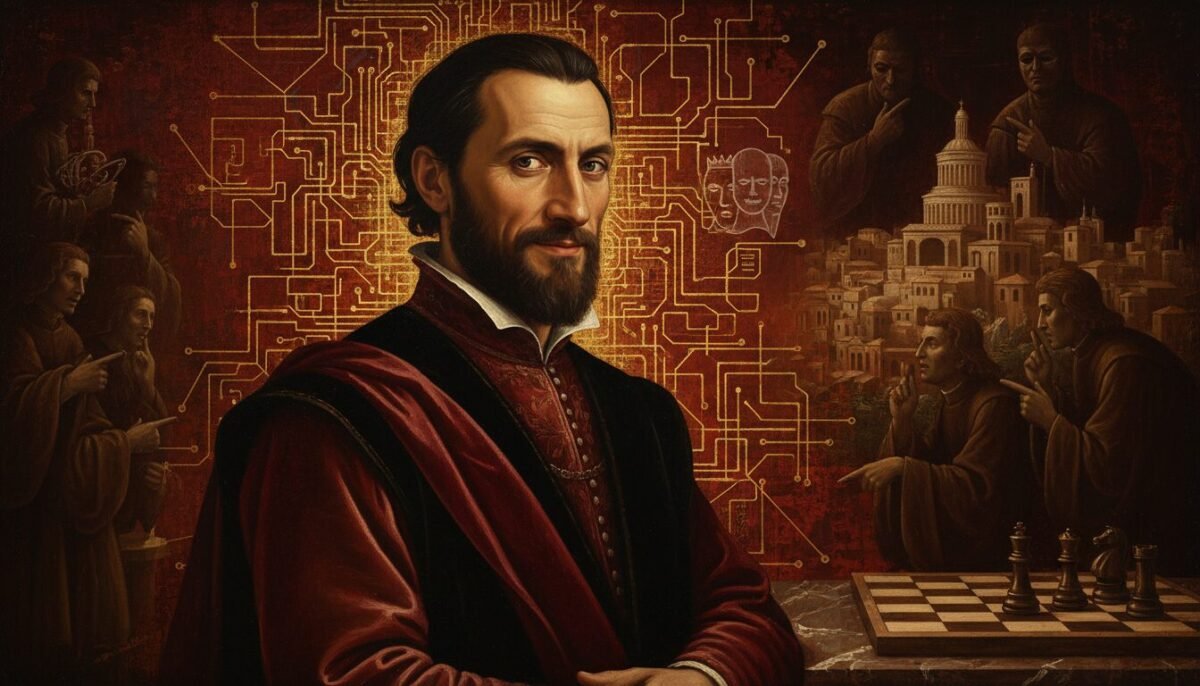
Consider the challenge of aligning stakeholders with conflicting interests. An idealistic leader might try to win everyone over with a passionate speech about “the mission.” A Machiavellian strategist, however, uses strategic manipulation—not necessarily to lie, but to frame the information in a way that appeals to each stakeholder’s specific self-interest. They might tell the CFO about cost savings, the Head of Product about innovation, and the Marketing Director about brand prestige. They are not changing the goal; they are customizing the “truth” to ensure the goal is reached.
This pragmatism is a massive asset in market positioning. In a 2026 economy defined by rapid disruption, the ability to act decisively without being hindered by sentimentality offers a distinct competitive advantage. These leaders are often the first to recognize when a long-standing partnership has become a liability or when a competitor is vulnerable to a aggressive talent raid. They don’t wait for permission to win; they create the conditions where winning becomes inevitable.
However, this “political skill” is a double-edged sword. While it can break through red tape and align disparate groups, it can also create an atmosphere of paranoia if the leader’s motives are perceived as purely self-serving. The most effective Machiavellians are those who use their skills to protect the organization, making them “the wolf that guards the sheep.”
4. Long-Term Planning vs. Short-Term Gains: The Machiavellian Paradox
A common misconception is that Machiavellianism is synonymous with short-term greed. In reality, the most dangerous (and effective) Machiavellians are those with the longest time horizons. There is a “Machiavellian Paradox” at play: to maintain power over the long term, one must often act with a degree of predictable integrity.
A leader who constantly betrays their allies for immediate wins will quickly find themselves isolated and powerless. A true strategist understands that reputation management is a critical component of long-term strategic viability. If people believe you are a person of your word, your word becomes a more powerful tool for manipulation when you actually need it. Therefore, the High Mach leader often behaves “ethically” not out of a moral imperative, but because it is the most efficient way to maintain influence.
History and modern business are full of case studies where pragmatic leadership led to organizational resilience. Think of the CEOs who took over legacy companies on the brink of bankruptcy. They often had to fire thousands of people, close beloved divisions, and break long-standing contracts. To the public, they appeared ruthless. But from a strategic perspective, they were ensuring the survival of the 50,000 employees who remained. This is the “Prince” in action—making the hard, unpopular choices today to ensure there is a tomorrow.
The difference between a “Low Mach” and a “High Mach” in this scenario is the psychological cost. The Low Mach leader might hesitate, seeking a consensus that never comes, and eventually lose the whole company. The High Mach accepts the role of the villain to achieve the objective of survival.
5. The Ethical Divide: Distinguishing Strategy from Harmful Manipulation
Where does strategic influence end and toxic manipulation begin? This is the “tipping point” that determines whether a leader is a visionary or a predator. The divide is usually found in the intent and the impact. Strategic influence is about moving people toward a collective goal; toxic manipulation is about exploiting people for personal gain or ego gratification.
In a toxic Machiavellian environment, the psychological toll on employees is devastating. When people feel like they are merely “pawns” on a board, engagement plummets. Retention becomes impossible because trust—the fundamental currency of any human collective—has been debased. Signs of a toxic Machiavellian culture include:
- Information Hoarding: Using knowledge as power rather than a resource.
- Gaslighting: Distorting reality to keep subordinates off-balance and dependent.
- Triangulation: Pitting team members against each other to prevent them from forming a unified front against the leader.
To combat this, we must look toward “Ethical Machiavellianism.” This sounds like an oxymoron, but it refers to the use of political skill and pragmatic strategy for the greater good. An ethical Machiavellian understands the dark side of human nature and the reality of power dynamics, but they use that knowledge to protect their team from external threats and internal dysfunction. They are “wise as serpents and innocent as doves.” They know how to play the game, but they play it to ensure the organization’s mission succeeds, not just their own career.
6. Balancing Pragmatic Strategy with Ethical Leadership in 2026
As we move deeper into 2026, the demand for a new kind of leadership is reaching a fever pitch. The “command and control” models of the past are failing in the face of a workforce that values purpose and autonomy. However, the “soft” leadership models often fail to account for the reality of competition and human ego. The future belongs to those who can integrate both.
Leaders must learn to audit their own strategic intentions. A simple framework for this is the “Mirror Test”: Is this move for the health of the mission, or the protection of my ego? If the answer is the latter, you have crossed into the territory of the Dark Triad. To counter-balance the inherent secrecy of Machiavellian strategy, leaders should adopt “Radical Candor.” This means being incredibly direct and objective about the “what” and the “why,” even when the “how” requires complex political maneuvering.
Future-proofing leadership requires a high EQ (Emotional Intelligence) to coexist with strategic pragmatism. You must be able to read the room and feel the pulse of your people, even if you are making the cold decision to pivot the company. In 2026, the most successful leaders will be “Strategic Empaths”—those who understand the mechanics of power but choose to use them to build structures of trust and innovation.
Conclusion
Machiavellianism is not a dirty word; it is a lens through which we can view the raw mechanics of power and influence. It offers powerful tools for strategic thinking and navigating the complex, often treacherous, waters of corporate politics. However, the ultimate success of these tools depends entirely on the hand that wields them. To thrive in the coming years, you must master the political skill of Machiavelli while maintaining the trust and respect of those you lead. Power without ethics is a recipe for a coup; ethics without power is a recipe for irrelevance.
Are you leading with a clear view of the board, or are you being moved by forces you don’t understand? To dive deeper into your own leadership style, consider exploring our resources on Machiavelli & Political Philosophy or the nuances of Power & Human Nature.
CTA: Ready to see where you stand? Download our Strategic Leadership Audit to evaluate your organizational power dynamics and enhance your ethical influence today.
Frequently Asked Questions
Is Machiavellianism always a bad thing in a leader?
Not necessarily. While the term is often used negatively, the traits associated with it—such as objective analysis, emotional detachment, and political savvy—are often essential for navigating complex organizations and making difficult but necessary decisions.
How can I tell if my boss is a “High Mach” or just a good strategist?
The key difference is transparency and intent. A good strategist uses their skills to benefit the organization and is often willing to explain the “why” behind their moves. A “High Mach” may be more secretive, using manipulation for personal gain or to maintain a sense of control over others.
Can you be Machiavellian and ethical at the same time?
Yes, this is often called “Ethical Machiavellianism.” it involves using an understanding of power dynamics and human psychology to achieve positive, ethical outcomes for the organization, rather than using those skills for exploitation.
What is the “Dark Triad” and how does it relate to business?
The Dark Triad consists of Machiavellianism, Narcissism, and Psychopathy. In business, these traits can lead to high levels of achievement and leadership positions, but if left unchecked, they can also create toxic work environments and lead to ethical failures.
Explore more about the psychology of influence in our articles on Machiavellianism, Influence & Leadership, or Comparative Philosophy.