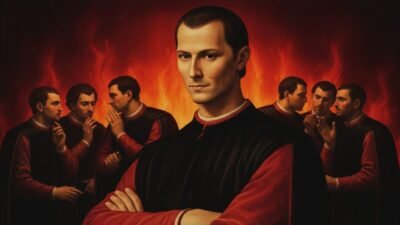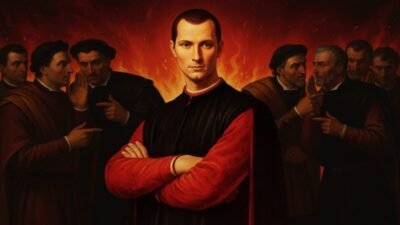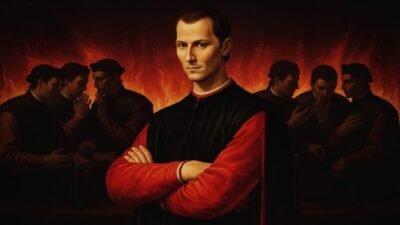
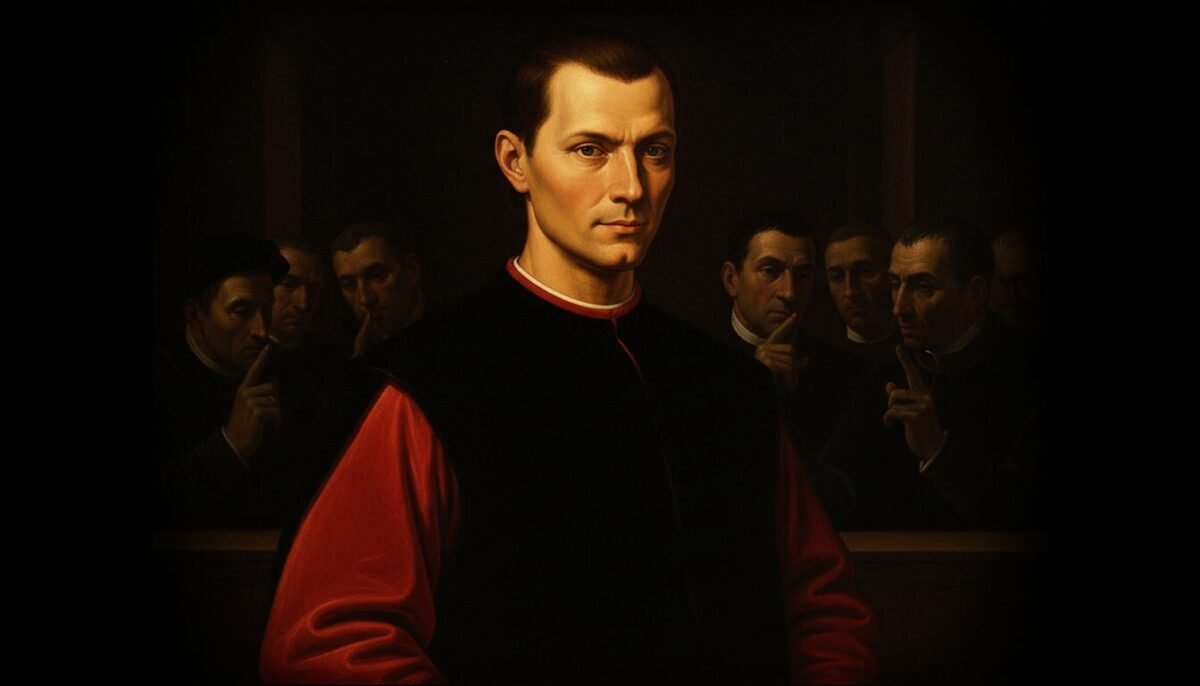
Imagine a high-stakes boardroom in 2026. A CEO sits across from a rival, navigating a landscape of deepfakes, algorithmic volatility, and shifting geopolitical alliances. In this hyper-connected, transparent era, we often tell ourselves that leadership has evolved into something purely empathetic, collaborative, and “authentic.” Yet, when the pressure mounts and survival is at stake, the veneer of modern idealism often cracks to reveal a much older, colder logic. Is it truly better to be feared than loved, or has the digital age finally rendered Niccolò Machiavelli’s realism obsolete? Many students and strategists today view Machiavelli through the distorted lens of “evil” caricatures—the mustache-twirling villain of political theory—missing the profound psychological insights that underpin his work. He wasn’t teaching us how to be “bad”; he was teaching us how to see the world as it actually is, rather than how we wish it to be.
This exploration provides a comprehensive deep dive into Machiavelli’s view of human depravity, the mechanics of self-interest, and how these timeless principles govern modern statecraft and corporate leadership in 2026. By stripping away the moralistic baggage, we find a thinker who understood the human psyche with a clarity that remains unsettling. Whether you are managing a decentralized autonomous organization (DAO) or navigating the complexities of a multipolar global economy, the shadows of the Florentine secretary are longer than ever. To understand power in 2026, we must first understand the man who dared to look into the abyss of human nature without blinking.
1. The Renaissance Crucible: Historical Context of Machiavellian Realism
To understand why Machiavelli wrote with such clinical detachment, one must understand the chaos of 15th and 16th-century Italy. This was not a world of stable borders and international law; it was a fractured landscape of warring city-states—Florence, Milan, Venice, the Papal States—constantly under threat from foreign powers like France and Spain. Machiavelli’s Florence was a place where a family could be in power one day and in exile the next. He served as a diplomat and high-ranking official, witnessing firsthand the brutal efficiency of some leaders and the catastrophic failures of others. His realism was forged in the fires of political collapse, not in the comfort of an academic office.
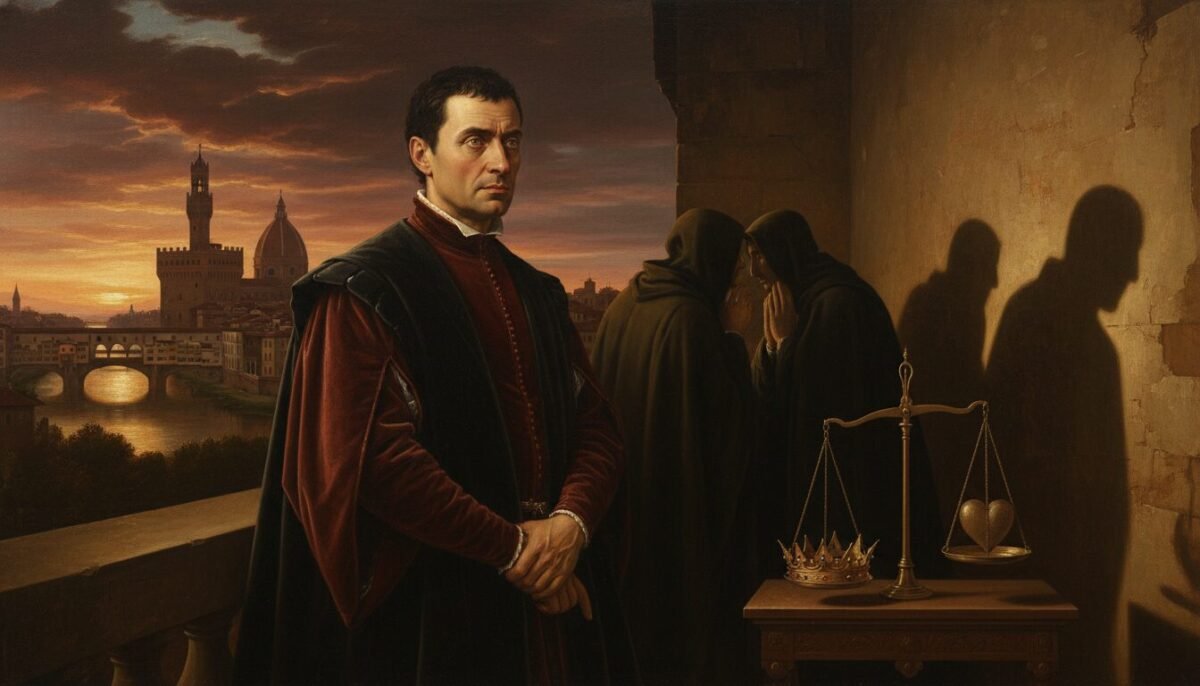
The shift Machiavelli initiated was seismic. For centuries, Medieval political thought had been dominated by idealism and the “Divine Right of Kings.” The prevailing “Mirrors for Princes” literature of the time advised rulers to be pious, just, and merciful, promising that God would reward a virtuous leader with a stable kingdom. Machiavelli looked at the evidence and saw the opposite: the most “virtuous” leaders were often the first to be overthrown, while those who were willing to get their hands dirty—like Cesare Borgia—brought order to chaos. He moved political theory from the realm of “ought” to the realm of “is,” establishing a secular pragmatism that prioritized the survival of the state over the salvation of the ruler’s soul.
The collapse of the Borgia papacy was a particularly formative moment for Machiavelli. He watched Cesare Borgia, a man he deeply admired for his ruthless efficiency, fall from power not because of a lack of skill, but because of a catastrophic stroke of bad luck—the death of his father, Pope Alexander VI, occurring exactly when Cesare himself was deathly ill. This shaped Machiavelli’s views on Fortuna (Fortune/Luck) and human failure. He realized that even the most brilliant strategist is at the mercy of a chaotic universe. However, he argued that a leader’s job is to build “dams and dikes” against the flood of Fortune. This objective methodology is what separates the man from the pejorative “Machiavellian” label. He wasn’t advocating for cruelty for its own sake; he was providing a forensic analysis of how power is won, held, and lost.
In 2026, we see a parallel to this Renaissance instability. The post-WWII international order has fractured, and we find ourselves in a “poly-crisis” world where traditional institutions are struggling to maintain relevance. Just as the printing press disrupted the Catholic Church’s monopoly on information, decentralized technology and AI are disrupting modern hierarchies. Machiavelli’s insistence on looking at the “effectual truth” of the matter—rather than the “imagination of it”—is more relevant than ever. He asks us to stop pretending that human nature has been “fixed” by technology and to start planning for the reality of human ambition and fear.
2. The Anatomy of Human Nature: Fickle, Ungrateful, and Deceptive
At the heart of Machiavelli’s philosophy lies a deeply pessimistic anthropology. In Chapter 17 of The Prince, he famously describes men as “ungrateful, fickle, simulators and deceivers, avoiders of danger, and greedy for gain.” To a modern ear, this sounds like a cynical indictment, but for Machiavelli, it was a necessary starting point for any stable government. If you build a system based on the assumption that people are naturally good and altruistic, that system will inevitably collapse when self-interest inevitably rears its head. He believed that while individuals might occasionally act with nobility, the *masses* are driven by more primal, predictable forces.
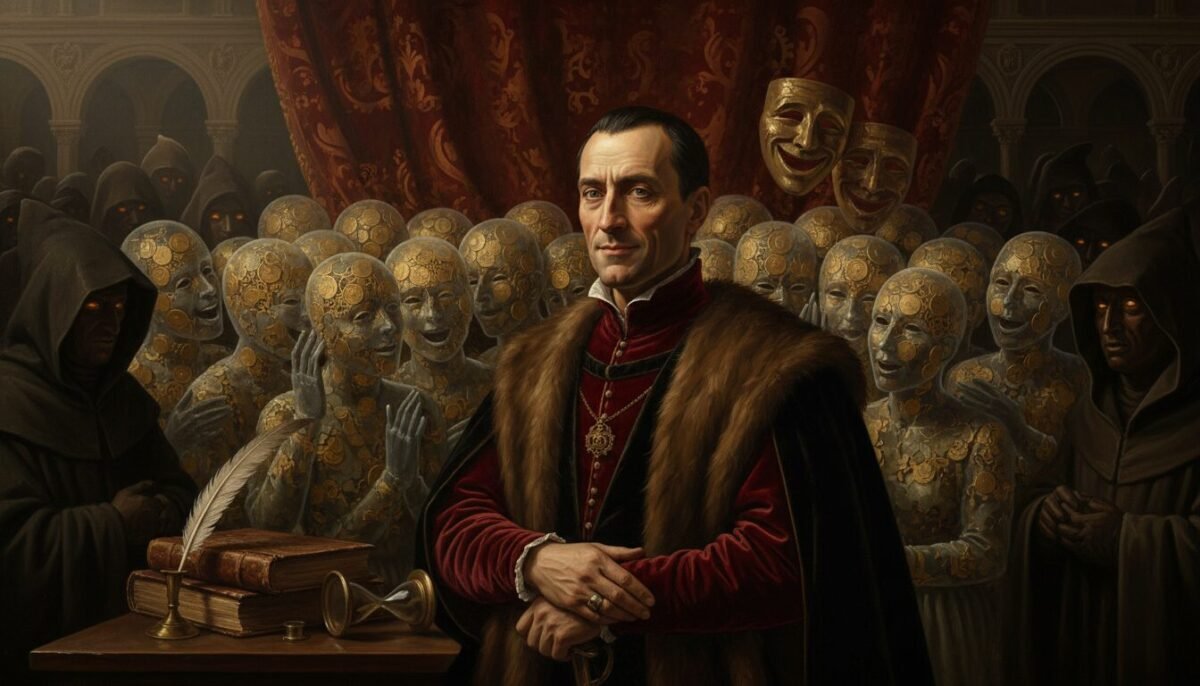
This leads to the concept of psychological egoism. Machiavelli posits that self-preservation and ambition are the primary engines of all social interaction. We are loyal to a leader or a cause only as long as that loyalty serves our own interests. The moment the cost of loyalty exceeds the benefit, the “fickleness” of the masses manifests. We see this in 2026 corporate culture: employees who pledge “undying passion” for a startup’s mission are often the first to leave when the stock options lose value or a better offer appears. Machiavelli would argue this isn’t a moral failing of the employees; it is simply human nature operating as it always has. A leader who relies on “love” or “gratitude” is building on sand.
The “fickleness” Machiavelli describes is particularly visible in the age of social media and rapid-fire news cycles. Public opinion in 2026 can shift in a matter of hours. A hero is “canceled” or a brand is boycotted not necessarily because of a deep moral shift, but because the crowd finds it advantageous or safer to align with the new prevailing wind. Machiavelli understood that the “people” are a volatile ocean. They will support you when you are providing them with security and prosperity, but they will turn on you the moment they feel their own property or safety is at risk. He noted that men “forget the death of their father sooner than the loss of their patrimony.” This insight into the primacy of material self-interest remains a cornerstone of political campaigning and economic policy today.
Critically, Machiavelli believed that human behavior does not evolve. While our technology changes—from the crossbow to the autonomous drone—the psychological hardware remains the same. The same drives that motivated a Roman senator or a Florentine merchant are at work in the mind of a 2026 tech mogul or a suburban voter. This “constancy of human depravity” is what allows history to be a useful teacher. Because humans are predictable in their selfishness and fear, a student of history can anticipate the moves of their adversaries. By accepting this “badness” as a constant, a ruler can design laws and institutions that channel these selfish impulses toward the common good, rather than being destroyed by them.
3. Self-Interest as the Engine of Statecraft in ‘The Prince’
If human nature is inherently self-interested, then the art of statecraft becomes a game of managing those interests. In The Prince, Machiavelli argues that a leader must operate under the assumption that all men are potential adversaries. This isn’t paranoia; it’s a strategic safeguard. If you assume everyone is a friend, you leave yourself vulnerable to the one person who isn’t. By assuming the worst, you prepare for the reality of competition. This “adversarial mindset” is essential for maintaining stability in a world where everyone else is also pursuing their own self-interest.
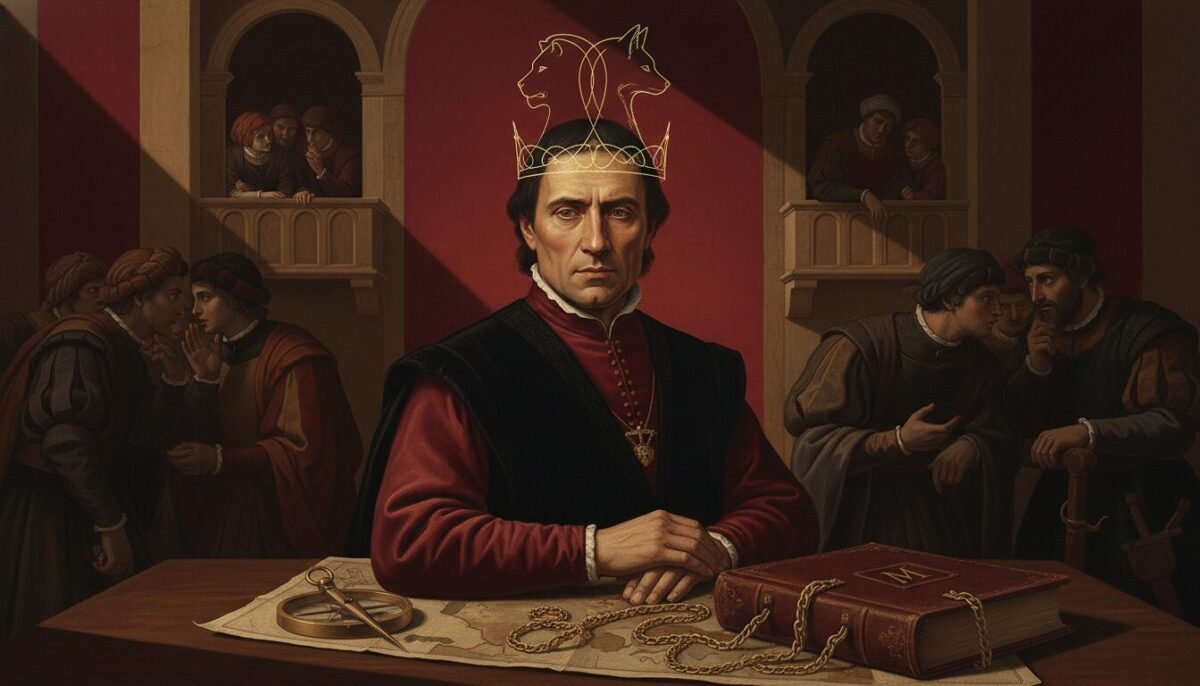
To navigate this world, Machiavelli introduces the metaphor of The Lion and The Fox. A ruler must be a lion to frighten the wolves (brute force and authority) and a fox to recognize the traps (intellectual deception and cunning). Relying on force alone is clumsy and often leads to resentment and rebellion. Relying on cunning alone leaves one vulnerable to those who are willing to use violence. The successful leader in 2026 is one who can pivot between these roles. They must have the “lion-like” strength to make hard decisions—such as mass layoffs or aggressive market entries—but also the “fox-like” agility to navigate the complexities of regulatory environments and public relations spin.
Machiavelli’s genius was in showing how a ruler can manipulate the “common good” through the lens of self-interest. He didn’t believe the masses needed to be “good” for a state to be successful; they only needed to be *satisfied*. If a leader ensures that the people are safe, their property is secure, and their basic needs are met, the people will, out of their own self-interest, support the leader. The “common good” is thus not a moral objective, but a strategic byproduct of a stable regime. A ruler who understands the flaws of their subjects—their greed, their fear, their vanity—can use those flaws as levers to maintain order. In 2026, this looks like “nudge” theory and algorithmic incentives that guide behavior without the need for overt coercion.
Furthermore, Machiavelli distinguished between the self-interest of the “Great” (the elite) and “The People.” The elite want to command and oppress, while the people simply want not to be oppressed. This fundamental tension is the heart of any political system. A wise leader realizes that the “Great” are more dangerous because they have the resources and ambition to overthrow the ruler. Therefore, it is often in the ruler’s self-interest to side with the people against the elite. By protecting the masses from the predations of the powerful, the ruler gains a broad base of support that is much harder to topple than a small circle of ambitious courtiers. This dynamic is playing out today in the populist movements across the globe, where leaders bypass traditional gatekeepers to speak directly to the “self-interest” of the general population.
4. Fear, Love, and the Calculus of Power: Navigating the Human Psyche
Perhaps the most famous question in all of political philosophy is Machiavelli’s dilemma: Is it better to be loved or feared? His answer is nuanced: ideally, one should be both. However, since they are difficult to combine, it is much safer to be feared than loved. Why? Because love is a bond of obligation which, “owing to the wickedness of men, is broken at every opportunity for their own profit; but fear preserves you by a dread of punishment which never fails.” In the cold calculus of power, love is a variable you cannot control, while fear is a tool you can wield with precision.
However, Machiavelli adds a crucial caveat: a leader must be feared, but never hated. Hatred is the ultimate political poison. Once a population hates their leader, they lose their fear of punishment and become willing to sacrifice themselves to destroy the ruler. How does one avoid hatred? Machiavelli is surprisingly practical: “Above all, he must abstain from taking the property of others, for men forget more easily the death of their father than the loss of their patrimony.” He also warns against interfering with the women of his subjects. In 2026 terms, this means respecting the “private sphere” and the economic security of the people. A government or a corporation can be demanding and strict (fear), but if it starts seizing assets or violating personal privacy (hatred), its days are numbered.
This dynamic has fascinating applications in 2026 organizational psychology and remote leadership. In a world of decentralized teams and “work from anywhere” cultures, the traditional bonds of “love” (company loyalty, office camaraderie) have weakened. Leaders can no longer rely on the “pizza party” to maintain morale. Instead, we see a shift toward a more Machiavellian “fear”—not of physical harm, but of obsolescence, data-driven performance metrics, and the “dread of punishment” via algorithmic ranking. A manager who is “too nice” (seeking love) often finds their team’s productivity slipping as individuals prioritize their own comfort. Conversely, the most effective modern leaders are those who maintain a high standard of accountability (fear of failure) while ensuring that the “property” (salary, benefits, work-life balance) of their employees is strictly protected to avoid resentment.
The fragility of “obligations” is another key insight. In 2026, we see this in the “gig economy” and the breakdown of the long-term social contract between employer and employee. When a company falls on hard times, the “love” the employees felt for the brand often vanishes instantly. Machiavelli would say this is to be expected. The leader who spent years trying to be “loved” is left baffled when the team deserts them, while the leader who maintained a healthy “fear” (respect for authority and consequence) finds that their team remains disciplined even in a crisis. Power is not about being liked; it is about being the most reliable guarantor of the interests of those you lead.
5. Virtù, Fortuna, and the Moral Divide: Politics vs. Private Ethics
To truly grasp Machiavelli’s worldview, one must understand his specific use of the word Virtù. In common parlance, virtue means moral goodness—kindness, honesty, piety. For Machiavelli, *virtù* is something entirely different: it is political manliness, prowess, skill, and the ability to achieve great things. A man of *virtù* might have to lie, cheat, or even kill if the situation demands it for the stability of the state. This is not “evil”; it is the highest form of political competence. It is the ability to adapt one’s character to the times.
This *virtù* is the primary weapon in the battle against Fortuna. Machiavelli famously compared Fortune to a torrential river that, when it overflows, destroys everything in its path. However, when the weather is fair, men can build dams and dikes to mitigate the damage. *Virtù* is the human agency that prepares for the unpredictable. In 2026, *Fortuna* might look like a sudden global pandemic, a breakthrough in AGI that renders an entire industry obsolete, or a sudden shift in trade winds. The leader with *virtù* is not the one who hopes for the best, but the one who has built the “dams” of diversified supply chains, robust cybersecurity, and agile organizational structures.
This leads to the “Dual Morality” theory. Machiavelli argued that the ethics of the individual (private morality) cannot and should not apply to the preservation of the state (political morality). A private citizen who lies is a liar; a ruler who lies to prevent a civil war is a statesman. This is the origin of the “Ends Justify the Means” controversy. While Machiavelli never actually wrote that exact phrase, he did write that “in the actions of all men, and especially of princes… one looks at the result.” If a leader succeeds in maintaining the state and the safety of the people, the “means” will always be judged honorable. This is a chilling but necessary realization for anyone in a position of high-stakes responsibility.
In 2026, this moral divide is more visible than ever. We demand “transparency” and “honesty” from our leaders, yet we also demand that they protect us from threats that often require secrecy and deception. The “ends” of national security or corporate survival often necessitate “means” that would be considered unethical in a private context—such as corporate espionage or back-channel diplomatic maneuvering. Machiavelli challenges us to stop being hypocrites. He forces us to acknowledge that the very stability that allows us to practice our private “virtues” is often maintained by leaders who are willing to sacrifice their own moral purity for the sake of the collective.
6. The Prince vs. The Discourses: Does Machiavelli’s View of Humanity Change?
There is a common misconception that Machiavelli was a lifelong advocate for autocracy. However, his other major work, Discourses on Livy, presents a much more nuanced view of human nature within a Republic. While The Prince focuses on the “emergency” state where a single strong leader is needed to create order from chaos, The Discourses explores how a free people can maintain a stable state over centuries. Does his view of humanity change? Not really. He still believes humans are self-interested and fickle, but he argues that in a Republic, these negative traits can be harnessed for the common good.
In a Republic, Machiavelli argues that the conflict between different self-interested factions—the rich and the poor, the “Great” and the “People”—is actually the secret to liberty. Instead of one side crushing the other, their constant tension leads to the creation of laws that protect everyone. Conflict is not a sign of failure; it is the engine of a healthy society. This is a profound insight for 2026, where we often view political polarization as a purely negative force. Machiavelli would suggest that the goal is not to eliminate conflict, but to channel it through institutions and laws so that no single faction can dominate the others.
He also emphasizes the necessity of religion and law as tools to “tame” human nature. In The Prince, religion is a tool for the ruler to manipulate the masses. In The Discourses, it is a social glue that creates “civic virtue”—a sense of duty to the state that outweighs immediate self-interest. He admired the ancient Romans for their ability to use religious oaths to keep soldiers loyal and citizens honest. For Machiavelli, the “goodness” of a citizenry is not natural; it is manufactured by good laws and strong traditions. If the laws are weak, the natural “depravity” of man will quickly return.
This highlights the difference in psychological management between an autocracy and a republic. In an autocracy, the ruler manages the people through fear and the satisfaction of their basic needs. In a republic, the state manages the people by making it in their self-interest to be “virtuous.” By giving citizens a stake in the government and a voice in the laws, the state aligns the individual’s ambition with the success of the collective. In 2026, we see this in the difference between a top-down corporate hierarchy and a decentralized, “flat” organization. The latter requires a much more sophisticated psychological framework to ensure that individual “self-interest” doesn’t lead to the fragmentation of the group.
7. Machiavellian Realism in 2026: From Geopolitics to AI Ethics
As we navigate the mid-2020s, Machiavelli’s realism is finding new life in the most cutting-edge fields. In international relations, we have returned to a world of “Realpolitik.” The idealistic “end of history” era is over, replaced by a multipolar struggle where the self-interest of nations—rather than international norms—is the primary driver. Whether it’s the race for semiconductor dominance or the control of Arctic shipping lanes, the logic is pure Machiavelli: secure your own position, assume your rivals are doing the same, and prepare for the “flood” of Fortune.
In the corporate world, “Corporate Machiavellianism” has evolved. Power dynamics in 2026 are often decentralized and AI-driven. The “Fox” of today is the algorithm—the opaque system that manipulates consumer behavior and employee productivity through subtle incentives and data-driven nudges. The “Lion” is the massive tech conglomerate that uses its market cap to crush or absorb any potential “wolf” that threatens its dominance. Leaders who fail to understand the “fox-like” nature of digital platforms—how they can be used to simulate “love” while exercising “fear”—will find themselves obsolete.
Digital deception has reached a level that would have fascinated Machiavelli. The ability to “simulate and dissimulate” is now automated. Deepfakes and AI-generated personas allow for a level of “fox-like” cunning that makes the Renaissance look quaint. We are entering an era where the “appearance” of virtue is entirely decoupled from the reality of the actor. Machiavelli’s advice to “appear merciful, faithful, humane, trustworthy, and religious” while being prepared to be the opposite is now the standard operating procedure for digital brand management. The “masses” are still fickle, but they are now being manipulated by machines that understand their self-interest better than they do themselves.
Ultimately, Machiavelli remains the ultimate “mirror” for the 2026 political soul. He forces us to look past our high-minded rhetoric and see the raw mechanics of our own behavior. We are still the same “ungrateful and fickle” creatures he described in 1513, just with better tools. By acknowledging this, we don’t become “evil”; we become effective. We learn how to build systems that account for human flaws, how to lead with a clear-eyed view of power, and how to protect the things we value in a world that is often indifferent to them.
Conclusion: Machiavelli’s view of human nature as fundamentally self-interested and fickle serves as the bedrock of political realism. By separating private morality from political necessity, he provided a blueprint for power that remains as potent in 2026 as it was in 1513. Understanding these psychological drivers—the interplay of fear and love, the battle between Virtù and Fortuna, and the constant engine of self-interest—is essential for anyone navigating the complexities of modern leadership. In a world of shifting sands, the Florentine secretary offers us a solid, if chilling, ground to stand on.
***
Frequently Asked Questions
1. Did Machiavelli actually believe people are “evil”?
Not exactly “evil” in a theological sense, but rather “bad” in a functional sense. He believed that without the restraint of laws and the incentive of self-interest, humans naturally gravitate toward selfishness, fickleness, and deception. He viewed this as a biological and psychological constant rather than a moral choice.
2. Is “Machiavellian” always a bad thing in leadership?
In modern psychology, it is often associated with the “Dark Triad” of personality traits. However, in a strategic sense, “Machiavellian” can simply mean being a realist. A leader who understands power dynamics and human flaws can often create a more stable and safe environment than one who is naively idealistic.
3. How can I apply Machiavelli’s “Fear vs. Love” in a modern office?
It’s about “Respect vs. Likability.” Seeking to be liked (love) can lead to a lack of accountability. Seeking to be respected (fear of consequence) ensures high performance. The key, as Machiavelli noted, is to avoid being hated by being fair, protecting your team’s interests, and not being arbitrary in your decisions.
4. What is the difference between Virtù and modern “Virtue”?
Modern virtue is about moral goodness (being a “nice” person). Machiavellian *Virtù* is about effectiveness, prowess, and the ability to achieve a goal. A leader might have to do something “un-virtuous” (like firing a friend) to demonstrate *Virtù* (saving the company).
***
If you found this analysis of power and human nature compelling, explore our other deep dives into the mechanics of influence:
- Machiavelli & Political Philosophy: The transition from the ancient to the modern world.
- Power & Human Nature: Why we crave authority and how it changes us.
- Machiavellianism: Understanding the psychological profile of the modern strategist.
- Influence & Leadership: Mastering the art of the Lion and the Fox in the digital age.
- Comparative Philosophy: How Eastern and Western views of power converge in 2026.
Want to master the art of political realism? Subscribe to the DeepPsyche newsletter for weekly insights into the psychological forces shaping our world, or download our guide to Leadership in the Age of AI.