Imagine a world where every individual action is unpredictable, yet every collective movement is strictly governed—a paradox that defines the very essence of human civilization. We wake up, follow traffic laws, exchange digital currency for coffee, and attend meetings, all while harboring a chaotic inner world of desires, fears, and rebellious impulses. This tension is the heartbeat of society. We are caught in a constant struggle between the human desire for absolute freedom and the existential necessity for structured social order. Without order, we have the terrifying unpredictability of the jungle; with too much control, we have the suffocating stillness of a prison.
To understand why our world looks the way it does, we must look beneath the surface of politics and economics. We must examine the triad of control, order, and chaos. This isn’t just an academic exercise; it is a map of the invisible forces that determine whether a society flourishes into a golden age or collapses into the ash heap of history. By analyzing how these forces interact, we can begin to see the “matrix” of modern governance and our own place within it.
1. The Sociological Triad: Defining Control, Order, and Chaos
To navigate the complexities of human society, we first need a clear framework. In sociology, structural functionalism views society as a complex system whose parts work together to promote solidarity and stability. Think of it like a biological organism: the heart, lungs, and brain must all function in harmony for the body to survive. In this view, “order” is the state of health, while “chaos” is the onset of disease.
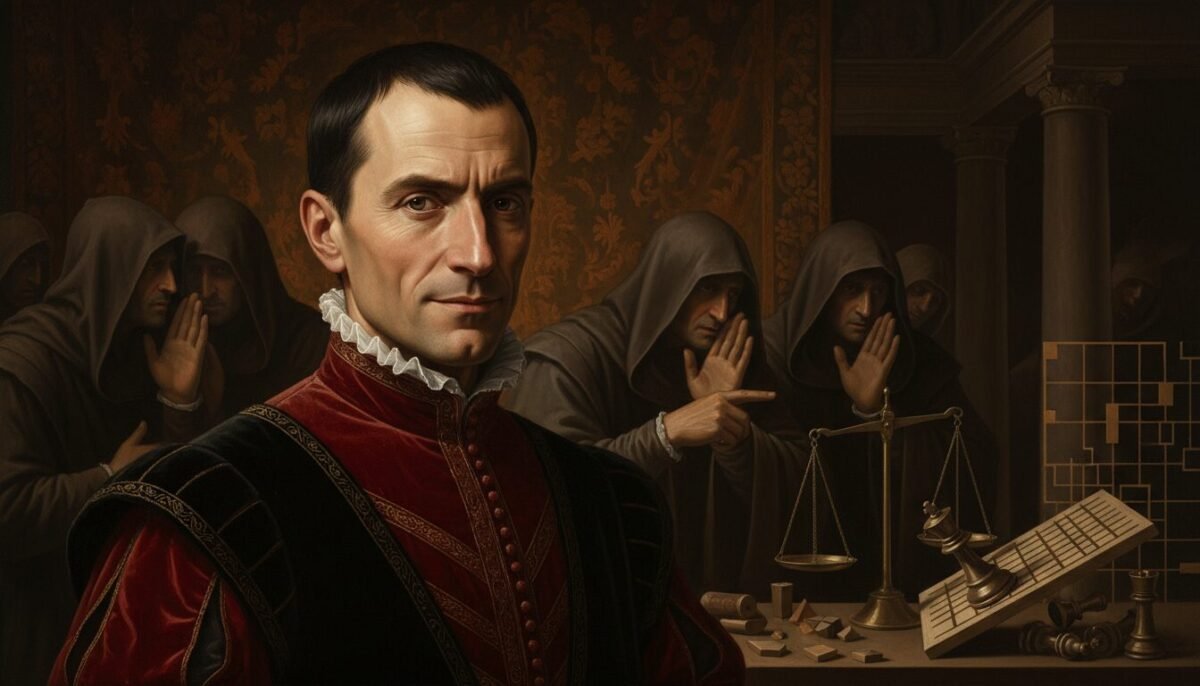
However, there is a persistent force working against this harmony: social entropy. Just as the second law of thermodynamics states that physical systems naturally drift toward disorder, human systems naturally decay. Laws become obsolete, institutions grow corrupt, and social bonds fray. Without a constant input of energy—in the form of shared values, enforcement, and adaptation—society doesn’t just stay still; it slides toward chaos. This is why “order” is never a permanent achievement; it is a temporary victory in an ongoing battle against entropy.
When we talk about maintaining this order, we must differentiate between two very different methods: Spontaneous Order and Planned Control. Spontaneous order is what happens when individuals follow simple local rules that result in complex global patterns. Language is a perfect example. No central committee invented English; it evolved through millions of individual interactions. Markets often work the same way. On the other hand, Planned Control is top-down. It is the city grid, the tax code, and the criminal justice system. A healthy society requires both: the organic flexibility of spontaneous evolution and the rigid scaffolding of planned governance. When a state tries to “plan” everything, it stifles the life out of the system. When it plans nothing, the system dissolves into predatory fragments.
2. The Foundations of Social Order: Contracts and Institutions
Why do we agree to follow rules at all? Why don’t we simply take what we want? This brings us to Social Contract Theory, the philosophical bedrock of the modern state. Thinkers like Thomas Hobbes, John Locke, and Jean-Jacques Rousseau offered different takes on this “deal” we make with society.
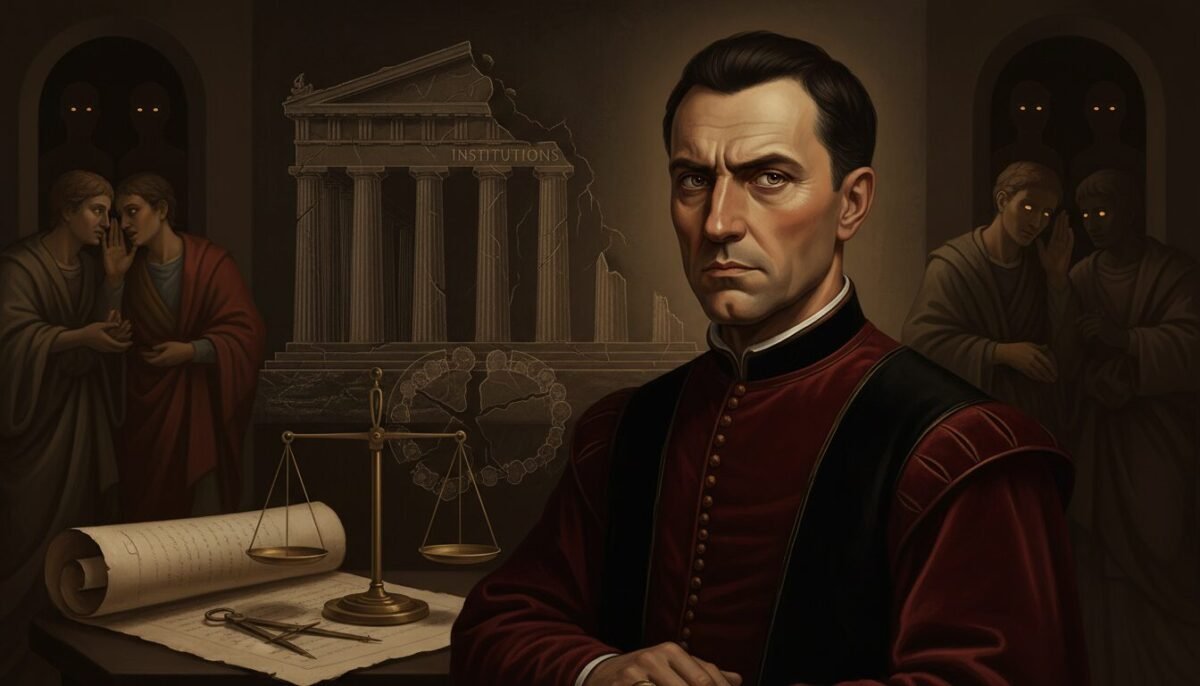
- Thomas Hobbes viewed the “state of nature” as a war of all against all. For him, life without a strong central authority (the Leviathan) was “solitary, poor, nasty, brutish, and short.” We trade our freedom for security.
- John Locke had a more optimistic view, arguing that we enter into a contract to protect our “natural rights” of life, liberty, and property. If the government fails to protect these, the contract is void.
- Jean-Jacques Rousseau spoke of the “General Will,” suggesting that true freedom comes from participating in a community that acts for the common good.
But social order isn’t just about high-minded philosophy; it’s built on institutions. We have formal institutions, like the government and the legal system, which use “hard power” to enforce rules. Yet, the informal institutions—norms, traditions, and cultural taboos—are often more powerful. You might not steal your neighbor’s mail because you fear the law, but you probably don’t cut in line at the grocery store because of a social norm. These unwritten rules provide the “social glue” that makes life predictable.
From an evolutionary perspective, our brains are hardwired to crave this predictability. The human amygdala is a “threat detector” that reacts to uncertainty with stress and anxiety. In the ancient past, being cast out of the tribe meant certain death. Therefore, we have a deep-seated psychological need to belong to a structured group. We trade a portion of our wild, individual autonomy for the psychological safety of knowing what tomorrow will look like.
3. Mechanisms of Social Control in the Modern Era
In the past, social control was visceral. It was the village elder’s disapproval or the king’s soldiers in the square. Today, the mechanisms of control have become more sophisticated, invisible, and pervasive. The primary mechanism remains the legal system, which sets the boundaries of acceptable behavior. However, the “status quo” is no longer maintained just by the threat of a jail cell.

We have entered the age of algorithmic governance. Technology has transformed social control from a reactive force into a proactive one. Consider digital surveillance: every transaction, every search query, and every movement tracked via GPS creates a “digital twin” of the individual. In some regions, this has evolved into “social credit systems,” where a citizen’s access to travel, education, or credit is determined by their “behavioral score.” This isn’t just law enforcement; it is the gamification of obedience.
Furthermore, globalization has standardized these mechanisms across borders. Whether you are in London, Tokyo, or New York, the fundamental structures of banking, air travel, and digital communication are remarkably similar. This standardization creates a global “order” that facilitates trade and communication but also makes it harder for any individual or group to opt out of the system. We are living in a world where the “panopticon”—the prison where the guard can see every cell—is no longer a metaphor; it is the architecture of the internet itself.
These technological tools allow for a level of influence and leadership that would have been unimaginable to Machiavelli. Power today is often exercised not by breaking the will of the people, but by shaping their desires through data-driven nudges. When the algorithm decides what news you see, it is exercising a form of social control that is far more effective than traditional propaganda because it feels like your own choice.
4. The Paradox of Freedom: Balancing Control and Individual Liberty
Herein lies the great paradox: a society needs control to protect freedom, but too much control destroys freedom. This is the “Goldilocks” problem of governance. If the state is too weak, we see the rise of warlords and the collapse of infrastructure (excessive anarchy). If the state is too strong, we see the erosion of personal autonomy and the death of innovation (authoritarian overreach).
History is littered with the corpses of societies that failed to find this balance. The Roman Republic collapsed when its institutions could no longer contain the ambitions of powerful individuals, leading to a shift toward the absolute control of the Empire. Conversely, the Soviet Union collapsed under the weight of excessive central planning, which stifled the spontaneous order of the economy and the human spirit. In the modern context, we see this tension in the debate over “security vs. privacy.” How much of our personal data are we willing to give up to prevent a terrorist attack or a pandemic?
The balance of power is the only thing that prevents societal collapse. This doesn’t just mean the “separation of powers” within a government, but the balance between the state, the private sector, and civil society. When any one of these becomes too dominant, the system tilts toward tyranny. True comparative philosophy shows us that the most resilient societies are those that allow for “controlled friction”—where different ideas and interests can clash without destroying the entire structure.
5. Chaos as a Catalyst: When Disruption Leads to Social Change
While we often fear chaos, it is not always the enemy. In sociology, chaos theory suggests that small disruptions—the proverbial flap of a butterfly’s wing—can lead to massive systemic shifts. This is often necessary. When a social system becomes too rigid, it loses its ability to adapt. In these moments, chaos acts as a “reset button.”
Consider the role of Creative Destruction, a term coined by economist Joseph Schumpeter. It describes the “process of industrial mutation that incessantly revolutionizes the economic structure from within, incessantly destroying the old one, incessantly creating a new one.” This applies to social dynamics as well. Revolutions, while chaotic and often violent, are frequently the result of a system that refused to evolve. The French Revolution was a chaotic explosion that eventually led to the birth of modern secular democracy. The chaos was the catalyst that broke the “order” of the absolute monarchy, which had become a stagnant prison for the French people.
Transitions from chaos to a new structure are rarely smooth. They are “punctuated equilibria”—long periods of stability interrupted by short bursts of radical change. Understanding this allows us to see current social unrest not just as a threat, but as a symptom of a system that is searching for a new level of order. The goal of a wise society is not to eliminate chaos entirely, but to harness its energy for political evolution rather than total destruction.
6. The Future of Order: Navigating Complexity in a Decentralized World
As we look toward the future, the traditional models of top-down control are being challenged by decentralized systems. Technologies like blockchain and Decentralized Autonomous Organizations (DAOs) offer a new vision of order: one that doesn’t require a central “king” or a massive bureaucracy. In these systems, trust is built into the code itself. This represents a radical shift back toward a high-tech version of spontaneous order.
However, decentralization brings its own form of chaos. We are currently struggling with the “Entropy of Information.” In the age of social media, the gatekeepers of truth have disappeared. While this has democratized speech, it has also led to a fragmented reality where different groups cannot even agree on basic facts. Without a shared “information order,” it becomes nearly impossible to maintain a social contract. How can we vote or deliberate if we live in different versions of reality?
The enduring dance between stability and transformation will define the next century. We are moving away from the “solid” order of the 20th-century nation-state toward a “liquid” world of shifting networks. Managing this complexity requires a new kind of literacy—an understanding of how power, psychology, and technology intersect. We must learn to be comfortable with a certain level of chaos while building new, more flexible structures of control that protect our human nature rather than trying to suppress it.
Societal stability is not a static achievement; it is a dynamic process. It is a tightrope walk over the abyss of chaos, with the pole of control held firmly in our hands. Understanding these mechanisms is vital for navigating the complexities of modern governance and ensuring that our desire for safety never completely eclipses our need for freedom.
Frequently Asked Questions
What is the difference between social order and social control?
Social order is the state of stability and predictability within a society, where parts work together harmoniously. Social control refers to the specific mechanisms—such as laws, norms, and technology—used to maintain that order and discourage deviance.
Can a society exist without any form of control?
Theoretically, no. Even in the most “anarchic” communities, informal social controls like reputation, peer pressure, and shared customs emerge to prevent total chaos. Without some form of control, collective action becomes impossible.
How does technology change the way we experience freedom?
Technology offers a “convenience trap.” While it gives us more tools for expression and connection, it also subjects us to constant surveillance and algorithmic influence, which can subtly erode our personal autonomy without us realizing it.
Is chaos always a bad thing for a country?
Not necessarily. While extreme chaos leads to suffering, moderate “disruption” or chaos is often the precursor to necessary social change and innovation, preventing a society from becoming stagnant and brittle.
If you found this analysis of societal dynamics intriguing, you may want to dive deeper into the mechanics of influence and the darker side of political strategy. Explore our insights on Machiavelli & Political Philosophy, the complexities of Power & Human Nature, or the psychological traits behind Machiavellianism to better understand the forces shaping our world.
Ready to explore the depths of the human psyche? Visit DeepPsyche.blog for more sharp, honest, and logic-driven perspectives on the hidden structures of our lives.