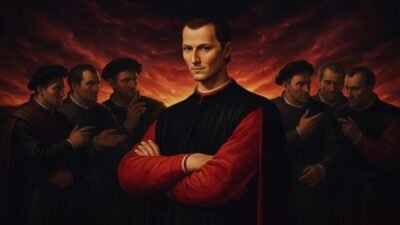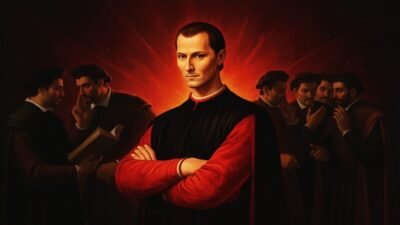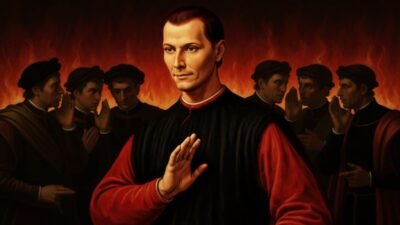
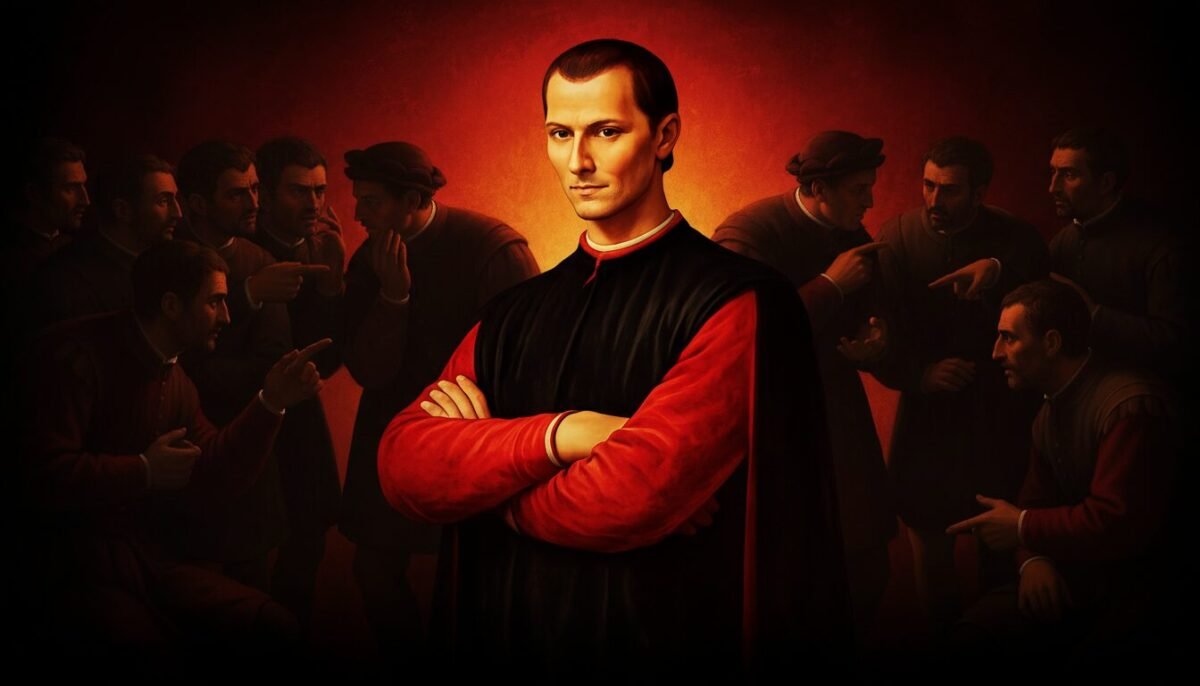
If you have ever been called “Machiavellian” in a corporate boardroom or a political debate, it wasn’t a compliment. The term has become a shorthand for cold-blooded manipulation, a lack of conscience, and the ruthless pursuit of power at any cost. We picture a shadowy figure whispering in a king’s ear, or a modern CEO firing thousands with a smirk, all while clutching a small, leather-bound book titled The Prince. But if we could pull Niccolò Machiavelli out of the 16th century and show him his own legacy, he would likely be baffled—and perhaps a little heartbroken.
The man behind the name was not a cartoon villain. He was a civil servant, a diplomat, a playwright, and a father who spent his life trying to save his beloved Florence from collapse. Most people today know him through a handful of misquoted lines and a single, slim volume, leading to a distorted view of his actual political philosophy. By stripping away the layers of myth, we discover a complex thinker who wasn’t trying to teach us how to be “evil,” but rather how to survive in a world that often is. He was the first to look at politics not as we wish it to be, but as it truly is.
1. The Context of Chaos: Why Machiavelli Wrote The Prince
To understand Machiavelli, you have to understand the smell of gunpowder and the sound of marching boots that defined his era. In the early 1500s, Italy was not a unified country; it was a chaotic patchwork of city-states—Florence, Venice, Milan, the Papal States—all constantly at each other’s throats. Worse, these wealthy but militarily weak states were the playground for the great superpowers of the day: France and Spain. Foreign armies regularly swept across the Alps, looting cities and toppling governments.
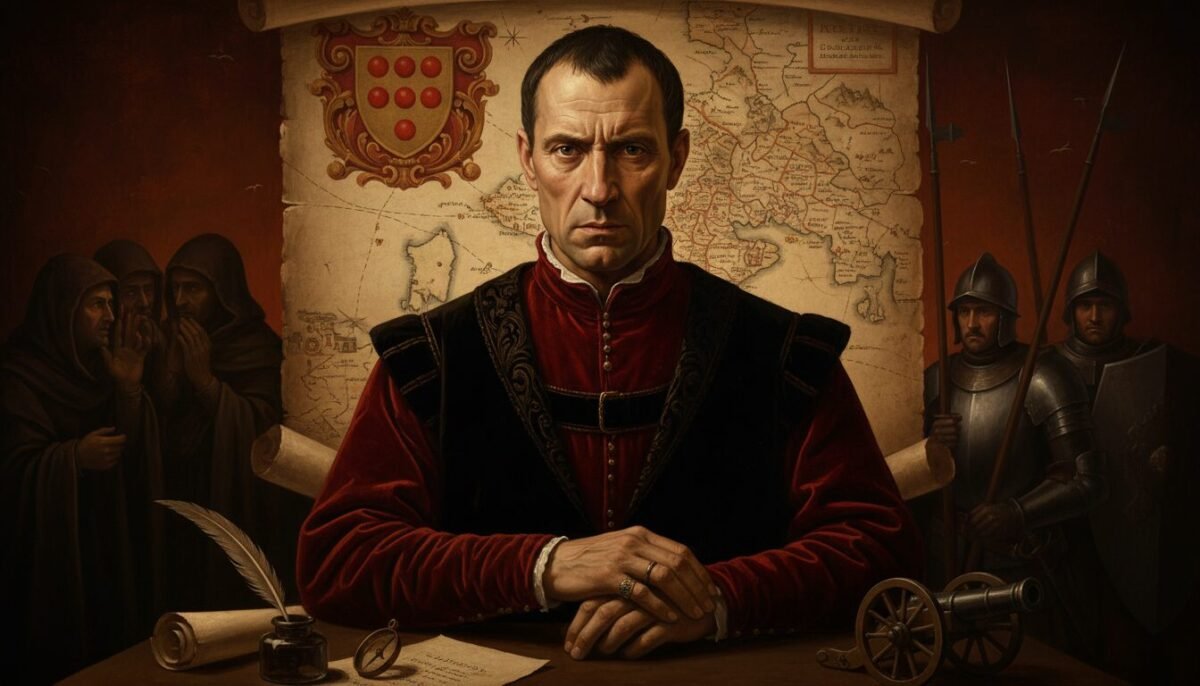
Machiavelli served as a high-ranking diplomat for the Florentine Republic for fourteen years. He went on missions to the courts of kings and popes, watching firsthand how power was won and lost. He saw leaders who were “good” men—pious, honest, and kind—get crushed because they refused to get their hands dirty. He also saw “bad” men, like the infamous Cesare Borgia, bring order and stability through sheer force of will. For Machiavelli, the stakes weren’t academic; they were existential. If Florence didn’t find a strong leader, it would cease to exist.
In 1512, the Florentine Republic collapsed. The powerful Medici family returned to power, and Machiavelli was stripped of his office, imprisoned, and tortured on the “strappado”—a device that dislocated the shoulders. He was eventually exiled to his small farm outside the city. It was there, in a state of deep depression and professional desperation, that he wrote The Prince.
It is crucial to realize that The Prince was not intended as a universal moral guide for all humanity. It was a “job application” addressed to Lorenzo de’ Medici. Machiavelli was essentially saying: “I know you hate me, but I have fourteen years of diplomatic secrets. Here is a manual on how to keep Florence strong so the French don’t invade us again. Please hire me.” He wrote it for a specific emergency, in a specific time of chaos, hoping to regain his position in the government he loved.
2. Debunking the Quote: Did He Say ‘The Ends Justify the Means’?
If you ask someone to summarize Machiavelli in one sentence, they will almost certainly say: “The ends justify the means.” It is the ultimate “Machiavellian” mantra. However, there is a significant problem with this: Machiavelli never actually wrote those words.
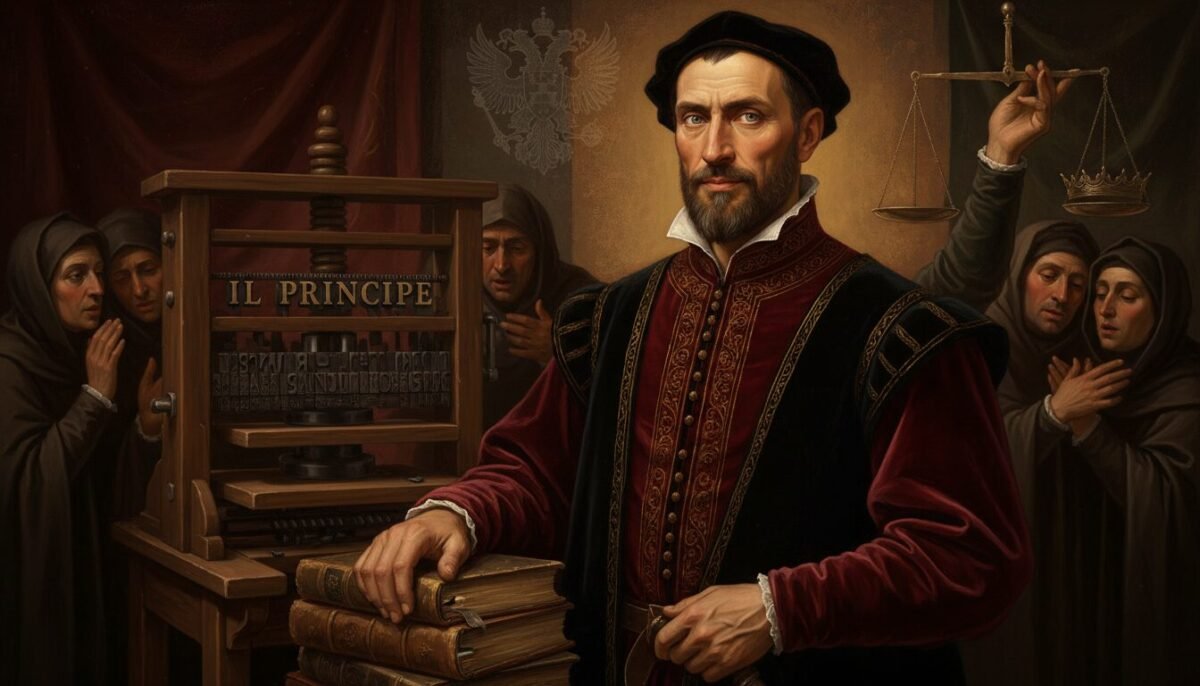
The phrase is a loose, somewhat clumsy translation of a line in Chapter 18 of The Prince: “Si guarda al fine.” A more accurate translation is “one looks to the result” or “the outcome is what people judge.” This might seem like a small linguistic hair to split, but the nuance is everything. Machiavelli wasn’t giving a blank check for any petty cruelty or selfish whim. He wasn’t saying “anything goes” as long as you get what you want.
For Machiavelli, the “end” that mattered was not personal wealth or ego; it was the stability and security of the state. He argued that a leader is responsible for the lives of thousands. If a prince is “too good” and refuses to take a harsh action—like executing a rebel leader—and that hesitation leads to a civil war where ten thousand people die, is that prince actually “moral”? Machiavelli argued that the leader who commits a small, necessary evil to prevent a massive catastrophe is the one who is truly acting for the common good.
He drew a sharp line between private morality and the “reason of state.” As an individual, you should be honest, kind, and kept to your word. But as a leader, you are in a different moral universe. You are a “trustee” of the people’s safety. If you have to lie to a foreign invader to keep your city from being sacked, you must lie. This wasn’t a celebration of evil; it was a tragic recognition of “necessity.” He famously wrote that a leader must “learn how not to be good” when the situation demands it, but he never suggested that being “not good” was a virtue in itself.
3. Machiavelli vs. Machiavellianism: The Birth of a Stereotype
How did a patriotic civil servant become the namesake for a personality disorder? The gap between the historical Niccolò and the psychological trait of “Machiavellianism” is wide. The demonization of Machiavelli began almost immediately after his death, fueled largely by the Catholic Church.
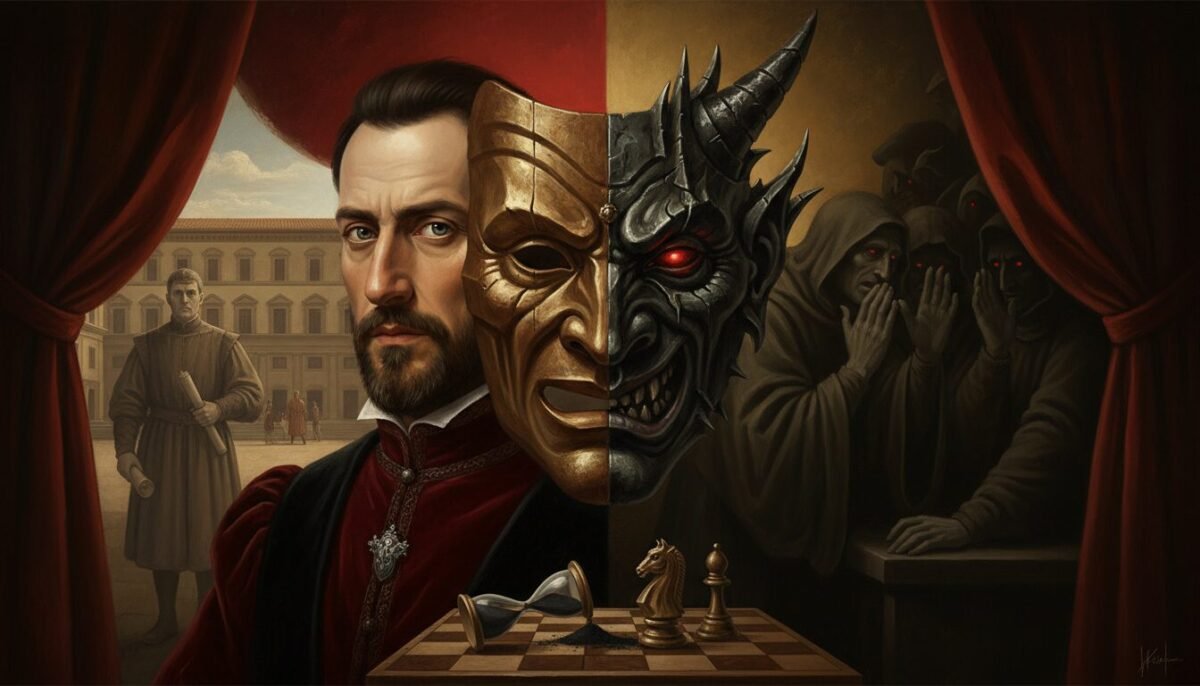
In 1559, the Church placed all of Machiavelli’s works on the Index Librorum Prohibitorum (the Index of Prohibited Books). To the religious authorities of the time, Machiavelli was a heretic because he suggested that politics should be separated from religion. He dared to suggest that a successful leader might need to ignore Christian ethics to save his country. This was an unforgivable affront to the idea that kings ruled by divine right and must follow divine law.
The stereotype was further cemented by Elizabethan drama. In 16th-century England, “the Machevill” became a popular stage trope—a villain who delighted in murder, poisoning, and betrayal for the sake of it. Christopher Marlowe’s play The Jew of Malta even features a character named “Machiavel” who delivers a prologue boasting about his cynicism. This caricature was so effective that the name “Old Nick”—a common English nickname for the Devil—is widely believed by some historians to be a jab at Niccolò Machiavelli himself.
Today, psychologists use “Machiavellianism” to describe one-third of the “Dark Triad” of personality traits (alongside narcissism and psychopathy). It describes someone who is manipulative, cynical, and lacking in empathy. But the real Machiavelli was a man of deep passions, a lover of poetry, and a person who suffered immensely for his political convictions. He wasn’t a sociopath; he was a realist who was tired of seeing his friends die because their leaders were too naive to understand how the world worked.
4. The Prince vs. The Discourses: Was He a Republican or a Monarchist?
One of the biggest misunderstandings about Machiavelli is that The Prince represents his entire worldview. If you only read that one book, you would assume he was a fan of absolute monarchy and autocracy. But if you turn to his much longer, more academic work, Discourses on Livy, you find a completely different man.
In the Discourses, Machiavelli reveals himself as a staunch Republican. He argues that a government of the people is better and more stable than a government of a single prince. He praises the Roman Republic and argues that the “multitude” is wiser and more constant than a single ruler. He advocates for checks and balances, the rule of law, and a civic militia where citizens fight for their own freedom rather than relying on untrustworthy mercenaries.
This creates a “Machiavellian Paradox”: How can the same man write a handbook for dictators and a manifesto for republics? Some historians, including Jean-Jacques Rousseau, argued that The Prince was actually a satire—a “handbook for Republicans” disguised as advice for kings. By “revealing” the dirty tricks of tyrants, Machiavelli was actually warning the people about what to look out for.
A more likely explanation is that Machiavelli was a pragmatist. He believed a Republic was the best form of government, but he also believed that a Republic could only exist among a virtuous, disciplined citizenry. In a time of total collapse and corruption—like the Italy of his day—he believed a “Prince” was a necessary evil to restore order and clear the ground so that a Republic could eventually be built. He was a lifelong servant of the Florentine Republic; his heart was always with the people, even when his head told him they needed a strongman to survive the storm.
5. Redefining Virtù: Morality in the Political Sphere
To truly grasp Machiavelli’s philosophy, we have to look at his use of the word virtù. In modern English, “virtue” implies moral goodness—honesty, purity, and kindness. But for Machiavelli, virtù had nothing to do with the Ten Commandments. It was derived from the Latin vir (man), and it meant something closer to “prowess,” “energy,” “skill,” or “boldness.”
A leader with virtù is someone who has the strength and intelligence to navigate the treacherous waters of politics. They are flexible. They can be a “lion” to scare off wolves and a “fox” to recognize traps. Machiavelli’s central argument was that a leader’s primary duty is the health of the state. If a leader is so obsessed with their own personal “goodness” that they allow the state to fall into chaos, they are actually failing in their duty. In his eyes, a “good” person can be a “bad” leader, and a “bad” person can be a “great” leader.
This virtù is the only weapon a human has against Fortuna (Fortune). Machiavelli famously compared Fortune to a violent river that, when it floods, destroys everything in its path. You cannot stop the river from flooding, but a leader with virtù builds dikes and dams during the dry season so that when the flood comes, the damage is controlled. You cannot control luck, but you can prepare for it. This was a revolutionary shift in thinking: politics wasn’t about following God’s will; it was a constant struggle between human skill and the unpredictable chaos of the world.
6. The Father of Political Realism: His Lasting Legacy
Machiavelli’s true contribution to history isn’t a set of “evil” tactics, but the birth of political realism. Before him, political philosophy was mostly “idealism.” Thinkers like Plato and St. Augustine wrote about how a perfect state should look and how a perfect leader should behave. Machiavelli threw those “imaginary republics” out the window.
He was the first to insist that we must study politics as it is, not as we wish it to be. This “effectual truth” of the matter changed everything. He paved the way for the Enlightenment, influencing thinkers like Spinoza, Hobbes, and even the American Founding Fathers. John Adams and Thomas Jefferson were both keen readers of Machiavelli, drawing on his ideas about republicanism and the need for checks on power.
Today, his work remains essential for anyone trying to understand the ethics of power. Whether in international relations or modern leadership, the “Machiavellian” questions remain: Is it better to be loved or feared? How do you maintain integrity in a corrupt system? Machiavelli didn’t invent the brutality of politics; he simply had the courage to report on it. He was a man who loved his country more than his own soul, and he wanted us to understand that power is a heavy, dangerous tool that must be handled with clear eyes and a steady hand.
By looking beyond the “villain” stereotype, we find a dedicated public servant who believed that the greatest “virtue” was the preservation of a free and stable society. He wasn’t a teacher of evil, but a realist who sought to understand the mechanics of power to save his homeland.
Frequently Asked Questions
- Did Machiavelli actually support tyrants? Not exactly. While he wrote The Prince as advice for a monarch, his personal writings and his work The Discourses show he was a committed republican who believed in the power of the people.
- Is Machiavelli’s advice still relevant today? Yes. His observations on human nature, the unpredictability of “Fortune,” and the necessity of pragmatism are still studied in political science and leadership courses worldwide.
- What is the difference between Machiavelli and “Machiavellianism”? Machiavelli was a historical philosopher; “Machiavellianism” is a psychological term for a personality trait characterized by manipulation and a lack of empathy, which is a significant exaggeration of his actual views.
If you want to dive deeper into the world of power, human nature, and the thinkers who shaped our understanding of leadership, explore our deep dive into the life of Francesco Guicciardini, Machiavelli’s contemporary, friend, and sharpest critic.