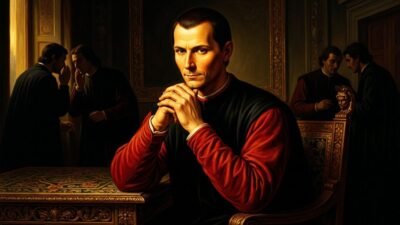

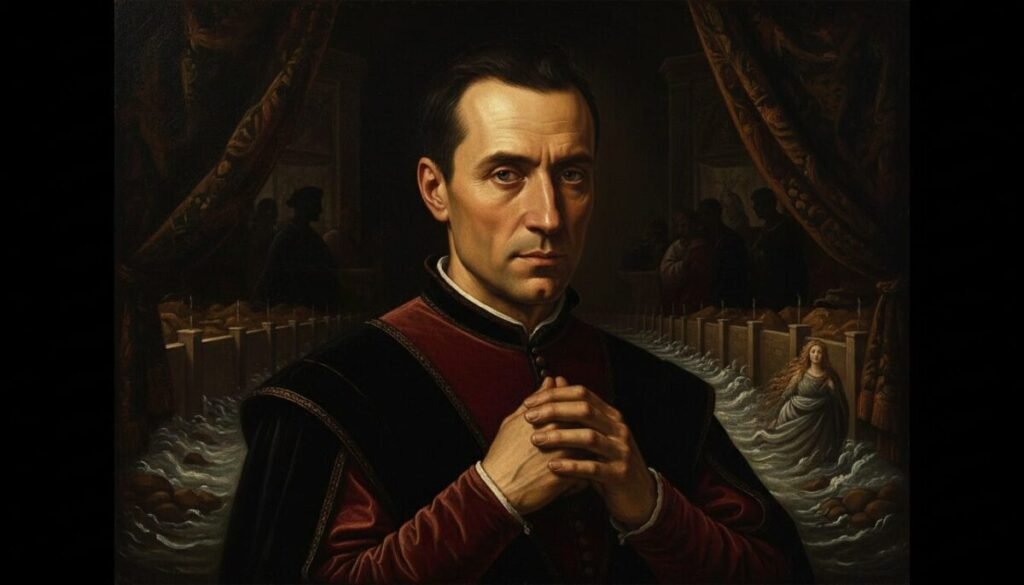
In the volatile political and economic landscape of 2026, we find ourselves surrounded by a peculiar paradox. We live in an era of unprecedented data analytics, predictive AI, and sophisticated risk management, yet leaders with impeccable credentials and “perfect” strategies continue to collapse overnight. Conversely, we witness the rise of outliers—individuals who seem to ride waves of chaos with an almost supernatural ease. Why does the most disciplined strategist fail while the reckless amateur occasionally triumphs? Modern observers often struggle to reconcile personal effort with the chaotic, unpredictable forces of history. We want to believe that merit and hard work are the sole architects of success, yet the “ghost in the machine”—that flickering variable of luck—remains the most potent force in human affairs.
This tension is not new. Five centuries ago, Niccolò Machiavelli sat in a small farm outside Florence, grappling with the same frustration. Having watched his beloved republic crumble and his own career vanish into the shadows of exile, he sought to decode the relationship between human agency and the “malignity of fortune.” His conclusion was revolutionary: success is not a matter of divine favor or simple merit, but a violent, strategic dance between Virtù (individual skill and prowess) and Fortuna (luck or chance). This article provides a deep dive into Machiavelli’s philosophy of Fortuna, offering a timeless framework for understanding how to master the unpredictable forces that govern our lives in 2026 and beyond.
1. The Secularization of History: From Divine Providence to Fortuna
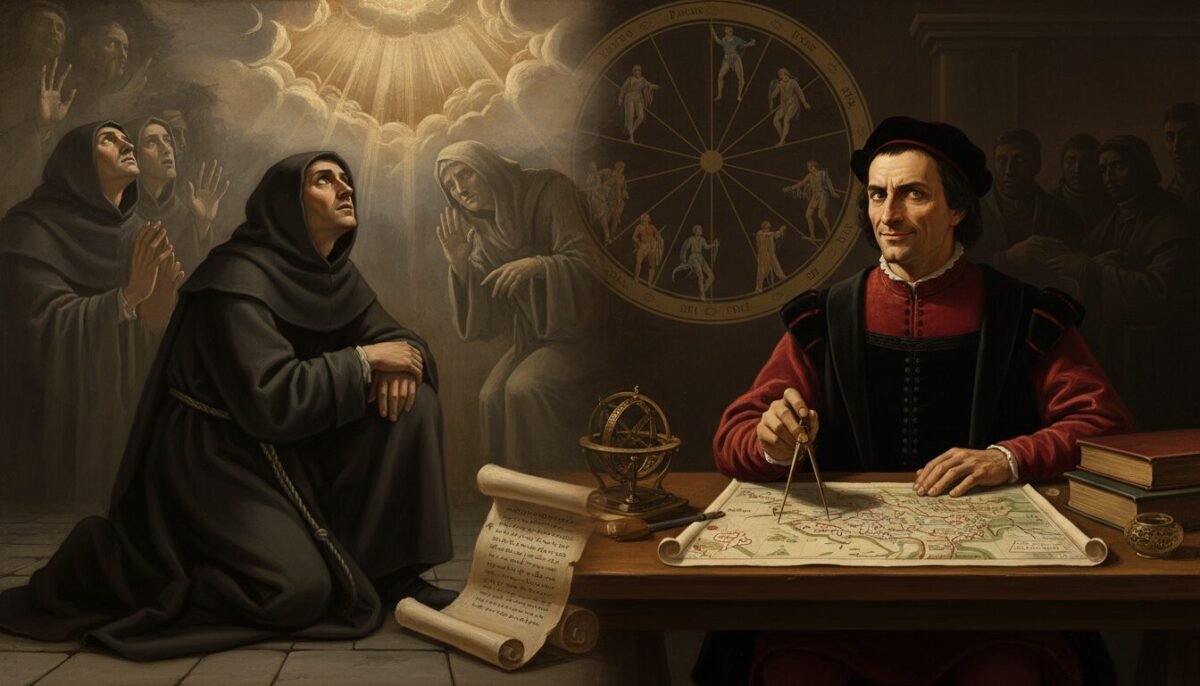
To understand Machiavelli’s breakthrough, one must first understand the intellectual prison he escaped. For a thousand years, the Western mind viewed history through the lens of Divine Providence. In the Medieval worldview, if a King fell or a plague struck, it was the “Will of God”—a moral judgment from a celestial judge. Human history was seen as a scripted drama where the ending was already written. The dominant metaphor was the Rota Fortunae, or the Wheel of Fortune. In this vision, a blindfolded goddess turned a massive wheel; humans were strapped to the rim, rising to the top only to be inevitably crushed at the bottom. The lesson was one of Christian humility: do not seek earthly power, for the wheel always turns, and only the soul is eternal.
Breaking the Wheel
Machiavelli performed a radical act of intellectual surgery: he removed God from the political equation. He did not necessarily deny the existence of the divine, but he argued that for the purposes of understanding power, God was an irrelevant variable. He secularized the concept of chance. Fortuna was no longer a tool of divine justice; she was an amoral, external force of nature. This shift moved history from the realm of theology to the realm of political realism. Machiavelli looked at the wreckage of Italian city-states and saw not “sins” being punished, but strategic errors meeting with unfortunate timing.
Fortuna as Historical Contingency
In Machiavelli’s eyes, Fortuna represents the “contingency” of history—the “what ifs” and the “wrong place at the wrong time.” She is the sudden storm that sinks a fleet, the unexpected death of a patron, or the discovery of a secret letter. By defining Fortuna as amoral, Machiavelli liberated the leader from the burden of guilt. If you fail because of a “black swan” event, it is not because you are a bad person; it is because you failed to account for the inherent instability of the world. He famously estimated that Fortuna governs roughly half of our actions, but she leaves the other half for us to direct. This 50/50 split is the birthplace of modern strategic thinking.
The Transition to Renaissance Realism
This transition marked the birth of the “active life” (vita activa) over the “contemplative life.” Instead of praying for better luck, the Machiavellian actor studies the patterns of the past to predict the chaos of the future. The Renaissance mind began to view the world as a laboratory. If history is not a divine script, then it is a series of cause-and-effect relationships. Machiavelli’s Fortuna is the “noise” in the system, the entropy that threatens every human structure. By acknowledging her power without bowing to her “will,” he created the first truly secular framework for human agency.
2. Virtù vs. Fortuna: The Central Dichotomy of The Prince
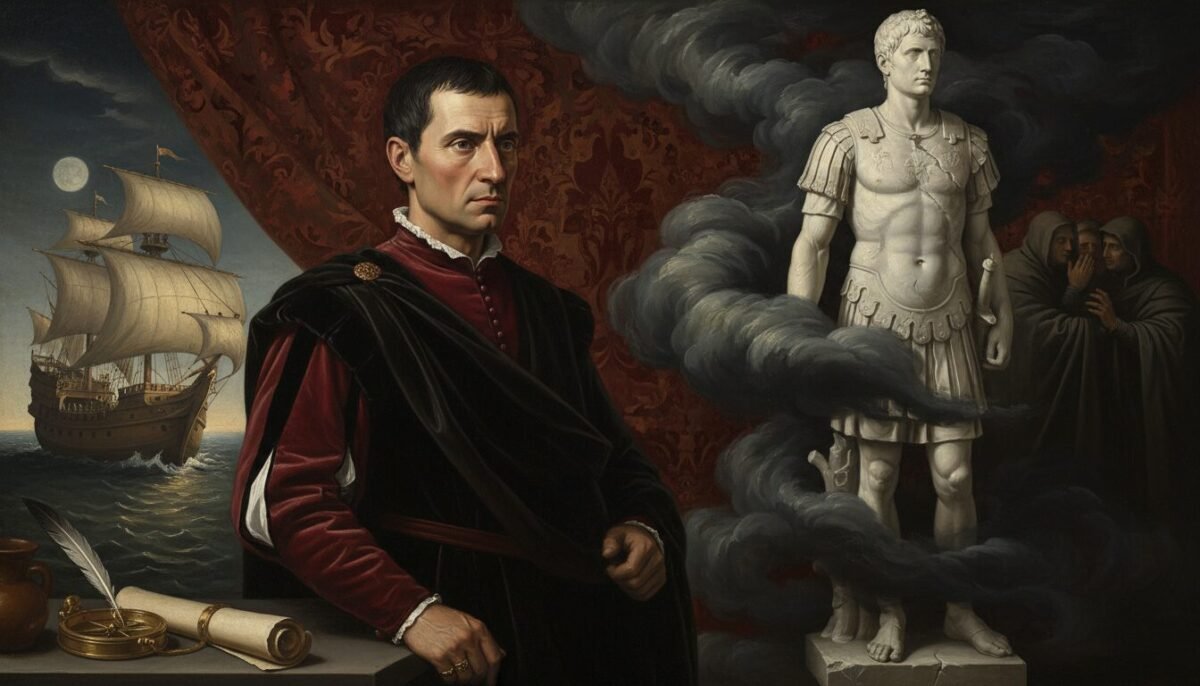
If Fortuna is the storm, then Virtù is the ship and the skill of the captain. It is essential to clear away the modern linguistic fog here: when Machiavelli speaks of virtù, he is not talking about “virtue” in the sense of kindness, honesty, or Christian morality. In fact, he often suggests that traditional moral virtues are a liability in the face of Fortuna. Machiavelli’s virtù is derived from the Latin vir (man), implying strength, prowess, strategic flexibility, and the ruthless intelligence required to achieve one’s goals. It is the ability to impose one’s will upon the chaos of the world.
The Symbiotic Relationship
Virtù and Fortuna exist in a state of constant, symbiotic tension. One cannot exist effectively without the other. Machiavelli argues that even the most talented individual (possessing high virtù) will remain obscure if Fortuna never grants them an “occasion” or opportunity. Think of a brilliant military commander born in a time of universal peace; his virtù has no theater in which to perform. Conversely, Fortuna can hand a kingdom to a fool, but without virtù, that kingdom will slip through his fingers like sand the moment the first crisis arrives.
The Impotence of Skill Without Opportunity
Machiavelli uses the examples of Moses, Cyrus, and Romulus to illustrate this. These men had supreme virtù, but they needed the “occasion” provided by Fortuna. Moses needed the Israelites to be enslaved in Egypt to have a people to lead; Romulus needed to be abandoned at birth to eventually found Rome. Fortuna provided the “matter,” and their virtù provided the “form.” This is a crucial lesson for the modern professional: you can spend years honing your skills, but you must remain hyper-vigilant for the specific moment when the environment (Fortuna) opens a door. To miss the occasion is as fatal as lacking the skill.
Building the Foundation
The primary goal of the Prince—and by extension, any modern leader—is to use periods of “good” Fortuna to build a foundation that can withstand the inevitable “bad” Fortuna. Machiavelli observes that most people are happy to enjoy the sunshine and forget that winter exists. The individual of virtù, however, is never more active than when things are going well. They are constantly stress-testing their organizations, diversifying their interests, and anticipating the “shocks” of chance. In Machiavellian terms, virtù is the capacity to be “proactively defensive.” It is the realization that luck is a loan, not a gift, and it can be called in at any moment.
3. The River and the Dikes: Preparation as Political Defense
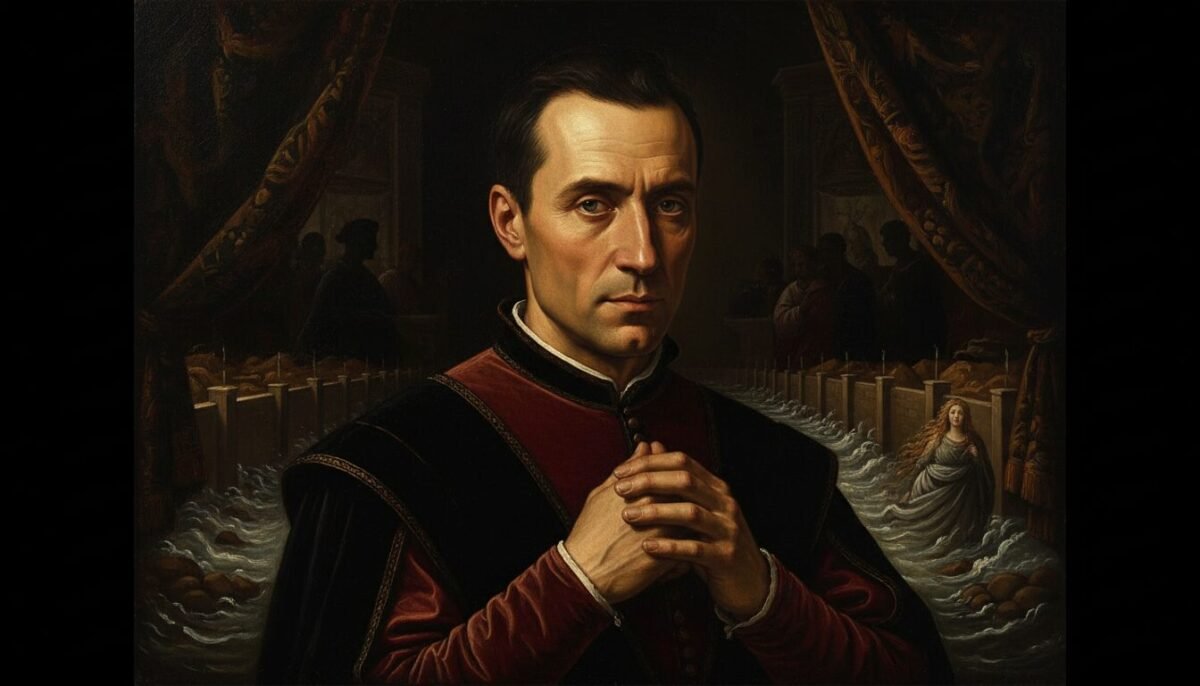
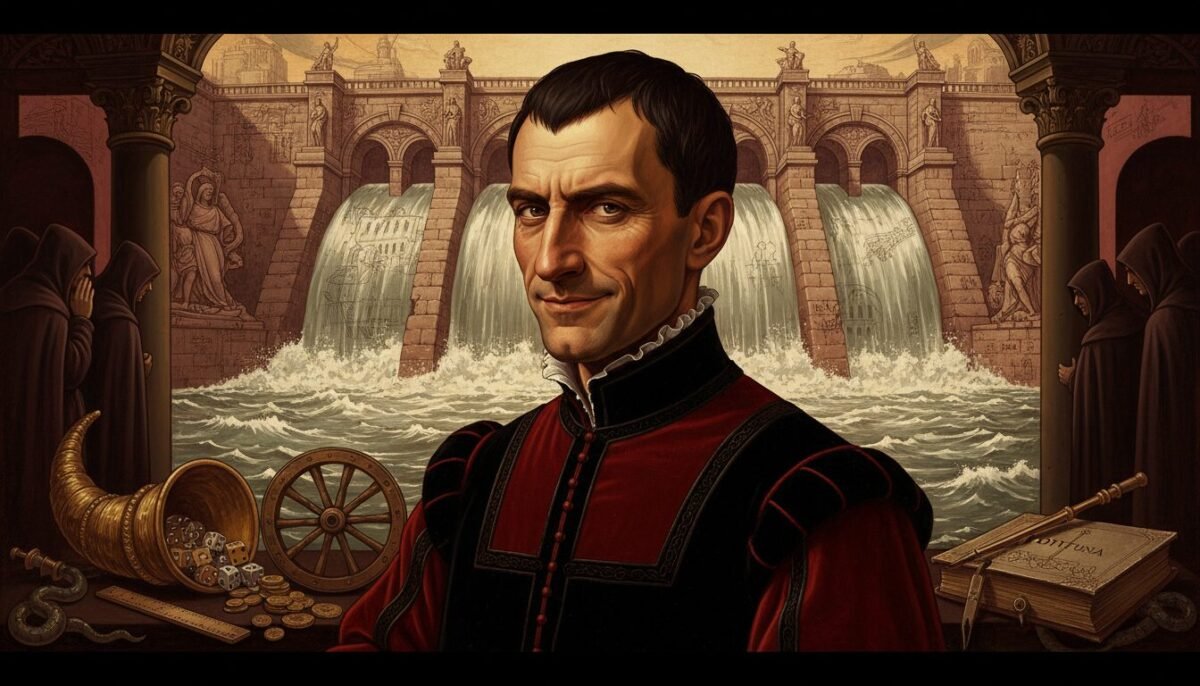
In the twenty-fifth chapter of The Prince, Machiavelli provides one of the most famous metaphors in the history of philosophy. He compares Fortuna to “one of those raging rivers, which when in flood overflows the plains, sweeping away trees and buildings, bearing away the soil from adjoined banks.” When the river is in a fury, everyone flees; no one can resist its momentum. This is the face of Fortuna when she is unleashed—the global financial crash, the sudden technological disruption, the geopolitical shift that renders old alliances useless.
The Power of Foresight
However, Machiavelli’s point is not one of despair. He notes that although the river is unstoppable once it is in flood, this does not mean that men, when conditions are quiet, cannot provide for it with “dikes and dams.” If the infrastructure is built during the dry season, the river, when it rises, will be channeled into a canal or its force will be rendered less “unbridled and hurtful.” This is the essence of Machiavellian strategy: the “dikes” are the institutions, the laws, the military preparations, and the financial reserves we build before the crisis hits.
Institutional Dikes in the Modern Age
In 2026, these “dikes” take many forms. For a corporation, it might be a robust R&D department that ensures the company isn’t blindsided by a new competitor. For a political leader, it is the cultivation of deep-rooted public support and a resilient bureaucracy that can function even when the leader is under fire. Machiavelli is teaching us that foresight is the only true antidote to luck. The tragedy of most leadership is that it is reactive. We wait for the flood to start building the dam. Machiavelli argues that by the time you see the water rising, it is already too late. The man of virtù spends his “quiet times” obsessing over the “flood plains” of his life.
Mitigating Instability
The “River” metaphor also highlights the inherent instability of power. No matter how strong your dikes are, the river is always there, flowing, waiting for a crack in the stone. This creates a philosophy of constant vigilance. You cannot build a “dike” once and consider the job done. The silt builds up; the wood rots; the earth shifts. Political and personal infrastructure requires constant maintenance. Machiavelli’s realism forces us to accept that we will never “defeat” chance; we can only manage its impact. The goal is not to stop the river from flowing, but to ensure that when it does, it doesn’t take our entire civilization with it.
4. Fortuna as a Woman: Audacity, Youth, and Mastery
Perhaps the most controversial passage in Machiavelli’s body of work is his personification of Fortuna as a woman. He writes, “Fortuna is a woman, and if you wish to keep her under it is necessary to beat and ill-use her.” He further adds that she allows herself to be mastered by the “adventurous” rather than those who act coldly, and that she is “always, woman-like, a lover of young men, because they are less cautious, more violent, and with more audacity command her.”
Contextualizing the Metaphor
While these words are jarring to the modern ear, we must look past the 16th-century gender dynamics to the underlying psychological strategy. Machiavelli is addressing a fundamental human flaw: the tendency toward over-caution. He is arguing against the “wait and see” approach that characterizes many failing leaders. In his view, Fortuna is attracted to energy. When the world is in a state of flux, the person who acts with “impetuosity” (boldness) often creates their own gravity, forcing circumstances to align with their will.
The Preference for the Impetuous
Why does Machiavelli prefer the “impetuous” leader over the “cautious” one? Because caution is based on the assumption that the environment is stable and that you have time to weigh all options. But Fortuna is the personification of instability. In a rapidly changing situation, the “cautious” leader is often paralyzed by a lack of information, while the “impetuous” leader takes a decisive step that changes the information landscape itself. Youth, in this context, represents a psychological state—a willingness to take risks, a lack of attachment to the “old ways,” and a raw vitality that can overwhelm the hesitations of chance.
The Psychological Shift: From Passive to Active
This metaphor represents a psychological shift from passive endurance to active confrontation. Many people treat “luck” as something that happens to them. They are the victims of their circumstances. Machiavelli demands that we become the protagonists of our circumstances. By “beating” Fortuna, he means asserting human agency over the “spirit of the times.” It is the difference between a trader who waits for the market to move and a visionary who moves the market. Audacity is not about being “lucky”; it is about creating a situation where the odds are forced to favor you because you have seized the initiative.
The Limit of Boldness
However, Machiavelli is careful. Boldness is not a universal solution. It is a specific tool for specific times. The “audacity” he champions is most effective when the times are “turbulent.” If the times are quiet and stable, the impetuous man may destroy himself by moving too fast. The ultimate mastery is not just being bold, but knowing when to be bold. Yet, if forced to choose, Machiavelli will always side with the man of action, for Fortuna, like time itself, waits for no one.
5. The Tragedy of Cesare Borgia: A Case Study in Malignant Luck
To see the limits of virtù, we must look at Machiavelli’s “hero,” Cesare Borgia. Borgia is the central figure of The Prince, the man Machiavelli held up as the gold standard for how a new ruler should behave. Borgia was brilliant, ruthless, and incredibly efficient. He took a chaotic region of Italy (the Romagna) and, through a series of masterful maneuvers, brought it to heel, eliminated his rivals, and established a functioning state.
Success Through Borrowed Fortuna
Borgia’s rise was a classic case of Fortuna. He was the son of Pope Alexander VI. His initial power, his troops, and his funding were all gifts of his father’s position. He did not “earn” his start; he was handed it by the “luck” of his birth. However, Machiavelli admires Borgia because, once he had the “occasion,” he used supreme virtù to secure his position. He didn’t rely on his father’s luck; he immediately began building his own “dikes and dams.” He created his own army, he tricked his enemies into a trap at Senigallia and executed them, and he won the love and fear of his subjects.
The Perfect Strategist Undone
Borgia had planned for everything. He knew that when his father died, he would be in danger. He prepared to influence the next Papal election, he neutralized the Roman nobility, and he consolidated his lands. He was the perfect Machiavellian prince. But then, the “extraordinary and extreme malignity of fortune” struck. At the exact moment his father, the Pope, died, Cesare himself fell deathly ill. He was bedridden, drifting in and out of consciousness, while his enemies gathered at the gates. Furthermore, a series of unlikely political alignments led to the election of Pope Julius II—a man who was a sworn enemy of the Borgias.
The Lesson of the “Black Swan”
Machiavelli’s analysis of Borgia is haunting. He concludes that Borgia did everything a wise man should do. His failure was not a failure of virtù, but a result of a “malignant” alignment of disasters that no human could have foreseen. This is the “tragic” side of Machiavelli’s philosophy. It is a warning to every leader in 2026: you can be perfect, you can be a genius, you can be ruthless and prepared—and you can still lose. Fortuna always retains the final 1% of the vote. This case study serves to humanize the “Prince,” showing that even the most powerful among us are ultimately subject to the “shocks” of a chaotic universe.
6. Adapting to the Times: The Prince’s Psychological Flexibility
If Fortuna is a river and a woman, the third way Machiavelli describes our relationship with chance is through the concept of riscontarsi con i tempi—matching oneself to the spirit of the times. This is perhaps his most sophisticated psychological insight. He argues that the reason men are successful one day and ruined the next is that they do not change their “nature” or their “mode of proceeding” when the times change.
The Spirit of the Times
Every era has a “spirit.” Some times require a cautious, diplomatic approach (the “fox”), while other times require a violent, direct approach (the “lion”). A leader who is naturally cautious will thrive as long as the times are stable. But when the world turns chaotic, that same caution becomes a death sentence. Conversely, the bold leader who thrives in a revolution may become a liability during a period of reconstruction. The “luck” we see is often just the accidental alignment of a person’s fixed temperament with the current requirements of the environment.
The Tragedy of the Fixed Nature
Machiavelli uses Pope Julius II as an example. Julius was a man of “impetuosity.” He acted with such speed and violence that he caught his enemies off guard every time. He was incredibly successful because the “times” he lived in were chaotic and demanded such action. Machiavelli muses that if Julius had lived into a time that required “caution,” he would have been ruined, because he was incapable of changing his nature. He was a hammer, and he saw every problem as a nail.
The Limits of Human Nature
This is the ultimate challenge of Machiavellian philosophy: Can a human being truly change their nature? Machiavelli is skeptical. He observes that we are prisoners of our past successes. If being “bold” has worked for us for twenty years, we cannot suddenly become “cautious” just because the market has shifted. We are also prisoners of our biology and our deep-seated temperaments. This creates an inherent instability in power. Because we cannot change our “mode of proceeding,” we eventually fall out of alignment with the “times.”
The Fluid Leader
The “Ideal Prince” would be a psychological chameleon, able to switch from lion to fox at a moment’s notice. In the context of 2026, this means having the self-awareness to recognize when your “default setting” is no longer working. It means surrounding yourself with people who possess the temperaments you lack—the cautious advisor for the bold CEO, the daring strategist for the conservative politician. Mastery of Fortuna requires not just mastering the world, but mastering the rigidities of one’s own soul.
Conclusion: The 50% Rule
Machiavelli’s philosophy of Fortuna is often misinterpreted as a dark, cynical “might makes right” manifesto. In reality, it is a profoundly empowering call to human agency. He refuses to let us off the hook. We cannot blame “the stars” or “the economy” or “bad luck” for our failures until we have first exhausted every ounce of our virtù. He grants Fortuna 50% of the power, but he demands that we claim the other 50% with everything we have.
In 2026, as we navigate a world that feels increasingly unmoored from tradition and stability, Machiavelli’s framework is more relevant than ever. He teaches us that while we cannot control the river, we can build the dikes. While we cannot control the “spirit of the times,” we can strive for the psychological flexibility to adapt to them. And while we cannot guarantee success, we can ensure that if we fall, we fall because of an “extraordinary malignity” of fate, and not because of our own hesitation or lack of foresight. Fortuna is a fickle master, but she is most easily “mastered” by those who refuse to be her victims. By combining virtù with audacity and preparation, we don’t just survive the chaos—we learn to ride it.
Frequently Asked Questions
What is the main difference between Virtù and modern virtue?
Modern virtue usually refers to moral goodness or ethical behavior. Machiavellian Virtù refers to “functional excellence”—the skill, strength, and strategic flexibility required to achieve a specific political or personal goal, regardless of the moral cost.
Does Machiavelli believe we have free will?
Yes. He explicitly states that Fortuna governs half of our actions, but she leaves the other half for us to govern. He rejects fatalism and argues that human agency is the primary tool for shaping history.
Can anyone develop Virtù, or is it an innate trait?
Machiavelli believes it can be developed through the study of history and the imitation of great men, but he also acknowledges that some individuals are naturally more “gifted” with the temperament required for leadership.
How does the “River” metaphor apply to modern business?
The “River” represents market disruptions, economic crashes, or technological shifts. The “Dikes” represent cash reserves, diversified product lines, and a culture of innovation that allows a company to survive a “flood” that destroys its competitors.
Interested in the mechanics of influence and the hidden drivers of history? Explore our deep-dive series on Renaissance Political Theory to master the strategies of the past for the challenges of 2026.