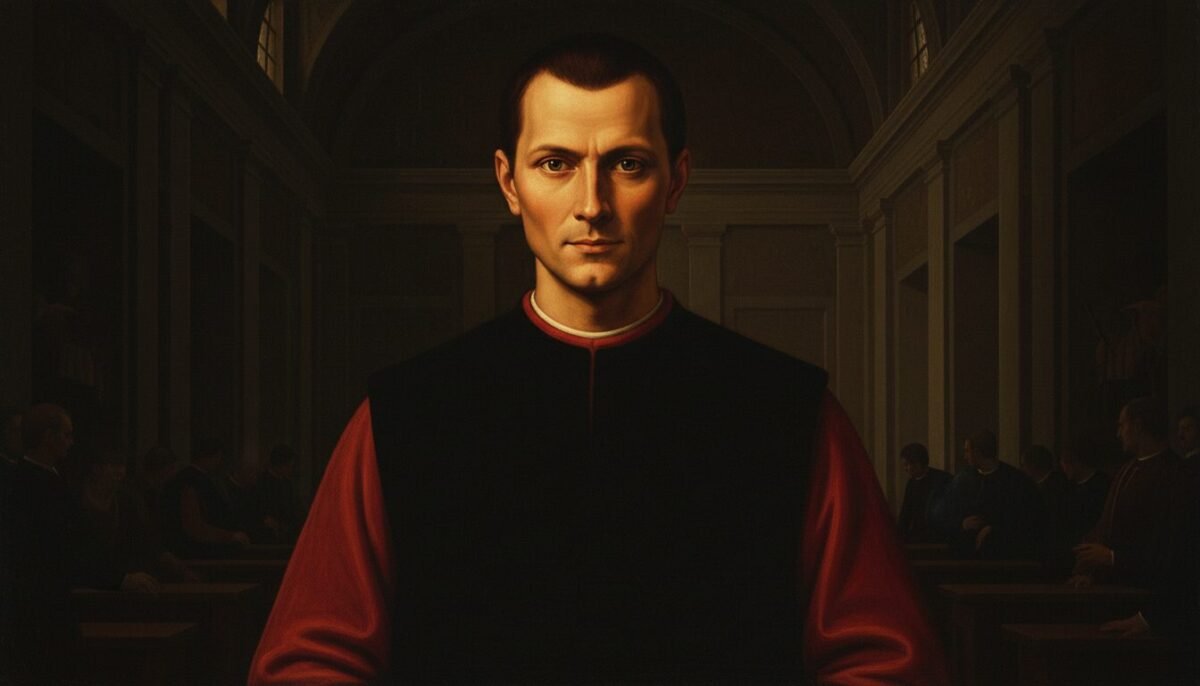
Imagine you are standing in a glass-walled boardroom in the heart of a 2026 megacity, or perhaps you are looking at a grid of faces on a high-definition remote conferencing screen. You’ve just delivered a directive that is necessary for the company’s survival but unpopular with the team. In that moment of silence, a chilling question flickers through your mind: Do they respect me because they like me, or because they know I’ll hold them accountable? This isn’t just a modern management anxiety; it is a dilemma that has haunted leaders for over half a millennium. Is it truly better to be feared than loved, or is this 500-year-old maxim a dangerous relic that has no place in our era of “empathetic leadership” and “psychological safety”?
The struggle is real and visceral. Today’s leaders often find themselves trapped in a binary trap. On one side, the “People Pleaser” risks losing authority, watching as deadlines slip and standards erode because they are too afraid of being the “bad guy.” On the other side, the “Autocrat” creates a toxic environment of resentment where talent flees at the first opportunity, leaving behind a hollowed-out shell of an organization. To navigate the complexities of 2026, we must look backward to move forward. By deconstructing Niccolò Machiavelli’s The Prince, we can uncover the raw, often uncomfortable truths about how the dynamics of fear and love shape political stability and modern executive power. This is not a manual for tyrants, but a map for realists who understand that leadership is not a popularity contest—it is a responsibility to the collective.
1. The Foundation of Machiavellian Realism: Contextualizing The Prince
To understand Machiavelli, you must first understand the chaos of 16th-century Italy. This wasn’t the Italy of postcards and slow-paced vineyards; it was a fractured landscape of warring city-states, shifting alliances, and constant foreign intervention. Florence, Machiavelli’s home, was a pendulum swinging between republican ideals and the autocratic rule of the Medici family. When the republic fell and Machiavelli was ousted from his diplomatic posts—and even tortured—he didn’t respond with bitterness or religious platitudes. Instead, he wrote The Prince, a cold, clinical analysis of how power actually works, rather than how we wish it worked.
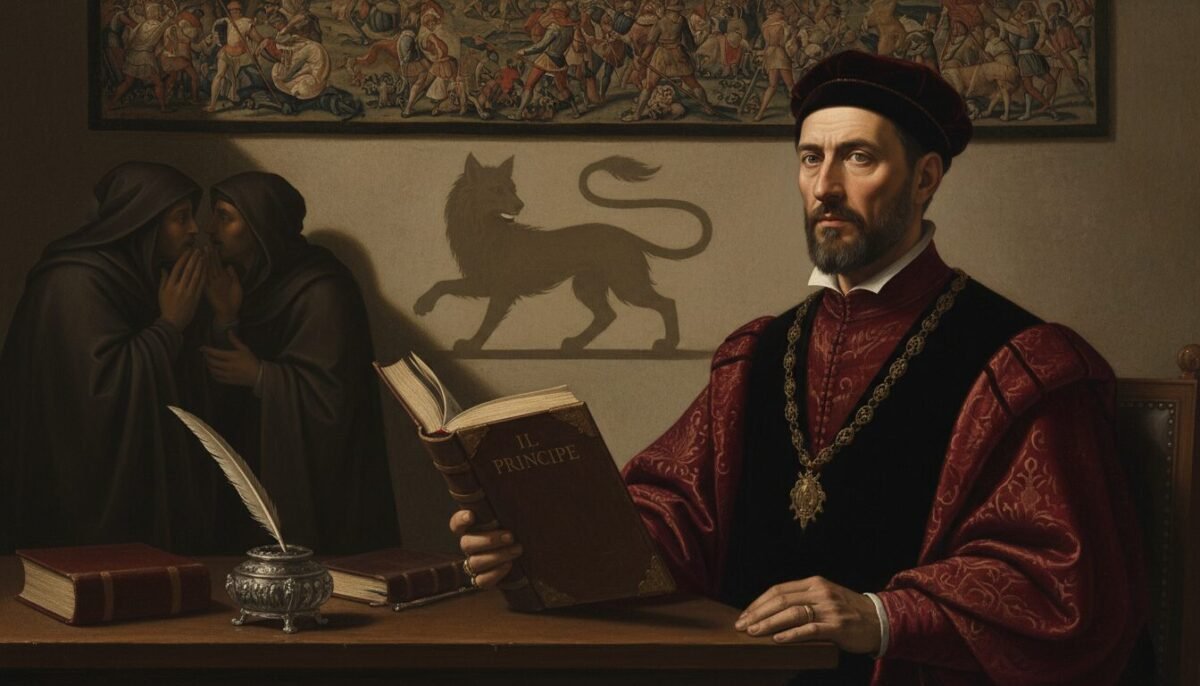
Before Machiavelli, the prevailing literature for leaders was the “mirror for princes”—pious guidebooks that urged rulers to be virtuous, kind, and godly. Machiavelli shattered this tradition. He argued that a leader who tries to be “good” in a world where so many are “not good” will inevitably come to ruin. This shift from classical idealism to political realism was revolutionary. He wasn’t advocating for evil; he was advocating for effectiveness. In his eyes, the greatest “sin” a leader could commit was not a moral lapse, but a failure to maintain the stability of the state. If the state falls, everyone suffers—the innocent and the guilty alike.
Central to this realism are the twin concepts of Virtù and Fortuna. In the Machiavellian sense, Virtù is not “virtue” in the moral sense. It is prowess, energy, and the strategic ability to adapt to changing circumstances. It is the quality of the lion and the fox combined. Fortuna, on the other hand, is the unpredictable, often violent “river” of luck and external events. Machiavelli believed that while we cannot control Fortuna, a leader with enough Virtù can build dams and dikes to direct its flow. This is the essence of statecraft: using one’s individual agency to safeguard the collective against the whims of fate.
For Machiavelli, the survival of the state—or in 2026, the survival of the organization—takes precedence over the personal morality of the individual leader. He understood that a leader must sometimes “enter into evil” to prevent a greater catastrophe. If a CEO must lay off 10% of the workforce to save the other 90%, the “moral” act is the one that ensures the company doesn’t go bankrupt, even if it feels “cruel” in the moment. This is the bedrock of Machiavellian realism: the ends of stability and survival justify the means of strategic severity.
2. The Core Argument: Why Fear Outlasts Love in Times of Crisis
In Chapter 17 of The Prince, Machiavelli tackles the famous question: Is it better to be loved than feared, or the reverse? His answer is nuanced but firm: “One ought to be both feared and loved, but as it is difficult for the two to go together, it is much safer to be feared than loved.” To understand why, we have to look at his deeply cynical—or perhaps deeply honest—view of human nature. Machiavelli describes men as “ungrateful, fickle, dissemblers, avoiders of danger, and greedy of gain.”
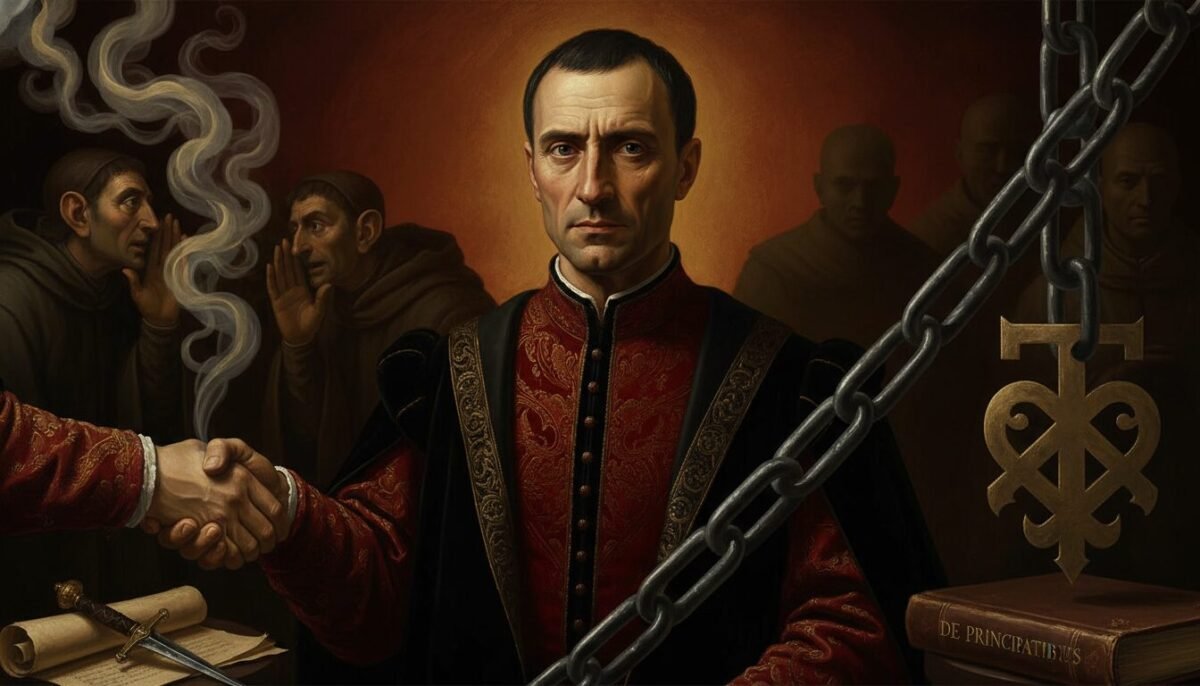
The psychological basis for his preference for fear lies in the nature of the bond between the leader and the led. Love, according to Machiavelli, is held by a “chain of obligation.” This chain is fragile because humans are inherently self-interested. When a crisis hits, or when it becomes personally advantageous to break that bond, people will do so. Love is a gift given by the follower to the leader; therefore, the follower can withdraw it at any time. If your team works hard only because they “like” you, what happens when you have to make a decision that they dislike? The motivation vanishes.
Fear, however, is different. Fear is maintained by a “dread of punishment which never fails.” Unlike love, fear is controlled by the leader, not the follower. It is a constant. In a 2026 context, this doesn’t mean threatening employees with physical harm. It means the “fear” of clear, inevitable consequences for poor performance or ethical lapses. When a team knows that the standards are non-negotiable and that failure to meet them has real-world implications, they operate with a level of discipline that “love” alone cannot produce. Fear provides the structural integrity that holds an organization together when the “weather” of the market gets rough.
Machiavelli further illustrates this through the metaphors of the Lion and the Fox. A leader must be a lion to frighten away the wolves (using force and authority) and a fox to recognize the traps (using cunning and intellect). Reliance on love alone is a “fox-only” strategy that fails when brute force is required. Reliance on fear alone is a “lion-only” strategy that fails when a leader is being outmaneuvered by hidden traps. The most effective leaders use fear as a baseline of authority, allowing them the freedom to be “fox-like” in their strategy without losing the respect of their subordinates.
In times of crisis—whether it’s a 16th-century invasion or a 2026 cyber-attack that threatens a company’s infrastructure—people do not look for a “friend.” They look for a steady hand that is unafraid to be harsh if it means survival. The “fickle” nature of human obligation means that in the heat of a storm, the “loved” leader is often the first to be abandoned, while the “feared” leader is the one people rally behind, because they know that leader will do whatever is necessary to reach the shore.
3. The Crucial Boundary: How to Be Feared Without Becoming Hated
There is a dangerous misunderstanding of Machiavelli that equates “fear” with “tyranny.” Machiavelli was incredibly clear: a leader must strive to be feared, but they must avoid being hated at all costs. Fear is a tool of governance; hatred is a catalyst for revolution. When a leader is hated, they lose the ability to govern because their subjects (or employees) are no longer motivated by self-interest or dread—they are motivated by the desire to destroy the leader, even at their own expense.
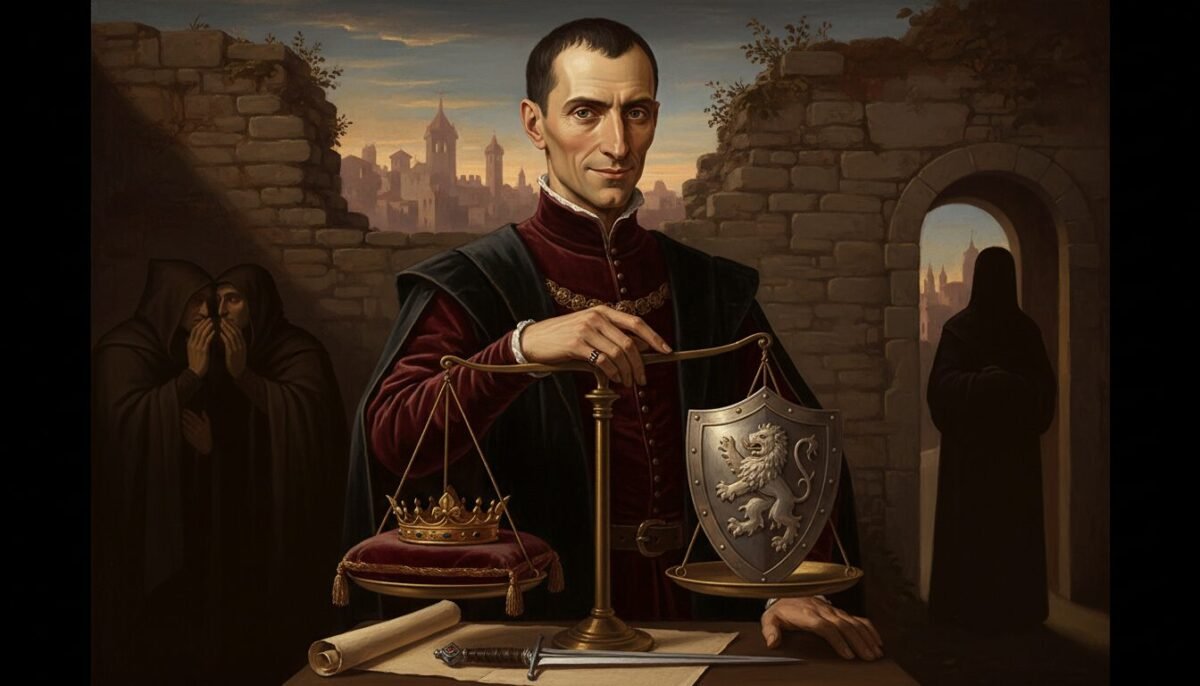
How does a leader avoid hatred? Machiavelli provides very specific, practical rules. In the 16th century, he warned princes to “abstain from the property of their citizens and from their women.” While the “women” part is a historical artifact, the “property” part is timeless. In a modern 2026 sense, this means respecting the “property” of your team: their time, their compensation, their personal boundaries, and their credit for their work. A leader who takes credit for a subordinate’s idea or who arbitrarily cuts bonuses while taking a raise for themselves is crossing the line from fear into hatred. You can be a demanding, “scary” boss who expects 110%, but if you are seen as a thief of effort or reward, you are doomed.
This leads to the concept of “cruelty well-used” vs. “cruelty poorly used.” Machiavelli argues that “well-used” cruelties are those applied at a single stroke out of necessity for safety, and then not persisted in. For example, if a department needs a radical restructuring, it is better to do the “cruel” thing (layoffs, reassignments) all at once rather than dragging it out over months of uncertainty. Dragging it out creates a climate of perpetual anxiety that turns into hatred. “Poorly used” cruelties are those that increase over time rather than diminish. A leader who is constantly “nitpicking” or being “mean” in small ways every day is using cruelty poorly. It doesn’t build authority; it builds a reservoir of resentment.
To be feared without being hated, a leader must maintain a reputation for justice. Severity must be seen as a tool for the common good, not a vent for personal ego. If you fire a high-performer who is a “toxic” influence on the culture, the rest of the team may “fear” your decisiveness, but they will not hate you. In fact, they will respect you for protecting the collective. The goal is to be seen as a stern but fair judge. When the rules are transparent and the punishment for breaking them is consistent, fear becomes a predictable part of the environment—a boundary that provides safety rather than a source of random terror.
4. Historical Case Studies: From Cesare Borgia to Modern Statecraft
To see these theories in action, we look at Machiavelli’s primary “hero” in The Prince: Cesare Borgia. Borgia was the son of Pope Alexander VI and a man of immense ambition. When he took over the region of Romagna, it was a lawless land ruled by weak lords who had plundered their subjects rather than governed them. To bring order, Borgia appointed a “cruel and able” minister, Remirro de Orco, and gave him full power. De Orco quickly pacified the region through brutal efficiency.
However, Borgia knew that such excessive cruelty would eventually make him hated by the people. In a masterclass of Machiavellian strategy, once the order was restored, Borgia had De Orco executed and his body left in the public square of Cesena. This act simultaneously satisfied the people (who saw the “cruel” minister punished) and left them “stupefied and satisfied.” Borgia used fear to create order, then distanced himself from the “hatred” of the process by sacrificing the instrument of that fear. It is a dark example, but it illustrates the surgical use of power.
Contrast this with Agathocles the Sicilian, who became King of Syracuse. Agathocles rose to power through sheer, unmitigated slaughter, killing the senate and the richest citizens. While he maintained power for a long time, Machiavelli refuses to call him “virtuous.” Why? Because his cruelty was “poorly used.” It was senseless, excessive, and lacked a strategic end beyond his own ego. Agathocles achieved “empire, but not glory.” He was feared, yes, but he was also hated, and his legacy was one of infamy. This is the warning for the modern leader: if your “toughness” serves only your vanity, you are an Agathocles, not a Borgia.
We see these dynamics in the rise and fall of populist leaders in the early 21st century. Many rose to power by promising to be the “strongman” who would break the rules to protect their followers. They used fear of “the other” to build a base. However, those who failed to transition from “insurgent fear” to “governing stability” often found themselves undone by the very resentment they stoked. The leaders who survived were those who could pivot—who could use the “lion’s” force to win, but the “fox’s” cunning to build institutions that made that force unnecessary on a daily basis.
In the world of 2026, we see similar patterns in “turnaround” CEOs. The ones who are remembered as legends are those who came into a failing company, made the “cruel” cuts necessary to save it, but did so with a clear vision of the future. The ones who are remembered as villains are those who gutted companies for short-term stock gains, enriching themselves while leaving a trail of destruction. One used fear to build; the other used it to plunder.
5. Machiavellianism in 2026: Applying Realism to Corporate Leadership
Translating 16th-century statecraft into the 2026 boardroom requires a shift in vocabulary, but the underlying psychology remains identical. In today’s high-stakes economy, where AI-driven disruption and global volatility are the norms, the “Prince” is the executive who can maintain a high-performance culture without losing the “hearts and minds” of their digital-native workforce. The modern version of “fear” is radical accountability.
In 2026, the greatest threat to an organization isn’t an invading army; it’s mediocrity and the “quiet quitting” that stems from a lack of clear consequences. When a leader prioritizes “being liked” over “being effective,” they create a vacuum. In this vacuum, high performers become frustrated because their extra effort isn’t rewarded, and low performers become complacent because their lack of effort isn’t punished. A Machiavellian leader in 2026 understands that “being liked” is a liability if it prevents you from removing a “brilliant jerk” or calling out a missed KPI. Accountability is the “fear” that keeps the gears of a modern corporation turning.
The challenge of managing remote and hybrid teams adds a new layer to this. Without the physical presence of the “Prince” in the office, how do you maintain authority? You do it through consistency and transparency. In a remote world, “fear” (accountability) is maintained by the “dread” of the data. When performance metrics are transparent and the consequences for missing them are applied consistently across the board—regardless of whether you are the CEO’s favorite or a new hire—you create a “rule of law.” This consistency replaces the need for physical intimidation. The team “fears” the system because the system is impartial and inevitable.
This brings us to Ethical Machiavellianism. This is the use of power dynamics not for personal gain, but to protect stakeholders and ensure long-term company survival. In 2026, a leader might have to use “fox-like” cunning to navigate complex ESG (Environmental, Social, and Governance) regulations or “lion-like” force to protect the company from a hostile takeover. Is it “moral” to use back-channel negotiations or to play two competitors against each other? Machiavelli would argue that if these actions save the jobs of 50,000 employees and protect the pensions of thousands of retirees, then it is not only moral—it is a duty. The modern Prince uses the tools of realism to build a fortress of stability in an unstable world.
Finally, the 2026 leader must understand the “Algorithm as the New Prince.” In many industries, the “boss” is an automated system that assigns tasks and monitors efficiency. This is the ultimate Machiavellian tool: it is perfectly consistent, it never seeks to be “loved,” and it is absolutely “feared” because its “punishments” (lower ratings, fewer shifts) are inevitable. However, the human leader’s role is to ensure this “algorithmic fear” doesn’t turn into “human hatred.” The leader must be the one who injects purpose and justice into the machine, ensuring that the “fear” remains a tool for excellence rather than a source of dehumanization.
6. The Risks of Pure Benevolence: Why Love Alone Fails a Leader
We have all seen the “People Pleaser” leader. They are the ones who bring donuts to every meeting, who never say “no” to a vacation request, and who avoid difficult conversations like the plague. On the surface, they are “loved.” But look deeper, and you will see an organization in decay. Machiavelli warns that the “vulnerability of the ‘People Pleaser’ in competitive environments” is total. Because their power base is built on the gratitude of others, it is inherently fragile. Gratitude is a debt, and most people don’t like being in debt; they will find ways to rationalize why they don’t owe you anything the moment things get difficult.
There is a profound paradox of mercy that Machiavelli identifies. He points out that a leader who is “too kind” and allows disorder to flourish is actually more cruel than the leader who uses severity to maintain order. If a leader, out of “mercy,” refuses to punish a group of looters, they are being “kind” to a few criminals but “cruel” to the entire population that suffers from the resulting theft and murder. In a 2026 business context, if a manager is “too kind” to address a toxic employee’s behavior, they are being “cruel” to the rest of the team who has to pick up the slack and endure the hostile environment. True mercy often requires a “cruel” initial act to prevent a widespread catastrophe.
Reliance on love also creates a “spendthrift” problem. Machiavelli discusses the “mean” (the middle ground) between being a miser and a spendthrift. A leader who tries to “buy” love through constant raises, perks, and lack of discipline will eventually run out of resources. Once the “gifts” stop, the “love” turns to resentment. “He who has built on the people has built on mud,” Machiavelli famously wrote. This isn’t because the people are bad, but because the foundation of “liking” someone is too soft to support the heavy weight of a crisis.
In the competitive landscape of 2026, a “loved” leader is often seen as a mark. Competitors will exploit their hesitation to be aggressive, and internal factions will manipulate their desire for harmony. A leader who cannot say “no” is a leader who has no strategy, because strategy is fundamentally about choosing what not to do. The “People Pleaser” tries to do everything for everyone, and in the end, achieves nothing for anyone. The Machiavellian “mean” is to be generous when it serves the state, but to be a “miser” with your resources and your “mercy” so that they have actual value when you choose to use them.
7. The Ethical Shift: Beyond Good and Evil in Political Philosophy
Perhaps the most misunderstood phrase attributed to Machiavelli is “the ends justify the means.” He never actually wrote those exact words, but the sentiment is woven throughout his work. However, it’s not a blank check for any behavior. Machiavelli’s “ends” were very specific: the stability, safety, and prosperity of the state. He wasn’t saying “you can do anything to get rich”; he was saying “you must do what is necessary to protect the collective.”
This represents a fundamental separation of private morality from public necessity. A “good person” in their private life might be a “bad prince” if their personal squeamishness about lying or using force leads to a civil war. Conversely, a “bad person” (by traditional religious standards) might be a “great prince” if their strategic ruthlessness brings forty years of peace and prosperity. This is the birth of secular governance. Machiavelli moved the yardstick of leadership from “Is the leader a saint?” to “Is the state safe?”
This shift paved the way for the modern world. It allowed for the development of international relations based on Realpolitik rather than religious crusades. It allowed for the creation of legal systems that prioritize the “commonwealth” over the personal whims of a monarch. In 2026, we see this in the way we evaluate CEOs and political leaders. We might not want to have a beer with them, and we might find their personal choices distasteful, but if they deliver growth, stability, and security for their “subjects,” we generally consider them successful. We have, in many ways, all become Machiavellians.
The enduring relevance of The Prince lies in its refusal to blink. It looks directly at the “dark” side of human nature and asks, “How do we build something stable out of this flawed material?” Machiavelli’s work is a testament to the idea that leadership is a craft, not a moral status. It requires the “Virtù” to face the world as it is, not as we want it to be. As we look toward the remainder of 2026 and beyond, the leaders who will thrive are those who can balance the “lion” and the “fox,” who can be feared for their standards while being respected for their justice, and who understand that the ultimate “mercy” is the creation of a stable, successful organization in an unstable world.
Machiavelli’s assertion that it is safer to be feared than loved is not a call for tyranny, but a pragmatic observation of human psychology. By balancing fear with the avoidance of hatred, a leader ensures stability and respect, whether in a Renaissance principality or a 2026 corporation. The goal is not to be a monster, but to be a master of the human landscape.
Frequently Asked Questions
Is Machiavellianism the same as being a sociopath?
No. While sociopathy involves a lack of empathy for personal gain, Machiavellianism in a leadership context is about the strategic use of power for the stability and success of the collective (the state or the company). It is a “calculated” approach rather than an “impulsive” or “malicious” one.
Can you be a “loved” leader in 2026 and still be successful?
Yes, but Machiavelli would argue it is “riskier.” If your success is based solely on being loved, it can vanish the moment you have to make a difficult or unpopular decision. The most successful leaders use love as a “bonus” while keeping fear (accountability) as the “foundation.”
How do I start applying Machiavellian principles without scaring my team away?
Start with “radical transparency.” Clearly define the rules, the goals, and the consequences for failure. When people see that you are consistent and fair, they will “fear” the consequences of poor performance without “hating” you as a person. This builds respect, which is the ultimate goal of the Machiavellian leader.
Does Machiavelli believe people are inherently evil?
Machiavelli doesn’t necessarily see people as “evil,” but rather as “fickle” and “self-interested.” He believes that people will generally choose their own benefit over loyalty to a leader unless there is a strong incentive (fear of consequences) to do otherwise.
If you found this analysis of power and human nature compelling, you might also enjoy our deep dives into Machiavelli & Political Philosophy, the intersection of Power & Human Nature, or our guide on Influence & Leadership in the digital age.
Ready to take your leadership to the next level? Download our comprehensive guide on ‘Strategic Leadership for the Modern Era’ to master the art of effective management.