
Is it better for a leader to be morally “good” or effectively powerful? This question, posed by Niccolò Machiavelli five centuries ago, remains the cornerstone of modern political realism. In the high-stakes corridors of power in 2026, we often see leaders paralyzed by the desire to be liked, while the world around them descends into chaos. We are taught from childhood that “being good” is the ultimate goal, yet we watch as those who play by the rules are frequently steamrolled by those who understand the hidden mechanics of influence.
Many readers mistake Machiavellianism for simple cruelty or a “win at all costs” sociopathy. This is a shallow interpretation that misses the brilliance of the Florentine’s work. Machiavelli wasn’t interested in being a villain; he was interested in what actually works. He introduced a sophisticated philosophical framework centered on the concept of virtù—a term that defines true leadership excellence. As we navigate the volatile geopolitical and digital landscape of 2026, deconstructing the complex meaning of virtù, its eternal struggle against Fortuna, and its application to modern survival is more than an academic exercise; it is a necessity for anyone seeking to lead effectively.
1. Defining Virtù: From Moral Goodness to Political Prowess
To understand Machiavelli, one must first strip away the modern English definition of “virtue.” When we hear that word today, we think of kindness, charity, and adherence to a moral code. However, Machiavelli’s virtù has its etymological roots in the Latin virtus, which implies manliness, strength, and excellence. In the context of the Italian Renaissance, it evolved into something far more pragmatic: the ability of an individual to achieve great things through their own skill and agency.
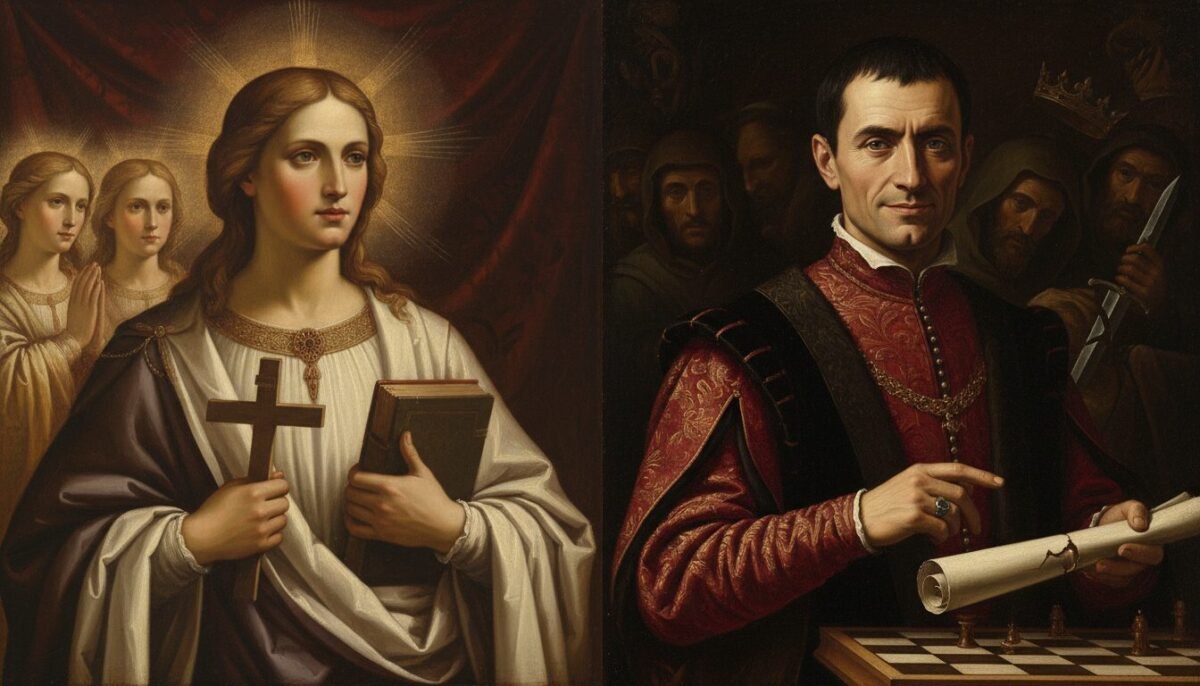
This was a radical departure from the prevailing Christian and Ciceronian ethics of the time. Cicero argued that a leader must always be honest and just, and that “expediency can never conflict with moral rectitude.” Machiavelli looked at the bloody reality of 15th-century Italy and essentially called “bluff.” He argued for a secular political efficacy. To him, virtù was a blend of talent, relentless energy, and the psychological flexibility to achieve one’s ends regardless of the means required. It is the quality that allows a leader to maintain the state and provide security for its people, even if that requires actions that would be considered “sinful” in a private context.
This shift was heavily influenced by Renaissance humanism. For the first time in centuries, thinkers were moving away from the idea that human life was merely a waiting room for the afterlife, dictated entirely by God’s will. Machiavelli’s virtù represents the peak of human agency. It suggests that while we cannot control everything, we are not helpless victims of fate. A leader with virtù possesses the “spirit” to impose their will upon the world, carving order out of chaos through sheer intellectual and physical prowess.
2. The Great Dichotomy: Virtù vs. Fortuna
If virtù is the skill of the player, Fortuna is the deck of cards. Machiavelli famously described Fortuna as an unpredictable, raging river. When she is angry, she floods the plains, uproots trees, and destroys buildings. Everyone flees before her; everyone yields to her impetus without being able to hinder it in any way.
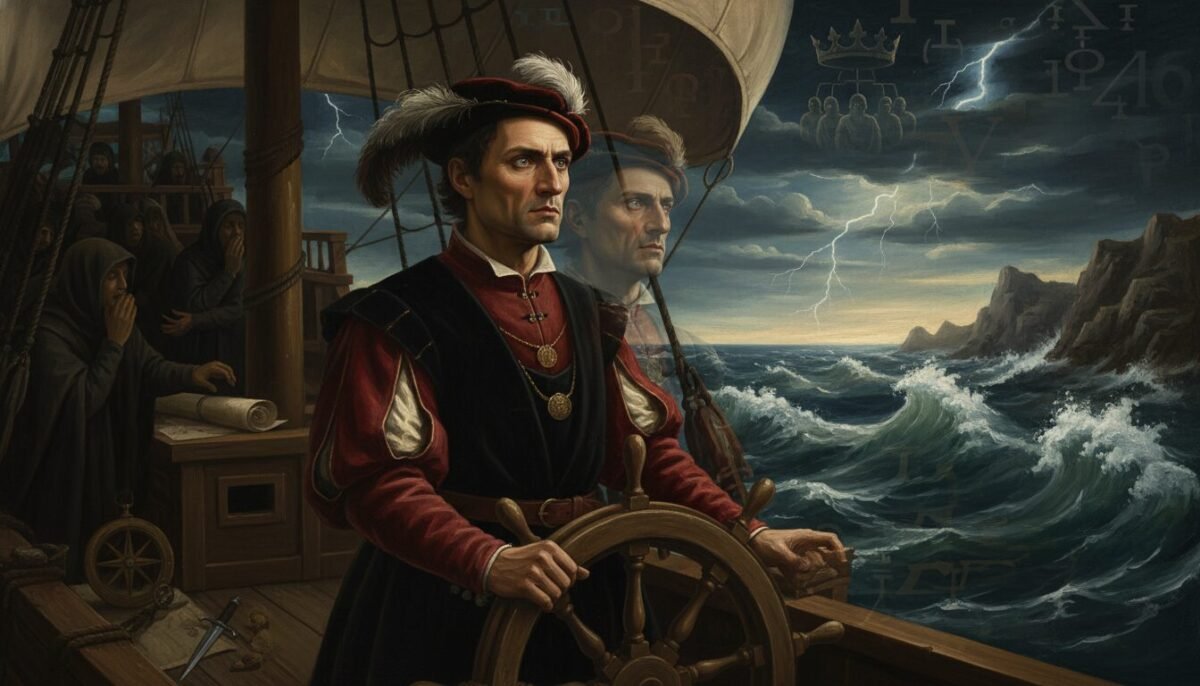
Machiavelli proposed a 50/50 rule that remains strikingly relevant in 2026: half of our actions are governed by fortune, but the other half—or perhaps a little less—is left for us to direct. Success is never purely the result of hard work, nor is it purely luck. It is the intersection of the two. However, the leader of virtù does not wait for the flood to happen. They act as the “dyke and dam.” During quiet times, they build the infrastructure, the alliances, and the military strength so that when the river of Fortuna eventually rises, its power is channeled or restrained rather than destructive.
Perhaps the most controversial aspect of this dichotomy is Machiavelli’s gendered metaphor. He wrote that “Fortune is a woman, and it is necessary, if one wants to hold her down, to beat her and strike her down.” While this language is jarring to modern ears, the philosophical point is about audacity. Fortuna, according to Machiavelli, favors the young, the bold, and the aggressive over those who are cautious and cold. In a world of rapid technological shifts and sudden market crashes, the leader who waits for “perfect information” is often the first to be swept away. Virtù is the courage to act decisively in the face of uncertainty.
3. Virtù in Action: The Case of Cesare Borgia
To see virtù in its rawest form, Machiavelli pointed to Cesare Borgia. Borgia was the son of Pope Alexander VI, and while he gained his initial power through his father (a stroke of Fortuna), he maintained and expanded it through incredible virtù. Machiavelli held him up as the ultimate exemplar because Borgia understood that the stability of a state often requires “surgical” ruthlessness.
Consider the “Remirro de Orco” episode. Borgia had conquered the region of Romagna, which was in a state of total lawlessness. To bring order, he appointed a cruel and efficient minister, Remirro de Orco, who used brutal methods to pacify the population. Once order was restored, Borgia realized that the people’s hatred for the minister’s cruelty might turn against him. In a masterstroke of virtù, he had Remirro executed and left his body in the town square, cut in two, with a wooden block and a bloody knife beside him. This spectacle left the people “at once satisfied and stupefied.” He had achieved order, shifted the blame for the violence onto a subordinate, and demonstrated his own absolute power in one move.
Borgia also understood the importance of self-reliance. He moved away from using mercenary or auxiliary troops—which he considered “useless and dangerous”—and built his own citizen army. He knew that you cannot be a master of your own destiny if your power depends on the whims or the payroll of others. Despite his brilliance, Borgia eventually fell. When his father died prematurely and he himself was deathly ill, he could not withstand the combined pressure of his enemies. Machiavelli’s analysis of Borgia’s failure is poignant: even the highest virtù can be overwhelmed by an extraordinary stroke of bad Fortuna. But that doesn’t make the virtù any less necessary; it simply makes the game of power tragic.
4. The Lion and the Fox: The Traits of a Leader with Virtù
A leader possessing virtù must be a psychological shapeshifter. Machiavelli famously argued that because a leader must know how to act like a beast, they should pick the lion and the fox. The lion cannot defend himself against snares, and the fox cannot defend himself against wolves. Therefore, one must be a fox to recognize snares, and a lion to frighten the wolves.
This requires a level of adaptability that few humans actually possess. Most of us have a fixed nature; if we are naturally cautious, we succeed when the times require caution but fail when the times require boldness. True virtù is the rare ability to change one’s nature to suit the “quality of the times.” If the environment shifts from a period of stability to a period of revolution, the leader must be able to pivot from the fox’s cunning diplomacy to the lion’s raw force instantly.
Central to this is the “Economy of Violence.” Machiavelli did not advocate for senseless cruelty. In fact, he despised it. He argued that cruelty should be “well-used”—applied once, out of necessity for security, and then turned into benefits for the subjects as quickly as possible. A leader who is constantly, “badly” cruel creates an atmosphere of fear that eventually leads to their own downfall. The ultimate moral justification for the leader is the maintenance of the stato (the state). If the state falls, everyone suffers. Therefore, any action—no matter how “un-lionlike” or “un-foxlike”—that preserves the state is, in Machiavelli’s eyes, an act of virtù.
5. Civic Virtù and the Health of the Republic
While The Prince focuses on the individual ruler, Machiavelli’s Discourses on Livy explores virtù on a collective level. He believed that the health of a Republic depends on the civic virtù of its citizens. When a population becomes soft, selfish, and indifferent to the common good—a state he called ozio (idleness or corruption)—the state is doomed to collapse or be conquered.
How do you prevent this rot? Machiavelli argued that good laws and even religion (used as a tool for social cohesion) are essential for fostering a disciplined and effective populace. He had a fascinating take on social conflict: he believed that the tension between the “Great” (the elite) and the “People” (the masses) was actually the secret to Rome’s strength. In a healthy republic, these two groups check each other’s ambitions. This friction prevents any one side from becoming too corrupt and keeps the collective virtù sharp.
In 2026, we see the opposite of this. Polarization is often destructive rather than productive. Machiavelli would argue that we have lost our civic virtù because we no longer prioritize the survival of the “body politic” over our own tribal interests. A state without collective virtù is a state waiting for a “Prince” to come and impose order by force.
6. Political Realism in 2026: Modern Interpretations of Virtù
As we look at the world in 2026, Machiavelli’s insights feel uncomfortably modern. We live in a decentralized geopolitical landscape where traditional power structures are being bypassed by non-state actors, algorithmic influence, and rapid-fire misinformation. In this environment, virtù is being redefined for the digital age.
The “fox” of 2026 isn’t just a cunning diplomat; they are a master of cybersecurity and narrative control. The “lion” isn’t just a general with an army; they are a leader who can mobilize economic sanctions or infrastructure-level disruptions. Machiavelli’s concept of verità effettuale—the “effective truth”—is the ultimate antidote to our era of deepfakes and echo chambers. He urged leaders to look at things as they actually are, rather than how they ought to be. In 2026, the leader who bases their strategy on “hope” or “idealism” without accounting for the cold reality of human nature and technological vulnerability is a leader who is inviting Fortuna to destroy them.
This is why modern CEOs and political strategists are returning to these principles. In an era of global instability, the “good” leader is no longer the one with the most virtuous-sounding press release. The “good” leader is the one who has the virtù to navigate the storm, protect their organization or state, and ensure survival in a world that doesn’t care about your intentions—only your results.
Conclusion
Machiavellian virtù is not a call to evil, but a call to realism. It is a sobering reminder that power is a responsibility that requires more than just good intentions. It defines the “good” leader as the one who possesses the skill, the adaptability, and the iron will to protect the state against the whims of Fortuna. In the end, Machiavelli teaches us that the greatest moral failure of a leader is not being “bad,” but being ineffective.
To dive deeper into the mechanics of power and the psychology of influence, explore our other analyses on Power & Human Nature and Influence & Leadership. Ready to apply these principles to your own career? Download our 2026 Leadership Strategy Guide, inspired by Machiavellian realism, and learn to master the “quality of the times.”
Frequently Asked Questions
Is Machiavellian virtù the same as being a sociopath?
No. A sociopath lacks a moral compass and acts for self-gratification. A leader with virtù may perform “evil” acts, but only as a calculated necessity to maintain the state and ensure the long-term safety and stability of the people.
Can someone learn virtù, or is it an innate talent?
Machiavelli believed it was a combination of both. While some are born with more natural “spirit” and energy, virtù can be sharpened through the study of history, the practice of arms, and the constant observation of human nature.
How does Fortuna apply to modern business in 2026?
Fortuna represents “Black Swan” events—sudden AI breakthroughs, market crashes, or geopolitical shifts. Virtù in business is the strategic foresight to build “dams” (diversified assets, robust security, adaptable culture) before the crisis hits.
Why did Machiavelli prefer a Republic if he wrote ‘The Prince’?
Machiavelli believed a Republic was more stable in the long run because it could draw on the collective virtù of many citizens. The Prince was a “manual” for an emergency situation where a strong individual is needed to found or save a state from total collapse.