Imagine walking into a room where a man sits behind a massive mahogany desk, framed by heavy velvet curtains and a gold-fringed flag. He wears a tailored charcoal suit, and on his lapel is a small, discreet pin of an eagle. Even before he speaks, you feel a subtle shift in your posture. Your voice drops a semi-tone; your answers become more concise. Now, imagine that same man meeting you in a coffee shop wearing a t-shirt and shorts. The information he shares is identical, but the weight of his words has vanished.
Why do we afford so much weight to a piece of wood like a judge’s gavel, a circle of metal like a monarch’s crown, or a stylized “check” on a corporate sneaker? These are inanimate objects, yet they possess a strange, almost magnetic ability to dictate human behavior. Authority, in its rawest form, is an abstract concept—a fragile agreement between the ruler and the ruled. To survive, it requires tangible markers to remain visible, stable, and unquestioned. Without symbols, power is merely a suggestion; with them, it becomes an objective reality.
1. The Semiotics of Power: Defining Symbolic Authority
At its core, symbolic power is the ability to make people see and believe in a specific version of the world. It is what sociologists often call “the power of making things with words”—or in this case, with images. When an institution uses a symbol, it isn’t just decorating; it is performing an act of “shorthand.” A complex legal system involving thousands of pages of code is condensed into the image of a set of scales. A multi-billion dollar corporation’s history, ethics, and promise of quality are distilled into a single, minimalist logo.
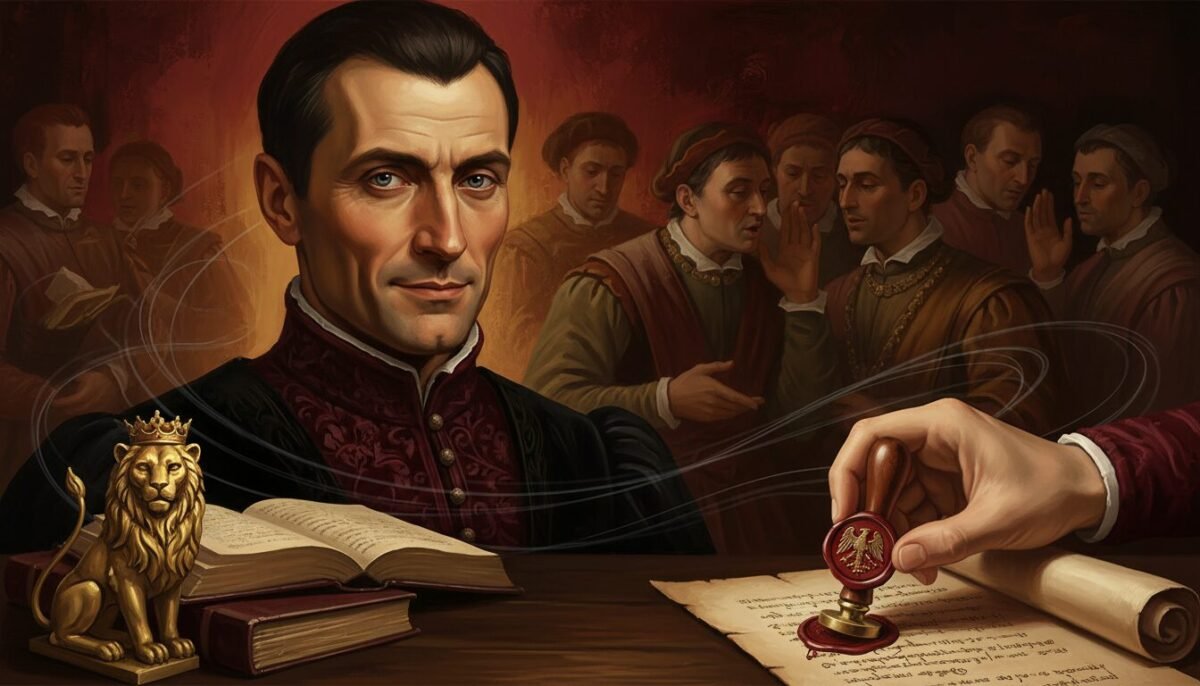
We can categorize these symbols into two distinct groups: formal and informal. Formal symbols are the “official” markers of an institution. These are the flags, the seals of office, the national anthems, and the constitutional documents. They are designed to project a sense of timelessness. When you see the Great Seal of a nation, you aren’t looking at a contemporary design; you are looking at a visual claim to ancestral legitimacy. These symbols say, “We were here before you, and we will be here after you.”
Informal symbols, on the other hand, are more fluid but equally potent. These include attire, body language, and even the “props” of a specific social class. Consider the “power suit” of the 1980s or the “tech-bro” hoodie of the 2010s. Both are uniforms that signal belonging to a specific hierarchy of influence. Informal symbols work through nuance—the firmness of a handshake, the height of a podium, or the silence of a luxury car’s engine. They communicate authority through the absence of effort, suggesting that power is so ingrained it no longer needs to shout.
Ultimately, these symbols act as a cognitive shortcut. In a complex world, we do not have the time or mental energy to vet every person we encounter. Symbols provide the “credentials” that allow social structures to function smoothly without constant negotiation or conflict.
2. The Psychology of Obedience: How Symbols Shape Perception
The human brain is hardwired to look for hierarchies. From an evolutionary standpoint, knowing who is in charge was a survival mechanism. This biological predisposition makes us incredibly susceptible to the visual cues of authority. There is a profound cognitive connection between what we see and what we believe to be legitimate.

One of the most famous demonstrations of this is the Milgram experiment. While often discussed in the context of ethics, the experiment is a masterclass in the semiotics of authority. Participants were willing to administer what they believed were lethal electric shocks to strangers simply because a man in a grey lab coat—a symbol of scientific expertise—told them to do so. When the lab coat was removed and the “experimenter” wore ordinary clothes, compliance plummeted. The authority didn’t lie in the man; it lied in the fabric of his coat. The symbol triggered an automatic psychological “bypass” that suppressed the participants’ own moral judgment.
This “automatic compliance” is part of the psychological comfort of established order. Most people find ambiguity stressful. We want to know who is the doctor, who is the pilot, and who is the police officer. Symbols provide a sense of safety by confirming that someone is “in control.” This is why, in moments of crisis, we look for the person with the most visible markers of rank. We aren’t just looking for a leader; we are looking for the reassurance that the hierarchy still holds.
Non-verbal communication further reinforces this. The way a CEO stands at the head of a boardroom table, or the way a sergeant stands with their hands behind their back, uses spatial semiotics to claim dominance. We perceive these physical cues not as aggressive acts, but as “natural” expressions of their status. We obey because the visual environment tells us that obedience is the most logical and safest path.
3. From Crowns to Constitutions: The Historical Evolution of Authority
The symbols we respect today didn’t appear out of thin air; they are the result of a long evolutionary process that shifted from “Divine Right” to “Legal-Rational” authority. In the medieval world, authority was seen as a gift from the heavens. The crown was not just a hat; it was a physical manifestation of God’s will. The French Fleur-de-lis, for instance, was more than a floral pattern; it was a religious and political claim to purity and divine favor. If you challenged the symbol, you weren’t just a rebel; you were a heretic.
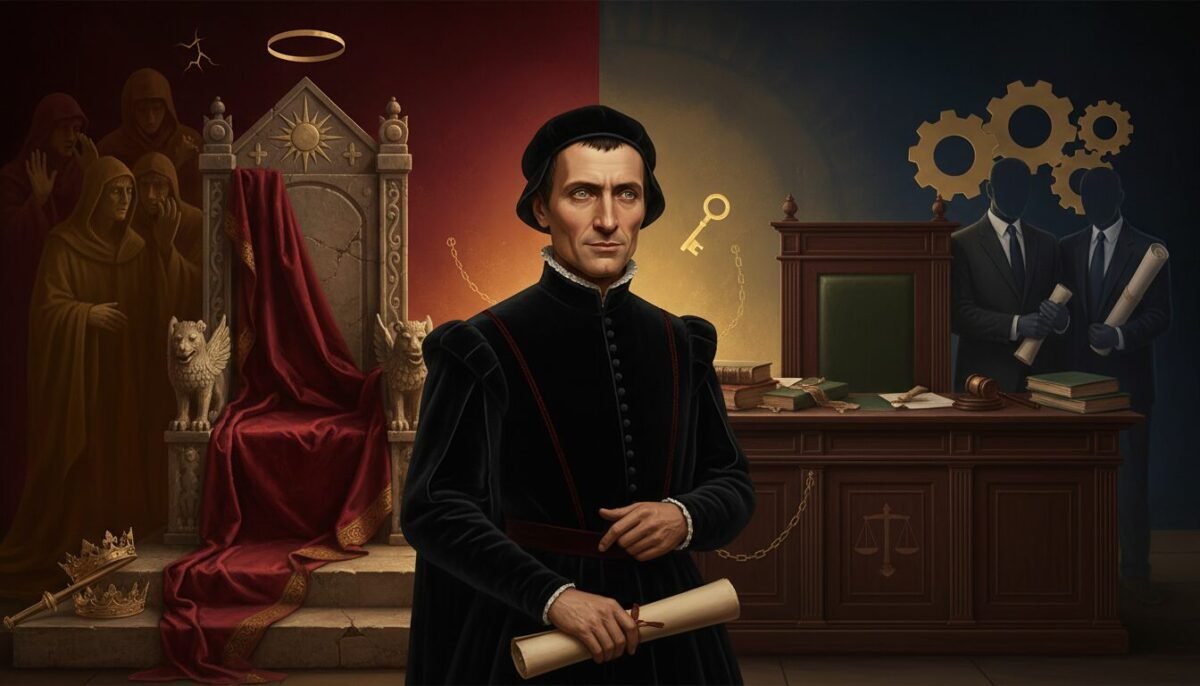
As societies moved toward the Enlightenment, the source of authority shifted from the person of the King to the “Office” of the State. We see this transition clearly in the Roman Eagle (Aquila). For a Roman legionary, the Eagle was the soul of the unit. To lose it was a disgrace beyond repair. The Eagle represented the “Senatus Populusque Romanus” (The Senate and People of Rome)—an abstract state rather than a single man. This set the stage for modern democracies.
Take the American Bald Eagle. It was chosen specifically to contrast with the lions and griffins of European monarchies. It was meant to symbolize a new kind of authority: one that was rugged, independent, and grounded in the natural world rather than hereditary bloodlines. However, notice how the form of the symbol remains similar to the Roman Eagle. New regimes almost always “borrow” the visual language of the old ones to steal some of their established gravity. We call this “political semiotics”—using the past to legitimize the present.
Even as political climates change, these icons evolve to maintain relevance. The British Monarchy has survived not by holding onto absolute power, but by perfecting the symbolism of power. They have transitioned from being the actual rulers to being the “living symbols” of national identity, proving that a symbol can often be more durable and influential than the person holding it.
4. The Architecture of Order: Uniforms, Rituals, and Physical Spaces
Authority is not just worn; it is inhabited. Monumental architecture is perhaps the most heavy-handed way that institutions project permanence. Think of the design of a traditional bank or a courthouse. They are often built with massive stone columns, high ceilings, and echoing halls. This is “intimidation by design.” The scale of the building makes the individual feel small, reinforcing the idea that the institution is vast and immovable. A courthouse doesn’t just house the law; it is the law in physical form.
Inside these spaces, institutional rituals act as performative symbols. The “call to order,” the swearing-in on a sacred text, or the rhythmic chanting in a religious service are all designed to suspend the ordinary world and enter a “sacred” space of authority. These rituals are repetitive and predictable, which creates a psychological sense of stability. When a ritual is performed correctly, it signals that the hierarchy is functioning as it should.
Then, there is the semiotics of the uniform. In law enforcement, the uniform serves two purposes: it anonymizes the individual and amplifies the office. When you see a police officer, you are not supposed to see “John Doe”; you are supposed to see “The State.” The dark colors, the badge at chest level (the heart), and the utility belt create a visual profile of capability and restraint. In the corporate world, the uniform has become more subtle but no less rigid. The “suit and tie” may be fading, but it has been replaced by “athleisure” or “minimalist chic” in tech hubs—a new uniform that signals a different kind of authority: the authority of the disruptor.
These physical markers—the buildings we enter, the rituals we perform, and the clothes we wear—create a “total environment” of authority. They make the power structure feel like a natural part of the landscape rather than a human invention.
5. Subversion and Transformation: When Symbols Challenge Authority
Because symbols are the bedrock of authority, they are also the primary targets of revolution. To destroy an institution, you must first destroy its “symbolic capital.” This is why protestors pull down statues of former leaders or burn flags. It is an act of symbolic inversion—taking the very thing that represents the regime’s power and treating it with contempt.
Consider the “V for Vendetta” mask, which has been adopted by various counter-culture movements globally. It takes the image of Guy Fawkes—a historical failure—and transforms it into a symbol of anonymous, collective resistance. By wearing the mask, the individual disappears, and the movement becomes an idea. This is the reverse of the police uniform; instead of the state becoming anonymous, the resistance becomes anonymous.
We also see “failed symbolic transitions” during leadership changes. When a new CEO or a new political leader tries to change the symbols of an organization too quickly, they often face a “rejection of the graft.” If the new symbols don’t resonate with the underlying values of the people, the leader loses legitimacy. You cannot simply command respect by changing a logo; the symbol must be “earned” through a alignment with the collective psyche. De-legitimizing an institution often starts with mockery—turning a serious symbol into a meme. Once a symbol is laughed at, it can no longer command the “automatic obedience” we discussed earlier.
6. The Digital Frontier: Branding and Authority in the 21st Century
In the 21st century, the “physical spaces” of authority are being replaced by digital ones. We no longer look at the height of a building to judge a company’s power; we look at its digital branding. The shift from the ornate seals of the past to the minimalist, “flat” designs of tech giants like Google, Apple, and Meta is a calculated move. Minimalism projects a sense of “frictionless” authority. It suggests that these companies are so integrated into our lives that they don’t need to show off. Their power is invisible, which makes it even harder to challenge.
The verified badge (the blue checkmark) is perhaps the most significant new symbol of the digital age. It is the modern equivalent of a knight’s heraldry. It tells the world, “This person is who they say they are, and they are important enough to be recognized by the platform.” When the rules for obtaining these symbols change—as we have seen in recent social media upheavals—it creates a crisis of authority. If anyone can buy the symbol of legitimacy, the symbol itself loses its power.
Furthermore, social media algorithms have created a new kind of “symbolic capital.” Authority is now measured in followers, engagement rates, and “viral” reach. Modern leaders—whether in politics or business—must navigate this digital semiotics carefully. A single poorly timed photo or a “cringe” video can strip away years of carefully built authority. In the digital frontier, authority is more “liquid”—it can be built overnight and lost in a click.
Conclusion
Symbols are not merely decorative additions to our social lives; they are the essential tools that transform raw power into recognized authority. They bridge the gap between the cold reality of an institution and the human psyche’s need for order and meaning. From the Roman Eagle to the blue checkmark, these visuals guide our behavior, dictate our loyalties, and shape our understanding of who belongs at the top of the mountain.
Understanding the power of symbols allows us to see the world for what it is: a complex stage where authority is constantly being performed. By recognizing these cues, we can begin to ask the most important question of all: Does the person behind the symbol actually deserve the authority the symbol grants them?
Frequently Asked Questions
Why do we still use ancient symbols like eagles or scales in modern times?
Ancient symbols carry “historical weight.” By using icons that have represented power for centuries, modern institutions tap into a sense of permanence and “proven” legitimacy, making them feel more stable to the public.
Can an institution survive if its symbols are mocked or destroyed?
It is very difficult. Symbols are the “visual interface” of authority. When they are de-legitimized through mockery or destruction, the psychological spell of obedience is broken, often leading to a rapid decline in the institution’s actual power.
How has the internet changed the way we perceive authority figures?
The internet has made authority more “performative” and fragile. We now judge authority based on digital cues like follower counts and “verified” status, but the constant access to leaders also makes them more human and prone to losing their “mystique.”
Is it possible to have a society without symbols of authority?
Likely not. Human psychology leans toward hierarchy and categorization. Even in “flat” organizations or counter-cultures, new symbols (like specific slang or dress codes) inevitably emerge to signal who holds influence within that group.
If you found this analysis of power and perception intriguing, you may want to explore our deeper dives into Machiavelli & Political Philosophy, the intersection of Power & Human Nature, or our guide to Influence & Leadership. Explore more at DeepPsyche.