


Imagine a city where soldiers stand on every street corner, their rifles slung low, eyes scanning the crowd. The government issues decrees, collects taxes, and enforces laws with surgical precision. On the surface, the state appears omnipotent. Yet, beneath the pavement, there is a hollow silence. The citizens do not follow the laws because they believe in them; they follow them because they fear the consequences of dissent. This is the paradox of the bayonet: as the diplomat Talleyrand famously noted, you can do many things with bayonets, except sit on them. A throne built solely on force is the most uncomfortable seat in the world.
The fundamental question that haunts every autocrat and puzzles every political scientist is whether a state can survive indefinitely through raw force alone. Is the “right to rule” merely a polite fiction we tell ourselves, or is it the invisible glue that prevents a civilization from dissolving into chaos? When a government loses its legitimacy—that intangible sense that its authority is justified—it enters a terminal decline, regardless of how many tanks it keeps in the garage. To understand why, we must look past the surface of politics and into the deep psychology of power.
1. Defining Power vs. Legitimacy: The Foundation of Authority
In the study of human systems, we often use the word “power” as a catch-all term, but the German sociologist Max Weber offered a vital distinction that remains the gold standard for understanding how societies function. He distinguished between Macht (raw power) and Herrschaft (authorized rule or authority).
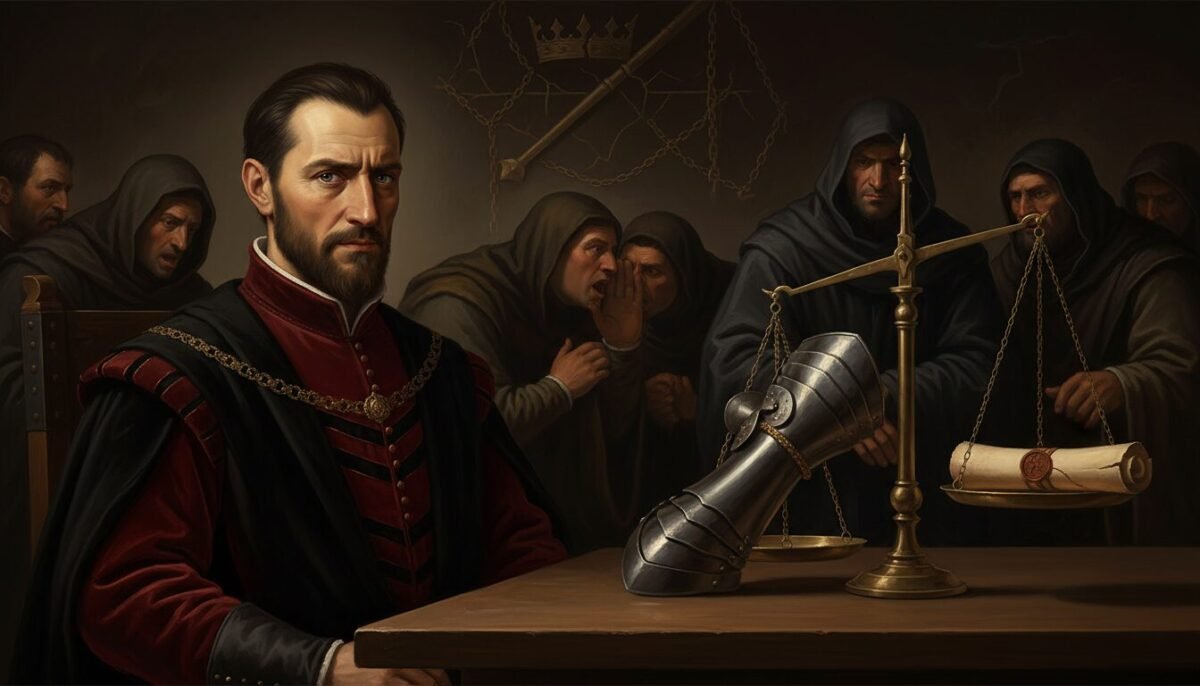
Raw Power (Macht) is the ability to impose one’s will upon others, even against their resistance. It is the schoolyard bully taking a lunchbox; it is the conqueror seizing a province. It requires no consent, only the capacity for violence or coercion. However, raw power is incredibly “expensive” to maintain. It requires constant surveillance and a high degree of energy to keep the subject in a state of submission. The moment the bully turns his back, or the conqueror’s army grows tired, the power evaporates.
Legitimate Authority (Herrschaft), on the other hand, is the probability that a command will be obeyed because the person receiving the command believes it is right to obey. This is the foundation of the social contract. In a healthy society, citizens voluntarily trade a portion of their absolute freedom—the right to do whatever they want, whenever they want—for the protection and order provided by the state. We stop at red lights at 3:00 AM not because a police officer is watching, but because we recognize the internal logic and “rightness” of the system.
Legitimacy transforms obedience from a forced choice into a moral obligation. When a regime is legitimate, it doesn’t need a soldier on every corner. The citizens become their own enforcers because they identify with the state. Without this psychological buy-in, the state is not a community; it is an occupying force in its own land.
2. Max Weber’s Triad: How Governments Earn the Right to Rule
How does a group of people convince millions of others that they have the “right” to make the rules? Weber identified three primary sources of legitimacy, each with its own psychological profile and inherent vulnerabilities.

Traditional Authority
This is legitimacy derived from “the way things have always been.” It is the authority of the hereditary monarch or the tribal chief. People obey because their ancestors did, and the system is sanctified by ancient customs. The strength of traditional authority lies in its stability; its weakness lies in its rigidity. When the world changes—through industrialization or global communication—traditional rulers often find that “custom” is no longer enough to justify their grip on power.
Charismatic Authority
This is perhaps the most volatile form of power. It rests on the perceived extraordinary qualities of an individual leader. Whether it is a revolutionary hero, a religious prophet, or a populist firebrand, the followers obey because they are “captured” by the leader’s vision or personality. Charismatic authority can move mountains, but it is notoriously fragile. It is tied to a single person; if that person fails, ages, or dies, the entire system of legitimacy often collapses with them.
Legal-Rational Authority
This is the hallmark of the modern state. Here, legitimacy is not tied to a person or a tradition, but to a system of established laws and procedures. We respect the President or the Prime Minister not because of their bloodline or their “magic” personality, but because they were elected according to a process we trust. The bureaucracy functions because it follows rules that are transparent and predictable.
However, we are currently witnessing a global phenomenon known as the “Democratic Deficit.” This occurs when the legal-rational systems remain in place, but the public loses trust in them. When people feel that the “rules” are rigged in favor of elites, or that the bureaucracy is a faceless machine indifferent to their suffering, the legal-rational foundation cracks. This is the danger zone where regimes often pivot back toward coercion to maintain order.
3. The Mechanics of Survival: How Illegitimate Regimes Maintain Control
When a regime can no longer rely on the voluntary consent of the governed, it must build a sophisticated architecture of control to prevent its own demise. This is not just about brute force; it is about the systematic dismantling of the human spirit and social trust.

- The Coercive Apparatus: The most obvious tool is the expansion of the military and internal security forces. The police are no longer there to “serve and protect” the public, but to protect the state from the public. This creates a “Praetorian Guard” scenario where the ruler becomes entirely dependent on the loyalty of the generals.
- Manufacturing Consent: Since the regime cannot earn genuine belief, it must manufacture a simulation of it. State-controlled media floods the airwaves with propaganda designed to do two things: glorify the leader and convince the population that any alternative would result in absolute chaos. The goal is not necessarily to make people believe the lies, but to make them so cynical that they stop looking for the truth.
- Surveillance and the Climate of Fear: Modern illegitimate regimes excel at atomization. By using pervasive surveillance—both human informants and digital tracking—they ensure that no two people can trust each other. If you fear your neighbor, your coworker, or even your brother might be an informant, you will never organize a protest. This climate of fear prevents the “collective action” necessary to challenge the state.
- Clientelism and Patronage: If you cannot win the hearts of the masses, you must buy the loyalty of the elites. Illegitimate regimes often function as giant patronage machines, distributing state resources, monopolies, and positions of power to a small circle of loyalists. These “clients” defend the regime not out of conviction, but because their own wealth and survival are tied to the ruler’s continued existence.
4. The Economic and Social Costs of Governance Without Consent
Maintaining a state through coercion is a game of diminishing returns. The “overhead” of repression eventually becomes so high that it cannibalizes the very society it seeks to rule.
First, there is the fiscal drain. A massive security apparatus—secret police, high-tech surveillance, and a pampered military—is incredibly expensive. In many illegitimate regimes, the security budget dwarfs the spending on education, healthcare, and infrastructure. Over time, the nation’s physical and intellectual capital withers because the state is spending all its money just to keep the lid on the pressure cooker.
Second, we see the phenomenon of capital flight and brain drain. The most productive members of society—the entrepreneurs, the scientists, and the intellectuals—are usually the first to realize when a system is losing its legitimacy. They don’t want to live in a world of fear and unpredictability. When the “best and brightest” flee to more stable, legitimate nations, they take their wealth and their talent with them, leaving the home country in a state of permanent economic stagnation.
Finally, there is the psychological toll on the population. Living under coercive rule leads to “learned helplessness.” When people feel they have no agency over their lives or their government, they withdraw from civic life. Innovation dies because people are afraid to take risks. Social alienation grows. A society of “learned helplessness” is a society that has stopped dreaming, stopped building, and is merely waiting for the end.
5. Historical Precedents: When the Facade of Power Crumbles
History is a graveyard of regimes that thought they could rule by force forever. The collapse usually happens in a way that seems “slow, then all at once.”
Consider the Soviet Union (1989-1991). For decades, the USSR was a global superpower with a terrifying nuclear arsenal and a pervasive secret police (the KGB). Yet, the regime had lost its ideological legitimacy long before the Berlin Wall fell. The citizens no longer believed in the “Communist Utopia,” and even the elites had stopped pretending. When Mikhail Gorbachev introduced Glasnost (openness), the “fear barrier” evaporated. Once people realized that the state was no longer willing or able to shoot them for speaking out, the entire monolithic structure collapsed in a matter of months. It wasn’t defeated by a foreign army; it dissolved because the internal belief in its right to exist had reached zero.
The Arab Spring of 2011 provides another modern example. In countries like Tunisia and Egypt, decades of autocratic rule were overturned not by organized political parties, but by a spontaneous eruption of public anger. The “fear barrier” broke when a single act of defiance—the self-immolation of Mohamed Bouazizi—became a symbol that resonated with millions. When the cost of submission becomes higher than the cost of rebellion, the coercive apparatus often fails because the soldiers themselves (who are also citizens) refuse to fire on their own people.
Even the French Revolution serves as a timeless reminder. The Bourbon monarchy had traditional legitimacy, but it failed the “social contract” by allowing the people to starve while the nobility remained exempt from the burdens of the state. When the perceived injustice reached a breaking point, the “divine right of kings” was no longer enough to protect the crown from the guillotine.
6. The Longevity Question: Can Coercion Last Indefinitely?
Some might point to modern surveillance states and argue that technology has changed the game. Can a regime with AI-driven facial recognition and total digital control maintain an illegitimate rule indefinitely? While technology extends the “shelf life” of an autocracy, it does not solve the fundamental problem of succession.
Illegitimate regimes are almost always hyper-centralized. Power is concentrated in a single leader or a tiny junta. Because there is no legitimate process for transferring power (like a trusted election), every leadership transition becomes a potential civil war. When the “Strongman” dies, the various factions of the elite—the military, the secret police, the oligarchs—begin to fight over the spoils. Without the glue of legitimacy, these internal fractures usually lead to the state’s undoing.
Furthermore, there is the “Tipping Point” theory. In any coercive system, there is a hidden threshold of dissent. A regime might look stable when 90% of the people are unhappy but 100% are afraid. But if a small trigger—a food shortage, a botched election, or a viral video of police brutality—causes the fear to drop by even 10%, the system can hit a cascade. Once the “silent majority” realizes that everyone else is also angry, the coercive power of the state is suddenly outnumbered and overwhelmed.
Legitimacy is not a luxury; it is a functional necessity for long-term survival. A state that rules by consent is like a ship that sails with the wind; a state that rules by force is a ship that must be rowed by slaves. Eventually, the rowers tire, the oars break, and the sea takes what it is owed.
Frequently Asked Questions
What is the main difference between power and authority?
Power is the ability to force someone to do something against their will (coercion). Authority is the “right” to rule, where people obey because they believe the command is legitimate and justified.
Can a democracy lose its legitimacy?
Yes. This is often called a “legitimacy crisis.” It happens when citizens feel the democratic process is corrupt, the laws are applied unfairly, or the government no longer represents the interests of the people. In these cases, even a democracy may begin to rely more on police force to maintain order.
Why do some illegitimate regimes last for decades?
Longevity is often achieved through a combination of high-level surveillance, “buying off” the military and elites with wealth, and keeping the population in a state of constant fear or economic dependency. However, these regimes remain inherently unstable and usually collapse during economic crises or leadership transitions.
If you found this analysis of power and human nature compelling, you may want to dive deeper into the minds of history’s most influential thinkers. Explore our deep dives on Machiavelli & Political Philosophy, the dark side of Influence & Leadership, or the fundamental connection between Power & Human Nature.
Stay curious. Stay sharp. Subscribe to the DeepPsyche newsletter for weekly insights into the hidden forces shaping our world.