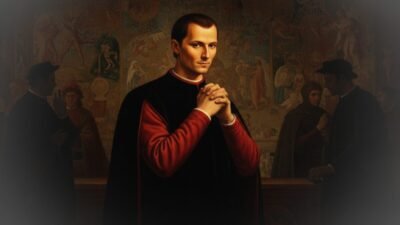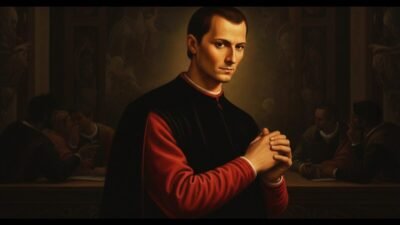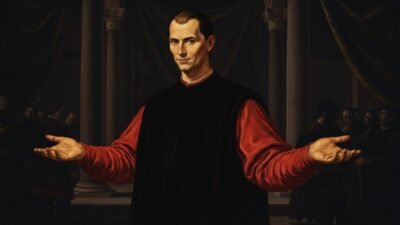

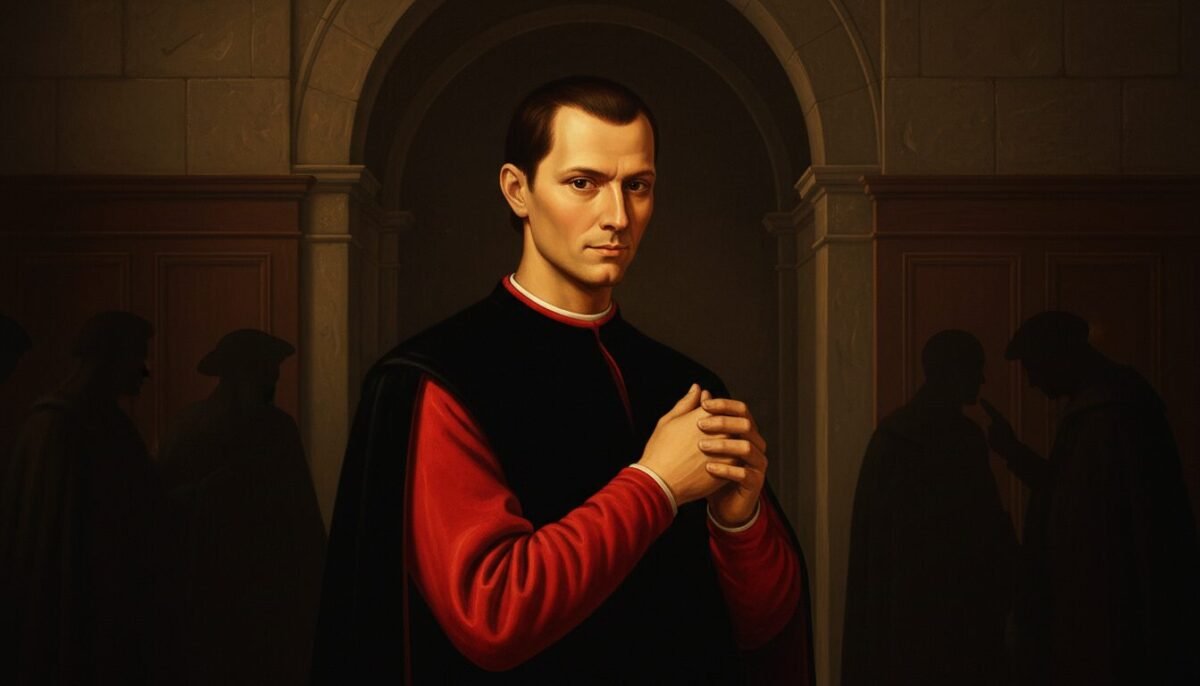
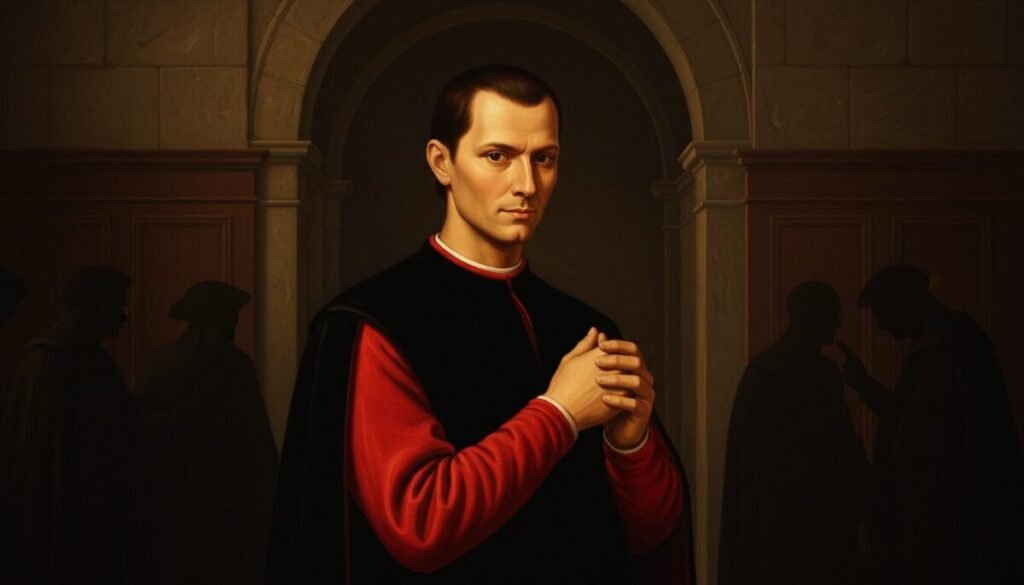
Was Niccolò Machiavelli truly the “teacher of evil” as history often suggests, or was he a desperate patriot writing from the shadows of exile? Imagine a man who spent his days negotiating with kings and popes, only to find himself suddenly stripped of his status, tortured on the rack, and banished to a quiet farm where his only companions were the birds and the dirt. This was the reality for Machiavelli in 1513. Most people today know him only through the chilling pragmatism of The Prince, a slim volume that has become the handbook for every aspiring autocrat. Yet, to judge Machiavelli solely by that work is like judging a composer by a single, dark movement of a massive symphony.
The truth is far more complex. Machiavelli’s final decade was a period of profound intellectual evolution, a time when he transitioned from a man of action to a man of letters. While the world remembers him as the architect of deceit, his later years reveal a thinker deeply committed to the survival of the republic and the prosperity of his beloved Florence. By looking beyond the “Machiavellian” caricature, we discover a man struggling to reconcile his high-stakes political experience with the harsh realities of a world that had moved on without him.
1. Life in Exile: The Struggle for Political Redemption
In 1512, the world Niccolò Machiavelli had built collapsed. The Florentine Republic, which he had served with tireless devotion for fourteen years as a diplomat and military strategist, fell to the returning Medici family. For Machiavelli, this wasn’t just a change in administration; it was a death sentence for his career. Suspected of conspiracy against the new masters of Florence, he was imprisoned and subjected to the strappado—a brutal form of torture where the victim’s hands are tied behind their back and they are repeatedly dropped from a height, often dislocating the shoulders. Machiavelli survived six such drops, maintaining his innocence throughout, but the physical and psychological scars remained.
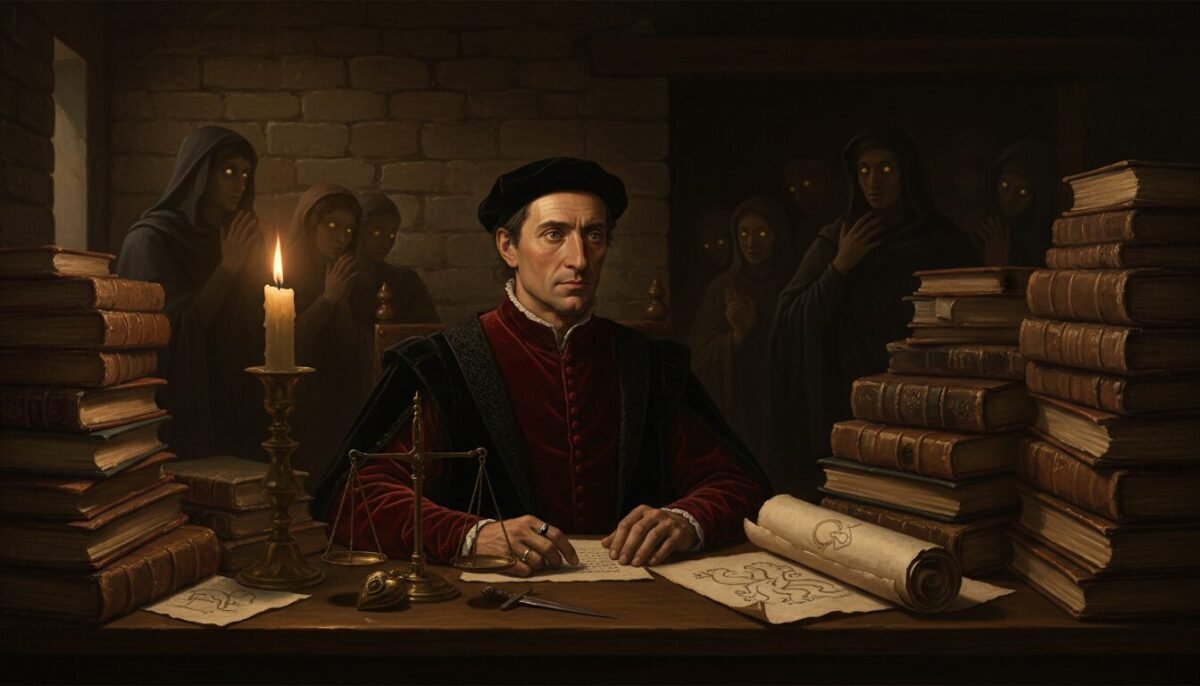
Exiled to his modest family estate in Sant’Andrea in Percussina, Machiavelli found himself in a state of agonizing boredom. For a man who lived for the “great game” of international politics, the quiet life of a gentleman farmer was a special kind of hell. In his famous letters to his friend Francesco Vettori, he described his days spent supervising woodcutters and arguing with local tradesmen over a few pennies. The psychological toll of political exclusion was immense; he felt like a ghost haunting the edges of a world he no longer influenced.
However, it was in this isolation that his greatest intellectual work began. Machiavelli did not accept his fate quietly. He spent his days in the mud, but his nights were spent in the company of giants. He famously wrote about returning home at sunset, stripping off his muddy clothes, and donning the “regal and courtly garments” of a scholar. In his study, he entered the “ancient courts of ancient men,” engaging in what he called “nightly conversations” with the great thinkers of Rome and Greece. This ritual was not just a coping mechanism; it was a desperate effort to regain favor with the Medici. The Prince was originally written as a sort of “job application”—a demonstration of his political utility to the very family that had tortured him. He hoped that by showing he understood the mechanics of power better than anyone else, he might be invited back into the fold.
2. From Diplomat to Scholar: The Major Works of the Final Decade
While The Prince is the work that defined his legacy, it represents only a fraction of Machiavelli’s intellectual output during his final decade. As the years passed and his hopes for a quick return to office faded, his writing became more expansive and, in many ways, more radical. His most significant scholarly achievement is arguably the Discourses on Livy. Unlike the monarchical focus of The Prince, the Discourses is a profound exploration of republicanism. Here, Machiavelli argues that a republic, with its system of checks and balances and its reliance on the collective virtue of its citizens, is inherently more stable and successful than a principality. This tension between his two major works has puzzled scholars for centuries, but it reflects a man who understood that different political “medicines” were required for different social “illnesses.”
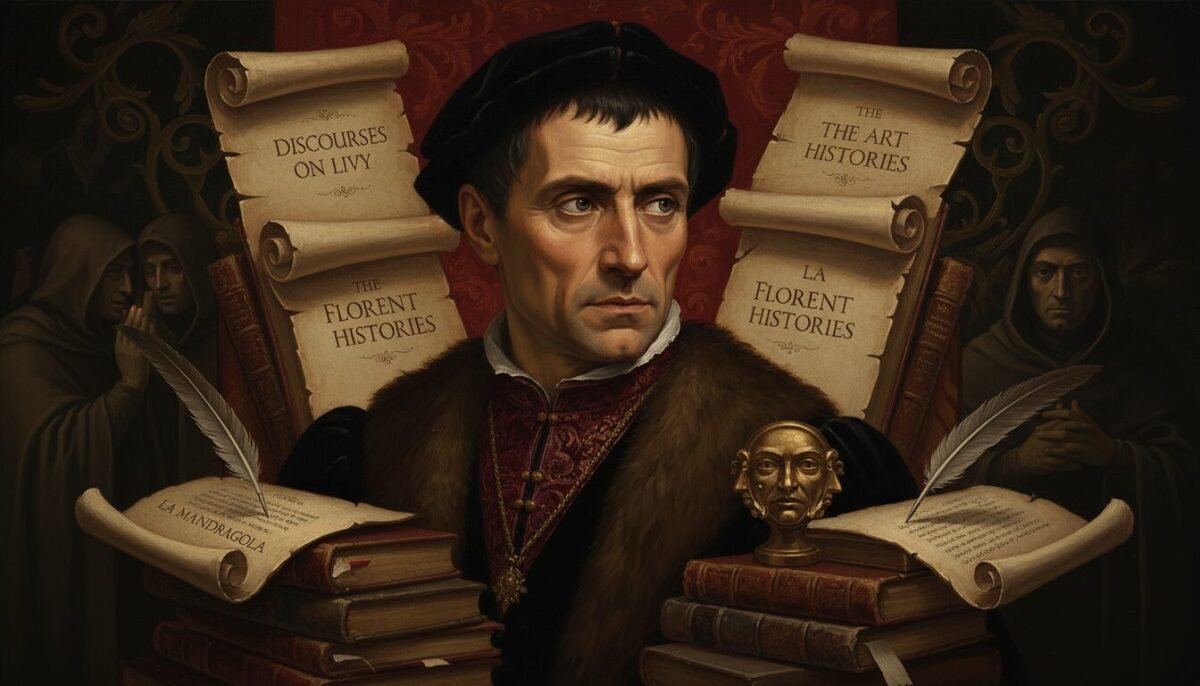
In 1521, Machiavelli saw the publication of The Art of War, the only major political work of his that was printed during his lifetime. In it, he argued passionately against the use of mercenaries—whom he blamed for the weakness of the Italian states—and advocated for a citizen militia. He believed that a state’s freedom was inextricably linked to the willingness of its citizens to fight for it. This wasn’t just theory for him; he had actually organized such a militia for Florence years earlier.
Machiavelli also turned his sharp wit toward the stage. His play The Mandrake (La Mandragola) became one of the most successful comedies of the Renaissance. On the surface, it is a ribald tale of seduction and deception, but beneath the humor lies a cynical critique of Florentine society. It suggests that in a world where everyone is corrupt, the only way to achieve one’s goals is through superior cunning. This foray into fiction allowed him to express truths about human nature that were perhaps too dangerous or too depressing to state in a political treatise.
Eventually, his intellectual reputation grew to the point that the Medici could no longer ignore him. In 1520, Cardinal Giulio de’ Medici (the future Pope Clement VII) commissioned him to write the Florentine Histories. This was a prestigious but delicate task. Machiavelli had to navigate the history of Florence without offending the very family that now ruled it, yet he managed to weave in his theories about the cyclical nature of power and the inevitable decline of states that lose their internal balance.
3. The Medici Rapprochement and the Final Return to Service
By the early 1520s, Machiavelli’s persistence began to pay off. He was no longer the pariah of 1513. He started receiving minor diplomatic missions—tasks that were a far cry from his days negotiating with the King of France, but missions nonetheless. He was sent to settle disputes between friars or to negotiate small commercial interests. While these roles were humble, they represented a “thaw” in his relationship with the Medici family.
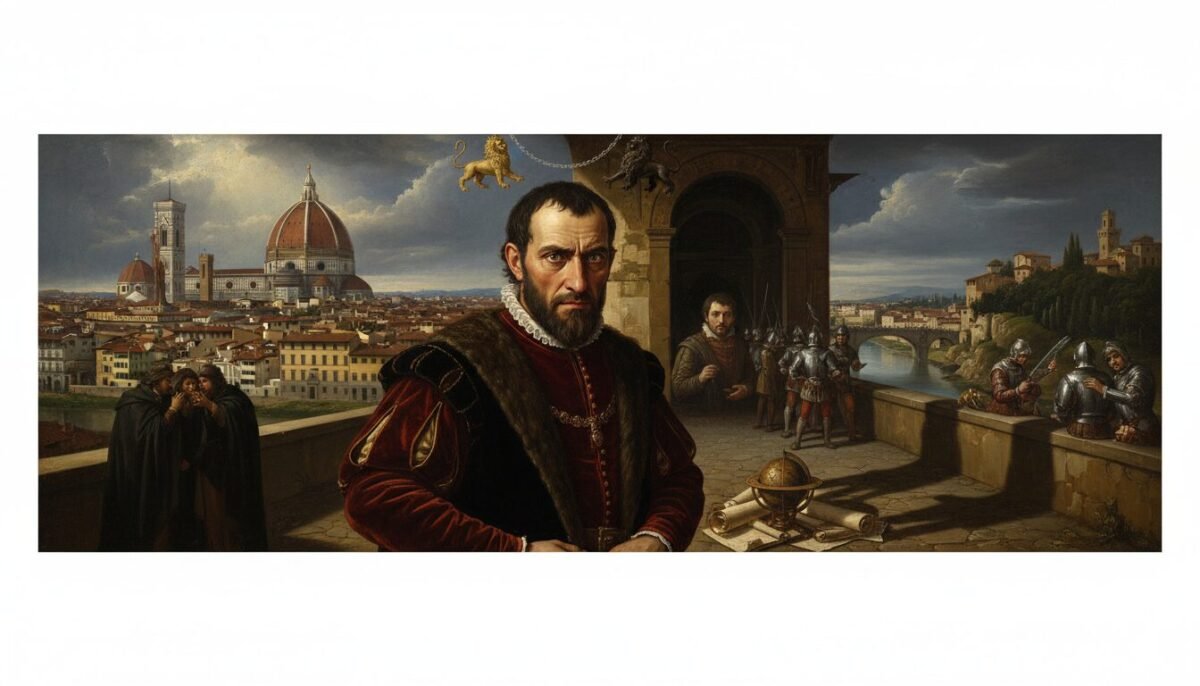
His relationship with Pope Clement VII was particularly crucial. The Pope recognized Machiavelli’s strategic mind and eventually tasked him with inspecting and fortifying the walls of Florence in anticipation of conflict. For a brief moment, it seemed that Machiavelli was back in the game. He was once again walking the halls of power, advising on the defense of his city. However, the timing could not have been worse. The Italian peninsula was becoming a chessboard for the massive empires of France and the Holy Roman Empire.
The 1527 Sack of Rome changed everything. When the unpaid imperial troops of Charles V stormed the Eternal City, the authority of the Medici Pope collapsed. In the ensuing chaos, Florence revolted against the Medici and restored the Republic. Machiavelli, the lifelong republican, should have been overjoyed. But he found himself in a cruel irony: the new republican government viewed him with suspicion because he had spent the last several years working for the Medici. He was rejected by the very system he had spent his life trying to perfect. The “new” men of the Republic saw him as a collaborator, a relic of the old regime. This final political rejection was perhaps the most painful blow of his life.
4. The Death of a Patriot and the Birth of a Legend
Machiavelli did not live long after the fall of the Medici. In June 1527, at the age of 58, he fell ill with stomach pains—possibly exacerbated by the stress of his final political failure. He died on June 21, surrounded by a few close friends. Legend has it that on his deathbed, he told a story of a dream in which he saw a crowd of ragged beggars (the saints in Heaven) and a group of noble philosophers (the damned in Hell). He allegedly said he would rather go to Hell to discuss politics with the greats than spend eternity in Heaven with the bored and the pious.
He was buried in the Basilica of Santa Croce in Florence, the “Temple of the Italian Glories,” alongside Michelangelo and Galileo. His tomb bears the famous Latin epitaph: Tanto nomini nullum par elogium—”For so great a name, no praise is adequate.” It is a fittingly grand tribute for a man who died in relative obscurity and political disappointment.
The real “Machiavelli” began to take shape only after his death. When his works were finally published posthumously in the 1530s, they hit Europe like a thunderbolt. The Catholic Church, initially indifferent, soon recognized the danger of his secular approach to power. In 1559, his writings were placed on the Index Librorum Prohibitorum, the list of prohibited books. He was branded an atheist and a “teacher of evil.” The religious and political backlash was so intense that it gave birth to the “Machiavellian” myth—a caricature of a man who delighted in cruelty and chaos, rather than a patriot who sought to understand the world as it was, not as we wish it to be.
5. The Evolution of Machiavellianism: From Villainy to Realism
The term “Machiavellian” quickly entered the European lexicon as a synonym for deceit, manipulation, and the devil himself. In Elizabethan England, he was often referred to as “Old Nick,” a nickname for the Devil. Stage villains would boast of their “Machiavel” tactics, and the popular image of the Florentine was that of a man who whispered poison into the ears of kings. This was the era of the “Anti-Machiavel” literature, where writers sought to distance themselves from his cold-blooded realism while often secretly practicing exactly what he preached.
However, during the Enlightenment, the tide began to turn. Thinkers like Jean-Jacques Rousseau and Montesquieu began to see Machiavelli in a different light. Rousseau famously argued that The Prince was actually a “book of republicans”—a satirical warning to the people about the methods of tyrants, rather than a manual for the tyrants themselves. They saw him as a man who had pulled back the curtain on the ugly reality of power, performing a public service by exposing how the world really worked.
By the 19th and 20th centuries, Machiavelli was being re-evaluated as the “father of political science.” He was the first to separate ethics from politics, arguing that the state operates under its own set of rules—the Raison d’État or “Reason of State.” This shift in perspective moved him from the category of “villain” to that of “realist.” He wasn’t advocating for evil; he was acknowledging that in a world where many are not good, a leader who tries to be good in every circumstance will inevitably lead his people to ruin. This realization is the cornerstone of modern political realism.
6. Machiavelli’s Intellectual Legacy in Modern Statecraft
The influence of Machiavelli’s later thought extends far beyond the borders of Italy. The American Founding Fathers, particularly John Adams and James Madison, were deep students of his work. While they may have recoiled at some of the advice in The Prince, they embraced the core message of the Discourses: that human nature is flawed and that a stable government must be built on a system of checks and balances that pits ambition against ambition. The U.S. Constitution is, in many ways, a Machiavellian document in its realistic appraisal of human fallibility.
In the realm of international relations, Machiavelli remains the patron saint of the “Realist” school. His focus on the “effectual truth” (verità effettuale) of the matter—looking at what people actually do rather than what they say they will do—is the foundation of modern intelligence gathering and diplomatic strategy. Whether it is the Cold War doctrine of containment or the complex power dynamics of the modern Middle East, the ghost of Machiavelli is always in the room.
Today, in an age of digital information and global conflict, his theories feel more relevant than ever. He understood that power is not just about force, but about the perception of force. He understood that leaders must navigate a world of “fake news” and shifting loyalties. Machiavelli’s legacy teaches us that while the tools of power change, the human heart—and the fundamental mechanics of the state—remain remarkably constant. He was a man of his time who managed to write for all time, reminding us that the survival of the community often requires making choices that no individual would ever want to make.
Frequently Asked Questions
Did Machiavelli actually believe the ends justify the means?
Machiavelli never actually wrote the phrase “the ends justify the means.” However, he did argue that a prince must be prepared to act against traditional morality if it is necessary to preserve the state and the safety of its citizens. His focus was on the outcome, not the intent.
Was Machiavelli a supporter of republics or dictatorships?
While The Prince focuses on how a single ruler can gain and hold power, his much longer work, Discourses on Livy, makes it clear that he believed a republic was the superior form of government for a free and virtuous people. He saw autocracy as a temporary necessity for a “corrupt” society that could not govern itself.
Why is he called the “father of political science”?
He is given this title because he was the first to study politics as a secular, empirical field. Before Machiavelli, political writing was usually “mirror for princes” literature that focused on how a leader should be a good Christian. Machiavelli looked at how power actually functions in the real world, regardless of religious or moral ideals.
If you found this exploration of power and history compelling, you might also enjoy our deep dives into Influence & Leadership or our analysis of Power & Human Nature. For those interested in how these ideas evolved, check out our guide on Machiavellianism in the modern world.
Machiavelli’s final years were defined by a poignant transition from a man of action to a man of letters. While he died without regaining the political power he craved, his posthumous legacy transformed him into the foundational figure of modern political realism. By looking past the “Machiavellian” caricature, we find a complex thinker dedicated to the survival and prosperity of the state. Explore our curated reading list of Renaissance political theory to dive deeper into the world of Machiavelli and his contemporaries on DeepPsyche.