Lord Acton famously claimed that “power tends to corrupt, and absolute power corrupts absolutely.” It is a quote so frequently cited that we have come to accept it as a physical law, akin to gravity. We look at the landscape of history—strewn with the wreckage of tyrants, the scandals of corporate titans, and the quiet betrayals of local officials—and we conclude that the “throne” itself must be cursed. But is this an inevitable law of human nature, or is it a failure of institutional design? Does the crown change the person, or does it simply reveal who they were all along?
The cynical view of leadership suggests that power and morality are mutually exclusive. We often believe that to climb the ladder, one must shed their conscience, and to stay at the top, one must suppress the humanity of others. Yet, if power were inherently evil, every advancement in human civilization—from the building of the Great Aqueducts to the eradication of smallpox—would have been impossible. Power is, at its core, the capacity to act. To understand if it can ever be ethical, we must move beyond catchy aphorisms and dive into the philosophical, psychological, and practical frameworks that govern how we influence one another.
1. Defining the Intersection of Power, Authority, and Ethics
To navigate the moral landscape of leadership, we must first distinguish between raw power and legitimate authority. Raw power is often rooted in coercion; it is the ability to force someone to do something against their will through fear, financial pressure, or physical strength. In contrast, authority is granted through consent. It is the social contract in action—a group of people agreeing to follow a leader because they believe that leader represents their interests or possesses a unique competence. Ethics enters the room the moment that influence begins. When you have the capacity to alter the trajectory of another person’s life, you inherit a moral weight that cannot be ignored.

How do we measure the “goodness” of that influence? Philosophers generally lean on two major frameworks. First, there is Deontology, championed by Immanuel Kant. This approach argues that the morality of power is found in the intent and the adherence to universal rules. An ethical leader, under this view, is one who never treats people as a mere means to an end. If a CEO lies to employees to “protect” the stock price, they have failed deontologically, regardless of the outcome, because they used people as tools rather than respecting them as rational agents.
On the other side sits Utilitarianism, which focuses on the consequences. A utilitarian leader asks: “Does my exercise of power result in the greatest good for the greatest number?” This is the logic often used in high-stakes governance or wartime leadership. It is a pragmatic, often cold calculus. However, the danger of pure utilitarianism in power is that it can be used to justify the suffering of a minority for the comfort of the majority. The most ethical exercises of power usually find a middle ground—respecting individual rights while striving for a broad, positive impact.
2. Does Power Inherently Corrupt? The Philosophical Debate
The debate over whether power is a corrupting toxin or a neutral amplifier has raged for centuries. Lord Acton’s warning was a reaction to the unchecked authority of the papacy and monarchs, suggesting that the human ego is too fragile to handle the lack of accountability. When we have power, the “brakes” in our brain—the parts responsible for social monitoring and empathy—tend to weaken. We begin to see ourselves as exceptions to the rules that govern others.
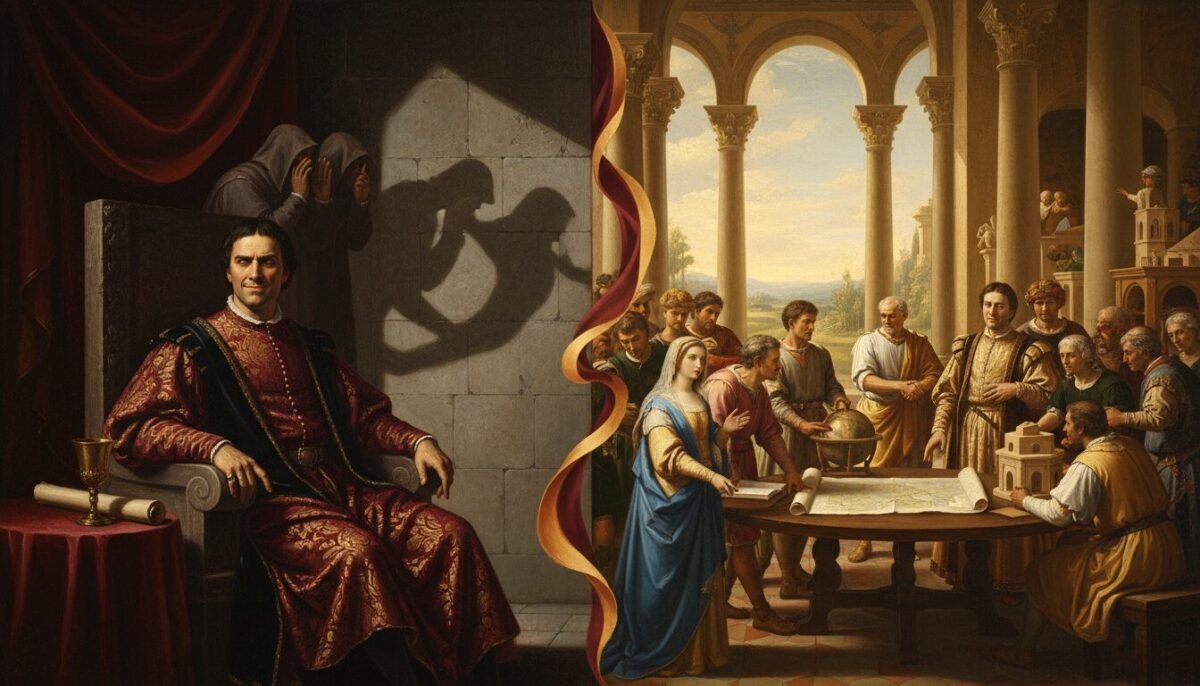
However, there is a counter-argument found in the concept of benevolent leadership. Thinkers like Plato envisioned the “Philosopher King,” a leader who does not desire power but accepts it out of a sense of duty. In this view, power doesn’t corrupt; rather, it provides the resources for a virtuous person to manifest their goodness on a grand scale. The corruption we see in history might not be a result of power itself, but a selection bias: those who most hungrily seek power are often the ones least fit to hold it.
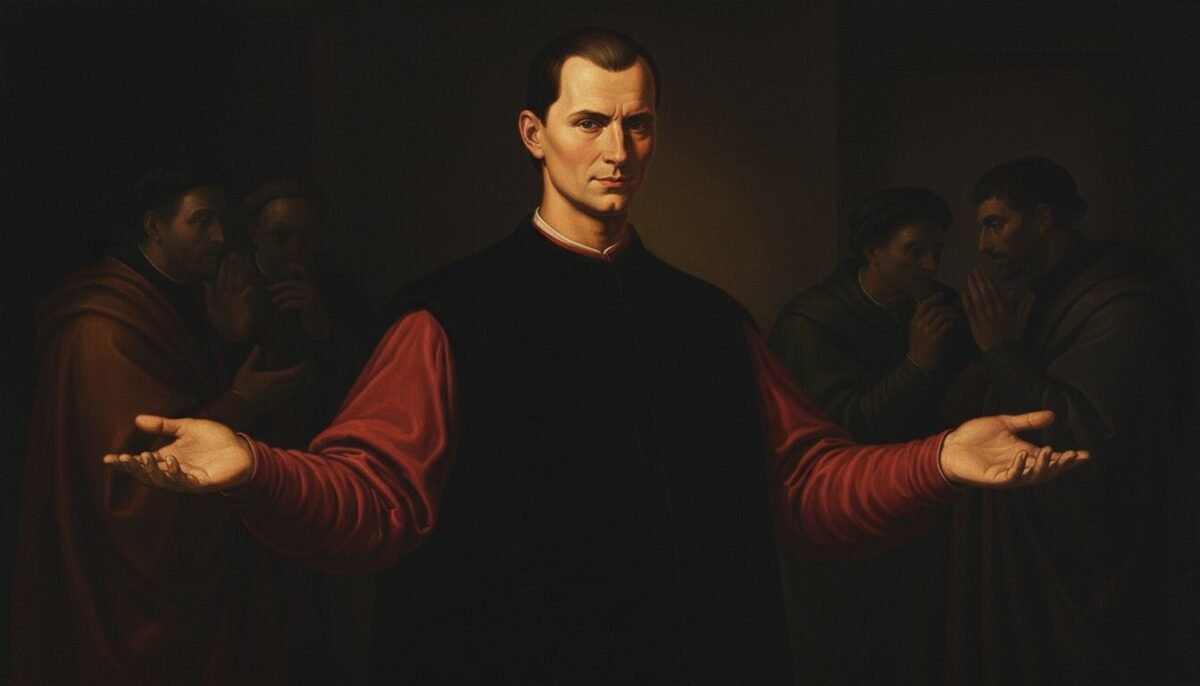
We cannot discuss this without mentioning Machiavellianism. Niccolò Machiavelli argued in The Prince that a leader must be prepared to be “not good” if the stability of the state requires it. He suggested that ethics are a luxury that those in power cannot always afford. While often viewed as a “villain’s handbook,” Machiavelli’s work raises a haunting psychological question: Can a leader remain “pure” while navigating a world of bad actors? Modern psychology has even identified the “Hubris Syndrome,” a disorder of the possession of power, characterized by a loss of contact with reality, restlessness, and an obsession with one’s own image. It suggests that power can literally re-wire the brain, making it harder to feel empathy and easier to take risks that harm others.
3. The Pillars of Ethical Leadership: Integrity and Empathy
If power has the potential to dehumanize, then empathy is the essential counterweight. Empathy in leadership is not about being “nice”; it is a cognitive and emotional discipline. It is the ability to maintain a vivid awareness of the human cost of every decision made from a mahogany desk. When a leader loses empathy, people become “headcounts,” “assets,” or “collateral damage.” To remain ethical, a leader must actively fight the psychological distancing that comes with high-level decision-making. They must stay “on the ground” enough to remember that their spreadsheets represent real lives.
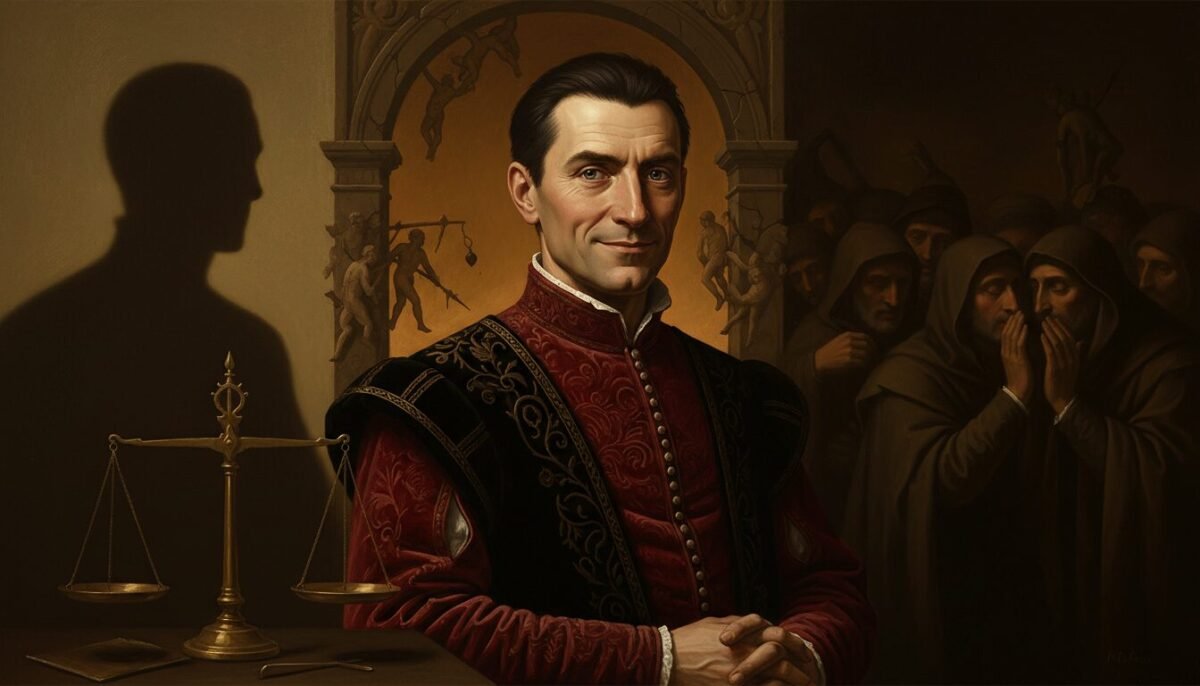
Integrity and radical honesty serve as the second pillar. Moral authority is not something you are given by a title; it is something you earn through consistency. In the modern world, transparency is no longer optional. With the democratization of information, a leader’s “private” ethics eventually become public knowledge. Ethical power requires a commitment to transparency that feels uncomfortable. It means admitting when a strategy has failed, being honest about the trade-offs of a policy, and ensuring that the “why” behind a decision is as clear as the “what.”
Finally, there is the concept of social responsibility. In the 21st century, the scope of power has expanded. A corporate leader is no longer just responsible to their shareholders; they are responsible to the environment, the local community, and the global supply chain. Ethical power today is measured by the “footprint” it leaves behind. It asks: “Is the world better because this organization exists, or are we simply extracting value while externalizing the costs?”
4. Servant Leadership: Reimagining Power as Service
In the 1970s, Robert Greenleaf introduced a concept that seemed like a total paradox: Servant Leadership. He argued that the most effective and ethical leaders are those who view themselves as servants first. This isn’t a weak or passive stance; it is a radical inversion of the traditional power pyramid. In a traditional model, the team exists to serve the leader’s vision. In servant leadership, the leader exists to remove obstacles for the team, foster their growth, and ensure their well-being.
This shift in focus from personal gain to community growth changes the chemistry of power. When a leader’s primary goal is the success of others, the “hubris” associated with power is naturally suppressed. The leader’s ego is tied to the collective achievement rather than individual dominance. We see this in modern business cultures that prioritize psychological safety and employee development over “command and control” management. Companies that adopt this model often find that they are more resilient because their power is distributed rather than hoarded.
Real-world examples of this can be found in social justice movements. Leaders like Dr. Martin Luther King Jr. or Dorothy Day did not seek power for the sake of status; they wielded influence as a tool to amplify the voices of the marginalized. Their authority came from their willingness to suffer alongside those they led. This “power-with” rather than “power-over” approach is the hallmark of leadership that survives the test of time and moral scrutiny.
5. Safeguarding Morality: Institutional Checks and Accountability
We cannot rely solely on the “goodness” of individuals. History proves that even the most well-intentioned leaders can succumb to the pressures of power if left unchecked. Therefore, ethical power requires institutional safeguards. The “separation of powers” in democratic systems is perhaps the greatest philosophical invention for the management of human ego. By creating competing centers of power—legislative, executive, and judicial—we ensure that no single person’s hubris can crash the entire system.
In the corporate and social world, this translates to transparency laws and whistleblowing protections. An ethical organization is one where the lowest-ranking employee feels safe pointing out a moral failure at the top. Without this “upward accountability,” power becomes a closed loop, feeding on its own delusions. Culture also plays a massive role. In some societies, authority is viewed as paternalistic and absolute; in others, it is viewed as a temporary stewardship. Societies that define authority through the lens of accountability rather than privilege tend to have much lower rates of corruption.
The “Panopticon” effect—the idea that people behave better when they know they are being watched—is a double-edged sword. While we don’t want a surveillance state, a level of radical transparency in how public funds are spent or how corporate decisions are made acts as a “moral disinfectant.” Power stays ethical when it is exercised in the light.
6. Case Studies: Historical and Contemporary Uses of Power
To see these theories in practice, we can look at Nelson Mandela. After 27 years in prison, Mandela held the power to seek revenge. Instead, he chose the path of reconciliation. He used his immense moral authority to build a “Rainbow Nation,” proving that power can be used to heal systemic wounds rather than inflict new ones. His leadership was ethical because it was rooted in a vision larger than his own ego or his party’s dominance.
In the corporate world, the fall of Enron remains the ultimate cautionary tale. It was a culture where power was decoupled from ethics, where “being the smartest guy in the room” justified any level of deception. Contrast this with the rise of B-Corps (Benefit Corporations). These are companies legally required to consider the impact of their decisions on their workers, customers, suppliers, community, and the environment. They represent a structural attempt to bake ethics into the very DNA of power and profit.
Looking toward the future, we face the challenge of AI and decentralized systems. Can we code ethics into an algorithm? Can decentralized autonomous organizations (DAOs) remove the “human element” of corruption by distributing power across a blockchain? While these technologies offer exciting possibilities for transparency, they also remind us that power is ultimately a human concern. Even the most advanced system is only as ethical as the people who design its goals.
Conclusion
Power is not a monster that inevitably devours the soul; it is a potent tool, like fire. It can cook a meal or burn down a house. To ensure that power remains ethical, we must move away from the “great man” theory of history and recognize that leadership is a collective responsibility. It requires rigorous institutional checks, a personal commitment to empathy, and a fundamental shift toward the philosophy of service.
The question is not whether power will corrupt, but whether we have the courage to build systems and characters that can withstand its heat. Ethical power is possible, but it is never accidental. It is a daily choice to remain transparent, to stay humble, and to remember that the true measure of a leader is not how many people serve them, but how many people are better off because they led.
Reflect on your own sphere of influence: Whether you are managing a household, a small team, or a massive corporation, how can you implement accountability and transparency in your leadership today? True authority begins with the courage to be questioned.
Frequently Asked Questions
Is it possible to be a “nice” leader and still be powerful?
Yes, but “nice” is often the wrong word. Ethical power is about being just and empathetic. Sometimes an ethical leader must make difficult, unpopular decisions, but they do so with transparency and a focus on the long-term well-being of the group rather than personal ego.
Does power change your brain?
Psychological studies suggest that high levels of power can diminish the “mirror neurons” responsible for empathy. This makes it harder for leaders to naturally sense the emotions of others, which is why conscious efforts toward empathy and staying connected to the “front lines” are so critical for ethical maintenance.
Can an organization be ethical if its primary goal is profit?
Profit and ethics are not mutually exclusive. However, an organization becomes unethical when profit is pursued at the expense of human rights, environmental health, or honesty. The most sustainable modern businesses treat profit as a result of providing value ethically, rather than an end that justifies any means.
What is the first sign that power is becoming corrupt?
The first sign is usually a lack of transparency and a defensive reaction to criticism. When a leader begins to surround themselves with “yes-men” and views dissent as disloyalty, the moral safeguards are failing.