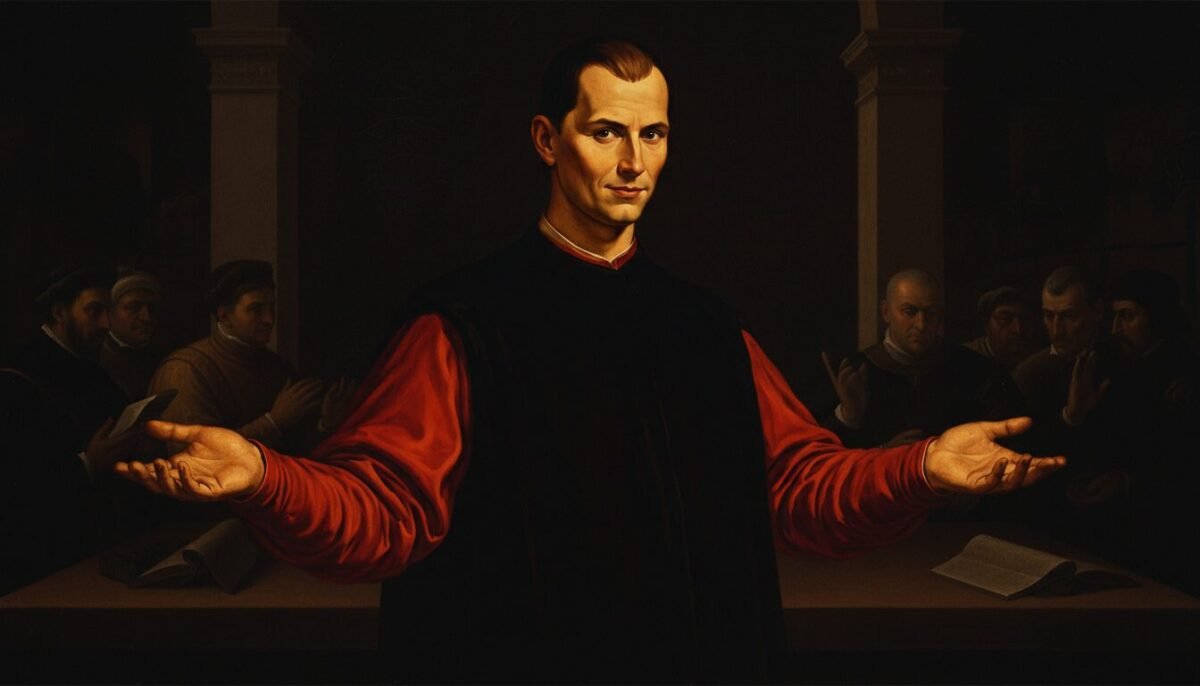
Lord Acton famously observed that “power tends to corrupt, and absolute power corrupts absolutely.” It is a chilling sentiment that has echoed through the halls of history, from the fall of Roman emperors to the modern collapse of multi-billion dollar tech empires. But we must ask a more uncomfortable question: Is authority inherently a poison that requires the sacrifice of one’s moral compass? Or is it possible to hold the reins of influence without losing one’s soul in the process?
Leaders today operate in a high-pressure crucible where the demands of stakeholders, the volatility of the market, and the intoxicating lure of personal gain create a constant friction against ethical obligations. We often see the “strongman” archetype celebrated—the leader who breaks rules to get results. Yet, history shows that power divorced from ethics is not just a moral failing; it is a structural weakness. To understand how to lead effectively, we must first understand the profound, often invisible, intersection where ethics and power meet.
1. The Inherent Link Between Authority and Moral Responsibility
At its core, power is never an isolated possession. In any functioning society or organization, power exists because of a “Social Contract.” This philosophical concept, championed by thinkers like John Locke and Jean-Jacques Rousseau, suggests that individuals cede a portion of their autonomy to a leader in exchange for protection, order, and the advancement of the collective good. Therefore, authority is not a personal privilege or a trophy won in a Darwinian struggle; it is a stewardship. It is a loan of trust that must be repaid with interest in the form of ethical governance.

The foundation of ethical power lies in the realization that moral obligation increases proportionally with the level of influence held. When a frontline employee makes a mistake, the impact is localized. When a CEO or a head of state makes a choice, the ripples can affect thousands or millions of lives. This “proportionality of impact” means that the higher you climb, the less “private” your morality becomes. Your internal values become public infrastructure.
Consider the concept of Noblesse Oblige—the idea that nobility extends beyond mere entitlement and carries an obligation to lead with honor. In a modern context, this means that a leader’s primary duty is to the ecosystem they inhabit, not just the ego they possess. When power is viewed as a tool for service rather than a weapon for dominance, the dynamic of the entire organization shifts. The leader is no longer a master, but a guardian of the mission. This shift in perspective is the first step in insulating oneself against the corrosive effects of authority.
The Weight of the Stewardship
To exercise power ethically, one must accept that they are accountable to those “below” them just as much as they are to those “above.” This inverted hierarchy is what separates a true leader from a mere boss. If you hold the power to hire, fire, promote, or set policy, you hold the keys to people’s livelihoods and psychological well-being. That is a heavy moral burden that requires constant self-reflection and a refusal to see people as mere “resources” or “capital.”
2. The Psychology of Power: Why Integrity is Challenged at the Top
If the link between power and ethics is so clear, why do so many leaders fail? The answer lies in the dark corners of human psychology. Research in neuroscience and social psychology suggests that power actually changes the way our brains function. This phenomenon is often referred to as “Hubris Syndrome.” As individuals gain authority, they often experience a decrease in activity in the part of the brain responsible for empathy—the mirror neuron system.

This leads to what psychologists call the “Power Paradox.” The very traits that help people rise to power—empathy, collaboration, and social intelligence—often disappear once they reach the top. They become more impulsive, less aware of others’ perspectives, and more prone to seeing themselves as “exceptions” to the rules that govern everyone else. This is not necessarily a sign of a “bad person,” but a biological reaction to the isolation and ego-inflation that high-status positions provide.
In high-pressure environments, we also see the phenomenon of “ethical fading.” This occurs when the moral dimensions of a decision disappear from view, replaced by “business” or “strategic” justifications. When a leader is focused solely on quarterly earnings or political survival, the human cost of their decisions becomes an abstraction. They aren’t “lying”; they are “managing the narrative.” They aren’t “exploiting”; they are “optimizing efficiency.” This linguistic gymnastics allows the ego to remain intact while the integrity of the organization crumbles.
Identifying the Triggers of Corruption
Psychological triggers for ethical failure often include:
- Isolation: Leaders who surround themselves with “yes-men” lose their connection to reality.
- The “End Justifies the Means” Fallacy: Believing that a noble goal excuses ignoble methods.
- Moral Licensing: The subconscious belief that because you have done “good” in the past, you have a “credit” that allows you to act unethically now.
Understanding these triggers is the only way to combat them. Ethical leadership requires a proactive defense against one’s own psychology. It requires a leader to intentionally seek out dissenting voices and to remain grounded in the mundane realities of those they lead.
3. The High Cost of Unethical Power Dynamics
The fallout of unethical leadership is rarely confined to the leader themselves. It acts like a slow-acting poison that erodes the very foundations of institutional stability. When a leader acts without integrity, they send a clear signal to the rest of the organization: The rules are optional. This creates a culture of cynicism where employees no longer strive for excellence, but for survival or self-interest.
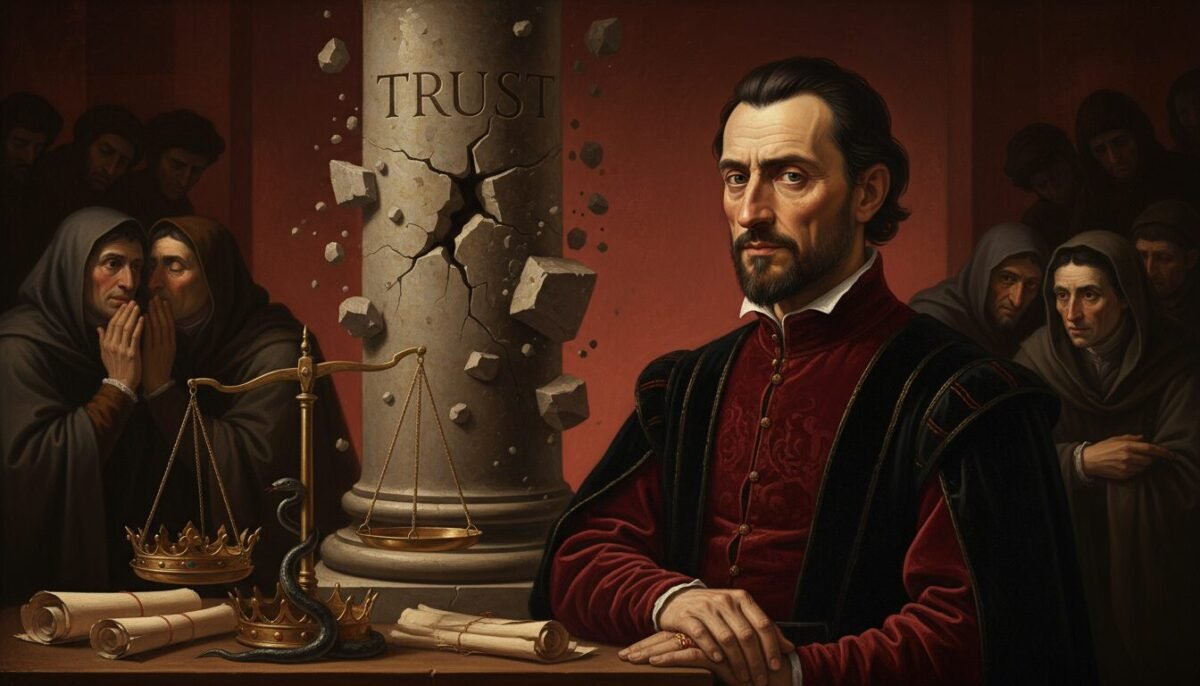
The ripple effect is devastating. In organizations where power is abused, employee morale plummets, leading to “quiet quitting” or high turnover of the most talented individuals—those who have the integrity to leave. What remains is a culture of fear and sycophancy. Innovation dies in such environments because people are too afraid to take risks or speak truth to power. The long-term consequence is organizational stagnation.
Beyond the internal culture, the external costs are staggering. We have seen global brands lose billions in market value overnight due to ethical scandals. Public trust, once lost, is incredibly difficult to regain. In the age of instant information, a leader’s lack of accountability is no longer a secret kept in a boardroom; it is a public liability. Legal repercussions, regulatory crackdowns, and brand devaluation are the inevitable “taxes” paid for unethical shortcuts.
The Erosion of Public Trust
When institutions—whether corporate or political—fail to hold their leaders accountable, the social fabric begins to tear. If the public perceives that power is being used solely for the benefit of those who hold it, they withdraw their consent. This leads to a breakdown in cooperation and an increase in societal polarization. Ethics, therefore, are not just a “nice to have”; they are the glue that holds complex systems together.
4. Effective Power Without Compromise: The Servant Leadership Model
How do we exercise power without falling into these traps? The most resilient model for ethical authority is “Servant Leadership.” This model distinguishes between “Power Over” (coercion and control) and “Power With” (collaboration and empowerment). A servant leader does not ask, “How can my team help me succeed?” but rather, “How can I help my team succeed?”
This approach requires a high degree of emotional intelligence and, perhaps most importantly, humility. Humility is often misunderstood as weakness, but in the context of power, it is the ultimate strength. It is the ability to recognize your own limitations and to value the contributions of others. Ethical leaders leverage their influence to remove obstacles for their subordinates, rather than becoming the obstacle themselves.
By focusing on “Power With,” leaders create an environment of psychological safety. When people feel that their leader has their back and is acting with integrity, they are willing to go above and beyond. This is the secret to sustainable high performance. Influence gained through respect is infinitely more powerful and long-lasting than influence gained through fear. Fear requires constant monitoring and escalating threats; respect operates even when the leader is not in the room.
The Role of Emotional Intelligence
Ethical leadership is an exercise in self-regulation. It is the ability to feel the impulse to use power for personal ego and to consciously choose a different path. This requires a leader to be deeply in tune with their own emotional state and the emotional climate of their organization. It is the difference between reacting to a challenge and responding to it with wisdom.
5. Building Frameworks for Ethical Power in Organizations
Relying on the individual character of a leader is not enough. Systems must be designed to check power. To prevent the abuse of authority, organizations must implement transparent decision-making processes. When the “why” behind a decision is made public, it becomes much harder to hide unethical motives. Transparency is the natural disinfectant for corruption.
A robust ethical framework must include:
- Independent Ethical Audits: Just as we audit finances, we should audit the “moral health” of an organization through anonymous surveys and third-party reviews.
- Whistleblower Protections: There must be a safe, protected channel for employees at any level to report misconduct without fear of retaliation. A leader who is truly committed to ethics will welcome these “early warning systems.”
- Radical Accountability: No one, regardless of their rank or their contribution to the bottom line, can be “above the law.” If a high-performing executive violates ethical standards, they must face the same consequences as anyone else.
Creating a culture of accountability means moving away from the “hero-leader” myth. When we deify leaders, we make it impossible to hold them accountable. Instead, we should foster a culture where leadership is seen as a collective responsibility. Ethical power is distributed power. By delegating authority and encouraging autonomy, a leader reduces the concentration of power that leads to corruption and simultaneously builds a pipeline of future ethical leaders.
The Importance of “Speaking Truth to Power”
An ethical leader’s greatest asset is a subordinate who is brave enough to say “No.” Leaders must actively cultivate an environment where dissent is not only tolerated but rewarded. If you are the smartest or most powerful person in every room, you are in a very dangerous position. Ethical frameworks are the guardrails that keep a leader on the path of integrity when the temptations of the “top” become overwhelming.
6. The Long-Term Benefits of Ethical Governance and Public Trust
In the short term, the unethical leader might seem to “win.” They might hit their numbers, crush their competition, or consolidate their control. But these victories are almost always pyrrhic. In the long run, ethical organizations consistently outperform their peers. They enjoy higher levels of employee retention, better brand loyalty, and greater resilience in times of crisis.
There is a direct relationship between ethical power and sustainability. In the realm of political science, we see that societies built on the rule of law and ethical governance are more stable and prosperous than those built on the whims of a dictator. The same applies to the corporate world. Trust is a force multiplier. When stakeholders trust a leader, transactions are faster, collaboration is deeper, and the organization can navigate change with far less friction.
Ultimately, the legacy of a leader is not measured by the power they amassed, but by how they used that power to elevate others. The leaders we remember with the most respect—those who truly changed the world for the better—are those who prioritized integrity over expediency. They understood that power is a fleeting resource, but character is an enduring legacy.
Ethics are not a constraint on power; they are the very foundation that makes power sustainable and legitimate. By fostering accountability, embracing humility, and building transparent systems, leaders can ensure that their influence serves the greater good. In the end, the most powerful thing a leader can do is to remain human.
Frequently Asked Questions
Can a leader be both highly successful and strictly ethical?
Absolutely. In fact, long-term success is often dependent on ethics. While unethical shortcuts may provide temporary gains, they create systemic risks that eventually lead to failure. Ethical leaders build trust, which is a key driver of sustainable growth and innovation.
What is the first sign that power is beginning to corrupt a leader?
One of the earliest signs is the “isolation of the ego,” where a leader begins to dismiss dissenting opinions, stops asking for feedback, and starts believing that the rules apply to others but not to themselves. A loss of empathy for frontline employees is also a major red flag.
How can an employee encourage ethical behavior in their leadership?
Employees can promote ethics by modeling integrity in their own work, utilizing official whistleblower channels when necessary, and asking for transparency in decision-making processes. Cultivating a culture where “truth-telling” is valued starts at every level of the hierarchy.
Is “Servant Leadership” practical in high-stakes, competitive industries?
Yes. Servant leadership is not about being “soft”; it’s about being effective. By focusing on the growth and well-being of the team, a leader ensures that the organization is agile, loyal, and capable of high performance under pressure, which is a significant competitive advantage.
If you found this analysis of power dynamics insightful, you may want to explore our deeper dives into Machiavelli & Political Philosophy or the psychological roots of Influence & Leadership. Understanding the mind is the first step to mastering the world around you.
Ready to transform your leadership approach? Explore more thought-provoking articles on DeepPsyche to sharpen your strategic thinking and moral clarity.