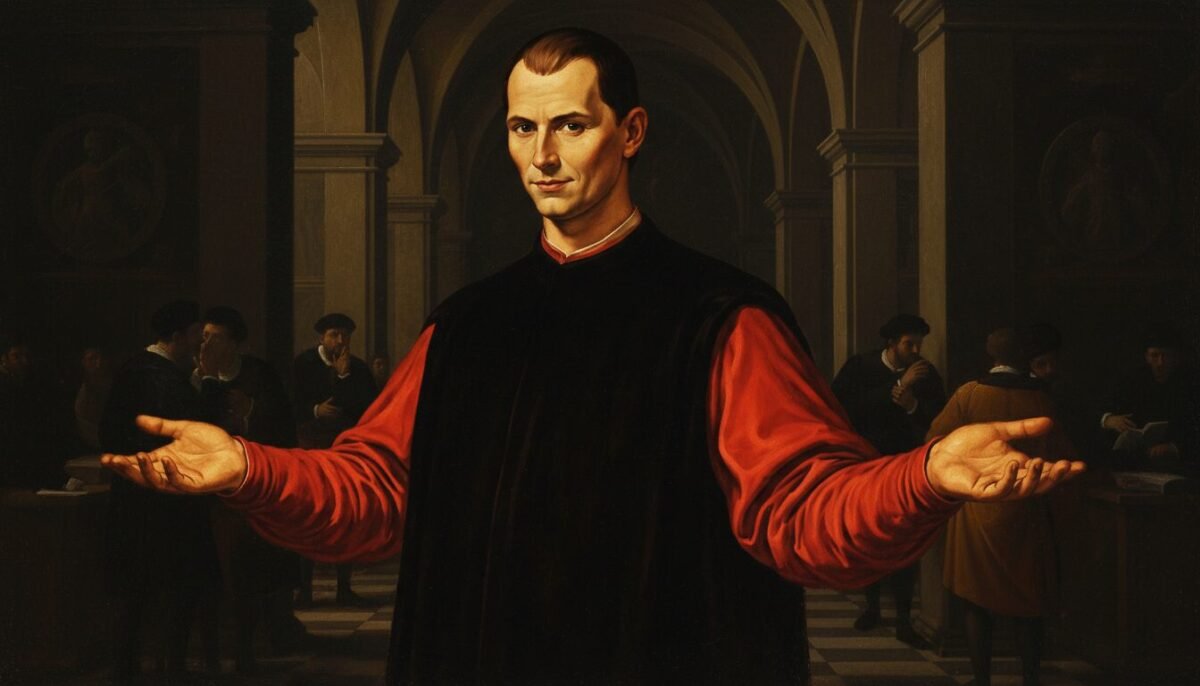

Imagine you are a defense attorney. Your client leans across the mahogany table and whispers a chilling confession: they committed the crime, and they enjoyed it. However, because of a technicality—a mishandled piece of evidence by the police—you know you can get them acquitted. If you follow the rules of your profession, you must fight for their freedom. If you follow the voice in your soul, you want them behind bars. In that moment, you are caught in the crossfire of the two most powerful guiding forces in human history: ethics and morality.
We often use these words as synonyms, tossing them into conversations about “right and wrong” as if they were interchangeable. But for the philosopher, the psychologist, or the strategic leader, conflating the two is a fundamental error. Ethics and morality represent two distinct systems of governance. One is a map provided by the world around us; the other is a compass built within us. When they point in the same direction, life is simple. When they diverge, we find ourselves in the “grey areas” that define our character and our legacy.
1. The Etymological Roots: Ethos vs. Mos
To understand why we confuse these terms, we have to look back at the linguistic soil from which they grew. The word ethics finds its origin in the Greek word ethos. In its earliest usage, ethos referred to “character” or “custom,” but specifically in the context of the community. For the Greeks, ethics was about how an individual lived within the polis (the city-state). It was the study of the “best way to live” as a member of a social body. It was inherently outward-facing—a question of how one’s character contributed to the harmony of the collective.
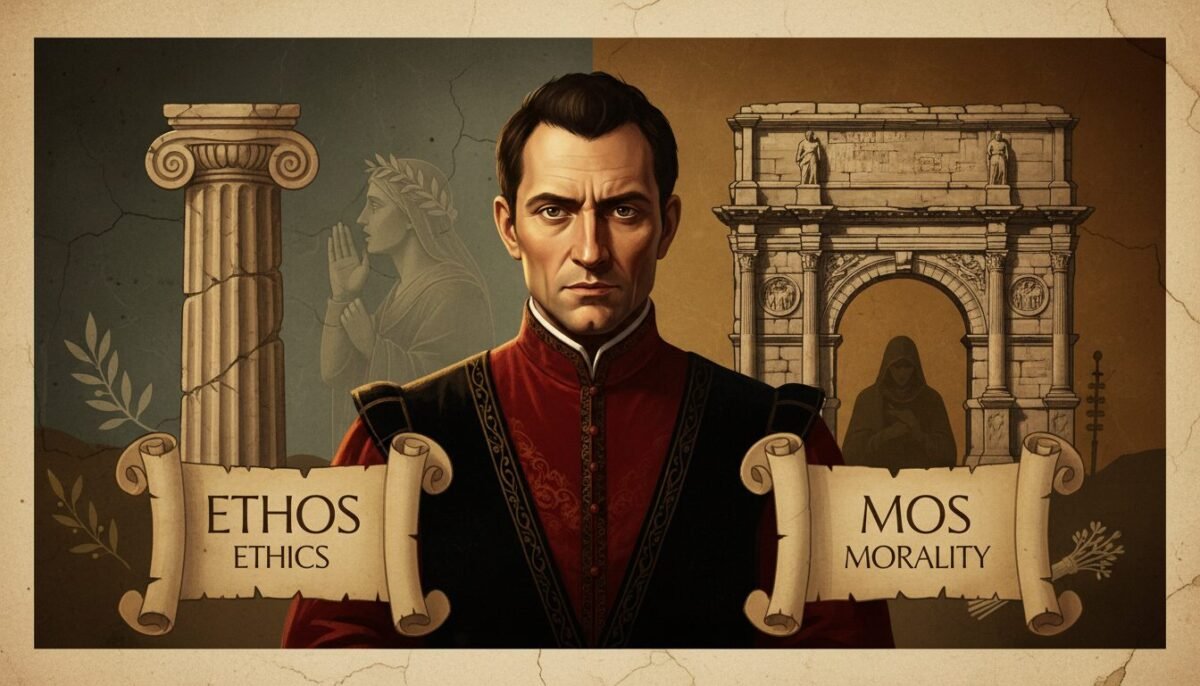
On the other hand, morality stems from the Latin word mos (plural mores), which also translates to “custom,” “habit,” or “manner.” When the Roman philosopher Cicero sought to translate the Greek concept of ethos into Latin, he coined the term moralis. Because both words essentially meant “custom” in their respective languages, they became linguistic twins in the Western mind for centuries.
However, as Western thought evolved, a subtle but profound split occurred. “Ethics” began to lean toward the theoretical and the professional—the study of systems of conduct. “Morality” became more closely associated with the personal, the religious, and the visceral. While ethos suggests a social standard we must meet to be considered a “good citizen,” mos suggests the habitual, internalised principles that dictate our private behavior. This historical overlap is why we still struggle to separate them today, yet the distinction is the key to navigating the complexities of modern power and influence.
2. Source of Authority: External Rules vs. Internal Principles
The most significant difference between ethics and morality lies in where the “rules” come from. Who is the judge? Who holds the gavel?
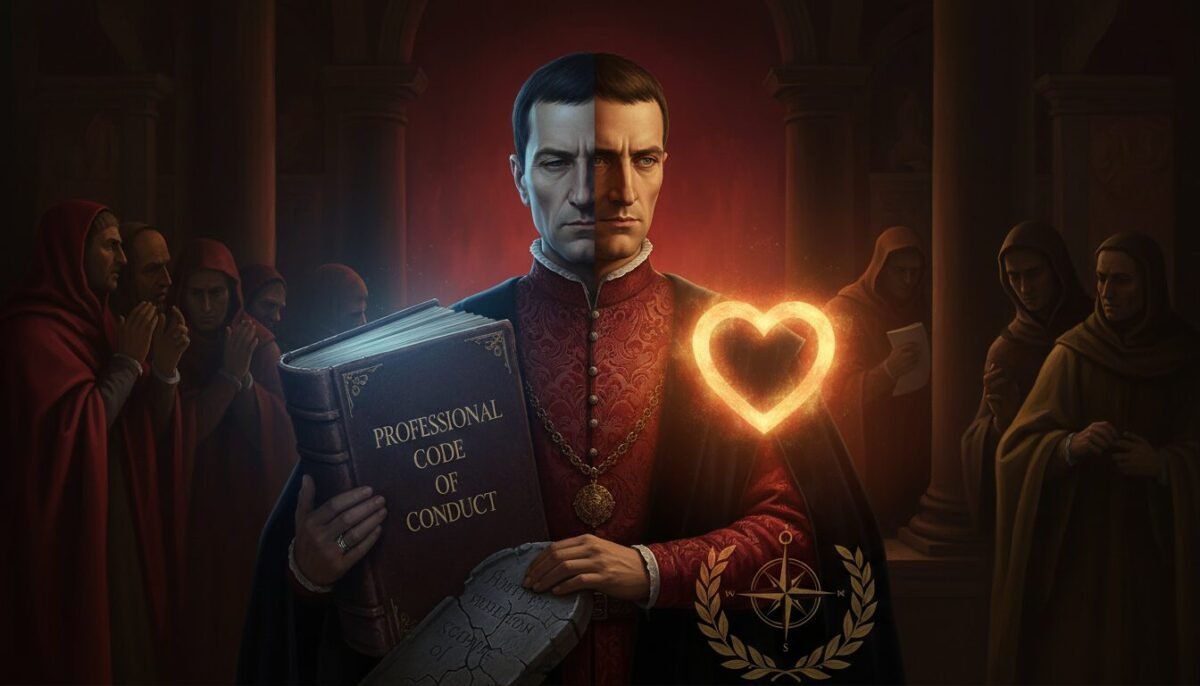
Ethics as a Social System
Ethics are provided by an external source. They are the “codes of conduct” established by a group to which you belong. This could be your workplace, your professional association (like the Bar Association or the Medical Board), or even your social club. Ethics are the terms of the social contract. They are often written down in handbooks, enforced by committees, and measured by objective standards. If you are a journalist, your ethics dictate that you protect your sources. If you are a CEO, your ethics dictate a fiduciary duty to your shareholders. These rules exist regardless of whether you personally “feel” they are right; they are the price of admission to the group.
Morality as an Individual Compass
Morality is an internal principle. It is your personal sense of right and wrong, forged in the fires of your upbringing, your culture, your religious beliefs, and your own philosophical reflections. Morality is what you do when no one is watching and when there is no handbook to guide you. It is the “still, small voice” of conscience. While ethics are prescribed by the collective, morals are believed by the individual. You might follow an ethical rule because you have to; you follow a moral principle because you feel you must.
This distinction is why we can see a person who is “ethically compliant” but “morally bankrupt.” A corporate raider might follow every legal and ethical rule of the financial market while simultaneously destroying the lives of thousands of employees—an act many would find deeply immoral. Conversely, a person might break an ethical code (such as a non-disclosure agreement) because their internal morality tells them that the truth is more important than a contract. Ethics are the “how” of social interaction; morality is the “why” of human existence.
3. Consistency and Flexibility in Different Contexts
Because ethics are tied to social systems, they are inherently situational. A person’s ethical requirements can shift dramatically as they move from one room to another. A soldier on a battlefield operates under a set of ethics where killing is not only permitted but is a duty. The moment that same individual returns home and puts on a police uniform, their ethical framework changes; they are now governed by the rules of civilian law enforcement, where the use of force is strictly regulated. Ethics are flexible because the needs of different social structures are different.

Morality, however, tends to be far more stable. If you believe that human life is inherently sacred, that moral conviction doesn’t disappear when you change your clothes or your job title. This is why many people experience “moral injury”—the psychological distress that occurs when their professional ethics require them to do something that violates their personal morals. A pacifist who finds themselves in a high-stakes corporate environment where “crushing the competition” is the ethical norm will likely feel a profound internal dissonance.
Furthermore, we must recognize that societal norms evolve, and as they do, collective ethics change. A century ago, it was considered “ethical” in many business circles to ignore the environmental impact of industrial waste. Today, “Environmental, Social, and Governance” (ESG) standards have shifted the ethical landscape. Morality, while also capable of evolution, often moves at a different pace. It is the bedrock upon which we stand, while ethics are the shifting tides of the social sea.
4. Professional Ethics: Codes of Conduct in Law, Medicine, and Business
In the professional world, we don’t leave things to chance. We use normative ethics to establish industry standards that ensure safety, trust, and predictability. These are not merely suggestions; they are the scaffolding of civilization.
- Medicine: The Hippocratic Oath is perhaps the most famous ethical code. It establishes the principle of non-maleficence—”First, do no harm.” A doctor may personally find a patient’s lifestyle choices immoral, but their professional ethics require them to provide the same level of care regardless of their personal judgment.
- Law: Attorney-client privilege is an ethical cornerstone. It ensures that a defendant can speak honestly to their counsel. Even if a lawyer’s personal morality is repulsed by a client’s actions, their ethical duty is to provide a vigorous defense within the bounds of the law.
- Business: Ethical codes in business often focus on transparency, fair competition, and the prevention of conflicts of interest.
The consequences of violating these two systems are also distinct. If you violate professional ethics, you face external sanctions: you lose your license, you are fired, or you are sued. If you violate your morality, the consequences are internal: guilt, shame, loss of self-respect, and a fractured sense of identity. You can be a successful professional who has been disbarred (ethical failure) but still feels they did the “right thing” (moral victory). Or, you can be a celebrated professional who is secretly haunted by the moral compromises they made to reach the top.
5. When Ethics and Morality Clash: The Ethical Dilemma
The most fascinating human stories—and the most difficult leadership challenges—occur in the “grey areas” where ethics and morality collide. This is the essence of an ethical dilemma: a situation where every available path requires you to betray one of your guiding systems.
Can something be ethical but immoral?
Consider the lawyer mentioned in the introduction. Defending a guilty person is ethical—it upholds the right to a fair trial, which is a pillar of a just society. However, allowing a dangerous person to return to the streets may feel immoral to the lawyer’s personal conscience. In this case, the individual must decide if the integrity of the system (ethics) outweighs the immediate personal conviction (morality).
Can something be moral but unethical?
The whistleblower is the classic example. Imagine an engineer at a pharmaceutical company who discovers that a new drug has dangerous side effects that the company is hiding. The engineer has signed a Non-Disclosure Agreement (NDA). Breaking that NDA is unethical in the context of their professional contract. However, staying silent while people are harmed is immoral. When the engineer leaks the documents, they are choosing their internal moral compass over the external ethical code of their employer. They are “unethical” by the company’s standards, but “moral” by their own.
Navigating these clashes requires more than just a rulebook; it requires strategic thinking and psychological depth. It requires an understanding of Power & Human Nature. Often, those in power use “ethics” as a shield to prevent people from following their “morality.” They define the rules of the game to ensure their own protection, labeling any dissent as “unethical.” The truly sophisticated individual learns to see through these labels to the underlying power dynamics at play.
6. Why Distinguishing Between the Two Matters Today
In our hyper-connected, diverse, and often polarized world, the ability to distinguish between ethics and morality is a superpower. It is the foundation of high-level leadership and effective communication.
First, it improves decision-making. When a leader faces a crisis, they must ask: “Is this a violation of our rules, or a violation of our values?” Understanding the difference allows for more nuanced responses. A team member might break a rule (an ethical lapse) for a very good reason (a moral imperative). A rigid leader who only sees the rule will lose a valuable, high-integrity employee. A wise leader will see the moral weight behind the action.
Second, it fosters better communication. In political and social debates, we often talk past each other because one person is arguing from a place of “social ethics” (what the law or society says) while the other is arguing from “personal morality” (what their heart says). Recognizing which system the other person is using allows for a more empathetic and productive dialogue.
Finally, it allows for the development of a Personal Moral Philosophy. We all operate within professional ethical standards, but those standards are not enough to sustain a meaningful life. We must build an internal foundation of integrity that can withstand the pressures of the external world. By clearly defining your own morals, you gain the strength to navigate the shifting ethics of your industry without losing your soul.
Ethics provide the external framework for social and professional harmony, while morality provides the internal foundation for individual integrity. Understanding the tension between the two is not just an academic exercise; it is essential for personal growth and professional success. In the end, the world will judge you by your ethics, but you must live with your morality.
Reflect on your own moral compass today—how does it align with the ethical standards of your profession? Are there areas where you are following the rules but losing your way?
Frequently Asked Questions
Can ethics and morality ever be the same?
Yes, in an ideal world, the rules of society (ethics) would perfectly reflect the deepest values of the individuals within it (morality). However, because societies are diverse and constantly changing, there is almost always some degree of friction between the two.
Is it worse to be unethical or immoral?
This depends on the perspective. From a social or professional standpoint, being unethical is “worse” because it carries tangible penalties like job loss or legal action. From a psychological and existential standpoint, being immoral is “worse” because it leads to internal fragmentation and a loss of self-integrity.
How can I resolve a conflict between my ethics and my morals?
Resolution often requires “moral courage.” You must weigh the long-term consequences of both paths. Sometimes, the solution is to work to change the ethical standards of your profession to better align with moral truths. Other times, it may mean leaving an environment that requires you to compromise your soul.
Explore more on DeepPsyche:
- Understand the cold logic of Machiavelli & Political Philosophy.
- Dive into the dark side of Power & Human Nature.
- Learn the art of Influence & Leadership in complex systems.
- Explore the history of Comparative Philosophy and how it shapes our world.