

Imagine a mid-level manager named Sarah. For years, she was the heart of her team—the one who remembered birthdays, listened to frustrations, and built a culture of radical transparency. Then, the promotion came. Within six months, the very people who championed her rise began to whisper in the breakroom. Sarah had become distant, impulsive, and seemingly blind to the social cues she once navigated with ease. Did the promotion change her, or did it simply strip away the mask she was forced to wear while climbing the ladder?
This is the central tension of the human experience: the relationship between influence and character. We often hear the adage that “power corrupts,” but the reality is far more nuanced. While we navigate power dynamics in every interaction—from the boardroom to the dinner table—most of us rely on outdated tropes about “alpha” behavior or Machiavellian schemes. In truth, power is not a static possession but a dynamic psychological state that physically reconfigures the brain. To understand how it works, we must bridge the gap between the cold pragmatism of the Renaissance and the startling revelations of modern neuroscience.
1. Philosophical Foundations: From Machiavelli to Nietzsche
To understand the modern psyche, we must first look back at the architects of our political and personal power structures. In the 16th century, Niccolò Machiavelli stripped away the veneer of “divine right” and moral idealism. In The Prince, he presented power as a cold, strategic game. For Machiavelli, the “ends justify the means” wasn’t a call to evil, but a survival guide for a fractured Italy. He argued that a leader’s primary duty is the stability of the state, and if that requires deception or ruthlessness, it is a necessary burden. This pragmatism shifted our understanding of power from a gift from God to a tool of human agency—something to be seized, managed, and protected.

Fast forward to the late 19th century, and Friedrich Nietzsche took this a step further, moving power from the political arena into the very marrow of human biology. His concept of the “Will to Power” (Wille zur Macht) suggests that our primary drive isn’t just to survive, but to expand, to create, and to exert our will upon the world. For Nietzsche, power is the fundamental biological and psychological drive for self-actualization. It is the artist conquering the canvas, the athlete pushing past physical limits, and the thinker challenging established dogmas. He saw power not as a means to an end, but as the ultimate expression of vitality.
This philosophical evolution represents a massive shift in human consciousness. We moved from seeing power as a static social hierarchy to viewing it as a strategic tool for social order, and finally, as an internal psychological necessity. Today, we live in the shadow of both thinkers: we use Machiavellian strategies to navigate corporate hierarchies while simultaneously feeling the Nietzschean urge to “level up” our personal influence and status.
2. The Five Bases of Power: Modern Psychological Frameworks
While philosophers debated the morality of power, social psychologists John French and Bertram Raven sought to categorize how it actually manifests in our daily lives. In 1959, they identified five distinct “bases” of power, a framework that remains the gold standard for understanding organizational psychology today.

- Reward Power: The ability to give others what they want—raises, praise, or promotions.
- Coercive Power: The ability to punish, whether through firing, demotion, or social ostracization.
- Legitimate Power: Authority derived from a formal position or title, such as “CEO” or “Parent.”
- Expert Power: Influence based on specialized knowledge or skills. In a room full of executives, the IT specialist often holds the most power during a server crash.
- Referent Power: This is the most potent and elusive form. It is power derived from being liked, respected, and admired. It is the essence of charisma.
In the 21st century, we are witnessing a massive shift in which of these bases “work.” In the industrial age, Legitimate and Coercive power were the primary levers of control. You did what the boss said because they held the title and the pink slip. However, in our modern, interconnected “knowledge economy,” Coercive power is rapidly losing its efficacy. It breeds resentment, stifles creativity, and leads to high turnover.
Instead, Referent Power and Expert Power have become the new currencies of influence. Influence today is less about “command and control” and more about “connection and competence.” People no longer follow leaders because they have to; they follow because they want to. This transition marks a move from formal authority to informal influence, where your ability to build a network of trust is more valuable than your spot on an organizational chart.
3. The Power Paradox: How We Gain and Lose Influence
One of the most profound discoveries in recent psychology is what Dacher Keltner calls “The Power Paradox.” The paradox is simple but devastating: the very traits that allow us to gain power—empathy, collaboration, openness, and fairness—are the first things we lose once we actually become powerful.
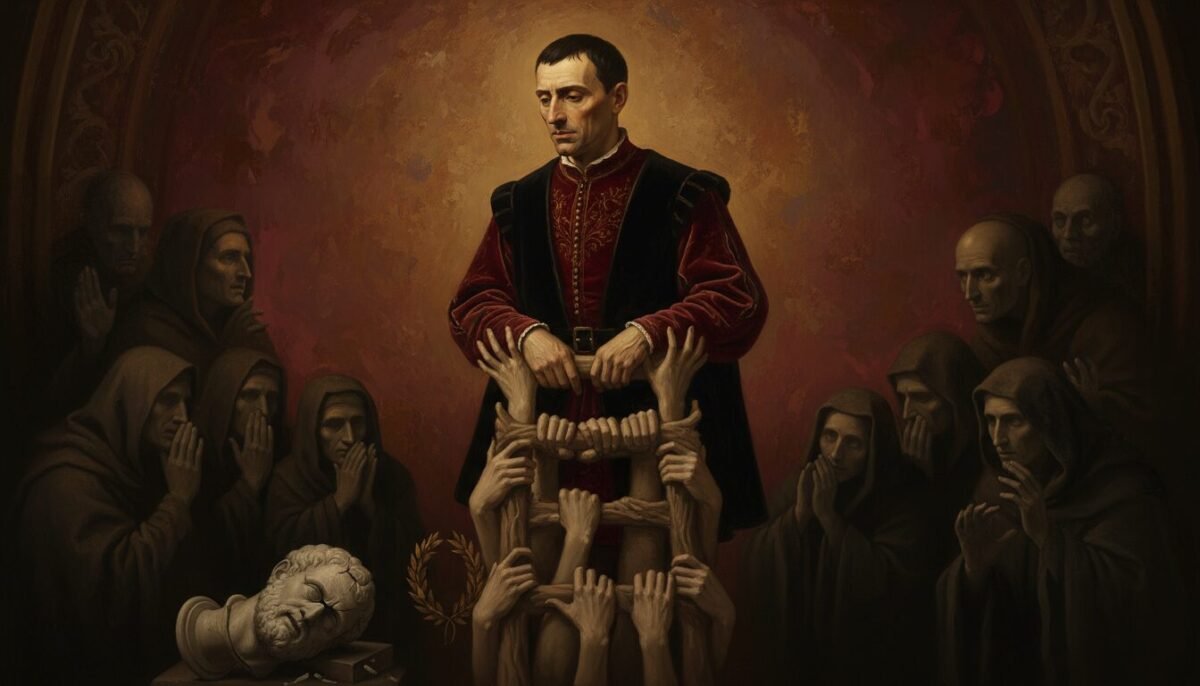
Keltner’s research shows that when people feel powerful, they undergo a psychological shift. They become more impulsive, less likely to see things from others’ perspectives, and more prone to stereotype. In one famous study, researchers found that drivers of high-end luxury cars were significantly less likely to stop for pedestrians at crosswalks than those in modest vehicles. The feeling of status seemed to create a “buffer” that allowed them to ignore the needs of others.
This phenomenon is sometimes referred to as “acquired sociopathy.” It’s not that power attracts bad people; it’s that the experience of power can damage the social intelligence required to maintain it. When we are at the bottom of a hierarchy, we are hyper-attuned to the moods and needs of those above us—it’s a survival mechanism. But once we reach the top, that pressure is removed. We stop listening. We stop empathizing. We start eating with our mouths open (literally—a Keltner study showed that powerful people are messier eaters and more likely to spray crumbs on others).
To survive this paradox, modern leadership is shifting from “power over” (domination) to “power with” (empowerment). The most successful modern influencers are those who consciously practice “power-sharing,” using their status to elevate others rather than diminish them. They recognize that influence is a renewable resource that grows when shared, rather than a finite pie that must be hoarded.
4. The Neurological Impact: How Power Changes the Brain
The Power Paradox isn’t just a social observation; it’s a biological reality. Recent studies using Transcranial Magnetic Stimulation (TMS) have shown that high-status positions can actually diminish the brain’s “mirror system.” This is the neurological network responsible for empathy—the part of the brain that “mirrors” the actions and emotions of others so we can understand them.
When we feel powerful, our prefrontal cortex—the area responsible for complex decision-making and social behavior—begins to operate differently. We become more focused on “goal-directed behavior” and less on “social monitoring.” This is why a powerful executive might steamroll over a colleague’s valid concerns; their brain is literally prioritizing the “win” over the “relationship.”
Furthermore, power acts like a drug on the brain’s reward system. It triggers a massive release of dopamine, the neurotransmitter associated with pleasure and motivation. This creates a feedback loop: the “rush” of power encourages more risk-taking and impulsive behavior, which can lead to even greater rewards—or catastrophic failures. This dopamine hit explains why some leaders become addicted to the “thrill” of influence, leading to the reckless behavior we often see in high-stakes political or financial scandals. Power doesn’t just change your mind; it re-wires your biology, making you more decisive but also more dangerously disconnected.
5. Michel Foucault and the Web of Social Power Dynamics
While psychology focuses on the individual, the philosopher Michel Foucault looked at the system. He argued that power isn’t something one person “has” and another “lacks.” Instead, power is a pervasive web that exists in every social interaction. It is not a baton passed from hand to hand; it is the very air we breathe.
Foucault introduced the concept of “Discourse”—the way we talk about things, the labels we use, and the norms we accept. These discourses exert a subtle but absolute control over our behavior. Think about a modern office. You aren’t usually being watched by a guard with a gun. Instead, you are governed by “subtle surveillance”: performance reviews, time-tracking software, and the unspoken social pressure to “look busy.”
Foucault’s work highlights how modern institutions—schools, hospitals, corporations—utilize “discipline” to create “docile bodies.” We internalize the rules of the system until we police ourselves. This is the most effective form of power because it doesn’t require force. When you check your work emails at 9:00 PM on a Saturday, you aren’t doing it because someone is threatening you; you’re doing it because you’ve internalized a discourse where “responsiveness” is equated with “value.” Understanding Foucault allows us to see that power is often most dangerous when it is invisible.
6. Power in the Digital Age: Shifting Structures and Ethics
The digital revolution has fundamentally disrupted these traditional power dynamics. In the past, power was centralized in “gatekeepers”—the editors of major newspapers, the heads of television networks, the leaders of political parties. Today, the internet has decentralized that authority. A teenager with a smartphone can have more “Referent Power” than a seasoned politician.
However, this decentralization has created a new, more complex ethical landscape. “Influence” has become a literal currency, measured in likes, followers, and engagement rates. But this new power is often built on data-driven algorithms that prioritize outrage over nuance. We are seeing the rise of “algorithmic power,” where the software itself decides who gets heard and who is silenced. This raises a terrifying question: if power is being shifted from humans to code, who is responsible for the ethical consequences?
In the corporate and political worlds, the question remains: is corruption inevitable? As we move toward more transparent, data-driven societies, the “dark corners” where Machiavellian schemes once flourished are being illuminated. Yet, the neurological and psychological temptations of power remain the same. The challenge of the 21st century is to build systems that account for the human brain’s tendency to lose empathy when it gains influence. We need “empathy-by-design” in our institutions and our technology.
Conclusion
Power is neither inherently good nor evil; it is a profound amplifier of what is already there. It is a complex interplay between ancient philosophical drives for self-actualization and modern neurological triggers that can dull our connection to others. By understanding the “Power Paradox,” we can begin to guard against the “acquired sociopathy” that so often plagues those in high-status positions.
The most effective leaders of the future will not be those who master the art of “power over” others, but those who master the art of “power with” them. They will be the ones who recognize that true influence isn’t about domination, but about the ability to move a collective toward a shared vision while keeping their own empathy centers fully engaged.
Reflect on your own influence: In your relationships and your work, are you using your status to empower those around you, or are you falling into the trap of the paradox?
Frequently Asked Questions
Does power always lead to a loss of empathy?
Not necessarily. While the “Power Paradox” suggests a natural tendency toward decreased empathy, individuals who consciously practice “perspective-taking” and maintain strong social accountability can mitigate these effects. Awareness of the neurological shift is the first step in preventing it.
What is the difference between “Power Over” and “Power With”?
“Power Over” is based on domination, coercion, and control. “Power With” is based on collaboration, collective action, and empowerment. The latter is increasingly seen as more effective in modern, non-hierarchical environments.
How can I increase my “Referent Power”?
Referent power is built on trust, consistency, and genuine connection. You increase it by listening more than you speak, following through on your promises, and showing a sincere interest in the well-being of others.
Is Machiavelli’s advice still relevant today?
Yes, but perhaps not in the way people think. Machiavelli’s real contribution was “political realism”—seeing the world as it is, rather than how we wish it to be. In a modern context, this means understanding the hidden incentives and power dynamics at play in any organization.
For more deep dives into the mechanics of the human mind and the hidden forces that shape our behavior, explore our latest features on Machiavelli & Political Philosophy, Influence & Leadership, and the evolving nature of Machiavellianism in the modern world. Subscribe to the DeepPsyche newsletter to stay ahead of the curve.