Imagine a person who is the pillar of their community—a devoted parent, a successful professional, and a volunteer at the local food bank. One evening, this same individual finds themselves consumed by a sudden, inexplicable surge of rage over a minor traffic slight, or perhaps they harbor a secret, recurring fantasy of sabotaging a colleague’s career. Why do even the most “civilized” individuals among us sometimes harbor thoughts or commit acts that seem entirely at odds with their moral compass? Most of us spend our lives carefully manicuring a public persona, yet beneath the surface, there is a reservoir of impulses we dare not admit to.
We often fear our inner demons, choosing to suppress or ignore them in hopes they will simply vanish. However, this suppression rarely leads to peace; instead, it creates a psychological fragmentation that leaves us susceptible to “explosions” of behavior we later regret. To truly understand ourselves, we must be willing to look into the abyss. This exploration isn’t about justifying cruelty, but about demystifying the dark side of human nature by examining psychological archetypes, our evolutionary history, and the practical methods for integrating these hidden parts of ourselves into a cohesive whole.
1. Understanding the Jungian Shadow and the Dual Nature of Man
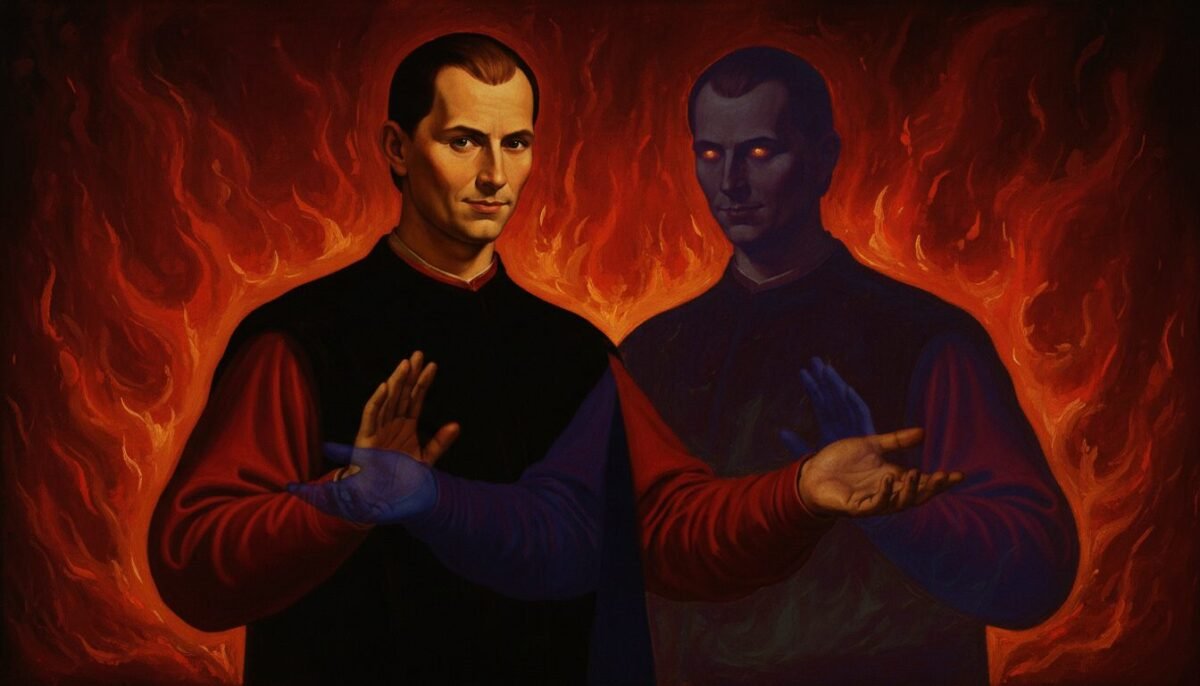
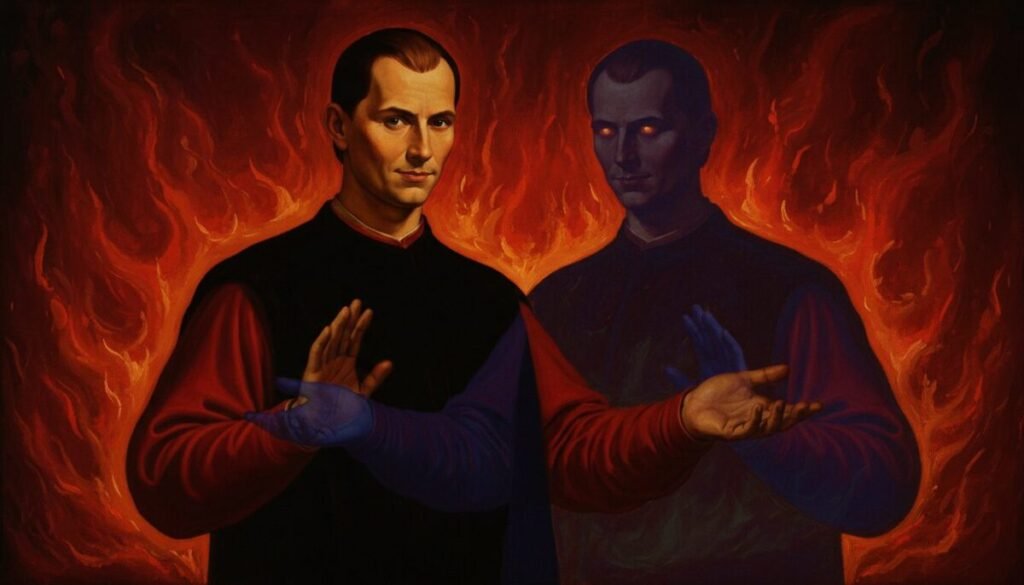
The Swiss psychiatrist Carl Jung famously proposed that every individual carries a “Shadow.” This isn’t a literal ghost, but rather the “unlived” or suppressed aspects of our personality. Think of it as a psychological basement where we throw everything that doesn’t fit our idealized self-image: our selfishness, our repressed anger, our unconventional desires, and even our untapped creative power. From the moment we are told as children to “be good” or “don’t be selfish,” we begin pushing parts of our natural psyche into the darkness.

Psychological archetypes—universal patterns of behavior and symbols—shape how we perceive good and evil. We often identify with the “Hero” or the “Innocent,” while projecting the “Villain” onto others. This leads to one of the most dangerous psychological phenomena: projection. When we refuse to acknowledge our own capacity for greed or aggression, we start seeing those exact traits in our neighbors, our political rivals, or different ethnic groups. We judge others harshly for the very sins we are too afraid to admit we are capable of committing. As Jung noted, “Everything that irritates us about others can lead us to an understanding of ourselves.”
This duality is not a modern discovery; it is woven into the fabric of human philosophy. Friedrich Nietzsche explored this through the lens of the Apollonian and Dionysian. The Apollonian represents order, logic, and restraint—the “civilized” side of man. The Dionysian represents chaos, emotion, and instinct—the “wild” side. A healthy culture, and a healthy individual, requires a balance of both. When we lean too heavily into the Apollonian and try to eradicate the Dionysian, the repressed energy eventually breaks through in destructive ways, much like a dam bursting under too much pressure.
Understanding the shadow means accepting that we are not “one-dimensional” good people. We are complex beings capable of both profound empathy and chilling coldness. Recognizing this duality is the first step toward true self-awareness. Without acknowledging the shadow, we are merely actors playing a role, unaware that the director of our lives is often the very part of us we claim does not exist.
2. The Evolutionary Roots: Why Aggression and Selfishness Persist
To understand why the “dark side” exists, we must look back at the harsh realities of our ancestors. Evolution does not care about “niceness”; it cares about survival and reproduction. For millions of years, aggression was not a moral failing; it was a vital survival mechanism. Those who were willing to fight for resources, protect their territory, and assert dominance were the ones who lived long enough to pass on their genes. The “dark” traits we see today—aggression, territoriality, and strategic selfishness—are the echoes of a world where the stakes were life and death.

A key concept here is kin selection. Humans evolved to be hyper-cooperative within their own small tribes (their “kin”), but this cooperation often came at the expense of “out-groups.” Hostility toward those who were different or perceived as competitors was an evolutionary advantage. It protected the tribe’s limited resources. In the modern world, this manifests as tribalism, xenophobia, and “us versus them” mentalities. Our primitive biological hardwiring is constantly clashing with modern social structures that demand universal cooperation and global empathy.
Furthermore, strategic selfishness often provided a competitive edge. In an environment of scarcity, the individual who ensured they had enough food before sharing with others was more likely to survive a famine. While we now live in an era of relative abundance (in many parts of the world), our brains are still calibrated for a high-stakes competitive environment. This is why we see “cutthroat” behavior in corporate boardrooms or intense social climbing; it is the modern expression of an ancient drive to secure one’s place at the top of the hierarchy to ensure security.
We are, in essence, stone-age creatures living in a digital, hyper-connected world. The impulses that once saved us—the surge of adrenaline that prompts a fight, the suspicion of the “other,” the drive for status—are often the very things that cause friction in a civilized society. Recognizing these traits as evolutionary leftovers doesn’t excuse bad behavior, but it does help us understand that our “dark side” is a functional part of our biological heritage, not a glitch in the system.
3. The Dark Triad: Narcissism, Machiavellianism, and Psychopathy
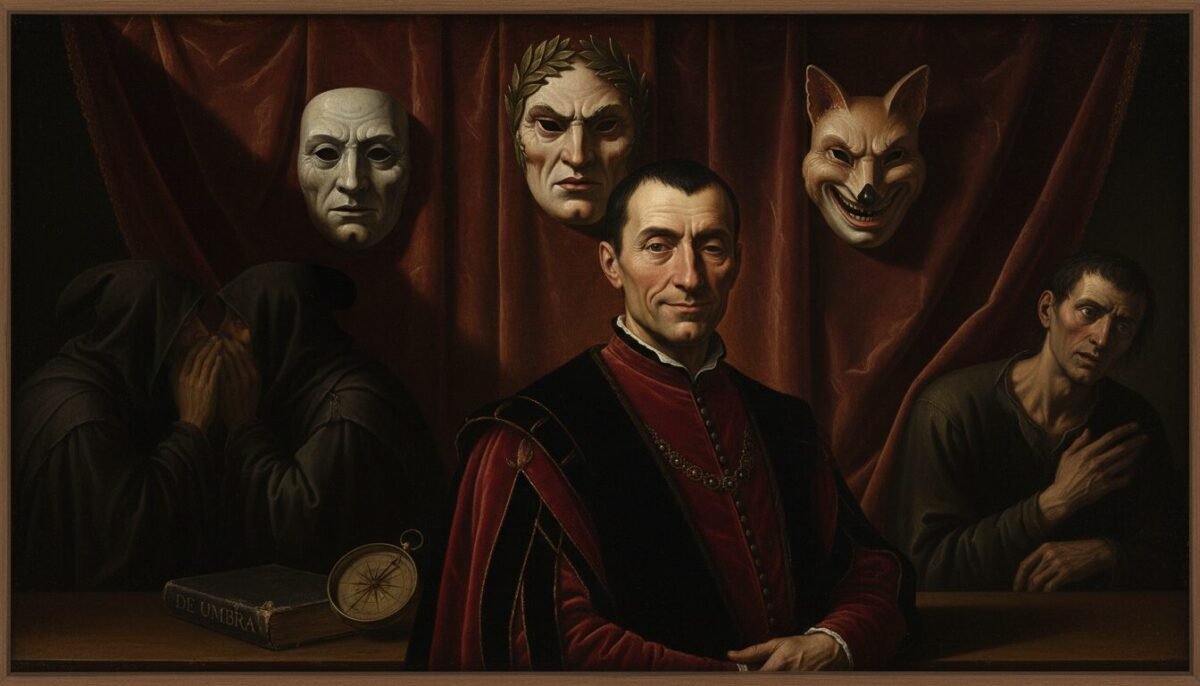
While everyone has a shadow, some individuals possess a cluster of traits that psychologists call the Dark Triad. These three traits—Narcissism, Machiavellianism, and Psychopathy—represent the extreme end of the human spectrum of self-interest and lack of empathy. Understanding these is crucial for navigating modern power dynamics and personal relationships.
- Narcissism: This is characterized by grandiosity, a sense of entitlement, and a constant need for admiration. A narcissist views the world as a stage where they are the only protagonist. Their lack of empathy isn’t necessarily a desire to hurt others, but rather a profound indifference to anyone else’s needs. In leadership, narcissists can be charismatic and visionary, but they often leave a trail of burnt-out subordinates and fractured organizations because they cannot handle criticism or share credit.
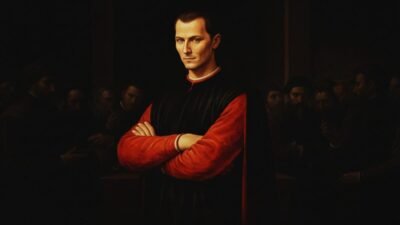
- Machiavellianism: Named after Niccolò Machiavelli, this trait involves high levels of manipulation, exploitation, and a cynical disregard for morality. The Machiavellian is the ultimate strategist. They view people as chess pieces to be moved for their own gain. They are often charming and patient, willing to play the “long game” to achieve power. In everyday social interactions, this might manifest as the friend who only calls when they need something or the colleague who subtly takes credit for your ideas.
- Psychopathy: This is perhaps the most misunderstood of the three. It involves high impulsivity, thrill-seeking, and a “cold-hearted” lack of remorse. Not all psychopaths are criminals; many are “successful” psychopaths who thrive in high-stakes environments like high-frequency trading or emergency surgery because they don’t experience fear or stress the way others do. However, their inability to bond emotionally makes them deeply destructive in personal relationships.
In the real world, these traits often overlap. A high-ranking executive might use Machiavellian tactics to climb the ladder, Narcissism to maintain their public image, and a touch of Psychopathy to make “hard” decisions (like mass layoffs) without losing sleep. These individuals often rise to the top because our society rewards the results they produce, even if the methods are morally bankrupt. By identifying these traits in ourselves and others, we can better protect our boundaries and understand the hidden motivations behind “toxic” leadership and interpersonal dynamics.
4. The Catalyst of Cruelty: Environmental Factors and Social Conditioning
It is a comforting lie to believe that “evil” is something inherent only to “bad people.” History and social psychology tell a different story. The Lucifer Effect, a term coined to describe how systemic pressure can turn good people into perpetrators of harm, suggests that the environment often plays a larger role than character. When individuals are placed in roles of absolute power or subjected to rigid hierarchies, their moral compass can quickly become skewed.
One of the most potent catalysts for cruelty is dehumanization. This is the process of stripping a person or group of their human qualities, reducing them to a label, a number, or a derogatory term. We see this in historical atrocities, but we also see it in modern cyberbullying and political discourse. When we stop seeing a “person” and start seeing a “troll,” a “traitor,” or an “enemy,” our natural empathy shuts down. This psychological “off switch” allows otherwise kind people to engage in shocking levels of cruelty because they no longer feel they are hurting a fellow human being.
Childhood trauma and attachment styles also play a significant role. A child who grows up in an environment where they are neglected or abused may develop “dark” behaviors as a defense mechanism. If the world is perceived as a hostile place where only the strong survive, then aggression and manipulation become logical tools for self-preservation. These patterns of behavior often become “hardwired,” leading to a cycle of trauma that persists into adulthood.
Ultimately, the line between “hero” and “villain” is often thinner than we think. Many people who commit acts of great harm believe they are doing the “right” thing or that they are the victims in the situation. Moral ambiguity is the reality of the human condition. Understanding that our environment—the people we surround ourselves with, the media we consume, and the systems we work within—can amplify our darkest impulses is essential for maintaining our integrity.
5. Shadow Work: How to Integrate Your Dark Impulses for Growth
If suppressing the shadow leads to fragmentation, what is the alternative? The answer is integration. Shadow work is the process of bringing the hidden parts of the psyche into the light of consciousness. It is not about *becoming* your dark side, but about *owning* it so that it no longer owns you. When you acknowledge your capacity for anger, you gain the ability to use that energy for healthy boundaries rather than letting it explode in a fit of rage.
How do you practically do this? Here are a few methods:
- Identifying Triggers: Pay close attention to the people who irritate you the most. What specific trait do they have that you find “unacceptable”? Often, that trait is something you have suppressed in yourself. If you hate someone’s “arrogance,” ask yourself if you have been denying your own need for recognition.
- Journaling: Write down your “darkest” thoughts without judgment. Don’t try to be a “good person” on the page. By externalizing these thoughts, you take away their power to influence you from the subconscious.
- Active Imagination: This is a Jungian technique where you “talk” to your shadow in a meditative state. Ask it what it wants. Often, the shadow is holding onto a need that isn’t being met, such as a need for safety, power, or expression.
Acknowledging our capacity for darkness actually leads to genuine empathy. When you realize that you are capable of the same mistakes and flaws as others, you become less judgmental and more compassionate. Furthermore, behavioral science shows that we can sublimate these impulses—redirecting “dark” energy into productive outlets. A person with a high drive for dominance might find fulfillment in leading a non-profit, while someone with a “dark” curiosity might excel in investigative journalism or scientific research.
Integration is the path to moral strength. A person who is “good” only because they are too afraid to be “bad” is not truly virtuous; they are simply harmless. True virtue comes from a person who knows exactly how dangerous they can be, yet chooses to act with kindness and restraint anyway.
6. The Path Forward: Balancing the Light and Dark Within
The goal of psychological maturity is not the total elimination of the “dark side.” Such a feat is neither possible nor desirable. Our shadow contains not just our flaws, but also our vitality, our creativity, and our survival instincts. To kill the shadow is to kill the very thing that makes us human. Instead, the path forward is one of balance—a conscious negotiation between our highest ideals and our lowest impulses.
Self-awareness is the only safeguard against the “explosion” of repressed traits. By checking in with ourselves regularly and acknowledging our feelings of envy, resentment, or greed, we prevent these emotions from festering in the dark. We must develop a holistic view of the self, accepting that we are a “both/and” creature: both kind and selfish, both rational and impulsive, both light and dark.
Ultimately, being human is about the necessity of moral choice. We are born with a complex set of traits rooted in millions of years of evolution and a lifetime of psychological conditioning. We cannot always control the thoughts that pop into our heads or the impulses that surge through our bodies. However, we have the ultimate power to choose how we act upon them. By understanding the Jungian shadow and the Dark Triad, we strip away the mystery of our “dark side” and gain the self-mastery needed to live a life of integrity.
The dark side of human nature is not a flaw to be erased, but a complex landscape to be explored. By integrating our shadow, we don’t become “bad” people; we become whole people. And in that wholeness, we find the strength to face the world with honesty, empathy, and a clear-eyed understanding of what it truly means to be human.
Start your journey of self-discovery today by downloading our free Shadow Work Journaling Guide and begin the process of integrating your hidden self.
Frequently Asked Questions
Is the “Shadow” always negative?
No. While it contains traits we find socially unacceptable, it also houses “Golden Shadow” elements—repressed talents, creativity, and strengths that we were discouraged from expressing in childhood.
Can someone with Dark Triad traits change?
While core personality traits are stable, individuals can learn to manage their behaviors through cognitive-behavioral therapy and high levels of self-awareness, though true empathy remains a challenge for those high in psychopathy.
Does shadow work make you a “bad” person?
Quite the opposite. Shadow work makes you a more conscious person. By knowing your capacity for harm, you are much less likely to act on it unconsciously.
How do I know if I’m projecting?
If you have an intense, visceral emotional reaction to someone’s behavior that seems “disproportionate” to the situation, there is a high probability you are projecting a suppressed part of yourself onto them.
If you found this analysis compelling, you may also enjoy our deep dives into Machiavelli & Political Philosophy, the dynamics of Power & Human Nature, or our guide to Influence & Leadership.