

Imagine you are sitting in a sterile laboratory at Yale University. Across from you is a researcher in a grey technician’s coat, holding a clipboard and wearing an expression of clinical indifference. Your task is simple: ask a “learner” in the next room a series of word-pair questions. Every time they get an answer wrong, you must flip a switch to deliver an electric shock. The shocks start at 15 volts—a mere tingle—but the panel goes all the way up to 450 volts, marked with ominous labels like “Extreme Intensity Shock” and, finally, “XXX.”
As the voltage climbs, you hear the learner pounding on the wall, screaming that his heart is bothering him, and eventually, he goes silent. You look at the researcher, distressed. He simply says, “The experiment requires that you continue.” Would you stop? Most people, when asked this question in the comfort of their own homes, insist they would walk out. Yet, when the actual experiment was conducted, the results told a much darker story about the human psyche. This fundamental tension—between our private conscience and the commands of an external power—is not just a quirk of psychology; it is a cornerstone of how our species has survived, thrived, and occasionally committed unspeakable atrocities.
1. The Evolutionary Roots of Social Hierarchies
To understand why we are so prone to following orders, we have to look back long before the invention of laboratories or modern governments. For the vast majority of human history, we lived in small, nomadic bands where survival was a daily gamble. In these high-stakes environments, a group that spent hours debating every decision was a group that didn’t survive a predator’s attack or a rival tribe’s raid.

Evolutionary biology suggests that social hierarchies emerged as a mechanism for group cohesion and efficiency. Having a clear leader allowed for rapid mobilization during conflict or scarcity. When resources were thin, a single voice deciding how to ration food or where to migrate prevented the kind of internal friction that could lead to extinction. Over hundreds of thousands of years, those who were biologically predisposed to recognize and respect a “rank” were more likely to remain within the safety of the group, pass on their genes, and survive.
In modern times, these biological predispositions manifest in our deep-seated desire for order. We feel a psychological “itch” when there is a power vacuum. This is why, even in supposedly egalitarian settings, informal leaders almost always emerge. We are wired to look for the “alpha” or the expert because, in our ancestral memory, “following the leader” was synonymous with “staying alive.” This instinctual drive for hierarchy is so strong that it often operates below the level of conscious thought, making us defer to those we perceive as higher-status individuals without even realizing we are doing it.
2. Lessons from the Milgram Experiment: The Limits of Conscience
In 1961, psychologist Stanley Milgram set out to understand how ordinary citizens could participate in the horrific systemic violence of the Holocaust. He wanted to know if there was something uniquely “obedient” about a specific culture, or if the tendency to follow orders was a universal human trait. His findings sent shockwaves through the scientific community and the public at large.

The discovery was staggering: 65% of participants—ordinary people from all walks of life—administered the maximum 450-volt shock. While many showed signs of extreme stress, trembling, and even stuttering in protest, they nonetheless continued to flip the switches because the authority figure in the lab coat told them they must. They weren’t sadists; they were simply unable to break the “social bond” of obedience to a legitimate authority.
Milgram’s study revealed that the presence of a “legitimate” authority figure has the power to suppress individual moral judgment. When we perceive someone as having the right to command—whether through their title, their clothing, or the setting—we experience a psychological shift. The responsibility for the action is transferred from the “self” to the “authority.” In the minds of the participants, they weren’t the ones hurting the learner; the experimenter was. This suggests that our conscience is not an immovable rock, but rather a flexible instrument that can be muted by the perceived legitimacy of the person giving the orders.
3. The Agentic State: Shifting Responsibility to the Leader
Why do we find it so hard to say “no” to authority, even when we know an action is wrong? Milgram proposed a concept known as the “Agentic State” to explain this phenomenon. He argued that individuals exist in two states of social consciousness: the Autonomous State and the Agentic State.
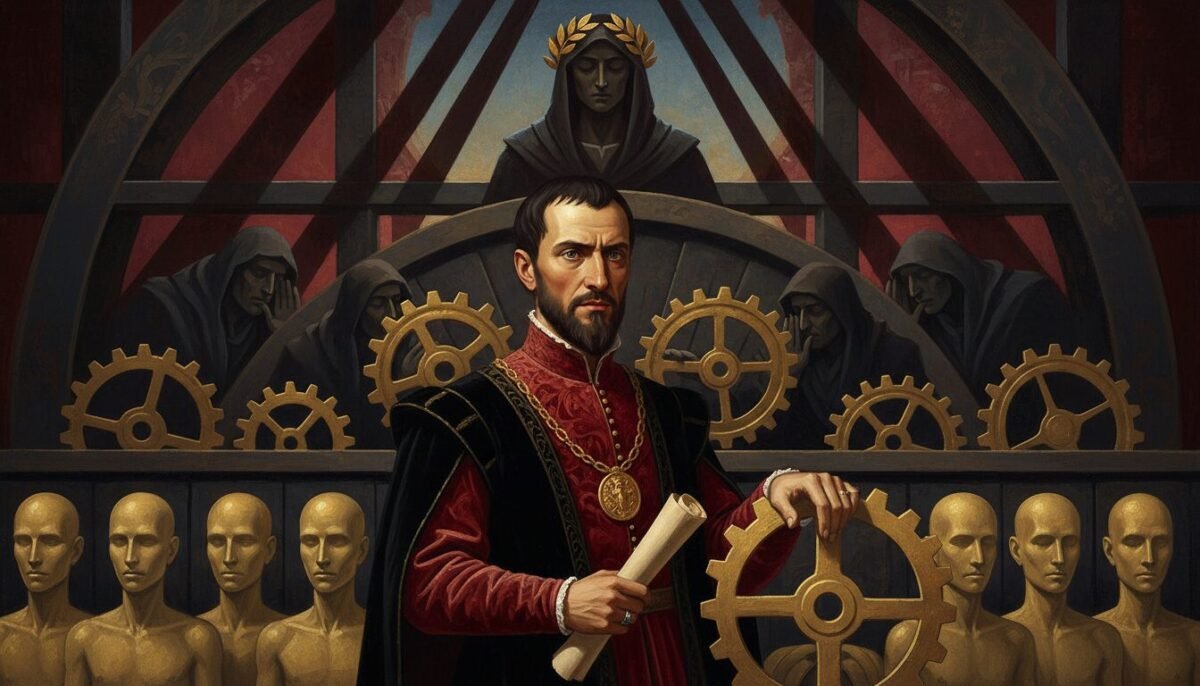
In the autonomous state, we act according to our own conscience and take full responsibility for our actions. However, when we enter a hierarchical system, we often undergo a “tuning” process where we begin to see ourselves as an “agent” for carrying out another person’s wishes. We no longer view ourselves as responsible for the content of the actions, but only for how well we perform them. We become instruments of the leader’s will.
There is a profound, albeit dark, psychological relief found in relinquishing personal responsibility. Making moral choices is exhausting and anxiety-inducing. By shifting into the agentic state, an individual can perform tasks that would normally be abhorrent to them because they have offloaded the moral “cost” to the person in charge. This is the psychological foundation of the “I was just following orders” defense. It is not always a lie told to escape punishment; for many, it is a genuine description of their internal state at the time of the act.
4. Socialization and the Power of Authority Symbols
Our submission to authority is not just biological; it is meticulously cultivated from the moment we are born. From early childhood, we are socialized to equate “goodness” with “obedience.” Parents reward compliance, and schools are designed as microcosms of hierarchy where students must ask permission to speak, eat, or even move. This early training creates a reflexive respect for authority that carries into adulthood.
This respect is often triggered by symbols rather than substance. Titles like “Doctor,” “Officer,” or “CEO,” and physical markers like uniforms or expensive suits, serve as psychological shortcuts. They signal to our brains that the person in front of us possesses “legitimate” power. The Stanford Prison Experiment famously demonstrated this: when ordinary college students were given guard uniforms and sunglasses, they quickly began to act with authoritarian cruelty, while those in “prisoner” smocks became submissive and broken. The symbols alone were enough to dictate the behavior of both groups.
Cultural norms further reinforce these dynamics. We are taught that society would collapse into chaos without strict adherence to the rules set by those in power. While this is true to an extent, it also creates a “legitimacy bias.” We tend to assume that because a system exists and has symbols of power, it must be inherently right or necessary. This makes it incredibly difficult for the average person to distinguish between a command that serves the common good and one that serves a corrupt agenda.
5. Constructive vs. Destructive Obedience in Society
It is important to acknowledge that obedience is not inherently “evil.” In fact, it is the glue that holds civilization together. Constructive obedience allows us to drive on the correct side of the road, pay taxes that fund hospitals, and cooperate in complex organizations to achieve goals no individual could reach alone. Without a degree of submission to authority, safety and social order would be impossible.
The danger arises at the tipping point where compliance leads to ethical failures. This is what philosopher Hannah Arendt described as the “banality of evil.” In her study of Nazi bureaucrat Adolf Eichmann, she noted that he wasn’t a monster in the traditional sense. He was a terrifyingly “normal” man who was simply very good at his job—a job that happened to be organizing the logistics of mass murder. He was a “desk murderer” who focused on the efficiency of train schedules rather than the fate of the people on those trains.
Systemic atrocities are rarely carried out by a few “bad” people. They are carried out by thousands of ordinary people who have entered the agentic state, focused on their small part of a larger process, and deferred their moral judgment to the system. When obedience becomes blind, it stops being a tool for social order and becomes a weapon for systemic harm.
6. Strategies for Maintaining Moral Autonomy and Critical Thinking
How do we protect ourselves from the trap of blind obedience? The first step is the conscious recognition of the psychological forces at play. Simply knowing about the Milgram experiment and the agentic state acts as a form of “psychological inoculation.” When you feel that internal pressure to comply with something that feels wrong, you can label it for what it is: a social pressure, not a moral obligation.
One of the most powerful tools for resistance is the presence of “disobedient models.” In variations of Milgram’s study, if even one other person refused to give the shocks, the participant’s likelihood of continuing dropped significantly. By being the first to question a command, you give others the “permission” to do the same. Cultivating a culture where questioning the legitimacy and morality of commands is encouraged—rather than punished—is essential for any healthy organization.
For individuals, the practice of moral autonomy requires constant vigilance. Ask yourself: “If I were doing this entirely on my own, without being told to, would I still think it is right?” If the answer is no, then you are likely in an agentic state. Developing a strong personal ethical code that exists independently of your job title or social status is the only way to ensure that when the “technician in the lab coat” tells you to flip the switch, you have the strength to walk out of the room.
Submission to authority is a complex blend of evolutionary survival, psychological shifts, and lifelong socialization. While it is essential for the functioning of society, it requires a level of ethical vigilance that most of us are never taught. The next time you find yourself following an order, take a moment to reflect: Are you acting out of reason, or are you simply playing your part in a script you didn’t write?
Frequently Asked Questions
What is the main takeaway from the Milgram experiment?
The primary takeaway is that ordinary people are surprisingly willing to perform actions that conflict with their personal conscience if they are told to do so by a perceived legitimate authority figure. It highlights that obedience is a social-psychological process rather than a reflection of a person’s inherent character.
Can the “Agentic State” be used as a legal defense?
While the agentic state explains the psychology behind certain actions, it is generally not accepted as a valid legal defense for crimes. International law, particularly since the Nuremberg Trials, has established that “following superior orders” does not exempt an individual from responsibility for war crimes or crimes against humanity.
How can I improve my own critical thinking when dealing with authority?
You can improve your autonomy by practicing “mindful dissent.” This involves questioning the source of the authority, the intent of the command, and the consequences of the action. Seeking out diverse perspectives and surrounding yourself with people who value independent thought can also help break the pressure of conformity.
Is all obedience bad for society?
No. Obedience is necessary for social stability, public safety, and large-scale cooperation. The goal is not to eliminate obedience entirely, but to move from “blind obedience” to “reflective obedience,” where we follow rules because they are just and reasonable, not simply because they come from a person in power.
If you found this analysis of human nature compelling, you may want to explore our deeper dives into Power & Human Nature, the strategic insights of Machiavelli & Political Philosophy, or how Influence & Leadership shape our modern world. Explore more at DeepPsyche.