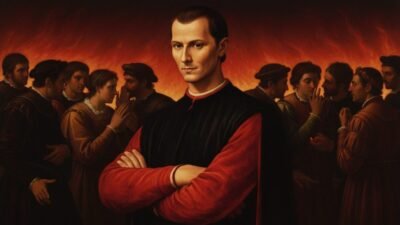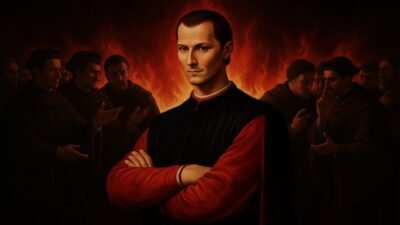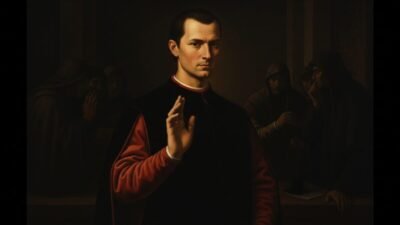
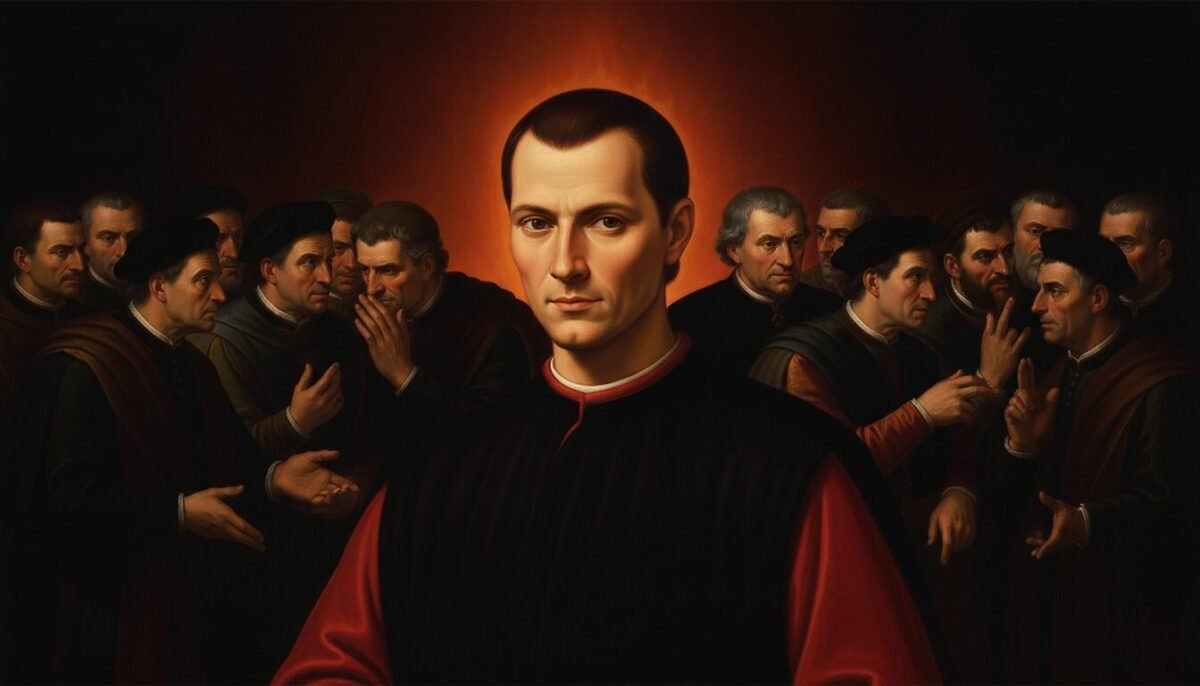
Is it better to be feared than loved? This provocative question, posed by a 16th-century diplomat, birthed a concept that still haunts both political corridors and psychological laboratories today. We often use the word “Machiavellian” as a sharp-edged insult, a way to describe the colleague who climbs the corporate ladder by stepping on fingers or the politician who treats the truth like a flexible suggestion. But behind the label lies a profound transformation of thought. While many use the term to describe manipulative behavior, few understand the complex journey from a Renaissance political treatise to a foundational element of modern personality psychology. This is the story of how a man’s desperate attempt to regain his job evolved into a clinical framework for understanding the darkest corners of the human mind.
To understand Machiavellianism, we must first strip away the modern clinical baggage and look at the man who started it all: Niccolò Machiavelli. He wasn’t a shadowy villain in a cape; he was a civil servant who found himself on the wrong side of a regime change, and his transition from a practical strategist to a psychological archetype is one of the most fascinating shifts in intellectual history. We will trace this evolution, exploring the life of Niccolò, the impact of his writings, and how 20th-century psychologists eventually transformed his political realism into a measurable, often chilling, human trait.
1. The Man Behind the Name: Niccolò Machiavelli and Renaissance Florence
To understand the philosophy, you must first understand the chaos of 15th and 16th-century Florence. This wasn’t just the city of Michelangelo and Da Vinci; it was a brutal, high-stakes chessboard of shifting alliances. Italy was a collection of warring city-states—Florence, Milan, Venice, the Papal States—constantly under threat from foreign powers like France and Spain. In this environment, survival wasn’t a matter of ethics; it was a matter of logistics and raw power.
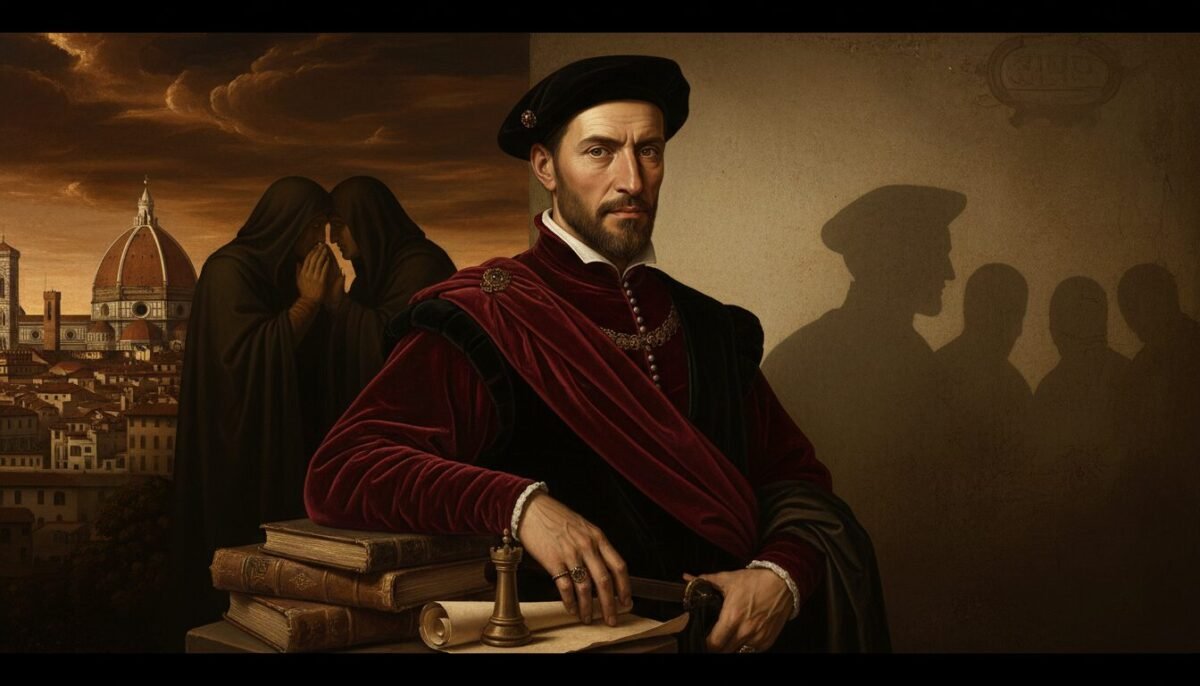
Niccolò Machiavelli was born into this world in 1469. He rose to prominence as a diplomat and high-ranking official in the Florentine Republic. For fourteen years, he traveled across Europe, observing the great power players of his day. He watched Cesare Borgia, the ruthless son of Pope Alexander VI, with a mixture of horror and admiration. He saw how Borgia used deception and strategic violence to stabilize a region that had been plagued by lawlessness. Machiavelli realized that the “good” leaders—those who were pious and gentle—often ended up deposed, their cities sacked and their people slaughtered. The “effective” leaders, however, were those who understood the mechanics of power.
His career came to a crashing halt in 1512 when the Medici family returned to power in Florence, backed by Spanish troops. The Republic was dissolved, and Machiavelli was not only dismissed but accused of conspiracy. He was imprisoned and subjected to the “strappado”—a form of torture where the victim’s arms are tied behind their back and they are dropped from a height. Despite the agony, he maintained his innocence. Eventually released but exiled to his small farm outside the city, a bored and desperate Machiavelli began to write. He wasn’t writing for fame; he was writing a “job application” to the Medici, hoping to prove that he understood the realities of ruling better than anyone else.
This intersection of Renaissance humanism—the belief in human agency and intellect—and the harsh realities of Italian warfare created a unique perspective. Machiavelli didn’t want to write about how the world should be; he wanted to write about how it actually worked. He was a political scientist before the term existed, analyzing the “effectual truth” of things rather than the “imagination” of them.
2. The Prince: A Revolutionary Treatise on Political Realism
The result of his exile was The Prince, a slim volume that would become one of the most controversial books in human history. Unlike the “Mirror for Princes” literature of the time, which urged rulers to be virtuous, kind, and God-fearing, Machiavelli’s guide was unapologetically pragmatic. He argued that a ruler’s primary duty is the stability and survival of the state, and if achieving that requires “entering into evil,” then so be it.
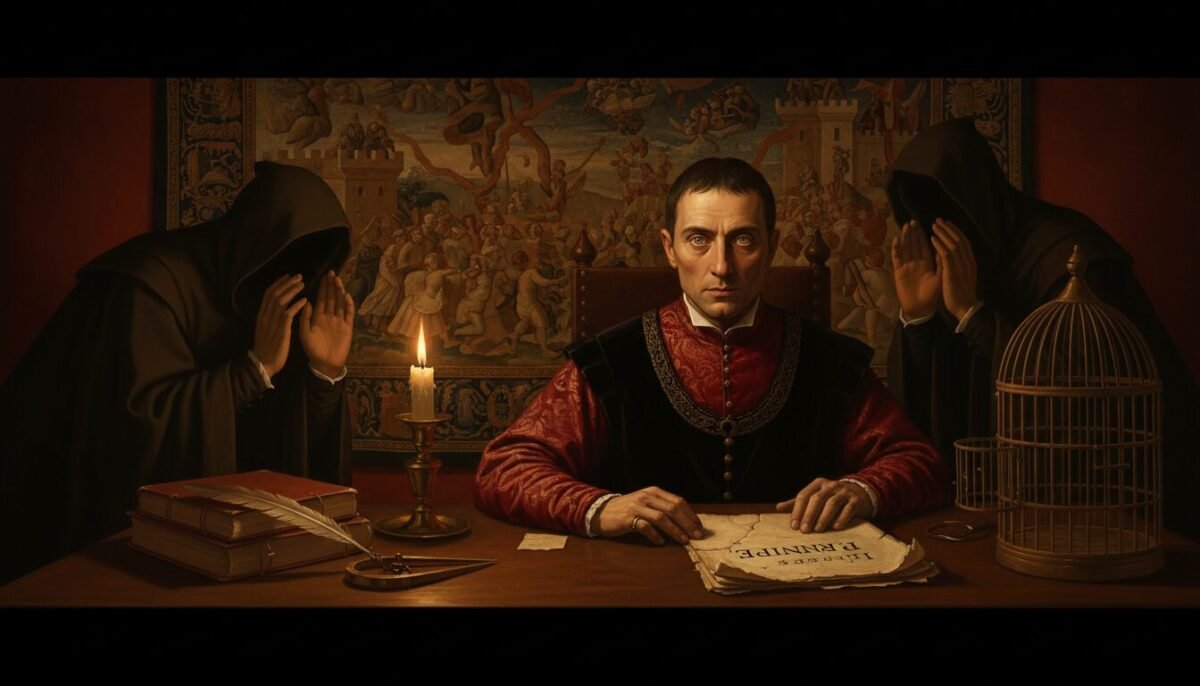
Central to his philosophy are two concepts: Virtù and Fortuna. In the modern sense, “virtue” implies moral goodness. For Machiavelli, Virtù meant something closer to “prowess,” “skill,” or “manliness.” It was the ability of a leader to adapt to any situation, to be a lion one moment and a fox the next. Fortuna, on the other hand, was the unpredictable, chaotic force of luck and circumstance. Machiavelli famously compared Fortuna to a raging river; while you cannot stop the flood, a man of Virtù builds dams and dikes in advance to direct its flow. To Machiavelli, the greatest sin a leader could commit was being unprepared for the cruelty of the world.
The book was revolutionary because it decoupled politics from morality. He argued that a prince must know how to be a “great pretender and dissembler.” He famously noted that while it is desirable to be both loved and feared, if one must choose, it is much safer to be feared. Why? Because love is a bond of obligation which men, being miserable creatures, break whenever it serves their advantage; but fear is strengthened by a dread of punishment which never abandons you.
The reaction was swift and fierce. The Catholic Church was scandalized by Machiavelli’s suggestion that a ruler might need to ignore Christian ethics to be successful. In 1559, The Prince was placed on the Index Librorum Prohibitorum (the Index of Prohibited Books). He was branded an atheist and a teacher of evil. Yet, behind closed doors, every major European monarch and statesman was reading him. They recognized that while his words were shocking, they were also undeniably true in the arena of statecraft.
3. From Pejorative to Philosophy: The Early Evolution of the Term
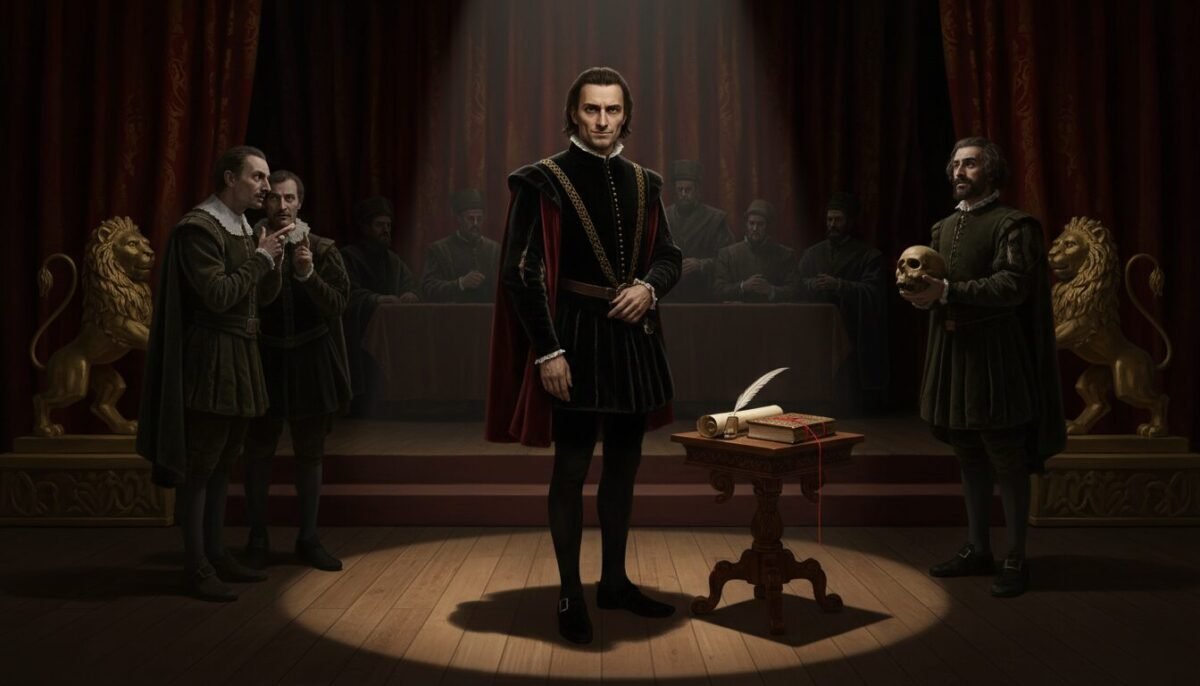
After his death, “Machiavellian” quickly morphed into a pejorative. In Elizabethan England, the term became a stock character type on the stage. Christopher Marlowe and William Shakespeare frequently used the “Machiavel” as a shorthand for a diabolical, scheming villain who delights in his own wickedness. In the prologue to The Jew of Malta, a character representing Machiavelli actually appears on stage, declaring, “I count religion but a childish toy, and hold there is no sin but ignorance.” This caricature—the “Old Nick” (a nickname for the devil that some believe was inspired by Niccolò)—became the dominant cultural image of the man.
However, by the 18th and 19th centuries, the perception began to shift again. Thinkers like Frederick the Great and later Otto von Bismarck began to view Machiavelli not as a teacher of evil, but as the father of Realpolitik—politics based on practical and material factors rather than theoretical or ethical premises. They saw him as a patriot who was simply honest about the “dirty hands” required to build and maintain a nation. The term began to move away from pure villainy and toward a sophisticated, if cold, realism.
It is important to note the distinction between Machiavelli’s personal republican ideals and the “Machiavellian” label. In his other great work, The Discourses on Livy, Machiavelli argued passionately for a republic with checks and balances, the rule of law, and a citizen militia. He believed in liberty. But the world remembered him only for The Prince. The label became a shadow that followed his name, detached from his actual political goals and attached instead to the methods he described.
4. The Psychological Pivot: Richard Christie and the Mach IV Scale
The most significant turning point in the history of Machiavellianism occurred not in a palace, but in a laboratory. In the 1970s, social psychologists Richard Christie and Florence Geis became fascinated by the idea that some people seem to have a natural affinity for the strategies outlined in The Prince. They wondered: Is Machiavellianism more than just a political strategy? Is it a fundamental personality trait?
To test this, they culled statements directly from Machiavelli’s writings and adapted them into a psychological survey. This became the Mach IV Scale. The test asks participants to rate their agreement with statements such as:
- “The best way to handle people is to tell them what they want to hear.”
- “Anyone who completely trusts anyone else is asking for trouble.”
- “It is hard to get ahead without cutting corners here and there.”
Christie and Geis discovered that people who scored high on this scale (High Machs) exhibited a distinct psychological profile. They weren’t necessarily “evil” in the cartoonish sense, but they were characterized by a “cool syndrome.” They were emotionally detached, resistant to social pressure, and highly strategic. While “Low Machs” would get caught up in the emotions of a situation or feel guilty about bending the rules, “High Machs” remained focused on the goal. They viewed other people not as individuals with feelings, but as variables in an equation.
This was a breakthrough. Machiavellianism was no longer just a philosophy of statecraft; it was a measurable, cynical worldview. Christie and Geis redefined the term as a personality trait characterized by a lack of affect in interpersonal relationships, a lack of concern with conventional morality, and a low ideological commitment. It was the birth of the “psychological Machiavellian”—the person who treats life like a game of chess where they are the only player who knows the rules.
5. Machiavellianism in the Dark Triad: Modern Personality Traits
In the 21st century, Machiavellianism has found a permanent home in the “Dark Triad” of personality psychology, alongside Narcissism and Psychopathy. While these three traits overlap, they are distinct. Narcissists are driven by ego and a need for admiration. Psychopaths are driven by impulsivity and a lack of empathy. Machiavellians, however, are driven by strategy.
A High Mach is often the most “successful” of the triad in modern society because they are capable of delayed gratification. A psychopath might punch a boss in the face; a narcissist might spend all day talking about their own brilliance; but a Machiavellian will quietly observe the power structure, identify the key decision-makers, and spend months or years subtly manipulating the environment to their advantage. They are the masters of the “long game.”
In modern corporate and social environments, Machiavellianism manifests as:
- Emotional Detachment: The ability to stay calm and calculating under pressure, often appearing “unflappable.”
- Strategic Manipulation: Using flattery, selective honesty, or “gaslighting” to steer others toward a desired outcome.
- Pragmatic Morality: Viewing ethics as a tool rather than a constraint. They will be “moral” if it helps their reputation, but will discard morality the moment it becomes a liability.
Research suggests that High Machs often thrive in competitive, loosely regulated environments—think high-stakes finance, certain branches of law, or aggressive political campaigning. They are the “sharks” of the modern world. However, this success often comes at a high personal cost. High Machs tend to have fewer genuine friendships, higher levels of stress (from constant plotting), and a profound sense of isolation, as they can never truly trust anyone else.
6. Myth vs. Reality: Historical Machiavelli vs. the Psychological Trait
There is a profound irony in how we use Machiavelli’s name today. The historical Niccolò Machiavelli was, by most accounts, a man of deep loyalties. He was a devoted patriot who suffered torture and poverty for his beliefs. He was a man of passion, humor, and intellectual curiosity. He wrote The Prince not because he was a cold, manipulative person, but because he was a desperate man who loved his country and wanted to see it strong and unified.
In contrast, the “Machiavellian” of modern psychology is defined by a lack of loyalty and a lack of passion. The psychological trait is characterized by a cynical “everyone is out for themselves” attitude, whereas the man himself believed in the possibility of a grand, collective greatness for Florence. The historical Machiavelli was a realist who recognized that the world is often cruel; the psychological Machiavellian is a person who uses that cruelty as a justification for their own behavior.
Why does the term persist so powerfully? Perhaps because it touches on a fundamental tension in the human experience: the conflict between our moral aspirations and our survival instincts. We want to believe in a world of kindness and transparency, but we all know, deep down, that power dynamics are real. Machiavelli was the first to look into that abyss without blinking. Whether we view him as a teacher of evil or a courageous truth-teller, his name remains the ultimate shorthand for the strategic use of power.
Machiavellianism has traveled from the desk of a disgraced Florentine diplomat to the forefront of personality psychology, evolving from a political strategy into a recognized psychological trait characterized by manipulation and cynicism. It serves as a reminder that the quest for power is not just a historical curiosity, but a permanent feature of the human psyche.
Frequently Asked Questions
Is being Machiavellian the same as being a sociopath?
No. While they share traits like low empathy and a tendency to manipulate, they differ in their execution. Sociopathy (often linked to psychopathy) involves impulsivity and a disregard for social norms. Machiavellianism is highly controlled, strategic, and often very respectful of social norms—provided those norms help the individual achieve their goals.
Can Machiavellianism be a positive trait?
In certain contexts, “High Mach” traits like emotional detachment and strategic thinking can be beneficial, such as in crisis management or high-stakes negotiations. However, because the trait is rooted in cynicism and manipulation, it usually leads to toxic relationships and a lack of trust over the long term.
How do I know if I am dealing with a Machiavellian?
Look for patterns of “calculated” behavior. High Machs often use “if-then” logic in social interactions, are rarely spontaneous with their emotions, and tend to be very good at figuring out what people want to hear. They often possess a “charming” exterior that hides a very cold, goal-oriented interior.
Did Machiavelli actually practice what he preached?
Ironically, no. Machiavelli was often too honest and blunt for his own good, which is partly why he ended up in exile. He was a brilliant analyst of power, but he wasn’t always a successful practitioner of the manipulation he described in his books.
The human mind is a complex landscape of light and shadow. To better understand the forces that drive behavior in the boardroom and beyond, explore our further readings on the Dark Triad to understand how Machiavellianism interacts with other personality traits in the modern world.
Suggested internal links:
- Learn more about Machiavelli & Political Philosophy.
- Discover the intersection of Power & Human Nature.
- Deep dive into the Machiavellianism personality trait.
- How these traits affect Influence & Leadership.
- Explore Comparative Philosophy on ethics and power.