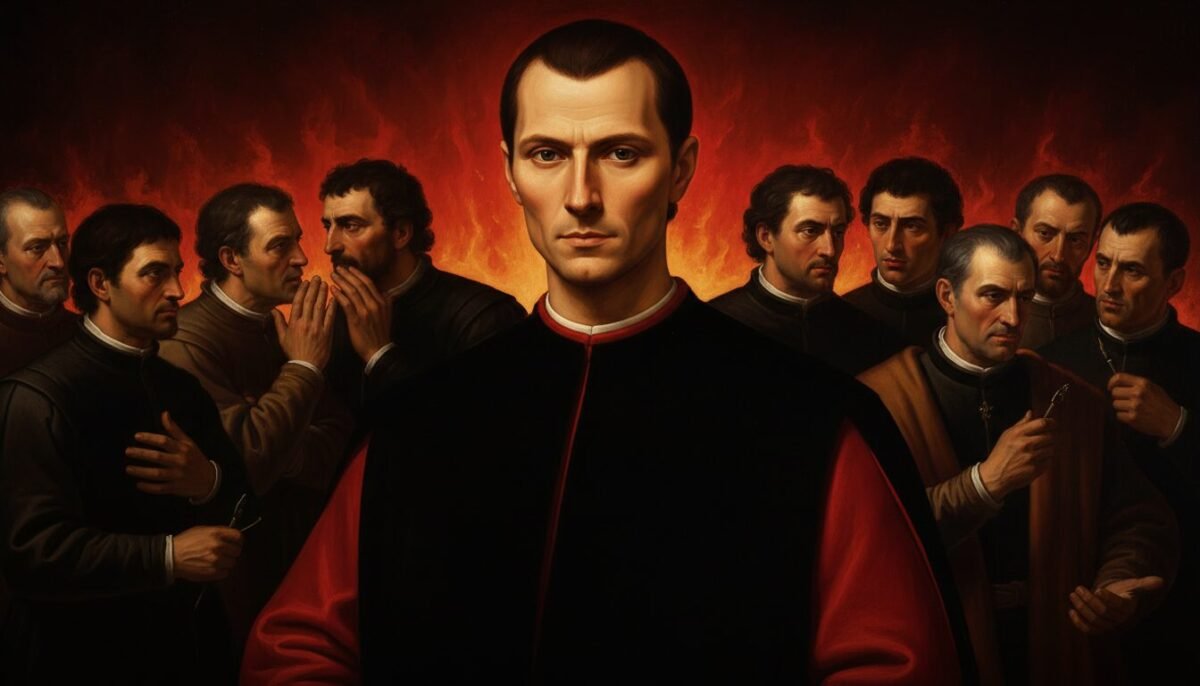
When we hear the word “Machiavellian,” we often picture a shadowy villain in a dimly lit room, perhaps twirling a mustache while plotting the downfall of an innocent rival. In our movies and novels, the Machiavellian character is the embodiment of pure, calculated evil. But if we step out of the cinema and into the high-stakes environments of international diplomacy, corporate restructuring, or emergency medicine, a different picture begins to emerge. Is this psychological trait actually about malice, or is it simply a form of high-level pragmatism that the average person finds uncomfortable to acknowledge?
Modern culture has flattened a complex philosophical and psychological construct into a lazy synonym for “evil.” This reductionism causes leaders, students, and observers of human behavior to overlook its strategic utility. By labeling any calculated move as “dark,” we lose the ability to understand the mechanics of influence and the necessity of cold rationality in a chaotic world. To truly understand the human psyche, we must deconstruct the myths surrounding Machiavellianism, separating the historical Niccolò Machiavelli from the “Dark Triad” trait and exploring why this mindset is often the engine behind effective decision-making.
The Historical Origin: Separating the Man from the Myth
To understand the term, we have to travel back to the blood-soaked soil of 16th-century Italy. This was not the Italy of postcards and slow summers; it was a fractured collection of city-states constantly at war, vulnerable to foreign invasions and internal betrayals. It was in this environment of chronic instability that Niccolò Machiavelli, a diplomat and political theorist in Florence, wrote his most famous work, The Prince.
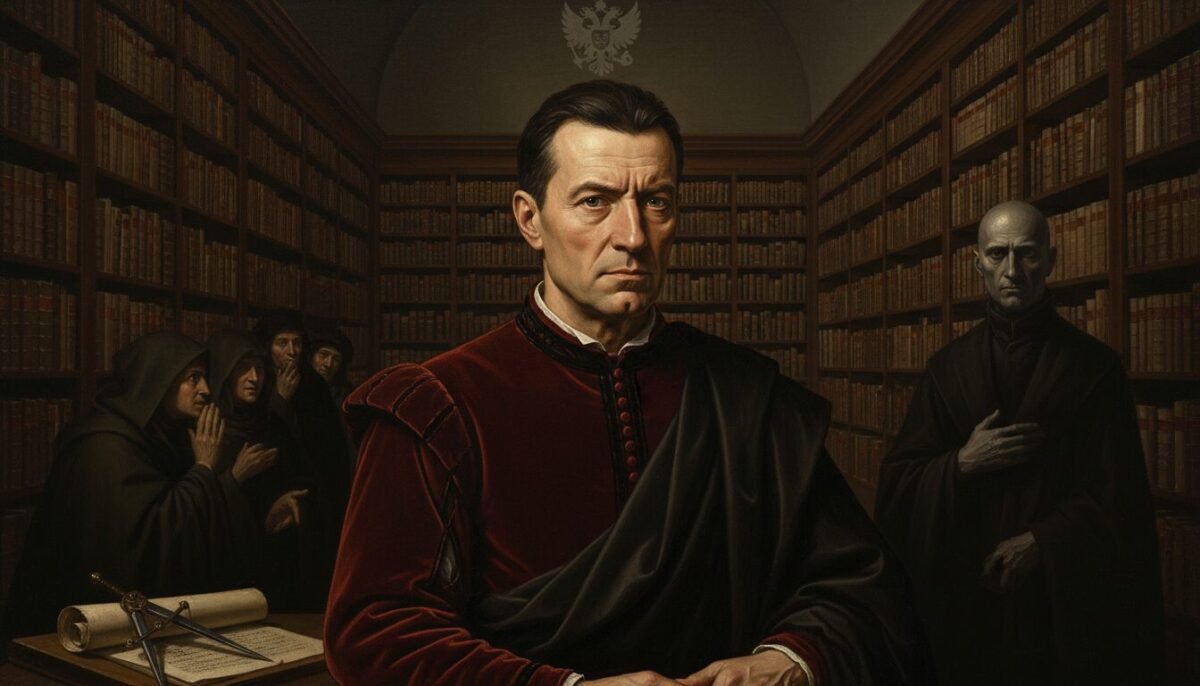
Machiavelli did not write his treatise to encourage cruelty for its own sake. In fact, he was a man who deeply loved his country and spent his life trying to protect the Florentine Republic. The Prince was essentially a job application and a survival manual. He looked at the world as it was, not as the church or the poets claimed it should be. He saw that leaders who tried to be “good” in a world full of “bad” people often ended up destroyed, taking their citizens down with them. His political realism was a desperate response to chaos. He argued that a leader’s primary duty was the stability and safety of the state, and if that required deception or harshness, it was a necessary price to pay.
Over the centuries, the nuances of Machiavelli’s patriotism and his preference for republicanism were stripped away. The Catholic Church placed his works on the Index Librorum Prohibitorum (the list of prohibited books), and “Old Nick” became a popular epithet for the Devil in English folklore. By the time the 20th century arrived, the term had evolved from a specific political philosophy into a psychological label. It moved from the halls of government to the clinical laboratory, where it was used to describe a personality type characterized by a cynical view of human nature and a preference for utility over morality.
When we call someone Machiavellian today, we are rarely referencing 16th-century Florentine politics. Instead, we are describing a person who views the world as a giant chessboard. The historical Machiavelli would likely be surprised to find his name attached to a “dark” personality trait, as he viewed his own insights as nothing more than common sense for anyone tasked with the heavy burden of leadership.
Defining the Psychological Trait: What Machiavellianism Really Is
In the realm of psychology, Machiavellianism is defined by a specific set of characteristics: a cynical disregard for morality, a focus on self-interest and personal gain, and a highly pragmatic approach to social interactions. However, the hallmark of the trait isn’t necessarily a desire to hurt others, but rather an extreme form of emotional detachment. For a person high in this trait, other people are often seen as variables in an equation rather than ends in themselves.
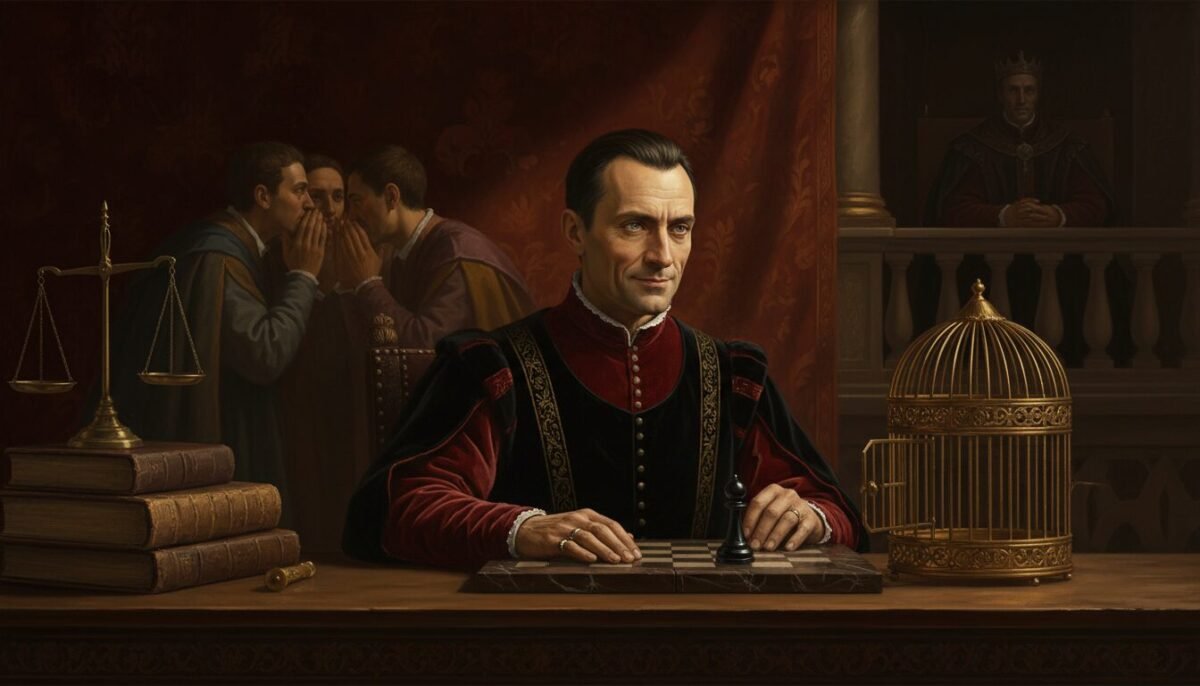
Psychologists measure this trait using the Mach-IV scale, developed by Richard Christie and Florence Geis in the 1970s. The scale asks individuals to agree or disagree with statements such as, “The best way to handle people is to tell them what they want to hear,” or “Anyone who completely trusts anyone else is asking for trouble.” Those who score high on this scale—referred to as “High Machs”—tend to be cool, detached, and resistant to social pressure. They are not easily swayed by emotional appeals and are masters of keeping their eyes on the long-term prize.
The distinction between “High Machs” and “Low Machs” is fascinating in social settings. A Low Mach person is often guided by “shoulds”—how they should act, how they should feel, and what is socially acceptable. They are often more empathetic but also more susceptible to manipulation and emotional volatility. A High Mach, conversely, is guided by “what works.” In a social interaction, they are constantly assessing the power dynamics. They aren’t necessarily looking to start a fight; in fact, they are often very charming and agreeable because they recognize that being liked is a powerful tool for influence. Their cynicism isn’t a loud, angry bitterness; it is a quiet, settled conviction that everyone has a price and every situation has a leverage point.
This pragmatic focus allows High Machs to excel in environments where others might buckle under the weight of sentimentality. They are the ones who can make the “hard call” because they have already calculated that the discomfort of the moment is a small price to pay for the success of the objective. While this can make them appear cold, it also makes them incredibly resilient in the face of social rejection or temporary setbacks.
The Dark Triad: Distinguishing Machiavellianism from Psychopathy and Narcissism
Machiavellianism is frequently grouped with psychopathy and narcissism to form what psychologists call the “Dark Triad.” While these three traits often overlap, Machiavellianism is arguably the most “calculating” and “patient” member of the group. Understanding the differences is essential for recognizing how these personalities operate in the real world.
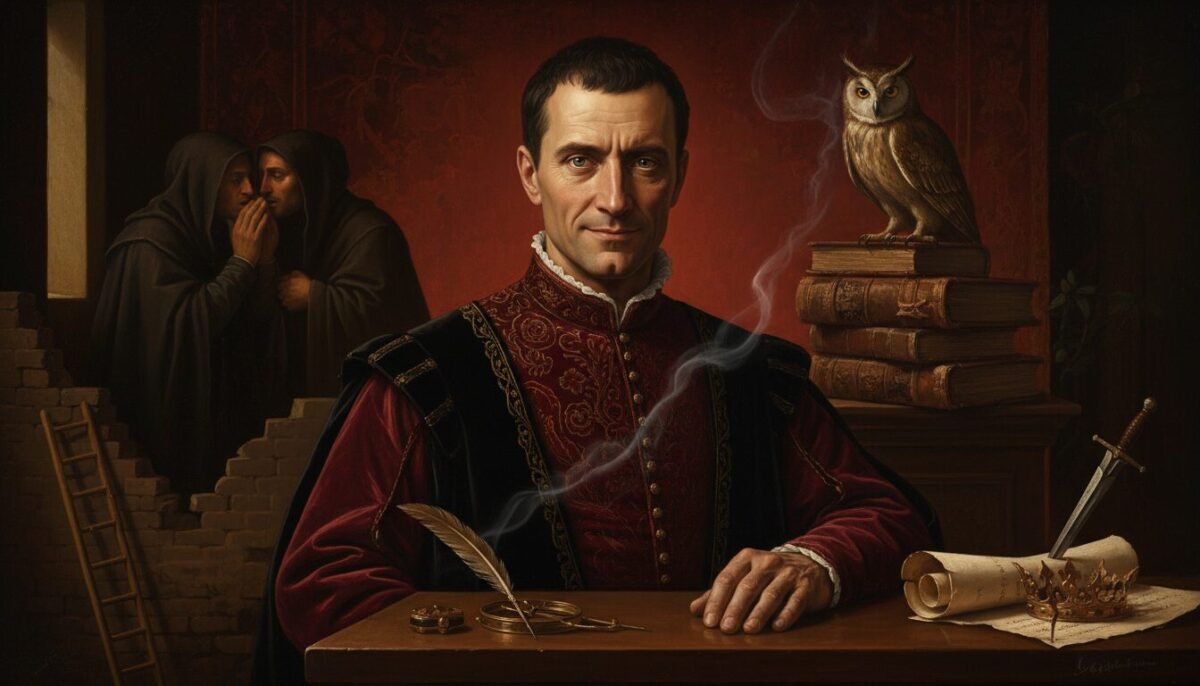
Consider the difference between the impulsivity of a psychopath and the calculated patience of a Machiavellian. A psychopath might act on a whim, taking a risk or hurting someone simply because they feel like it in the moment, often with little regard for the future consequences. They lack a “braking system.” A Machiavellian, however, is the ultimate long-term planner. They are perfectly willing to wait months or even years to achieve a goal. They will not take a risk unless the odds are heavily in their favor. If a Machiavellian hurts someone, it is rarely out of impulse; it is because they have determined that the person is an obstacle that must be moved.
The distinction from narcissism is equally sharp. Narcissists have a fragile ego; they crave admiration, validation, and the spotlight. They need you to tell them they are the smartest person in the room. A Machiavellian has no such need. In fact, many High Machs prefer to stay in the background. They don’t care who gets the credit as long as the outcome aligns with their interests. While a narcissist might be undone by a blow to their vanity, a Machiavellian is largely immune to such things. They don’t have a “fragile” ego because their sense of self isn’t built on the opinions of others—it’s built on their ability to control their environment.
This lack of a need for admiration makes the Machiavellian much more dangerous in a competitive sense than the narcissist. You can see the narcissist coming from a mile away; they are loud and self-aggrandizing. The Machiavellian is the person who listens more than they speak, who understands your weaknesses before you’ve even finished your first cup of coffee, and who uses that information not to feed their ego, but to advance their agenda. They are the “quiet” part of the Dark Triad, and their silence is their greatest strength.
The Ethics of Strategy: Does the End Always Justify the Means?
Perhaps no phrase is more associated with Machiavellian thought than “the end justifies the means.” Interestingly, Machiavelli never actually wrote those exact words, though the sentiment is woven throughout his work. In modern ethics, this is often viewed as a “villain’s motto,” but when we strip away the stigma, we find it at the heart of one of our most respected ethical frameworks: utilitarianism.
Utilitarianism suggests that the most ethical choice is the one that produces the greatest good for the greatest number. In a crisis, a leader might have to make a decision that is “immoral” on a personal level—such as lying to the public to prevent a mass panic or sacrificing a small department to save a thousand-person company. From a Machiavellian perspective, the “means” (the lie or the layoff) are justified by the “end” (the survival of the collective). This isn’t malicious manipulation; it is strategic influence for collective success.
The ethical line is often drawn at the intent. Is the individual manipulating others for purely selfish, destructive reasons, or are they using their strategic skills to navigate a complex system where “pure” honesty might lead to disaster? In many professional spheres, we actually *want* our leaders to be somewhat Machiavellian. We want a negotiator who can keep a straight face while bluffing a competitor. We want a surgeon who can detach from the tragedy of an accident to focus on the mechanics of a repair. We want a general who can view a map of soldiers as “assets” rather than friends, because that detachment is what allows them to make the decisions that win the war.
The reality is that in any large organization, resources are finite and interests are often in conflict. In such an environment, “strategic influence” is the only way to get anything done. The Machiavellian understands that the world is not a meritocracy where the “best” person naturally wins; it is a landscape of power where the person who understands the levers of influence is the one who can actually implement their vision—even if that vision is a benevolent one.
The Power of Cold Rationality: Emotional Detachment in Decision-Making
One of the most significant advantages of the Machiavellian trait is the ability to maintain emotional detachment in high-pressure environments. While most people are prone to “affective empathy”—where they actually feel the pain or stress of those around them—High Machs excel at “cognitive empathy.” They understand what you are feeling on an intellectual level, but they don’t let those feelings cloud their judgment.
This detachment allows for a level of objective analysis that is rare. Most of us are victims of our own cognitive biases. We fall for the “sunk cost fallacy,” refusing to abandon a failing project because we’ve invested so much emotion into it. We suffer from “ingroup bias,” favoring people we like even when they aren’t the best for the job. A Machiavellian is largely immune to these emotional traps. They can look at a failing project and cut it without a second thought. They can hire a person they personally dislike if that person is the most capable of achieving the goal.
In professional negotiations, this is a superpower. When an opponent tries to use guilt, anger, or flattery to sway the deal, the Machiavellian simply observes the tactic. They see the emotion as a data point, not a command. By remaining emotionally uncoupled from the situation, they can wait for the other side to make a mistake. They are less susceptible to emotional manipulation because they are the ones who understand the mechanics of manipulation better than anyone else.
This “cold rationality” is often mistaken for a lack of humanity. However, in many contexts, it is the highest form of professionalism. Being able to separate “how I feel” from “what needs to be done” is what allows for progress in the face of overwhelming odds. It is the ability to remain the “calm eye” in the center of a storm of human drama.
Machiavellianism in Leadership: Navigating Modern Hierarchies
Modern corporate and political hierarchies are not so different from the courts of the Medici. They are complex webs of alliances, rivalries, and shifting power dynamics. In these environments, “High Mach” traits often translate into high levels of political skill and organizational savvy. A leader who lacks these traits—who is perhaps too “Low Mach”—often finds themselves sidelined, unable to build the necessary coalitions to see their projects through.
Effective leadership requires a fine line between influence and bridge-burning. A “pro-social Machiavellian” uses their understanding of human nature to align the interests of different groups. They know how to frame a proposal so that everyone feels they are winning, even if the leader is the one steering the ship. They understand the “informal” hierarchy—knowing that the CEO’s executive assistant might have more actual power than a junior VP. This strategic foresight allows them to navigate the “corporate jungle” without getting caught in the undergrowth.
However, the risk is real. A Machiavellian who focuses too much on the “means” and forgets that they are dealing with human beings can eventually burn too many bridges. If people feel they are being used as mere tools, they will eventually revolt. The most successful Machiavellian leaders are those who realize that “reputation” is a strategic asset. If you have a reputation for being a backstabber, your power is diminished. Therefore, the truly “High Mach” move is often to be seen as a person of integrity, even if that integrity is a carefully maintained strategic choice.
In the modern business environment, we often reward the traits associated with Machiavellianism: the ability to plan long-term, the capacity for objective decision-making, and the skill to influence others. While we might not use the word in a performance review, we look for “strategic thinkers” and “politically astute” individuals. These are often just polite ways of describing the very traits Machiavelli championed five centuries ago.
Conclusion
Machiavellianism is not a synonym for malice; it is a trait defined by pragmatism, emotional regulation, and strategic foresight. It is the realization that the world is a complex place where the “moral high ground” is often a lonely and ineffective place to stand. By understanding the nuances of this trait—separating the calculated strategy from the impulsive cruelty of other “dark” personalities—we can better navigate the social and professional landscapes we inhabit. Whether we like it or not, power and influence are the currencies of human interaction. Learning how they work isn’t an admission of evil; it is a requirement for anyone who wishes to make a meaningful impact on the world.
Explore our further guides on personality psychology to understand how different traits shape the modern workplace and how you can harness your own psychological profile for greater influence.
Frequently Asked Questions
Is being Machiavellian always a bad thing?
Not necessarily. While it can be used for exploitation, many “High Machs” use their strategic skills for “pro-social” ends, such as navigating complex bureaucracies to get resources for their teams or maintaining stability during a crisis.
Can you become more Machiavellian, or is it innate?
While personality traits have a genetic component, “political skill” and strategic thinking can certainly be learned and developed through experience and a conscious study of human behavior and power dynamics.
How can I tell if my boss is Machiavellian?
Look for signs of high emotional control, a preference for “behind the scenes” influence rather than overt displays of ego, and a tendency to view every situation in terms of long-term utility rather than immediate emotional reaction.
What is the main difference between a Machiavellian and a Narcissist?
The narcissist needs your praise to feel good; the Machiavellian only needs your compliance to reach their goal. One is driven by ego, the other by objective.
Deepen Your Understanding:
- Learn about the intersection of Machiavelli & Political Philosophy and how it shaped the modern state.
- Explore the darker side of Power & Human Nature in our series on social dynamics.
- Understand the full spectrum of the Dark Triad, including Machiavellianism and its counterparts.
- Master the art of Influence & Leadership by applying strategic psychological principles.
- Compare Eastern and Western views on strategy in our Comparative Philosophy section.