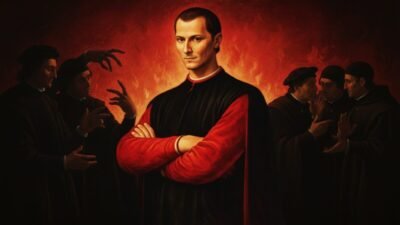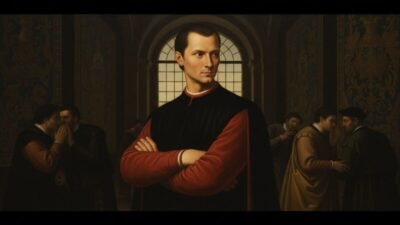

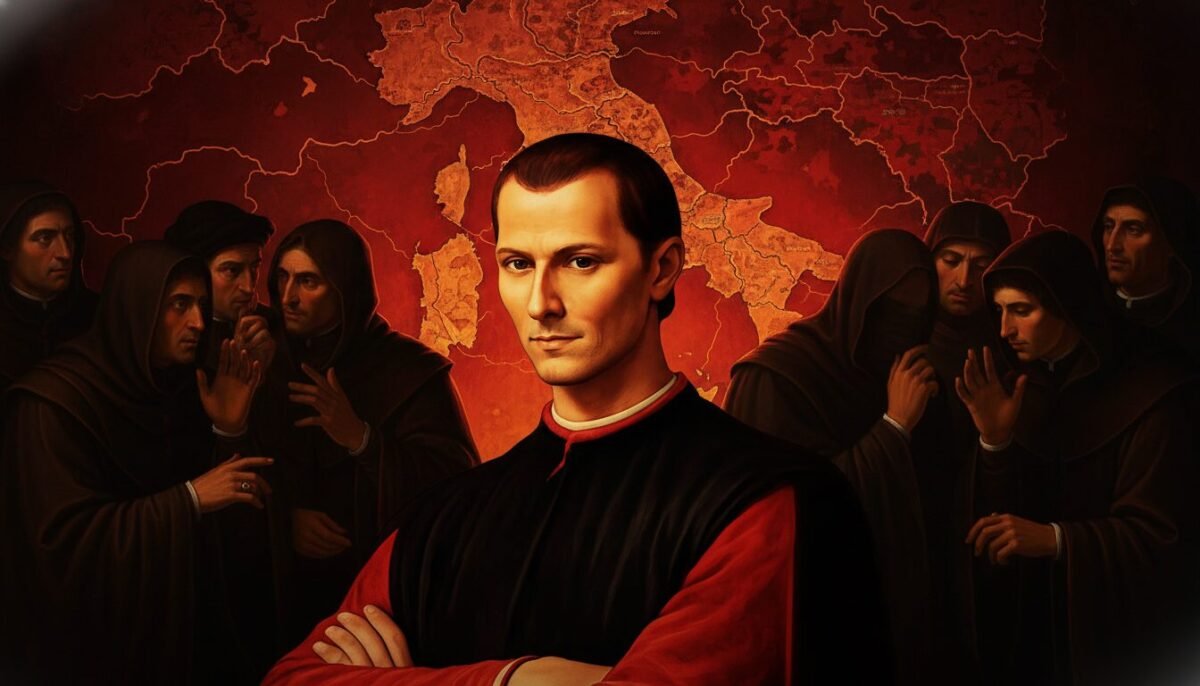
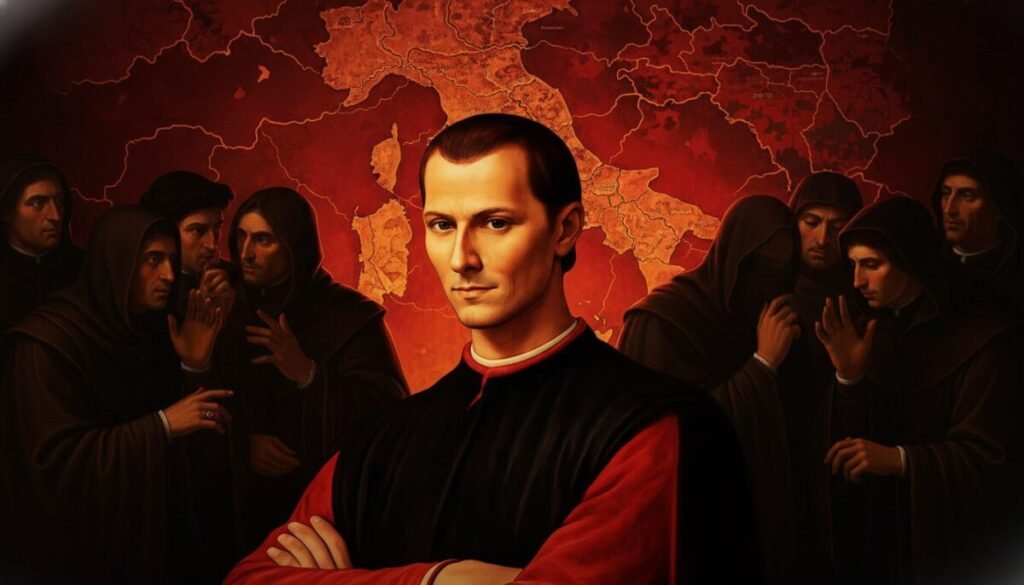
While Leonardo da Vinci was meticulously layering glaze onto the Mona Lisa, capturing a smile that would haunt the Western imagination for centuries, the streets outside his studio were often running red with the blood of political rivals and mercenary soldiers. It is one of history’s greatest paradoxes: the era that produced the most sublime art and humanistic philosophy was also a period of unparalleled political depravity, betrayal, and systemic instability. To look at a map of 15th-century Italy is to look at a shattered mirror, where every shard reflects a different ambition, a different tyrant, and a different vision of the world.
The sheer complexity of Renaissance Italy’s shifting alliances, warring city-states, and dynastic feuds can make the era feel like an impenetrable maze. Yet, it is within this very chaos that the modern world was forged. This was a time when the old medieval certainties—the absolute authority of the Emperor and the moral supremacy of the Church—were dissolving into a brutal, competitive landscape. By deconstructing the political fragmentation of the 15th and 16th centuries, we can begin to understand how a land of constant turmoil became the cradle of modern political science and the ultimate masterpiece of Western civilization.
1. The Fragmented Map: Why Italy Was a Patchwork of City-States
Unlike France, England, or Spain, which were coalescing into centralized monarchies during the late Middle Ages, Italy remained stubbornly divided. The primary reason for this was the lingering shadow of the Holy Roman Empire. While the Emperors in Germany claimed lordship over Northern and Central Italy, their actual power had evaporated, leaving behind a “power vacuum” that local elites were more than happy to fill. Without a central king to impose order, the Italian peninsula became a laboratory for every conceivable form of government, from radical republics to hereditary despotisms.
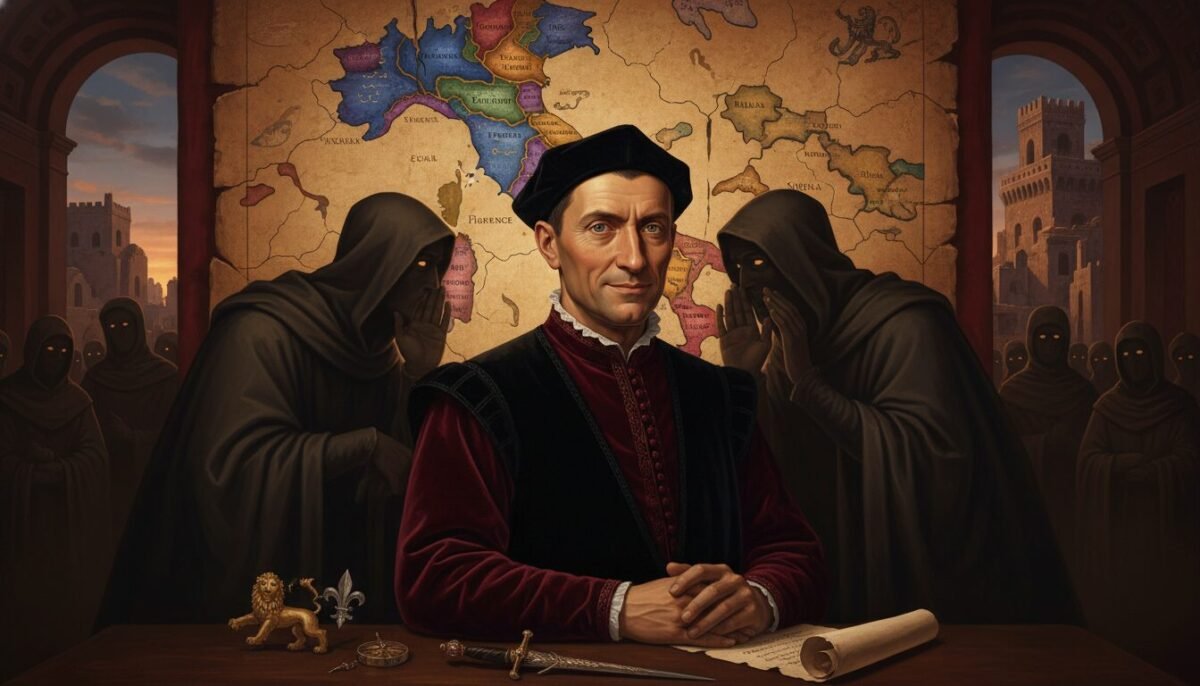
By the mid-15th century, the map had stabilized into what historians call the “Big Five”: the Republic of Venice, the Duchy of Milan, the Republic of Florence, the Papal States, and the Kingdom of Naples. Each of these entities operated like a sovereign nation, with its own coinage, foreign policy, and deep-seated grudges against its neighbors. Venice was a maritime empire, a “Serene Republic” governed by a merchant oligarchy that looked toward the East. Milan was a military powerhouse, often ruled by strongmen who seized power through the sword. Florence was the intellectual and financial heart of Italy, a place where banking families played a dangerous game of “republican” theater.
Economic prosperity was the fuel for this fragmentation. Italy was the wealthiest region in Europe, sitting at the crossroads of Mediterranean trade. This wealth allowed urban centers to buy their independence from feudal lords and build massive walls to defend their autonomy. However, this same wealth made them targets. The fierce competition for trade routes, textile monopolies, and banking dominance meant that peace was never a permanent state, but merely a brief intermission between wars. The 1454 Peace of Lodi attempted to create a balance of power among the Big Five, but in a land where every city-state felt it was the center of the universe, such a balance was inherently fragile.
2. Dynastic Ambition: The Medici, the Borgias, and the Struggle for Control
In this volatile environment, power was rarely about legal right; it was about virtù—a combination of skill, energy, and ruthless pragmatism. No families embodied this better than the Medici of Florence and the Borgias of Rome. Their rise to power illustrates the transition from the communal ideals of the Middle Ages to the raw dynastic ambitions of the Renaissance.
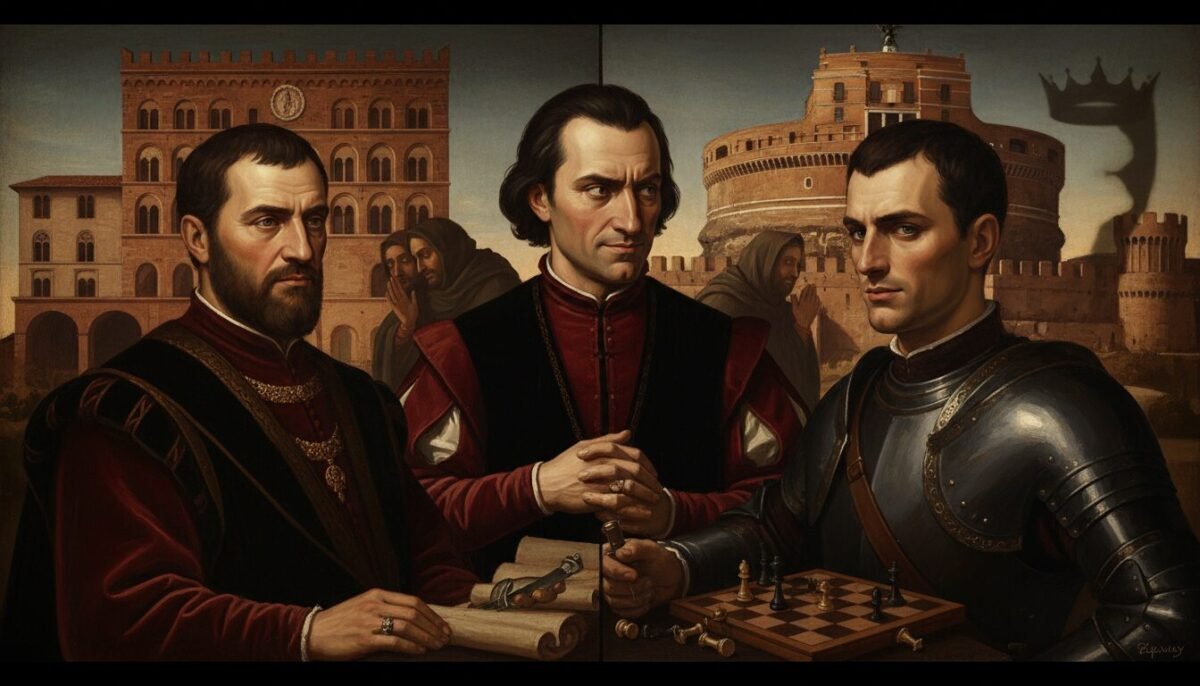
The Medici family did not start as nobles; they were bankers. Under Cosimo de’ Medici, they mastered the art of “soft power.” Cosimo understood that in a city like Florence, which took great pride in its republican institutions, appearing to be a king was a death sentence. Instead, he ruled from the shadows, using his immense wealth to fund the public debt, bribe officials, and act as a patron to the city’s greatest artists. By the time his grandson, Lorenzo the Magnificent, took the reins, the Medici were the de facto rulers of Florence, maintaining the facade of a republic while ensuring every major decision went through their palace. They transformed banking capital into political capital, proving that the purse could be mightier than the sword.
Contrast this with the Borgias. When Rodrigo Borgia ascended to the papacy as Alexander VI in 1492, he didn’t just want to lead the Church; he wanted to carve out a secular kingdom in central Italy for his children. His son, Cesare Borgia, became the personification of the new political animal. Cesare used a mixture of extreme violence, strategic marriages, and calculated betrayals to dismantle the minor lordships of the Romagna. The Borgias represented the “Signoria” model at its most aggressive—the replacement of traditional institutions with the absolute lordship of a single family. While the Medici used patronage to charm, the Borgias used the gallows to command. Both, however, shared the same goal: the survival and exaltation of their bloodline in a world where today’s ally was tomorrow’s executioner.
3. The Sword and the Purse: Condottieri and the Business of Warfare
One of the most peculiar aspects of Renaissance politics was that the people who started the wars rarely fought them. The wealthy merchants of Florence and Venice considered military service a distraction from business and a danger to the state (an armed citizenry might overthrow the government). Consequently, they outsourced their violence to Condottieri—mercenary captains who sold their services to the highest bidder.
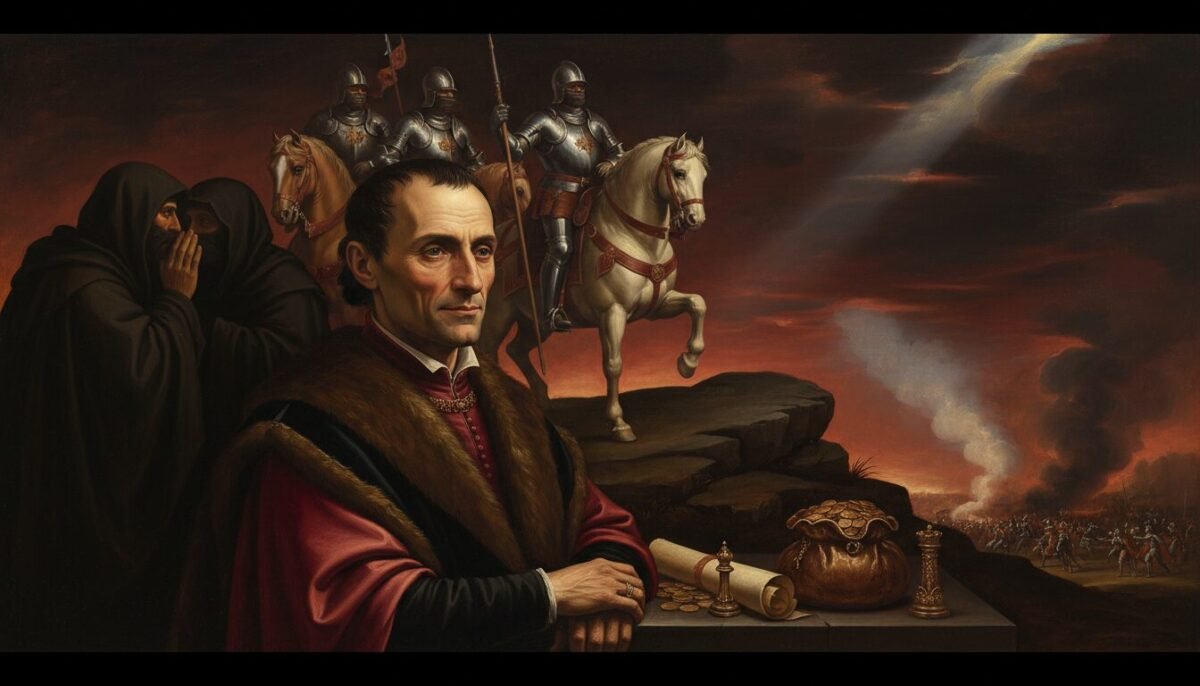
Warfare became a business transaction. These mercenary companies were essentially private corporations of the sword. Captains like Sir John Hawkwood or Francesco Sforza (who eventually became the Duke of Milan) were not motivated by patriotism or religious zeal; they were motivated by the contract (the condotta). This led to a strange, almost theatrical form of conflict. Because the soldiers were expensive assets, the Condottieri often avoided “decisive” battles that might result in heavy casualties. Instead, they engaged in elaborate maneuvers, sieges, and strategic retreats designed to prolong the conflict and keep the paychecks coming.
The reliance on mercenaries had devastating consequences for the Italian people. Since these soldiers had no loyalty to the land, they frequently turned to plunder and extortion when their pay was late. Betrayal was a standard business tactic; a Condottiero might switch sides in the middle of a campaign if offered a better deal, leaving his previous employer defenseless. This military instability stunted the development of national identity and left the Italian states vulnerable. While they were busy playing chess with mercenary pawns, the great monarchies of Europe were developing professional, standing armies that would eventually descend upon the peninsula with terrifying efficiency.
4. The Papal States: When the Pope Was a Secular Prince
To understand the chaos of Italy, one must understand the dual nature of the Papacy. During the Renaissance, the Pope was not merely the spiritual shepherd of millions; he was a territorial monarch with a crown, an army, and a desperate need for tax revenue. The Papal States, stretching across the center of Italy, acted as a massive geographic barrier that prevented any single power from unifying the north and the south.
The “Warrior Pope,” Julius II, is perhaps the most striking example of this secular transformation. Known as Il Papa Terribile, Julius was more comfortable in a suit of armor than in liturgical robes. He personally led his troops into battle to reclaim lost territories and expand the borders of the Papal States. His formation of the League of Cambrai—a massive alliance intended to humble the Republic of Venice—showed that the Pope was willing to invite foreign powers into Italy if it served his immediate territorial interests. Under Julius, the Church became a major player in the game of Realpolitik, often prioritizing the defense of the “Patrimony of St. Peter” over the spiritual health of Christendom.
This focus on secular power led to rampant nepotism and corruption. Popes frequently appointed their “nephews” (often their biological sons) to high ecclesiastical offices to ensure family control over Church wealth. This blurred the line between sacred and profane, fueling the resentment that would eventually spark the Protestant Reformation. In the context of Italian politics, the Papacy acted as a “spoiler”—strong enough to prevent any other state from dominating Italy, but never strong enough to unify the country itself.
5. The Italian Wars: Foreign Invasions and the End of Independence
The internal squabbles of Italy eventually caught the attention of the “barbarians” beyond the Alps. In 1494, the delicate balance of power established by the Peace of Lodi collapsed when Ludovico Sforza of Milan, feeling threatened by Naples, invited King Charles VIII of France to assert his claim to the Neapolitan throne. It was like inviting a wolf into a sheepfold to settle a dispute between the sheep.
Charles VIII marched through Italy with a modern army and a train of mobile bronze cannons that turned medieval walls into rubble. This invasion triggered the “Italian Wars,” a series of conflicts that lasted until 1559. Italy became the primary battleground for the Habsburg-Valois rivalry—a titanic struggle between the French monarchy and the Holy Roman Empire (led by the Spanish Habsburgs). The Italian city-states, once the masters of their own destiny, were reduced to pawns in a global game of chess. They switched sides constantly, trying to survive the clash of these superpowers, but each shift only brought more destruction.
The symbolic end of the High Renaissance’s political optimism came in 1527 with the Sack of Rome. Mutinous troops of the Holy Roman Emperor, Charles V, breached the walls of the Eternal City. For eight days, they raped, looted, and murdered, while the Pope was trapped in the Castel Sant’Angelo. The Sack was a psychological trauma for all of Europe. It proved that the cultural brilliance of Italy was no shield against the raw power of centralized nation-states. By the mid-16th century, most of Italy had fallen under Spanish or Austrian shadow, marking the end of its era as an independent political laboratory.
6. Machiavelli and the Birth of Modern Political Realism
It was out of this wreckage that modern political science was born. Niccolò Machiavelli, a diplomat for the Florentine Republic, watched the collapse of his world with a mixture of horror and clinical fascination. Having seen the Medici exiled and restored, having met the ruthless Cesare Borgia, and having witnessed the helplessness of Italian states against foreign cannons, Machiavelli realized that the old political theories were useless.
In his seminal work, The Prince, Machiavelli stripped away the “ought” of politics and focused on the “is.” He rejected the medieval idea that a ruler must be a virtuous Christian to be successful. Instead, he argued that a leader’s primary duty is the survival and stability of the state, by any means necessary. He introduced the concept of virtù not as moral goodness, but as the flexibility to be “a lion and a fox”—to use both force and fraud to navigate the whims of Fortuna (Fate). This was the birth of Realpolitik.
Machiavelli’s legacy is profound. He was the first to recognize that politics is an autonomous sphere with its own rules, separate from private morality. His observations were not a “how-to” guide for villains, but a desperate plea for a leader strong enough to unify Italy and expel the foreign invaders. While he failed to see that unification in his lifetime, his shift from idealized leadership to pragmatic power-management became the blueprint for modern governance and diplomacy. He taught the world that in the arena of power, the greatest sin is not cruelty, but incompetence.
Renaissance Italy was a paradox of cultural brilliance and political fragility. The constant competition between city-states like Florence and Venice, the intervention of the Papacy, and the eventual foreign dominations created a volatile environment that birthed modern political theory. We admire the art, but we must also respect the crucible of chaos that forced humanity to rethink the very nature of power.
Frequently Asked Questions
Why didn’t the Italian city-states unite against foreign invaders?
Deep-seated local rivalries and economic competition made unity almost impossible. Most city-states feared their Italian neighbors more than they feared the French or Spanish, often inviting foreigners in to help settle local scores.
Was Machiavelli as “evil” as his reputation suggests?
Machiavelli wasn’t advocating for evil for its own sake; he was a realist who believed that a “good” but weak leader would cause more suffering through instability than a “cruel” but strong leader would through order.
How did the Medici maintain power without being kings?
They used a system of patronage, ensuring that the city’s elite owed them money or favors, and they manipulated the electoral process to ensure that only their supporters held key government positions.
What was the lasting impact of the Italian Wars?
The wars shifted the center of European power from the Mediterranean to the Atlantic and established the Habsburgs as the dominant force in Europe for over a century, while leaving Italy fragmented and under foreign influence until the 19th century.
If you found this exploration of power and intrigue fascinating, you might enjoy our deep dives into Machiavelli & Political Philosophy, the psychological roots of Influence & Leadership, or the dark side of human ambition in our series on Machiavellianism.