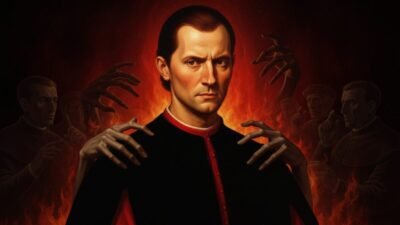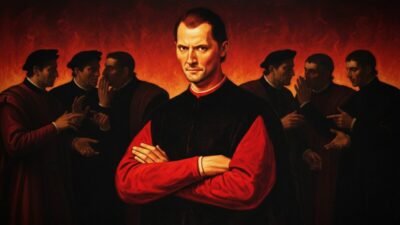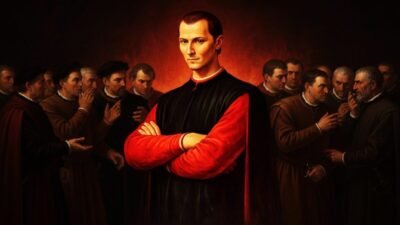
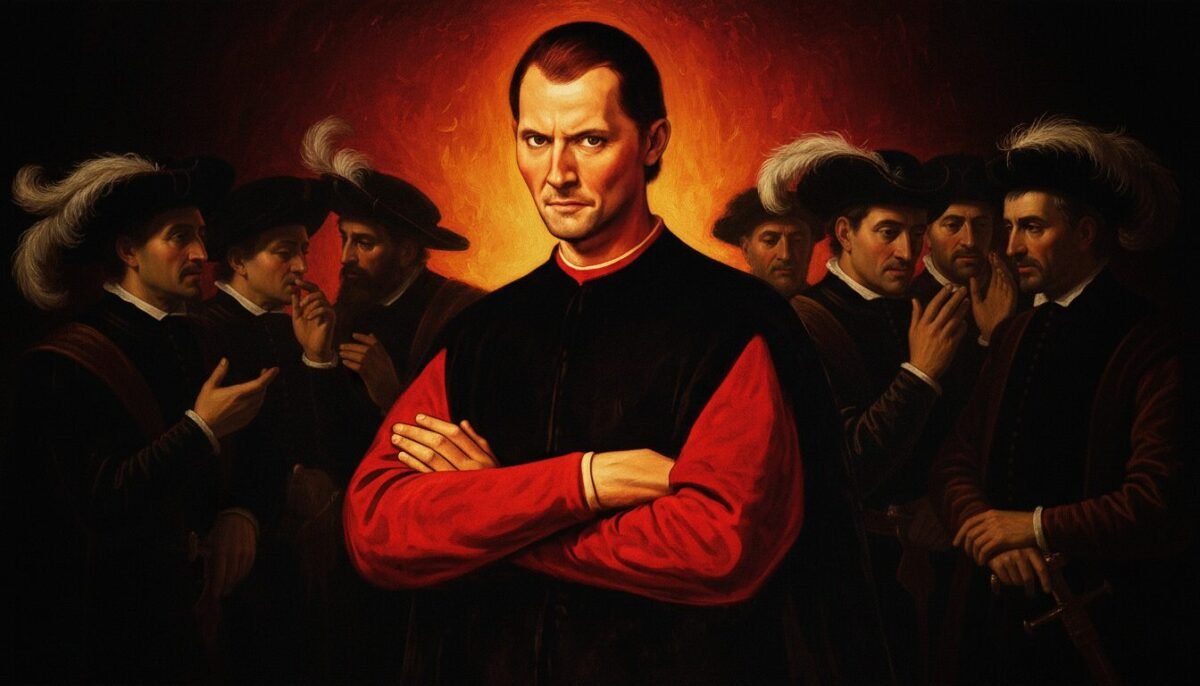
Is it truly better for a leader to be feared than loved, or is that just the cynical advice of a man whose name has become synonymous with deceit? For centuries, the word “Machiavellian” has been hurled as an insult, conjuring images of backstabbing advisors and ruthless tyrants whispering in dark corridors. Many beginners find Niccolò Machiavelli’s The Prince intimidating, or worse, they dismiss his ideas as purely “evil” without considering the historical chaos of Renaissance Italy. We tend to judge his words through the lens of our modern, relatively stable democracies, forgetting that he wrote from a world where a city-state could be sacked, burned, and its leaders executed before the sun went down.
To understand Machiavelli is to look directly into the sun of political reality without blinking. He wasn’t interested in how people should behave in a perfect world; he was obsessed with how they actually behave when power, survival, and the fate of thousands are on the line. This article breaks down Machiavelli’s core principles into simple concepts, explaining his impact on modern political science and how to interpret his most famous—and most misunderstood—advice.
1. Who Was Niccolò Machiavelli? Contextualizing the Man and His Era
Before he was a “sinister” philosopher, Niccolò Machiavelli was a civil servant. Born in 1469 in Florence, he spent fourteen years as a high-ranking diplomat and official for the Florentine Republic. He wasn’t theorizing from an ivory tower; he was on the front lines, meeting with kings, popes, and the terrifying warlord Cesare Borgia. He saw firsthand how the “good” leaders often failed because they were too rigid, while the “bad” ones succeeded because they were adaptable.
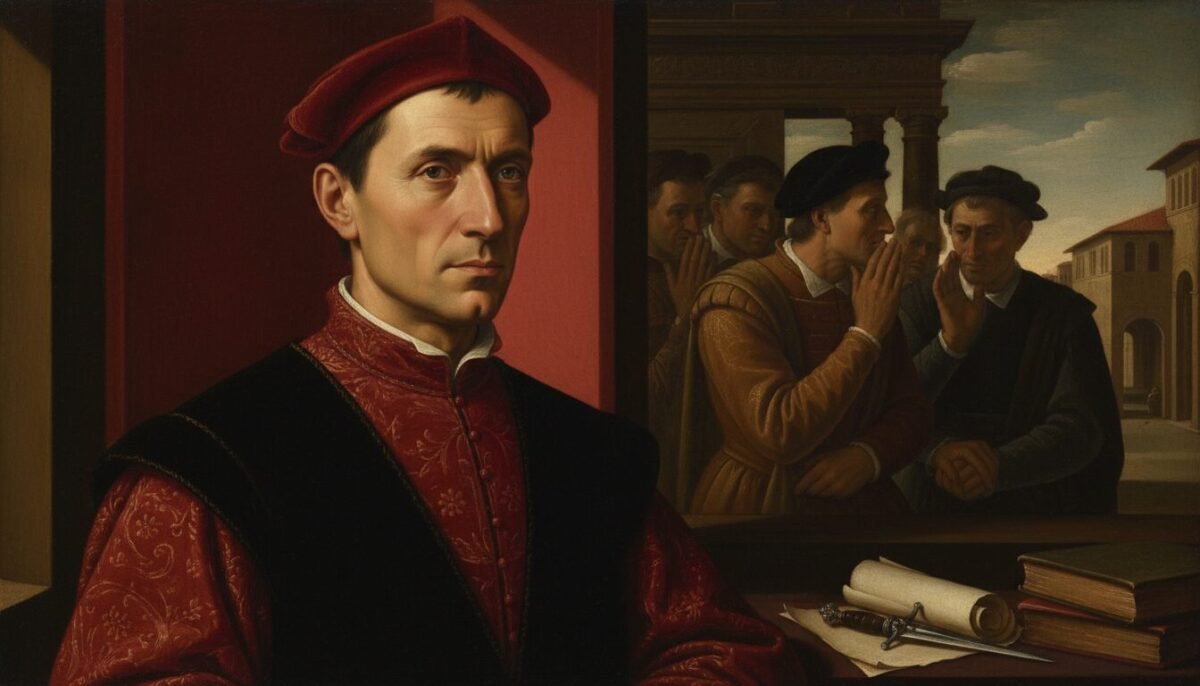
The Italy of Machiavelli’s time was not a unified country. It was a fragmented collection of warring city-states—Florence, Milan, Venice, Rome, and Naples—constantly being trampled by the massive empires of France and Spain. Political instability wasn’t a theory; it was a daily threat. When the powerful Medici family returned to power in Florence in 1512, the Republic collapsed. Machiavelli was ousted from his job, imprisoned, tortured on the “strappado” (a device that dislocates the shoulders), and eventually exiled to his small farm outside the city.
It was in this state of forced retirement and desperation that he wrote his most famous works. His practical experience in statecraft shaped a worldview that was profoundly realistic. He had seen the carnage that resulted when a leader was indecisive or overly concerned with Christian piety at the expense of national security. He realized that the “rules” of politics were fundamentally different from the rules of personal morality. To Machiavelli, the greatest “sin” a leader could commit was not a moral lapse, but the failure to protect the state.
2. The Core Objective of ‘The Prince’: Stability Over Idealism
It is a common misconception that The Prince was intended as a universal manifesto for evil. In reality, it was something much more mundane: a job application. Machiavelli wrote it as a gift for Lorenzo de’ Medici, hoping to prove his worth as a political advisor and regain his position in the government. This context is vital. He wasn’t writing for the masses; he was writing a “how-to” manual for a ruler who needed to stabilize a fractured territory.
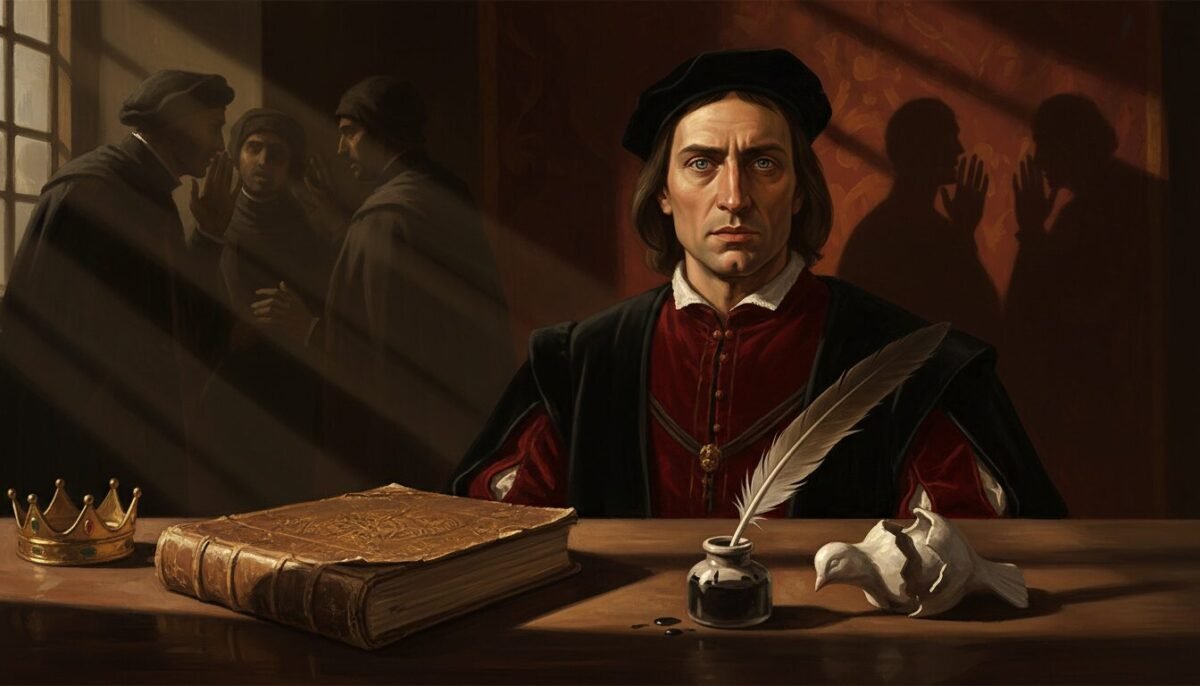
Machiavelli’s greatest departure from the thinkers who came before him—like Plato or Cicero—was his rejection of idealism. While previous philosophers spent volumes debating “how one ought to live,” Machiavelli argued that focusing on an imaginary utopia was a recipe for ruin. He famously wrote that a man who neglects what is actually done for what should be done learns the way to self-destruction rather than self-preservation.
The primary goal of a ruler, according to Machiavelli, is the maintenance of the Stato (the state). This doesn’t just mean the ruler’s personal power, though that is part of it. It means the security, order, and longevity of the political community. For Machiavelli, a “good” leader is one who ensures that the citizens can go about their lives, trade their goods, and raise their families without the fear of foreign invasion or civil war. If achieving that stability requires actions that would be considered “immoral” in private life, Machiavelli argues that the leader has a professional obligation to perform them. Stability is the highest moral good in politics, because without it, no other virtues can exist.
3. Virtù and Fortuna: The Interplay of Skill and Fate
To navigate the treacherous waters of politics, Machiavelli introduces two central concepts: Virtù and Fortuna. These are the two forces that determine the success or failure of any leader, and understanding them is key to grasping his entire philosophy.
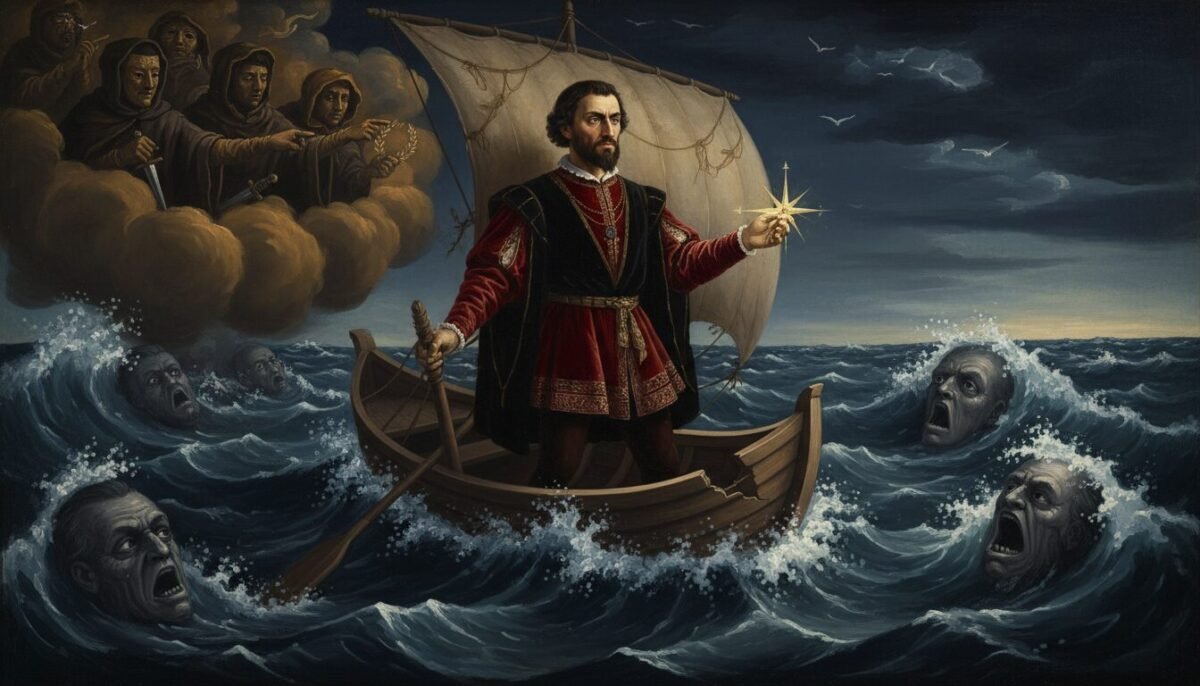
First, we must clear up a linguistic confusion. When Machiavelli speaks of Virtù, he is not talking about “virtue” in the sense of kindness, honesty, or Christian charity. In fact, traditional Christian virtue is often the opposite of Machiavellian Virtù. For him, Virtù is a blend of prowess, energy, intelligence, and political skill. It is the ability of a leader to adapt to changing circumstances, to be a “lion” (strong and intimidating) and a “fox” (cunning and able to recognize traps). A leader with Virtù knows when to be cruel and when to be kind, when to keep their word and when to break it.
On the other side of the coin is Fortuna. Machiavelli views Fortuna as the unpredictable nature of luck, chance, and historical circumstances. No matter how much Virtù a leader has, they are always at the mercy of events they cannot control—plagues, sudden invasions, or the whims of a fickle populace. However, Machiavelli is not a fatalist. He famously uses the metaphor of a torrential river: Fortuna is like a wild river that, when it floods, destroys everything in its path. But a leader with Virtù is like a builder who constructs dikes and dams during the dry season. You cannot stop the river from rising, but you can control where the water goes and minimize the damage.
The successful leader is the one whose Virtù is perfectly calibrated to the Fortuna of their times. If the times are chaotic, the leader must be bold; if the times are quiet, the leader must be cautious. The tragedy of politics, Machiavelli notes, is that humans rarely change their nature, so they often fail when the “river” of luck changes direction and they are still using the old “dikes.”
4. The Separation of Morality and Politics: Realpolitik Explained
Perhaps the most controversial aspect of Machiavelli’s thought is his insistence on the separation of private ethics and political necessity. This is the foundation of what we now call Realpolitik—a system of politics based on practical and material factors rather than theoretical or ethical premises.
Machiavelli argues that a leader must “learn how not to be good.” This sounds shocking, but his logic is grounded in a specific psychological observation: most people are not good. He believed that humans are generally “ungrateful, fickle, deceptive, and greedy.” If a leader tries to play by the rules of a saint in a world full of sinners, he will be devoured. Therefore, the leader must be prepared to enter into “evil” if it is necessary to prevent a greater catastrophe. For example, executing a few rebel leaders (a “cruelty”) might prevent a civil war that would kill thousands (a greater “cruelty”). In Machiavelli’s eyes, the “cruel” leader who brings peace is actually more merciful than the “kind” leader who allows chaos to reign.
This leads to the famous phrase often attributed to him: “the end justifies the means.” Interestingly, Machiavelli never actually wrote those exact words. What he wrote was that in the actions of men, and especially of princes, “the results are what matter.” If a prince succeeds in maintaining the state, the means he used will always be judged honorable and praised by everyone. He wasn’t giving a blank check for any and all atrocities; he was saying that the success of the state provides a retrospective justification for the difficult choices a leader had to make. It is a philosophy of “dirty hands”—the idea that you cannot govern effectively without occasionally getting your hands stained.
5. Feared vs. Loved: The Famous Dilemma of Leadership
In Chapter 17 of The Prince, Machiavelli asks the ultimate leadership question: Is it better to be loved than feared, or vice versa? His answer is a masterclass in psychological strategy. He concludes that while it would be ideal to be both, the two rarely go together. Therefore, if you must choose, it is much safer to be feared than loved.
Why? Because love is a bond of obligation that men, being the miserable creatures they are, break whenever it serves their self-interest. Fear, however, is preserved by a “dread of punishment” which never fails. Love is in the control of the people; they choose who they love. Fear is in the control of the ruler. A wise leader always builds his foundation on what he controls, not on what others control.
However—and this is a crucial distinction that many people miss—Machiavelli warns that being feared is not the same as being hated. Being feared is a strategic tool; being hated is a political death sentence. A leader who is hated will face conspiracies and rebellions that no amount of force can stop. How does a leader avoid hatred? Machiavelli’s advice is surprisingly practical: “Above all, he must abstain from the property of others, because men forget the death of a father more quickly than the loss of their inheritance.” He also advises staying away from the women of his subjects. In short: don’t be a petty tyrant. Be a strong, predictable authority figure who respects the basic rights and property of the people, and they will fear your power without hating your person.
6. What Does it Mean to be ‘Machiavellian’ Today?
Today, the term “Machiavellian” is often used in psychology to describe one of the “Dark Triad” personality traits, alongside narcissism and psychopathy. It characterizes someone who is manipulative, cynical, and indifferent to morality. But in the world of political science, Machiavelli’s legacy is far more sophisticated. He is widely considered the “Father of Modern Political Science” because he was the first to treat politics as an empirical study—observing what people do rather than what they say.
His influence is everywhere in modern Realpolitik and international relations. When we see countries making alliances with dictators because it serves their national interest, or when we see leaders making “tough calls” that sacrifice a small group for the perceived benefit of the majority, we are seeing Machiavellian logic in action. He stripped away the religious and moral justifications for power and showed it for what it is: a technical skill used to manage human behavior and ensure survival.
Machiavelli’s work remains essential because it forces us to confront the uncomfortable truths about leadership. It asks us: Do we want a leader who is a “good person” by private standards, or a leader who is effective at keeping us safe? He suggests that sometimes, we cannot have both. By moving beyond the “evil” caricature, we can see Machiavelli as a man who loved his country deeply and wanted to provide a roadmap for its survival in a brutal world.
Conclusion
Niccolò Machiavelli wasn’t a teacher of evil, but a realist who observed that power operates by its own rules. He didn’t invent the ruthlessness of politics; he simply had the courage to write it down. By understanding the interplay of Virtù and Fortuna, the necessity of stability, and the strategic balance between fear and hatred, we gain a clearer view of how the world works. Machiavelli challenges us to look past our ideals and see the machinery of government for what it is—a constant, calculated effort to maintain order in an inherently chaotic world.
Want to dive deeper into the forces that shape human society and the mind? Explore more of our guides on Power & Human Nature and Influence & Leadership to sharpen your strategic thinking.
Frequently Asked Questions
Did Machiavelli actually believe the things he wrote in ‘The Prince’?
There is a long-standing debate among historians. Some believe he was being literal, while others, like Jean-Jacques Rousseau, argued that The Prince was a satire intended to warn the people about the methods of tyrants. However, most scholars today agree it was a sincere attempt to provide a practical guide for a ruler in a time of crisis.
Is ‘The Prince’ his only important book?
No. While The Prince is his most famous, his work The Discourses on Livy offers a much more favorable view of republics and the importance of liberty and checks and balances. To understand his full philosophy, one must read both.
Can Machiavelli’s advice be applied to modern business?
Many corporate leaders use his concepts of Virtù and Fortuna to navigate market volatility and competition. However, the stakes of business are rarely as terminal as the 16th-century politics Machiavelli described, so his advice on “cruelty” is usually interpreted metaphorically as “decisiveness.”
Why is he called the Father of Political Science?
Because he moved the study of politics away from “what should be” (normative) to “what is” (empirical). He used historical examples and direct observation to create a “science” of power, independent of theology or ethics.
Ready to explore the darker corners of the human psyche and the mechanics of influence? Subscribe to the DeepPsyche newsletter for weekly insights into Machiavellianism, Comparative Philosophy, and the hidden structures of the world.