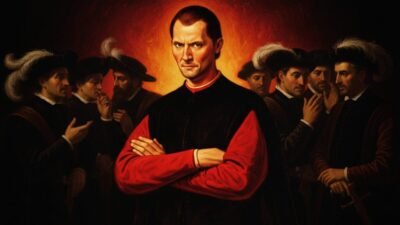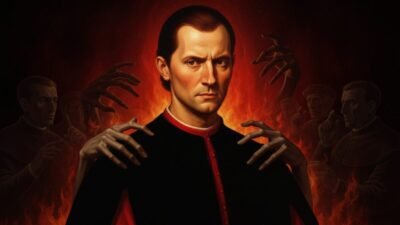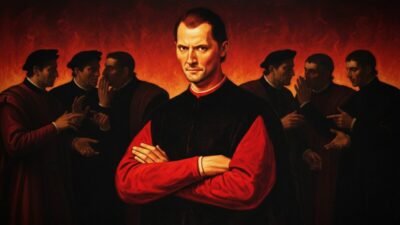
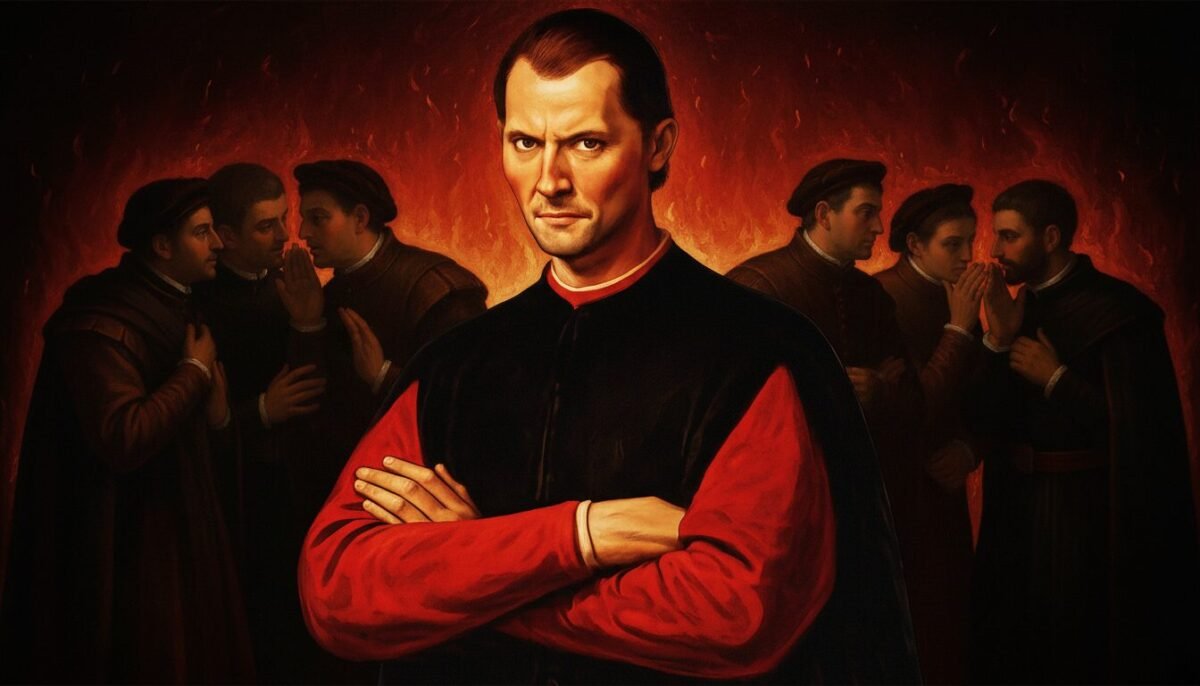
Is it better to be loved or feared? This chilling question, posed five centuries ago, continues to define the cutthroat world of modern politics, corporate boardrooms, and even social hierarchies. Most people hear the name “Machiavelli” and immediately envision a shadowy figure whispering deceptions into the ears of tyrants. We have turned his name into an adjective—Machiavellian—to describe the cold, calculating, and often ruthless pursuit of power. But to reduce the man to a mere caricature of evil is to miss one of the most profound intellectual shifts in human history.
Niccolò Machiavelli was not a monster; he was a realist. He was a man who looked at the crumbling structures of Renaissance Italy and dared to describe the world as it actually functioned, rather than how we wish it would. While his contemporaries were writing guidebooks on how to be a “good Christian prince,” Machiavelli was busy documenting the mechanics of survival. He understood that in a world where everyone else is playing dirty, the person who insists on playing by the rules of a Sunday school lesson is the first one to be destroyed. His work represents the birth of political science, a transition from moral philosophy to a cold, hard analysis of power and human nature.
1. The Life of Niccolò Machiavelli: From Diplomat to Exile
To understand the philosophy, one must understand the chaos of the man’s life. Niccolò Machiavelli was born in 1469 in Florence, a city that was the beating heart of the Renaissance—a place of staggering artistic beauty and terrifying political instability. Florence was a republic, but it was a fragile one, constantly squeezed between the ambitions of the Papacy, the Kingdom of France, and the Holy Roman Empire.
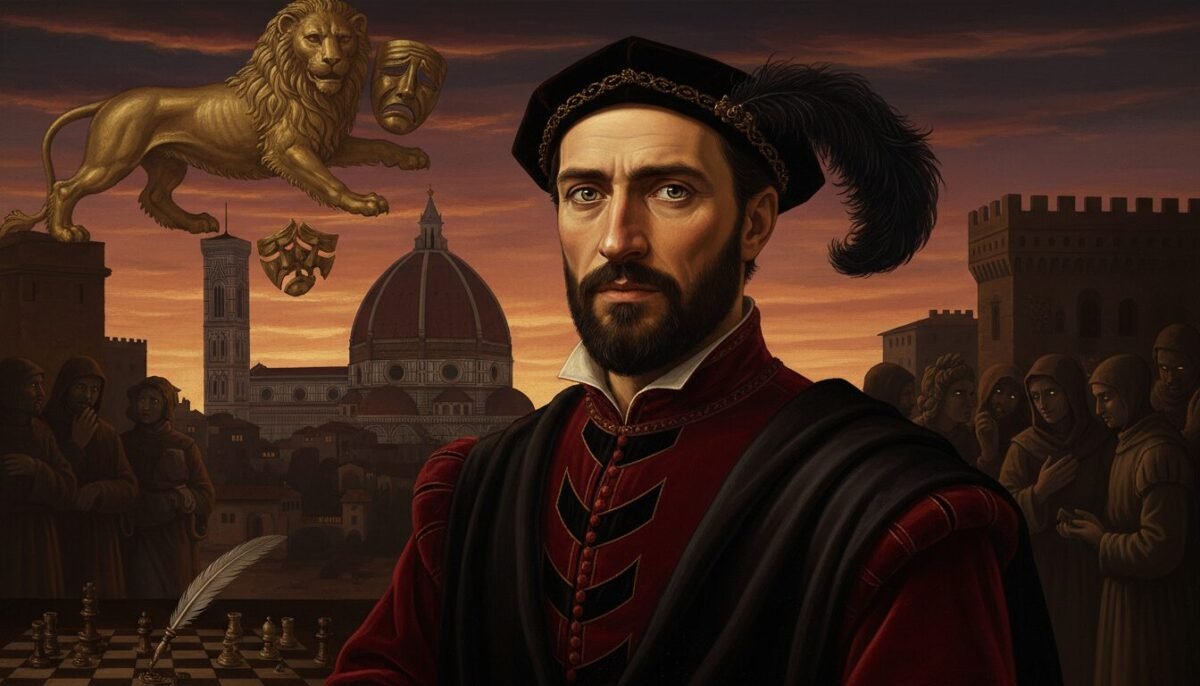
Machiavelli was not a nobleman; he was a civil servant. For fourteen years, he served as the Secretary to the Second Chancery of the Republic of Florence. This wasn’t a desk job. He was a high-level diplomat, sent on missions to the courts of kings and popes. He stood in the presence of the most powerful men of his age, watching them succeed and, more importantly, watching them fail. He observed Cesare Borgia, the ruthless son of Pope Alexander VI, whose cold efficiency in consolidating power fascinated Machiavelli. He saw how Borgia used both terror and strategic benevolence to bring order to the chaotic Romagna region. These experiences were the laboratory for his later writings.
However, the tides of fortune are fickle. In 1512, the Medici family, backed by Spanish troops, returned to Florence and overthrew the Republic. Machiavelli, a staunch defender of the republican government, was stripped of his office. He was accused of conspiracy, imprisoned, and subjected to the “strappado”—a form of torture where the victim is hoisted by their wrists, which are tied behind their back, and then dropped. Despite the agony, he maintained his innocence.
Released but banished to his small estate in San Casciano, Machiavelli found himself in a state of agonizing boredom and poverty. A man who had once shaped the destiny of states was now reduced to arguing with local tradesmen and playing cards in village taverns. It was in this exile, fueled by a desperate desire to return to public life and a need to share his hard-won wisdom, that he began to write. He spent his nights “dressing in the clothes of court and palace” to commune with the great thinkers of antiquity, eventually producing the works that would change the world forever.
2. The Prince: Power, Pragmatism, and the Art of Statecraft
If you have heard of Machiavelli, you have heard of The Prince. Written in 1513 as a sort of “job application” to the Medici family, this slim volume is perhaps the most misunderstood book in the Western canon. Its core themes are not cruelty for cruelty’s sake, but rather the acquisition, preservation, and stability of power. Machiavelli’s primary concern was the “effectual truth”—how things actually work, not how they are imagined in utopias.
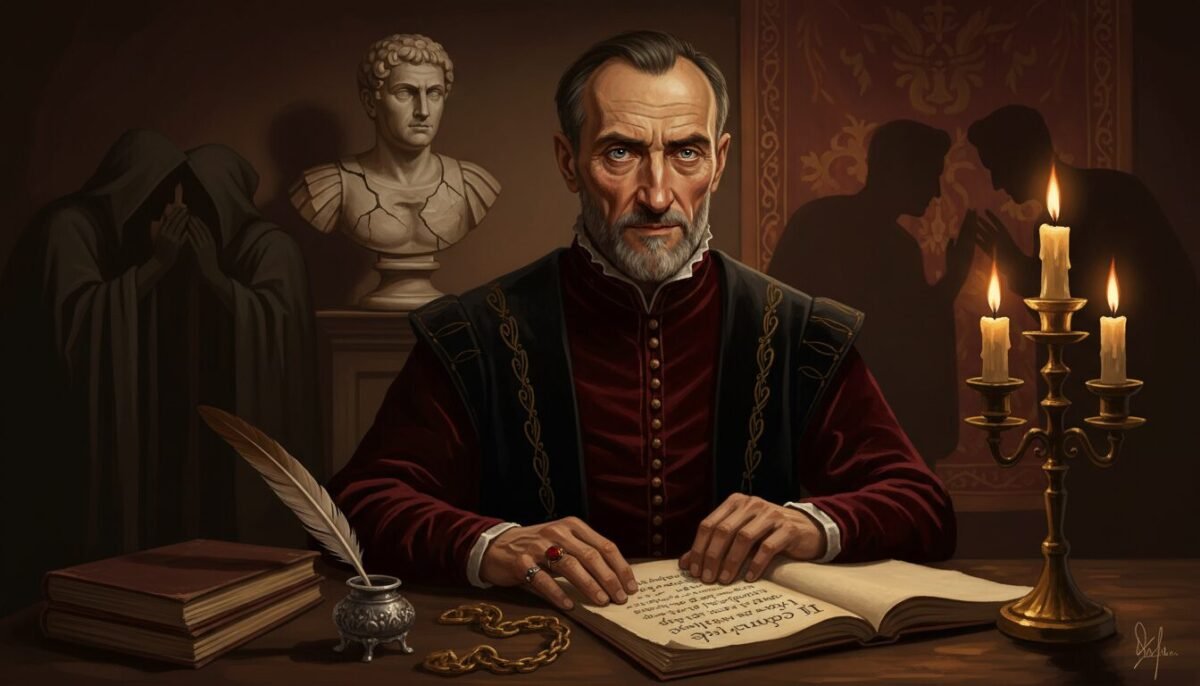
A common misconception is that Machiavelli explicitly wrote the phrase “the end justifies the means.” While he never used those exact words, the sentiment permeates the text. However, there is a crucial nuance: the “end” he refers to is not personal wealth or ego, but the stability and security of the state. To Machiavelli, the greatest sin a ruler could commit was to allow the state to fall into chaos, for in chaos, everyone suffers. Therefore, any action taken to prevent that collapse—even actions that are traditionally “immoral”—is politically justified.
This marks a revolutionary shift from “ought” to “is.” Before Machiavelli, political writers argued that a leader should be a mirror of divine virtue. Machiavelli argued that a prince must learn “how not to be good” when the situation demands it. He famously noted that a ruler who tries to be virtuous in all things will inevitably be ruined by the many who are not virtuous. In this sense, he is the father of political realism. He stripped the divine mask off the face of power and showed the gears and pulleys underneath.
His advice to rulers was practical and often jarring. He suggested that if you must do harm, do it all at once so the resentment fades, but hand out benefits slowly so they are savored. He argued that while it is ideal to be both loved and feared, if you must choose one, it is much safer to be feared. Love, he claimed, is held by a chain of obligation which men, being selfish, break whenever it serves them; but fear is maintained by a dread of punishment which never fails. This isn’t an endorsement of tyranny; it is a psychological observation of Influence & Leadership in a world of self-interested actors.
3. Machiavelli’s View on Human Nature and Secular Politics
At the heart of Machiavelli’s philosophy lies a deeply pessimistic view of human nature. He did not believe that humans were inherently good or that they would naturally cooperate for the common good. Instead, he described men as “ungrateful, fickle, simulators and deceivers, avoiders of danger, and greedy for gain.” This perspective wasn’t born of bitterness, but of his observations during Renaissance history, where he saw allies turn into enemies at the first sign of a better deal.
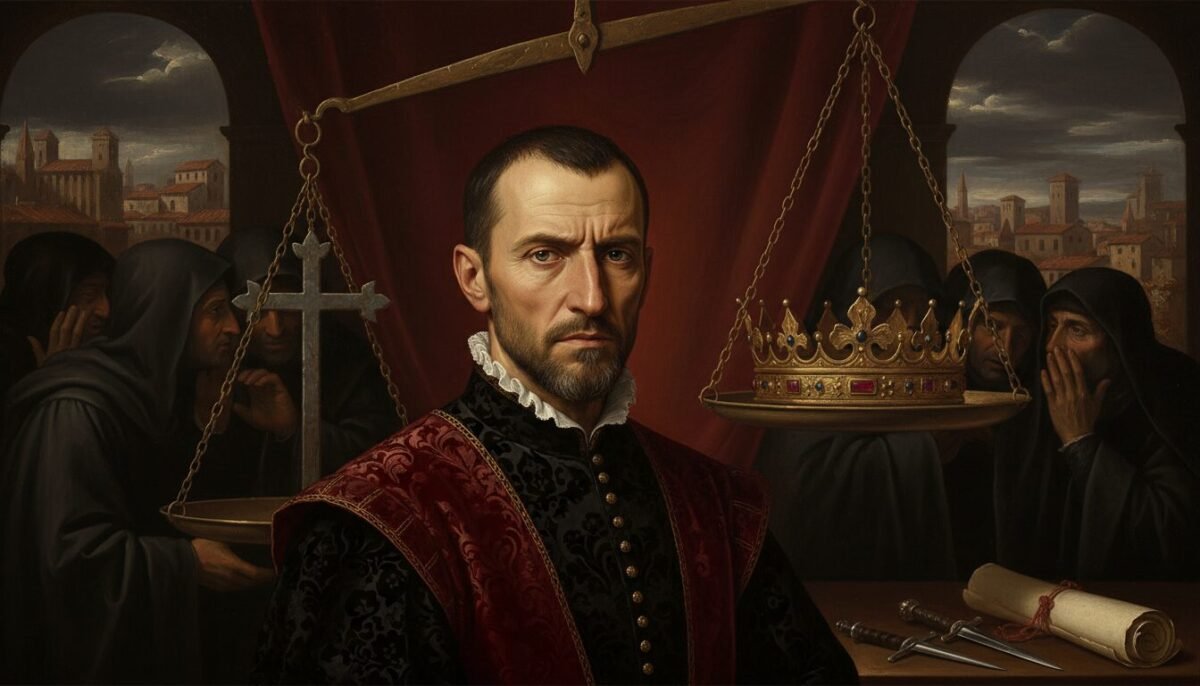
Because he viewed human nature as flawed and unchanging, he believed that politics must be separated from traditional Christian morality. In the medieval view, the state was a tool for leading souls to heaven. Machiavelli disagreed. He saw the state as a secular entity whose primary purpose was to provide security, order, and the conditions for human flourishing on earth. This is the essence of Realpolitik: the idea that politics is a distinct sphere of activity with its own rules, independent of the moral laws that govern private life.
By secularizing politics, Machiavelli paved the way for the modern state. He argued that a leader’s “virtue” was not found in their piety, but in their effectiveness. A “good” leader in the Machiavellian sense is one who keeps the country safe and prosperous, even if they have to lie, cheat, or kill to do it. This separation of private morality from public duty remains one of the most contentious and influential aspects of his thought, forcing us to confront the uncomfortable reality that the qualities that make a person a “good person” are often the very qualities that make them a “bad leader.”
4. Virtù and Fortuna: The Two Forces Shaping History
To navigate the treacherous waters of politics, Machiavelli introduced two central concepts: Virtù and Fortuna. These are not just words; they are the two opposing forces that determine the rise and fall of great men and nations.
In the modern world, we think of “virtue” as moral goodness. For Machiavelli, Virtù meant something closer to the original Latin virtus: manliness, prowess, energy, and strategic ruthlessness. It is the ability of a leader to adapt to circumstances, to act with boldness when necessary, and to use both the “lion” (force) and the “fox” (cunning) to achieve their goals. A leader with virtù does not wait for things to happen; they make things happen.
On the other side is Fortuna—the unpredictable, chaotic nature of luck and circumstance. Machiavelli famously compared Fortuna to a violent river that, when it floods, destroys everything in its path. However, he argued that when the weather is calm, a man of virtù builds dams and dikes so that when the flood comes, its power is diverted or contained. You cannot control luck, but you can prepare for it. He famously (and controversially) wrote that “fortune is a woman,” and if you wish to master her, you must treat her with boldness and force.
The key to success, therefore, is adaptability. Machiavelli observed that many leaders fail because they have a fixed character. A man who is naturally cautious will succeed when the times require caution, but he will be ruined when the times require audacity. The ultimate leader is the one who can change their nature to match the “quality of the times.” This requires a level of psychological flexibility that few possess—the ability to be a saint one day and a devil the next, depending on what the situation demands.
5. The Republican Ideal: Insights from the ‘Discourses on Livy’
It is a great historical irony that the man whose name is synonymous with autocracy was, at heart, a passionate republican. While The Prince was a handbook for a single ruler in a time of crisis, his longer and more profound work, the Discourses on Livy, explores how a free republic can be maintained over centuries. If The Prince is about how to build a house in a storm, the Discourses is about how to build a cathedral that lasts for generations.
Machiavelli’s preference for a republic was based on his belief that a state is stronger when it draws on the collective energy of its people. He was an early advocate for the “rule of law” and the importance of checks and balances. He argued that the tension between the nobility (the “great”) and the common people (the “populace”) was not a weakness, but a source of strength. In the Roman Republic, which he deeply admired, this conflict led to the creation of laws that protected liberty. For Machiavelli, a healthy state is one where different factions compete within a legal framework, preventing any one group from becoming too powerful.
He looked to the Roman Republic as the gold standard for Comparative Philosophy and governance. He believed that for a republic to survive, its citizens must possess “civic virtue”—a willingness to place the interests of the state above their own private interests. He warned that when citizens become corrupt and care only for their own wealth and comfort, the republic is doomed to fall into the hands of a tyrant. This part of his work reveals a man who was deeply committed to the idea of liberty and the collective well-being of his fellow citizens.
6. Legacy and Modern Machiavellianism: Misconceptions vs. Reality
The legacy of Niccolò Machiavelli is a double-edged sword. In modern psychology, “Machiavellianism” is one of the traits in the “Dark Triad,” alongside narcissism and psychopathy. In corporate culture, his name is often invoked to justify “backstabbing” and “climbing the ladder” at any cost. But this is a shallow interpretation of his work. Machiavelli wasn’t interested in petty office politics; he was interested in the survival of civilizations.
His influence on modern political science is immeasurable. Thinkers like Thomas Hobbes, who wrote about the “war of all against all,” and Friedrich Nietzsche, who explored the “will to power,” owe a massive debt to the Florentine diplomat. He introduced the concept of the “Reason of State” (raison d’état)—the idea that the national interest must take precedence over all other considerations. This remains the foundation of international relations theory today.
Was he a “Teacher of Evil,” as some critics claimed? Or was he a patriot who was simply honest enough to describe the world as he saw it? If you look closely at his life, you see a man who loved his city and suffered for his beliefs. He didn’t invent the dark side of Power & Human Nature; he merely turned on the lights so we could see it. By understanding Machiavelli, we gain a clearer view of the world around us. We learn to be less naive about the motives of those who seek power, and perhaps, we learn how to better protect the liberties we hold dear.
Ultimately, Machiavelli’s work serves as a permanent reminder that the path to hell is often paved with good intentions, and that in the arena of power, the most dangerous person is the one who refuses to see the world as it truly is.
Frequently Asked Questions
Did Machiavelli actually believe in being evil?
No. Machiavelli believed that a leader should be “good” whenever possible, but must be prepared to be “not good” when the safety and stability of the state are at risk. He saw this as a necessary burden of leadership, not a personal preference for cruelty.
What is the difference between ‘The Prince’ and ‘The Discourses’?
The Prince focuses on how an individual can gain and hold power, especially in a new or unstable state. The Discourses on Livy explores how a republic can be maintained through the participation of its citizens and the balance of power between different social classes.
Why is Machiavelli called the father of political science?
He was the first to analyze politics as a secular, empirical field of study. He moved away from moral and religious “shoulds” and focused on observing how power actually functions in the real world, using historical examples and personal experience.
Is ‘The Prince’ still relevant today?
Absolutely. Its insights into Machiavellianism, human psychology, the nature of power, and the importance of adaptability are still studied by political leaders, CEOs, and strategists around the world.
If you found this deep dive into the mind of Machiavelli enlightening, consider exploring our other analyses on the intersection of psychology and power. You might be interested in our guides on Machiavelli & Political Philosophy or our exploration of Influence & Leadership in the modern age. Subscribe to the DeepPsyche newsletter for more sharp insights into the forces that shape our world.